Please Rewind Video Store
THE TALENT WALL
The actors behind the movies we keep rewinding. Explore their careers, unforgettable roles and the films we've covered across the Please Rewind movie network.
Cast Directory
MEET THE CAST
From movie stars to character actors, every profile connects back to the films, features and decades that made their careers worth rewinding.
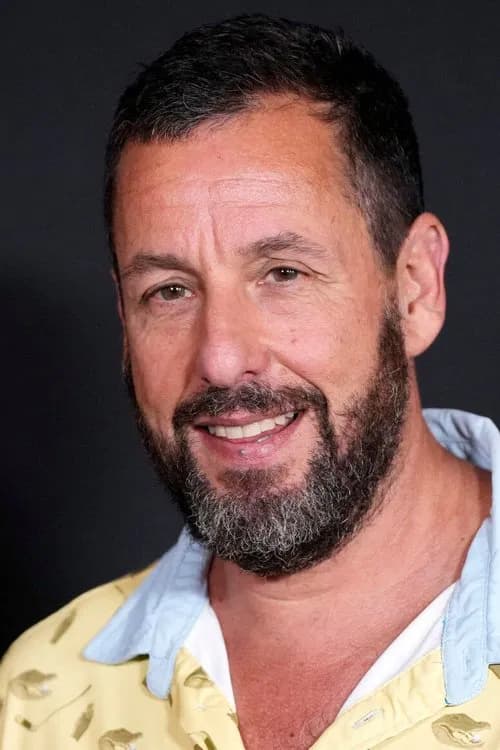
Adam Sandler
Brooklyn
Adam Sandler has built a career on comedy that can be broad, strange, sentimental and deliberately rough around the edges. Born in Brooklyn on September 9, 1966, he grew up in Manchester, New Hampshire, and graduated from New York University’s Tisch School of the Arts with a degree in acting in 1988. He began performing in comedy clubs as a teenager before joining Saturday Night Live as a writer in 1990 and becoming a featured player the following year. His original songs, including “The Thanksgiving Song” and “The Chanukah Song,” helped establish the mix of music, character work and offbeat humor that would follow him into movies. The Please Rewind films capture a defining stretch of Sandler’s screen career. In Billy Madison, he plays a grown man sent back through school, a premise that gives his proudly juvenile comic persona plenty of room to operate. Happy Gilmore, The Wedding Singer and The Waterboy followed in quick succession, each reinforcing his ability to build a film around an outsider whose behavior can be ridiculous while his emotional stakes remain sincere. The Wedding Singer also began his recurring screen partnership with Drew Barrymore; they reunited for 50 First Dates in 2004. That run made Sandler a major comedy presence, but it does not tell the whole story. Punch-Drunk Love placed familiar Sandler qualities—volatile energy, loneliness and a certain childlike vulnerability—inside a more dramatic frame, earning him a Golden Globe nomination. He later moved into dramatic territory again with The Meyerowitz Stories, Uncut Gems and Hustle. His performance in Uncut Gems earned the Independent Spirit Award for Best Male Lead, while Hustle brought a Screen Actors Guild Award nomination. Sandler has also worked extensively as a writer and producer, forming Happy Madison Productions in 1999. Across comedy, drama, stand-up and voice acting, his career has repeatedly returned to the same useful tension: the loud comic troublemaker on the surface, and the bruised, hopeful figure just underneath.
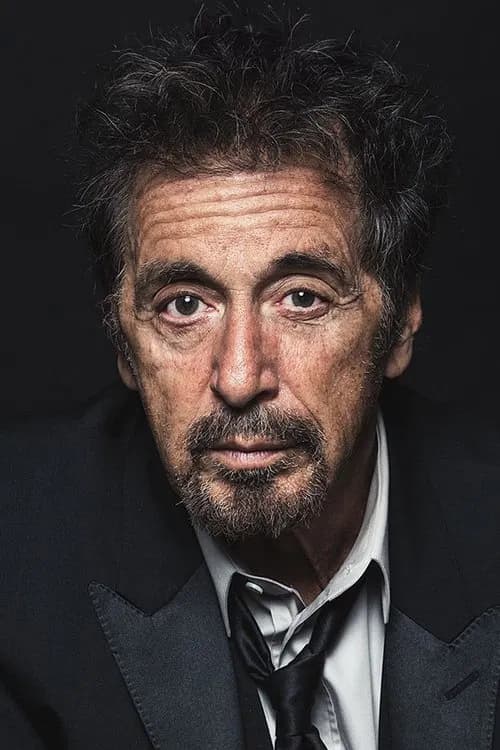
Al Pacino
Manhattan
Al Pacino has built a career on intensity, but that intensity has never come in just one form. He can play tightly controlled, openly theatrical, weary, dangerous or darkly amused—sometimes shifting between them within the same performance. Born in Manhattan on April 25, 1940, Pacino developed his craft in New York theatre, studying at HB Studio and later the Actors Studio under Lee Strasberg. His stage work remained an important part of his career even after his move into film. The Please Rewind movies capture a particularly rich stretch of that screen career. Cruising placed him at the centre of a controversial thriller in 1980, while Scarface gave him one of his defining roles three years later: Cuban drug lord Tony Montana. Sea of Love marked his return to film after a four-year hiatus, with Pacino playing a detective hunting a serial killer. The early 1990s showed just how broad his range could be. He appeared in David Mamet’s Glengarry Glen Ross and played the irascible, blind retired Army officer Frank Slade in Scent of a Woman. The two performances earned him Academy Award nominations in the same year, and he won Best Actor for Scent of a Woman. Heat brought Pacino and Robert De Niro together on screen for the first time, under the direction of Michael Mann. Donnie Brasco found him playing Lefty, a gangster whose relationship with an undercover FBI agent gives the film its emotional weight. In The Devil’s Advocate, he went in another direction entirely, playing Satan with gleeful menace. Any Given Sunday and Ocean’s Thirteen later gave Pacino room to operate in large ensembles. In the latter, he played casino tycoon Willy Bank, the target of Danny Ocean and his crew. Across these films, Pacino’s appeal lies not simply in how big he can go, but in the tension, vulnerability and calculation beneath the surface.
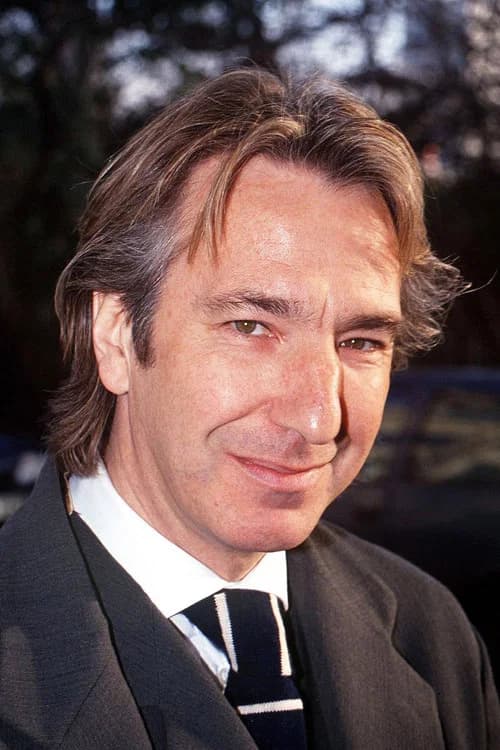
Alan Rickman
Acton
Alan Rickman could make a pause feel as carefully chosen as a line. Known for his deep voice and languid delivery, the British actor brought precision, dry wit and an undercurrent of danger to the screen—qualities that made him a natural fit for villains, without ever limiting him to them. Born in Acton on 21 February 1946, Rickman initially trained and worked as a graphic designer. He later attended RADA and built an extensive theatre career, including work with the Royal Shakespeare Company. His performance as the Vicomte de Valmont in Les Liaisons Dangereuses transferred from the West End to Broadway and earned Tony and Drama Desk nominations. Rickman’s first feature film role was also one of his defining ones: Hans Gruber in Die Hard. Opposite Bruce Willis, he gave the action thriller an antagonist whose composure was every bit as threatening as his violence. Three years later, he embraced a more extravagant strain of villainy as the Sheriff of Nottingham in Robin Hood: Prince of Thieves, winning the BAFTA Award for Best Actor in a Supporting Role. His range extended well beyond heavies. In Dogma, he played Metatron, the voice of God, bringing characteristic authority to Kevin Smith’s comedy. Love Actually placed that controlled exterior in a more painfully ordinary setting, with Rickman playing Harry, the foolish husband of Emma Thompson’s character. For a generation of viewers, however, Rickman is inseparable from Severus Snape. Beginning with Harry Potter and the Philosopher’s Stone, and continuing through Chamber of Secrets and Prisoner of Azkaban among the films featured by Please Rewind, he made the potions master severe, guarded and difficult to read. The role made particularly effective use of his ability to suggest that a character was withholding far more than he said. Rickman also worked as a film and theatre director, including directing the stage and screen versions of The Winter Guest. Across comedy, fantasy, romance and action, his performances were held together by the same exacting control—and by a voice that could turn even the simplest sentence into a scene.
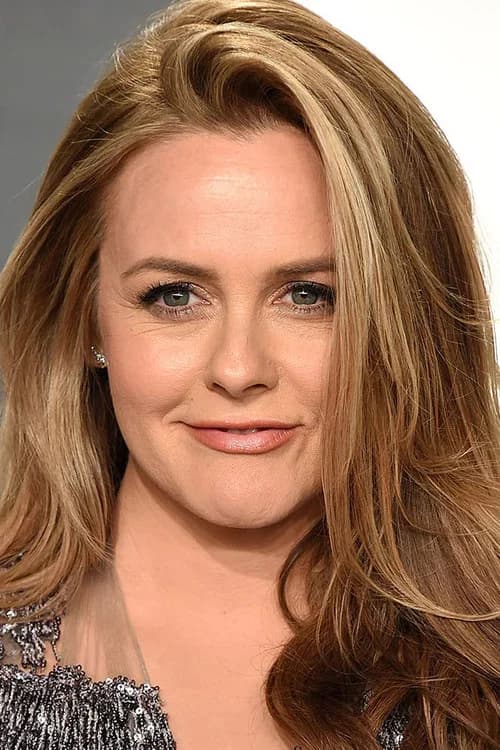
Alicia Silverstone
San Francisco
Alicia Silverstone has a screen presence built for comedy: bright, direct and able to find the intelligence inside characters who might initially seem sheltered or self-absorbed. Born in San Francisco on October 4, 1976, she began modeling at eight and later appeared in television commercials. Her first credited acting role came in a 1992 episode of The Wonder Years, followed by her film debut in The Crush. That performance earned her Best Breakthrough Performance and Best Villain at the 1994 MTV Movie Awards. Appearances in Aerosmith’s videos for Cryin’, Amazing and Crazy made Silverstone a household name, but Clueless turned that visibility into a defining movie role. Director Amy Heckerling cast her as Cher Horowitz, the sweet, spoiled Beverly Hills teenager whose confidence regularly runs ahead of her judgment. Silverstone gives Cher buoyancy without treating her as a joke, balancing the character’s comic certainty with genuine warmth. The 1995 film became both a hit and a critical favorite, and Silverstone received several honors for her performance, including Best Female Performance at the 1996 MTV Movie Awards. Two years later, she entered a very different kind of pop spectacle as Barbara Wilson, better known as Batgirl, in Batman & Robin. The film drew polarized reviews, and Silverstone’s performance received the unusual combination of a Razzie Award and a Kids’ Choice Award. It remains a vivid example of the eclectic choices that followed her breakthrough. Rather than staying in one lane, Silverstone moved among film, television, voice work and theater. She voiced Sharon Spitz in Braceface, earned a Golden Globe nomination for the television comedy Miss Match and appeared onstage in productions including The Graduate, Boston Marriage, Speed-the-Plow and Time Stands Still. Her later screen work has ranged from Amy Heckerling’s Vamps and Yorgos Lanthimos’s The Killing of a Sacred Deer to Book Club, The Baby-Sitters Club, Reptile and Y2K. Across those projects, she has remained a flexible performer, equally comfortable with broad comedy, darker material and characters whose polished surfaces conceal something messier.

Angelina Jolie
Los Angeles
Angelina Jolie has always brought a certain danger to the screen: a watchful, self-possessed quality that can turn into action without much warning. Born in Los Angeles on June 4, 1975, she trained at the Lee Strasberg Theatre Institute before beginning her professional film career. Her early difficulty with auditions—she was sometimes considered “too dark”—eventually became part of what distinguished her. Hackers (1995), her first major studio film and a breakthrough role, gave that intensity a fitting home. Playing a rare female hacker in the film’s stylised digital underground, Jolie stood apart from the ensemble. The movie struggled at the box office but later developed a cult following, making it an early example of a film finding its audience after theatrical release. By The Bone Collector (1999), she was holding the screen opposite Denzel Washington as a police officer drawn into the hunt for a serial killer. Gone in 60 Seconds (2000) placed her in blockbuster territory as a mechanic and former girlfriend of Nicolas Cage’s car thief. It was a smaller role, but one that made effective use of her cool, unforced presence. Lara Croft: Tomb Raider (2001) changed the scale. Jolie learned an English accent and undertook extensive martial-arts training to play the archaeologist-adventurer, helping establish her global reputation as an action star. She could make elaborate physical business feel direct and controlled, an ability that became central to several of her biggest films. Mr. & Mrs. Smith (2005) gave that action persona a comic edge. Opposite Brad Pitt, Jolie played one half of a bored married couple who discover that both are secret assassins. The film runs on energy, competition and the chemistry between its leads. Wanted (2008) pushed her into colder territory as a seemingly amoral assassin, a part well suited to her ability to project authority with minimal fuss. Across these films, Jolie’s appeal lies in the tension between composure and volatility. Whether behind a keyboard, investigating a crime or walking into a firefight, she rarely seems like she is waiting for the movie to catch up.
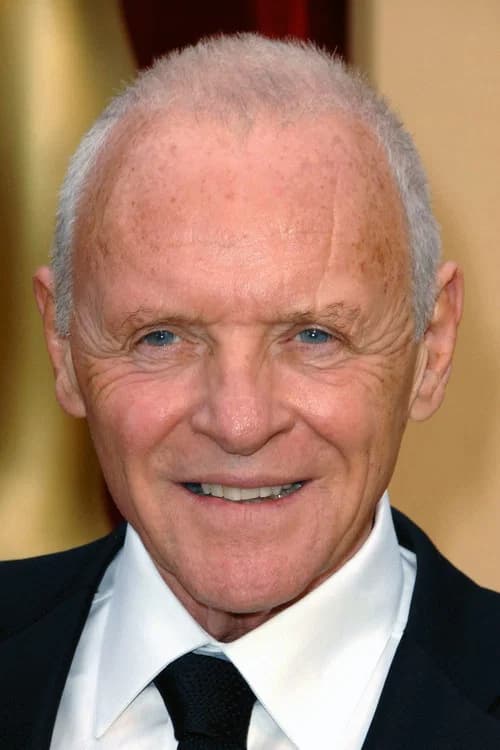
Anthony Hopkins
Port Talbot
Anthony Hopkins has the rare ability to make stillness feel like action. A measured look, a carefully placed pause or a sudden change in tone can shift an entire scene, whether he is playing a compassionate doctor, a cultured monster or a man struggling to hold on to his own reality. Born in Port Talbot, Wales, on 31 December 1937, Hopkins studied at the Royal Welsh College of Music & Drama before attending RADA. His early career was shaped by the stage, including work with the Royal National Theatre, but the precision of that training translated naturally to film and television. In David Lynch’s The Elephant Man, Hopkins plays Sir Frederick Treves opposite John Hurt. It is a performance built around observation and restraint, qualities that would become central to much of his screen work. His most famous use of that control came as Hannibal Lecter in The Silence of the Lambs. Hopkins made Lecter frightening not through constant display, but through unnerving calm and exact language. The performance won him the Academy Award and BAFTA Award for Best Actor, and he later returned to the role in Hannibal. The films featured on Please Rewind show how comfortably Hopkins could move between genres and different kinds of authority. He played Professor Van Helsing in Bram Stoker’s Dracula, appeared in the sweeping family drama Legends of the Fall, and brought his formidable presence to both The Mask of Zorro and Meet Joe Black. Mission: Impossible 2 placed that same command inside a sleek action spectacle. Hopkins’ work extends well beyond acting, with directing, writing, producing, painting and composing among his creative pursuits. His later screen career has continued to test his range: he played Pope Benedict XVI in The Two Popes and won a second Academy Award for his performance in The Father. Across these very different roles, the appeal remains consistent. Hopkins understands how much an actor can communicate before raising his voice—or saying anything at all.
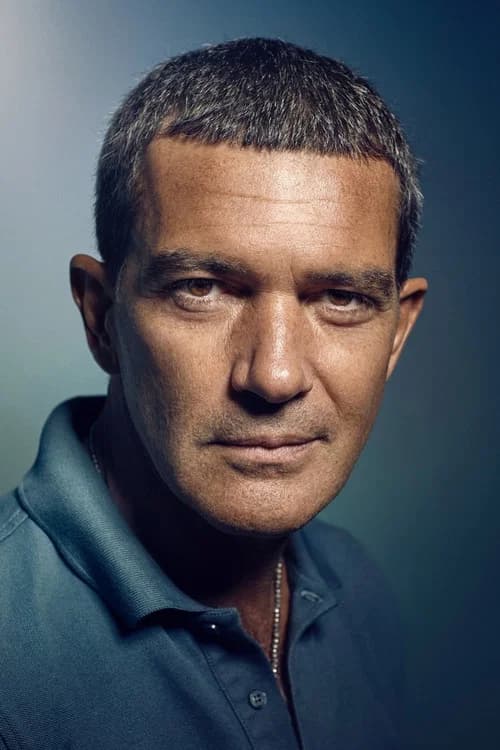
Antonio Banderas
Málaga
Antonio Banderas has built a career on movement: between Spanish and American cinema, drama and adventure, live action and animation. Born in Málaga on 10 August 1960, he initially hoped to become a professional footballer before a broken foot changed his direction. Acting studies and theatre work followed, eventually taking him from Málaga to the Spanish National Theatre and into films directed by Pedro Almodóvar. Those early collaborations, including Labyrinth of Passion, Law of Desire and Women on the Verge of a Nervous Breakdown, helped establish Banderas internationally. When he moved into American films, he initially learned English-language dialogue phonetically for The Mambo Kings. By Philadelphia, in which he played the life partner of Tom Hanks’s lawyer, he had reached a broad Hollywood audience without losing the warmth and directness that distinguished his Spanish work. The Please Rewind movies capture just how flexible his screen presence can be. Desperado turns his charisma into pure action-movie momentum, while The Mask of Zorro gives him the sweep, humour and romance of a classic masked hero. In Spy Kids, he plays retired agent and family man Gregorio Cortez, bringing the same action credentials into Robert Rodriguez’s colourful children’s adventure. Shrek 2 then lets him send up that swashbuckling image as the voice of Puss in Boots, a role built around charm, theatricality and comic timing. Banderas has repeatedly returned to the stage and to Spanish-language work. His reunion with Almodóvar in The Skin I Live In offered a colder, more calculating role, while Pain and Glory drew on a quieter, more reflective side of his acting. That performance won the Cannes Film Festival Award for Best Actor and brought him his first Academy Award nomination for Best Actor. His career is unusually broad without feeling disconnected. Whether carrying a sword, playing a spy, voicing an animated cat or working through one of Almodóvar’s emotionally complicated stories, Banderas understands how to make movie-star presence serve the character rather than replace it.
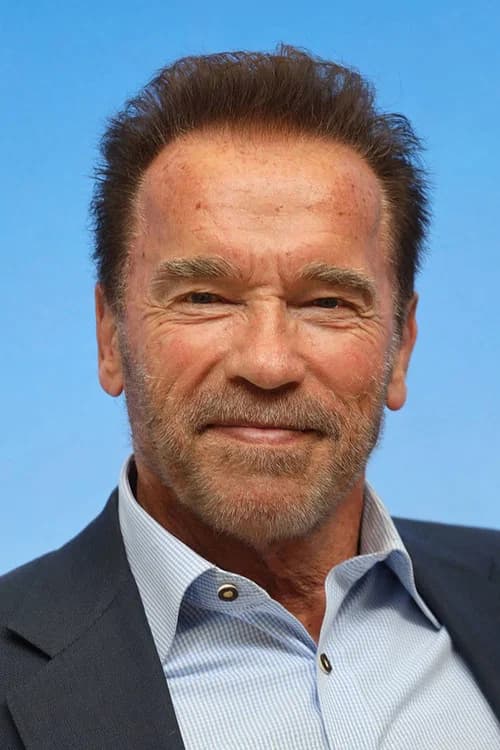
Arnold Schwarzenegger
Thal, Styria, Austria
Arnold Alois Schwarzenegger was born on July 30, 1947, in Thal, near Graz, in Styria, Austria. He moved to the United States in 1968 to pursue bodybuilding and film, becoming a naturalized U.S. citizen in 1983. By then, he had already won five Mr. Universe titles and seven Mr. Olympia titles, achievements that made physical presence an unavoidable part of his screen identity. His first feature-film credit came under the name Arnold Strong in Hercules in New York in 1969. The bodybuilding documentary Pumping Iron raised his public profile in 1977, but Conan the Barbarian provided the breakthrough leading role in 1982. Conan the Destroyer followed in 1984, the same year Schwarzenegger took the title role in James Cameron’s The Terminator. That performance became the defining part of his movie career: controlled, imposing and built around an economy that suited him perfectly. The films that followed turned that presence in several directions. Commando, Raw Deal, Predator, The Running Man and Red Heat kept him at the centre of forceful 1980s star vehicles, while Twins and Kindergarten Cop showed how effectively his scale and seriousness could be used for contrast. Total Recall, directed by Paul Verhoeven, placed him in another ambitious science-fiction world before Terminator 2: Judgment Day reunited him with Cameron in 1991. Schwarzenegger’s 1990s work included Last Action Hero, True Lies, Eraser and Batman & Robin. True Lies marked another major collaboration with Cameron, while Terminator 3: Rise of the Machines brought him back to his signature series in 2003. Across these movies, his appeal comes from more than sheer size: he can make restraint feel threatening, spectacle feel direct and a deliberately straight-faced performance carry its own humour. His career also moved beyond acting. Schwarzenegger was elected in California’s 2003 gubernatorial recall election and served as the state’s 38th governor from November 17, 2003, until January 3, 2011.
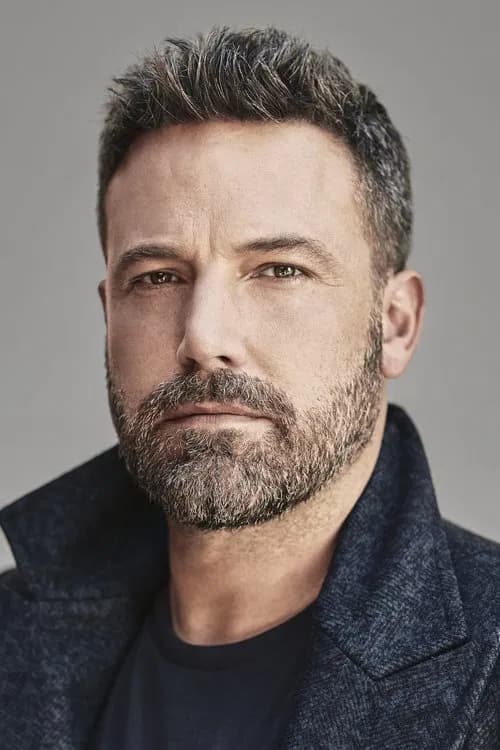
Ben Affleck
Berkeley
Ben Affleck’s career has moved between scrappy comedy, studio spectacle, superhero movies and filmmaking of his own, but his screen presence has often worked best when confidence is allowed to crack around the edges. Born in Berkeley, California, on August 15, 1972, and raised largely in Cambridge, Massachusetts, he began acting professionally as a child before building a run of smaller film and television parts. Several of those early appearances sit on the Please Rewind shelf, including Field of Dreams, Buffy the Vampire Slayer and Dazed and Confused. In Richard Linklater’s 1993 film, Affleck played a high-school bully, a role that made useful dramatic capital out of his imposing build while leaving room for the liveliness Linklater saw in him. Mallrats gave him another bully to play, but his collaboration with Kevin Smith soon opened up more interesting territory. Chasing Amy became Affleck’s acting breakthrough, with his ease and comic timing carrying a more complicated romantic lead. That same year, Good Will Hunting changed the shape of his career. Affleck co-wrote the screenplay with Matt Damon and played the loyal working-class friend of Damon’s gifted central character. The pair won the Academy Award for Best Original Screenplay, making Affleck, at 25, the youngest writer ever to win an Oscar for screenwriting. Armageddon then pushed him firmly into Hollywood leading-man territory as a blue-collar driller recruited for a planet-saving mission. He returned to Smith’s particular blend of argument, irreverence and friendship in Dogma, playing one of its fallen angels, and later joined the self-parody of Jay and Silent Bob Strike Back. Daredevil placed him behind the mask as blind superhero Matt Murdock, though Affleck later described it as the only film he regretted making. His career subsequently expanded well beyond acting into screenwriting, producing and directing. That wider perspective helps explain the unusual shape of his filmography: Affleck can look completely at home in a blockbuster, but his most revealing work often finds the uncertainty beneath the movie-star exterior.
Ben Stiller
New York City
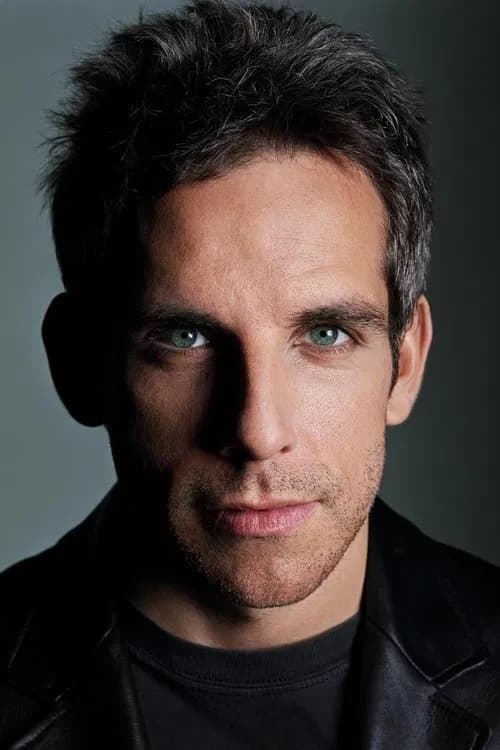
Ben Stiller has built a career around characters who want to appear in control even as the situation slips rapidly beyond them. His gift for tightly wound frustration, social discomfort and straight-faced absurdity made him a defining presence in American screen comedy, while his work as a writer, producer and director gave him room to shape the joke from both sides of the camera. Born in New York City on November 30, 1965, Stiller grew up around performance. His parents, Jerry Stiller and Anne Meara, were actors and comedians, and he began making Super 8 movies with his sister and friends. That early interest in filmmaking developed alongside sketch comedy, including writing and performing on Saturday Night Live and creating two television series titled The Ben Stiller Show. His film appearances stretch back to Empire of the Sun and Next of Kin, but the late 1990s brought the comic roles that established his particular screen persona. He made a brief appearance as the sadistic nursing-home orderly Hal L. in Happy Gilmore, directed and appeared in The Cable Guy, and starred opposite Cameron Diaz in There’s Something About Mary. In Meet the Parents, his performance as nurse Greg Focker turned escalating embarrassment into the entire engine of the movie. Stiller’s comedy can be broad without becoming careless. Zoolander, which he directed and starred in as male model Derek Zoolander, lets vanity and foolishness collide with total commitment. DodgeBall: A True Underdog Story gave him another outsized comic character, while Madagascar introduced him to animated voice acting. Night at the Museum placed his anxious energy inside a large-scale family adventure. That combination of performer and filmmaker came together especially clearly in Tropic Thunder. Stiller directed, co-wrote, co-produced and starred in the film, developing a Hollywood satire from a premise he had first conceived while working on Empire of the Sun. Across these movies, he remains equally comfortable as the overwhelmed ordinary man and the absurdly confident fool—and often finds the funniest point somewhere between them.
Bill Murray
Wilmette
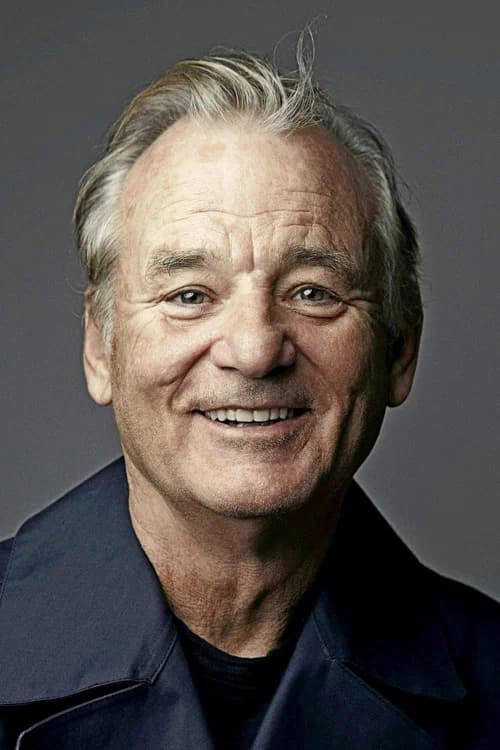
Bill Murray has built a screen career around a rare kind of unpredictability: he can seem detached from the action while quietly controlling its comic rhythm. Born on September 21, 1950, in Wilmette, Murray came through Chicago’s Second City before joining Saturday Night Live in 1976. His first starring film role arrived with Meatballs, but Caddyshack and Stripes helped establish the dry, mischievous presence that would become central to his work. That presence found its ideal blockbuster setting in Ghostbusters. As Peter Venkman, Murray brought a relaxed irreverence to supernatural chaos, later returning for Ghostbusters II. Scrooged gave his comic abrasiveness a darker holiday setting, while his cameo in Little Shop of Horrors showed how effectively he could disrupt a movie in only a few scenes. Tootsie, meanwhile, placed him inside a sharp ensemble rather than making him the centre of the machinery. Murray’s filmography has also made room for sly supporting appearances and playful versions of himself. He appears in Tim Burton’s Ed Wood, turns up as himself in Space Jam and joins the glossy action-comedy world of Charlie’s Angels. Those roles make good use of the sense that Murray might wander into almost any movie and immediately alter its temperature. Lost in Translation revealed how naturally his restraint could carry drama. Playing ageing movie star Bob Harris opposite Scarlett Johansson, Murray lets loneliness, resignation and humour coexist without forcing any of them. The performance earned him a BAFTA, a Golden Globe and an Independent Spirit Award, and it remains a key example of the emotional weight behind his understated style. Across comedy, drama, voice work, writing, producing and occasional directing, Murray’s career has resisted a single neat category. The connecting thread is his ability to make stillness funny, cynicism revealing and even the strangest detour feel entirely at home.
Bill Paxton
Fort Worth
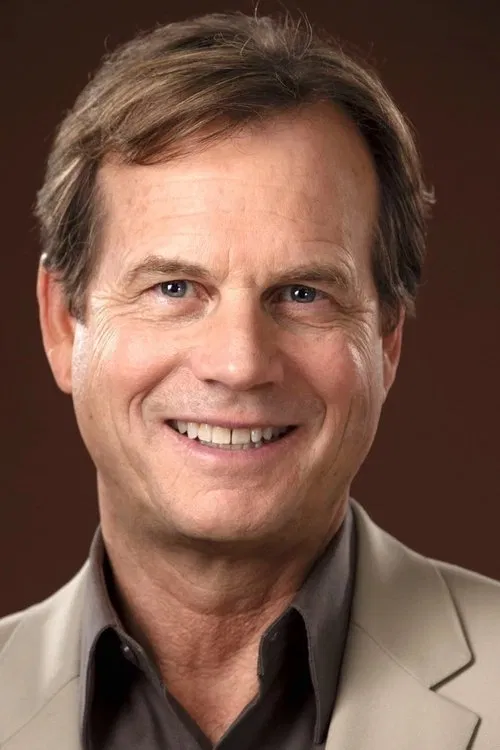
Bill Paxton brought nervous energy, rough-edged humour and an unmistakably human presence to movies that often operated on a massive scale. Born in Fort Worth on May 17, 1955, he became an actor and filmmaker whose career moved easily between science fiction, horror, westerns, action pictures, historical drama and television. His early screen work included a soldier in Stripes and smaller appearances in Streets of Fire and Commando, but Weird Science and Aliens gave him roles with considerably more room to make an impression. As bullying older brother Chet Donnelly in Weird Science, Paxton pushed comic unpleasantness to absurd extremes. As Private Hudson in Aliens, he turned panic, bravado and gallows humour into the reactions of a man who suddenly understands just how bad the situation is. Near Dark offered another memorable change of temperature. Playing Severen, the most psychotic member of the film’s vampires, Paxton supplied the neo-western horror story with a wild, dangerous charge. Predator 2 and True Lies kept him close to muscular genre filmmaking, while Tombstone cast him as Morgan Earp. The scale widened further in the mid-1990s. Paxton played astronaut Fred Haise in Apollo 13 and storm chaser Bill Harding in Twister, finding grounded character work inside two technically ambitious productions. His appearance in Titanic continued a long-running collaboration with director James Cameron that had also included Aliens and True Lies. Paxton’s work was not limited to acting. He directed the feature films Frailty, in which he also starred, and The Greatest Game Ever Played, and his occupations also included producing and screenwriting. On television, his lead performance in Big Love earned three Golden Globe nominations, while Hatfields & McCoys brought an Emmy nomination. Across the movies collected by Please Rewind, Paxton is rarely doing the same thing twice. Whether frightened, funny, threatening or steady under pressure, he had a gift for making spectacle feel personal.
Bill Pullman
Hornell
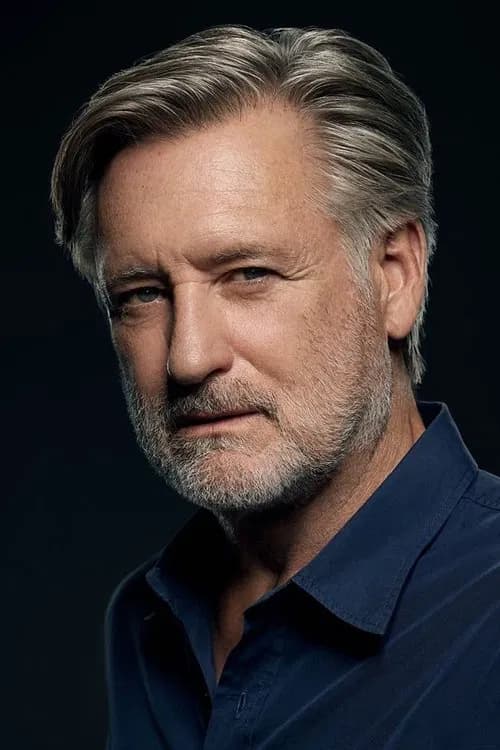
Born in Hornell, New York, in 1953, Bill Pullman took a route to the screen that began with serious theatrical study. He earned a theater studies degree from SUNY Oneonta and an MFA from the University of Massachusetts Amherst, then taught theater at SUNY Delhi and Montana State University. During the 1980s, he worked primarily with theater companies in New York and Los Angeles before moving into film. His first prominent movie role came in the 1986 comedy Ruthless People, followed by one of his most recognizable comic performances: Lone Starr in Mel Brooks’s Spaceballs. Pullman’s dry delivery and grounded presence made him a useful counterweight to that film’s broad science-fiction parody. The Serpent and the Rainbow soon placed him in much darker territory, establishing the range that would become a defining part of his career. Pullman appears across several movies revisited by Please Rewind, including A League of Their Own, Sleepless in Seattle and Casper. Together, they show how comfortably he could move between ensemble comedy, romance and family fantasy without forcing himself to the center of every scene. He later played the President of the United States in Independence Day and took a major role in David Lynch’s Lost Highway, two sharply different films released only a year apart. Theater has remained an important part of Pullman’s work. He appeared in Edward Albee’s The Goat, or Who Is Sylvia? and later Peter and Jerry, earning Drama Desk Award nominations for both performances. He also starred on Broadway in David Mamet’s Oleanna and wrote the play Expedition 6. On television, Pullman played President Dale Gilchrist in the comedy 1600 Penn and detective Harry Ambrose across four seasons of The Sinner. Whether playing authority, uncertainty or deadpan comedy, he has built a career around a screen presence that can feel dependable one moment and intriguingly unsettled the next.
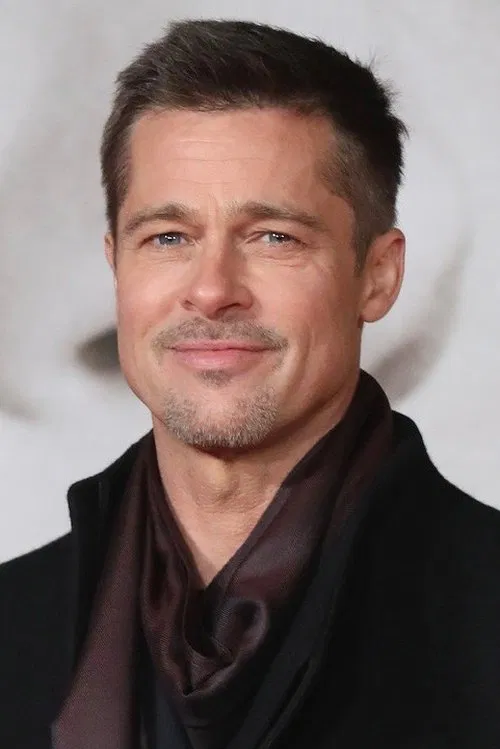
Brad Pitt
Shawnee
Brad Pitt has built a film career around the tension between movie-star ease and a willingness to look strange, foolish or dangerous on screen. Born William Bradley Pitt on December 18, 1963, in Shawnee, Oklahoma, he studied journalism at the University of Missouri before leaving shortly before completing his coursework and moving to Los Angeles to pursue acting. His career began in 1987 with uncredited film appearances, including Less Than Zero. Wider recognition arrived with Thelma & Louise, where his supporting turn as small-time criminal J.D. made considerable use of his easy charm. True Romance offered a very different kind of impression: a brief appearance as Floyd, a laid-back stoner who seems to occupy his own movie even while sitting on a couch. That range became central to Pitt’s screen presence. Legends of the Fall placed him firmly in leading-man territory, while Sleepers and Meet Joe Black leaned into heavier drama and romance. He could also step sideways into the oddball world of Being John Malkovich or bury his polish beneath the thick accent and black comedy of an Irish Traveller boxer in Snatch. As Rusty Ryan in Ocean’s Eleven, Ocean’s Twelve and Ocean’s Thirteen, Pitt found one of his most natural modes: relaxed, observant and quietly amused, even when a complicated heist is underway. Mr. & Mrs. Smith gave that confidence an action-comedy charge, casting him as assassin John Smith opposite Angelina Jolie’s Jane Smith. The Curious Case of Benjamin Button reunited Pitt with director David Fincher for the story of a man who ages in reverse, earning Pitt Academy Award, Golden Globe and Screen Actors Guild Award nominations. The following year, Inglourious Basterds let him push in a louder, more comic direction as Lieutenant Aldo Raine, an American resistance fighter battling Nazis in occupied France. Across these films, Pitt’s appeal lies not simply in holding the frame, but in knowing when to underplay it, disrupt it or hand the moment to the ensemble around him.
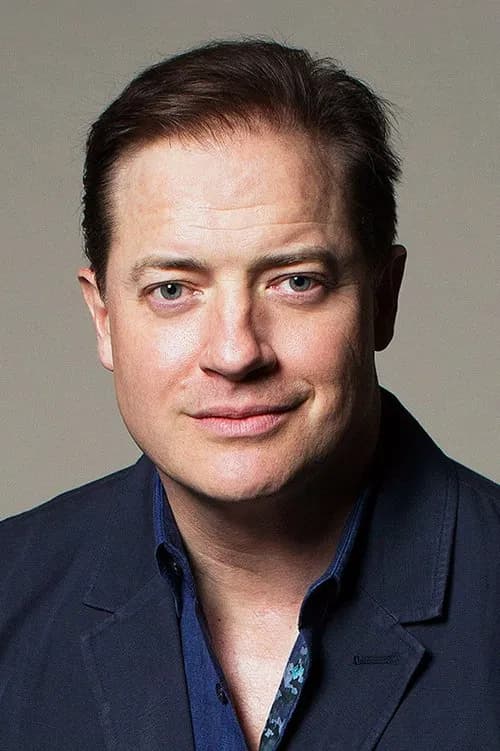
Brendan Fraser
Indianapolis
Brendan Fraser has always brought an unusual combination of physical confidence and openheartedness to the screen. He can carry broad comedy without standing outside the joke, then shift into adventure or drama while keeping the character grounded. That range shaped a career that began in the early 1990s and eventually made him one of the most recognizable leading men of his era. His first leading film role came in Encino Man (1992), playing a prehistoric caveman thawed out in the present day alongside Sean Astin and Pauly Shore. The part made immediate use of Fraser’s gift for expressive physical comedy. The film earned a cult following, and Fraser later reprised the character in cameos in Son in Law and In the Army Now. Fraser found his defining adventure role as Rick O’Connell in The Mummy (1999). As the film’s lead adventurer, he balanced action, comedy and old-fashioned movie-star charm, helping turn the fantasy adventure into his biggest commercial success. He returned as O’Connell in The Mummy Returns (2001), extending the role that established him as a major film star, and later came back for The Mummy: Tomb of the Dragon Emperor in 2008. His work was never limited to blockbusters. Fraser received critical acclaim for Gods and Monsters, appeared opposite Michael Caine in The Quiet American and joined the ensemble of Crash. His career also moved across television and voice performance, including his work as Clifford Steele, also known as Robotman, in Titans and Doom Patrol. That breadth became especially clear with The Whale. Fraser’s lead performance in Darren Aronofsky’s film won him the Academy Award for Best Actor, making him the first Canadian winner in the category. It was a dramatic recognition of qualities visible throughout his career: vulnerability, sincerity and a willingness to commit fully, whether playing a displaced caveman, a desert adventurer or a man confronting profound personal pain.
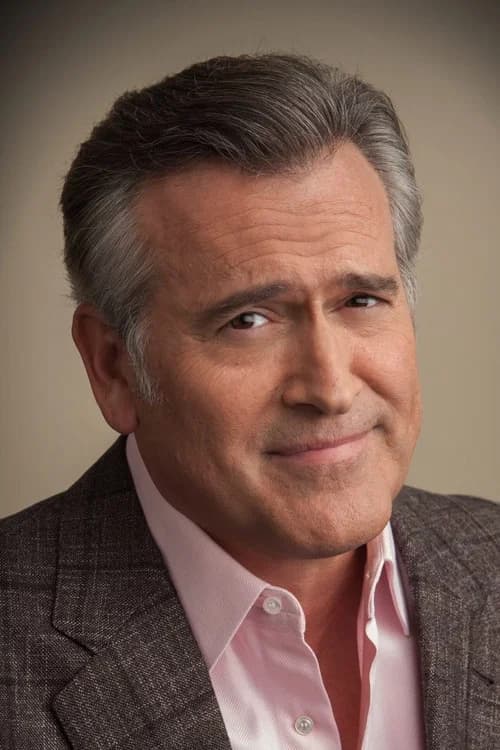
Bruce Campbell
Royal Oak
Bruce Campbell has built a career around a rare kind of screen presence: square-jawed confidence constantly undercut by chaos. Born in Royal Oak, Michigan, on June 22, 1958, he began acting and making Super 8 shorts as a teenager. His friendship with Sam Raimi became a lasting creative partnership, beginning with the short Within the Woods and continuing into The Evil Dead. Campbell starred as the protagonist of The Evil Dead and also served as a co-executive producer. The film established the combination that would define much of his appeal: horror played with physical commitment, anxious energy and an increasingly outsized sense of bravado. Evil Dead II pushed that balance further, while Army of Darkness sent Ash Williams into a broader collision of fantasy, action and comedy. Across the three films, Campbell makes panic, swagger and slapstick feel like parts of the same performance. His work with Raimi extended beyond the Evil Dead series. Campbell joined the cast of Darkman, and his wider film career included a featured role in the Coen brothers’ The Hudsucker Proxy and an appearance in Fargo. These parts fit a career that has rarely depended on conventional leading-man choices. Campbell is often at his best when a movie needs someone who can arrive with complete self-belief while still letting the audience in on the joke. That range has carried into television, voice acting, writing, producing and directing. He led The Adventures of Brisco County, Jr., played Sam Axe on Burn Notice and returned to Ash Williams in Ash vs Evil Dead. He has also voiced Ash across several video games and written books including If Chins Could Kill and Hail to the Chin. Campbell’s filmography moves freely between cult horror, studio comedy, television adventure and self-aware character work. Through it all, he has retained a recognisable style: forceful, funny and willing to look ridiculous without weakening the character.
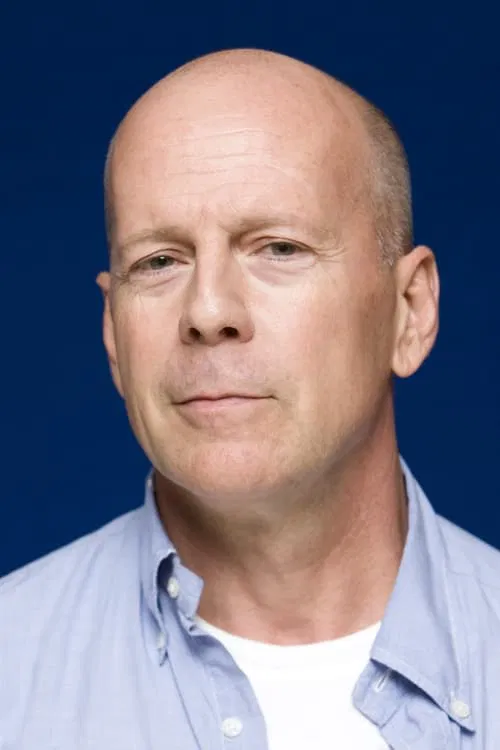
Bruce Willis
Idar-Oberstein
Bruce Willis built a screen career around a useful contradiction: he could look completely at home in the middle of chaos while still suggesting that the situation might be getting the better of him. That balance of toughness, dry humor and vulnerability helped make John McClane in Die Hard (1988) a defining action role. Willis returned as McClane in Die Hard 2 (1990), Die Hard with a Vengeance (1995) and Live Free or Die Hard (2007), carrying the character across nearly two decades of changing action cinema. Born Walter Bruce Willis on March 19, 1955, in Idar-Oberstein, West Germany, Willis established himself on television as David Addison Jr. in Moonlighting. The series showcased his comedic ability and earned him an Emmy and a Golden Globe. His work soon expanded well beyond one screen persona. The Please Rewind selection stretches from an appearance in The Verdict (1982) to the comedy of Look Who’s Talking (1989) and Death Becomes Her (1992), where his willingness to play against action-star expectations became part of the appeal. Pulp Fiction (1994) gave Willis a place in one of the decade’s defining ensembles, while The Fifth Element (1997) and Armageddon (1998) put him at the center of large-scale science-fiction spectacle. The Sixth Sense (1999) and Unbreakable (2000) drew on a quieter, more restrained side of his presence. Sin City (2005), meanwhile, found a natural fit for his weathered authority within its hard-boiled comic-book world. His range also included voice acting, from the talking baby in Look Who’s Talking to Muddy Grimes in Beavis and Butt-Head Do America (1996), as well as work as a producer, screenwriter, singer and musician. Willis retired from acting in 2022 after his family announced that he had been diagnosed with aphasia. His filmography remains unusually varied: action franchises, dark comedy, animation, science fiction and intimate supernatural drama, often connected by that unmistakably grounded, reluctant-hero energy.

Cameron Diaz
San Diego
Cameron Diaz has always been difficult to pin to a single mode. Across comedy, drama, action and animation, she brings an open, energetic screen presence that can turn playful, abrasive or emotionally raw as the movie requires. Born in San Diego on August 30, 1972, Diaz began modeling as a teenager before making her film debut in The Mask without previous acting experience. By the late 1990s, she had become a major comedy presence. There’s Something About Mary placed her at the center of an unusually unruly romantic comedy and earned her a Golden Globe nomination, while her appearance in Fear and Loathing in Las Vegas belonged to a very different strain of late-’90s filmmaking. That period also showed how readily Diaz could move away from conventional star packaging. In Being John Malkovich, she played the pet-obsessed wife of an unemployed puppeteer, a performance that brought Golden Globe, BAFTA and SAG nominations. The same year, she appeared as football team owner Christina Pagniacci in Oliver Stone’s Any Given Sunday. Charlie’s Angels gave Diaz an action-comedy showcase alongside Drew Barrymore and Lucy Liu. She then took a darker turn in Vanilla Sky as the former lover of Tom Cruise’s publishing magnate, earning further supporting-actress nominations. In 2001, she also found one of her defining voice roles as Princess Fiona in Shrek, returning for Shrek 2 in 2004. Between those animated films came Martin Scorsese’s Gangs of New York, in which Diaz played a pickpocket and grifter in the movie’s 19th-century Five Points setting. That run—from There’s Something About Mary through Being John Malkovich, Charlie’s Angels, Vanilla Sky, Shrek and Gangs of New York—captures the range that shaped her career: broad comedy without self-consciousness, heightened genre work and dramatic roles with sharper edges. After stepping away from acting following Annie, Diaz returned in the 2025 action-comedy Back in Action. She is also set to voice Princess Fiona again in Shrek 5.
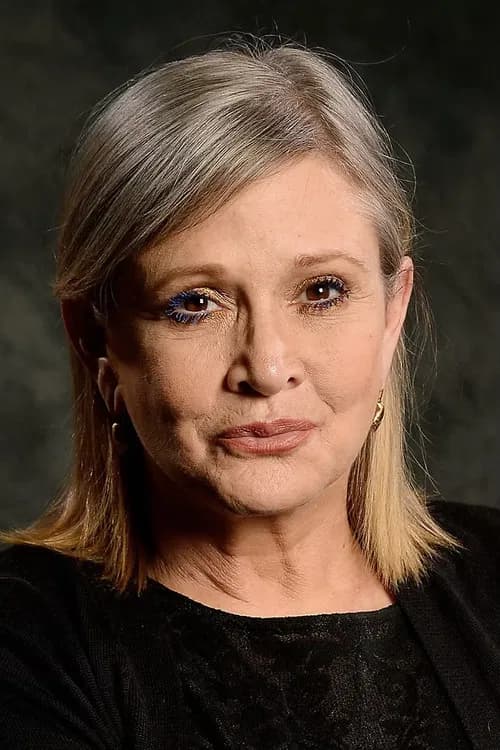
Carrie Fisher
Beverly Hills
Carrie Fisher brought a rare combination of authority, wit and impatience to the screen. Born in Beverly Hills on October 21, 1956, she began acting young and became Princess Leia in 1977’s Star Wars. By The Empire Strikes Back and Return of the Jedi, Leia had become the role most closely associated with Fisher, giving her space for resolve, humor and a welcome refusal to be sidelined. Fisher’s film career was far more varied than that single part suggests. In The Blues Brothers, she played Jake’s relentlessly vengeful ex-lover, credited simply as the Mystery Woman. She moved easily between comedy and drama throughout the 1980s, appearing in The Man with One Red Shoe and Hannah and Her Sisters before taking substantial supporting roles in When Harry Met Sally and The ’Burbs. The latter cast her as the wife of Tom Hanks’s increasingly suspicious suburbanite, with Fisher providing a grounded counterweight to the neighborhood chaos. Her 1990s work continued that taste for comedy at different levels of absurdity. She appeared in Drop Dead Fred and Hook, then played a therapist in Austin Powers: International Man of Mystery. Even in compact roles, Fisher had a knack for making exasperation feel like its own comic rhythm. Acting was only one side of her career. Fisher published her first novel, Postcards from the Edge, in 1987 and adapted it for the screen. She wrote further novels, worked for years as a script doctor and created the autobiographical one-woman show Wishful Drinking, which later played on Broadway. Her writing drew on personal experience with a directness sharpened by satire rather than softened by nostalgia. Fisher later returned to Leia in the Star Wars sequel trilogy and appeared in the comedy series Catastrophe. Across acting, novels, screenwriting and stage work, she remained a distinctive Hollywood voice: candid, funny and unusually alert to the absurdity around her.
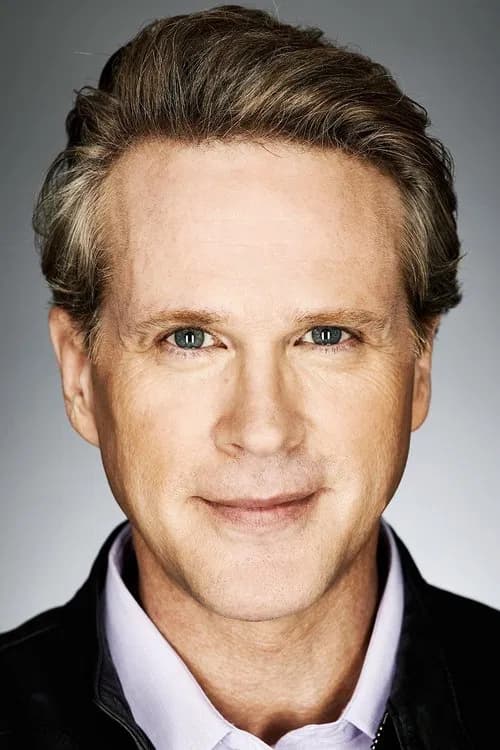
Cary Elwes
Westminster
Cary Elwes has the kind of screen presence that can move from sincere heroism to broad comedy and tightly wound horror without losing its essential poise. Born in Westminster, London, on 26 October 1962, the British actor studied at the London Academy of Music and Dramatic Art before moving to the United States in 1981 to continue his acting studies. He also worked as a production assistant as a teenager and made his acting debut in 1984’s Another Country. For many viewers, Elwes is inseparable from Westley, the stable boy turned swashbuckler at the heart of The Princess Bride. The 1987 fantasy comedy became a cult classic after its release on home video and television, and Elwes later co-wrote As You Wish: Inconceivable Tales from the Making of The Princess Bride, a memoir about the film. The part established a useful Elwes specialty: playing romantic confidence with just enough wit to keep it from becoming stiff. That quality made him a natural fit for comedy, whether appearing in Hot Shots! or taking the title role in Mel Brooks’s Robin Hood: Men in Tights. Yet his filmography around those performances shows considerable range. He appeared in Glory, played a rival driver in Days of Thunder and took a supporting role in Bram Stoker’s Dracula. Twister and Liar Liar placed him inside two very different kinds of major 1990s entertainment, one driven by disaster-movie spectacle and the other by high-energy comedy. Saw offered a much harsher showcase. As Dr. Lawrence Gordon, Elwes was central to the 2004 horror thriller’s grim locked-room ordeal, trading the relaxed charm associated with some of his earlier work for panic, suspicion and desperation. He later returned to the role in Saw 3D. Alongside film and television acting, Elwes has worked as a stage actor, voice actor, screenwriter and producer. That breadth suits a career shaped less by one fixed persona than by an ability to understand the particular tone a movie needs.
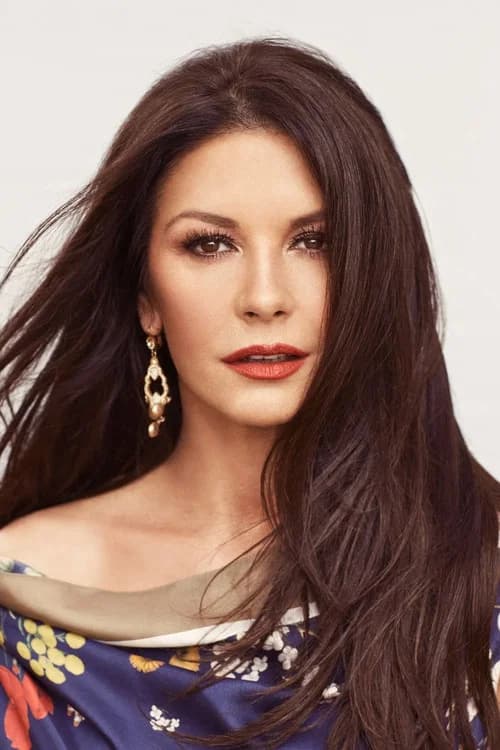
Catherine Zeta-Jones
Swansea
Catherine Zeta-Jones arrived on screen with a foundation built in dance and musical theatre. Born in Swansea on 25 September 1969, she began dance lessons as a child, appeared in the original West End production of Annie and later stepped into the lead role of Peggy Sawyer in 42nd Street. That stage training remains visible in her screen work: she carries herself with precision, understands the value of an entrance and can shift easily between physical action, comedy and musical performance. After gaining wide recognition on British television in The Darling Buds of May, Zeta-Jones found her Hollywood breakthrough as Elena in The Mask of Zorro. The 1998 adventure gave her the room to be more than a poised leading lady. Having trained in dancing, riding and sword-fighting for the part, she matched the film’s sweep with a spirited, physically assured performance. Her range became clearer over the next several years. In Traffic, she played Helena, a pregnant wife who takes control of her husband’s drug business after his arrest. Chicago then brought her stage and screen instincts together in the role of nightclub singer Velma Kelly. Her performance earned the Academy Award, BAFTA Award and SAG Award for Best Supporting Actress. Two Please Rewind films from 2004 show different sides of her appeal. Steven Spielberg’s The Terminal cast her as an insecure flight attendant, allowing vulnerability to sit beneath her polished presence. In Steven Soderbergh’s Ocean’s Twelve, she played Europol agent Isabel Lahiri, fitting comfortably into the film’s sleek European heist machinery while bringing her own authority to its crowded ensemble. Zeta-Jones has continued moving between film, theatre and television rather than staying in one lane. Her Broadway performance in A Little Night Music earned Tony and Drama Desk awards, while later screen roles have included Olivia de Havilland in Feud, Dr. Vivian Capshaw in Prodigal Son and Morticia Addams in Wednesday. Across those shifts, the through line is control: she knows when to play a role broadly, when to hold something back and how to make elegance feel like part of the character rather than decoration.
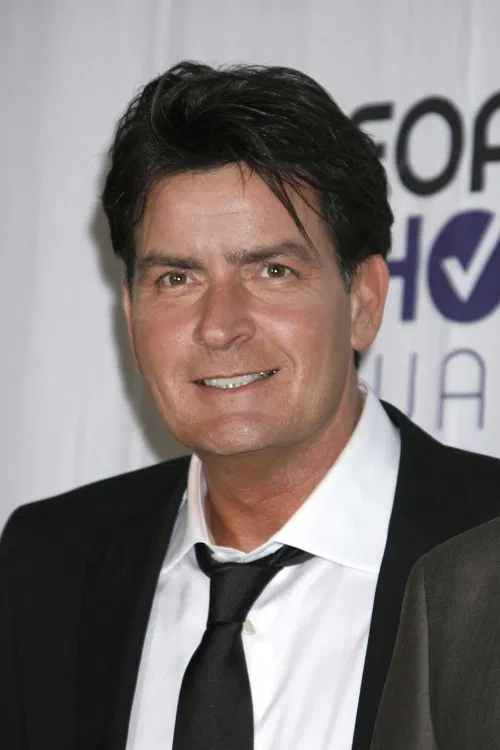
Charlie Sheen
New York City
Charlie Sheen has built a screen career around a useful tension: he can play the earnest young man entering a dangerous world, or the confident wise guy who already thinks he owns it. Born Carlos Irwin Estévez in New York City on September 3, 1965, he grew up in an acting family and began making amateur Super 8 films while attending Santa Monica High School. After leaving school, he adopted the stage name Charlie Sheen and pursued acting full time. His early film work moved quickly through several defining 1980s genres. After appearing in the Cold War drama Red Dawn, Sheen made an outsized impression during a brief police-station scene in Ferris Bueller’s Day Off and took a supporting role in the coming-of-age drama Lucas. Platoon provided his breakthrough, placing him at the center of Oliver Stone’s Vietnam War film. He reunited with Stone for Wall Street, playing Bud Fox, an ambitious young stockbroker drawn into a far more ruthless game. That intensity did not lock Sheen into one mode. In 1988, he joined two very different ensembles, portraying baseball player Happy Felsch in Eight Men Out and regulator Richard M. Brewer in the western Young Guns. His own background as a high-school pitcher and shortstop added an interesting connection to the baseball roles. Major League then gave him one of his best-known characters, hard-throwing closer Ricky “Wild Thing” Vaughn. Sheen’s straight-faced delivery proved especially well suited to parody. As the ace pilot at the center of Hot Shots!, he treated every absurdity with exaggerated seriousness, letting the comedy build around him. Later appearances found him playing a fictional version of himself in Being John Malkovich and returning to spoof territory in Scary Movie 3. Television became a major part of his career after he joined Spin City, followed by his long-running role as Charlie Harper in Two and a Half Men and the lead in Anger Management. Across war films, sports movies, westerns, satire and sitcoms, Sheen’s most effective performances make use of the same quality: an ability to shift between sincerity and self-aware swagger without losing his easy screen presence.

Charlize Theron
Benoni
Charlize Theron has built a career on refusing to remain in one lane. Born in Benoni, South Africa, in 1975, she first pursued modelling and trained as a ballet dancer before a knee injury closed off that path. Acting followed, with early roles showing an appetite for characters who could not be reduced to surface impressions. Her breakthrough came with The Devil's Advocate in 1997. Playing the increasingly haunted wife of Keanu Reeves's ambitious lawyer, Theron brought emotional weight to a film filled with supernatural menace and Al Pacino at full force. An appearance in Men of Honor followed in 2000, during a period in which she steadily moved between genres and directors. By The Italian Job in 2003, Theron could fit comfortably into the machinery of a studio heist movie without disappearing inside it. As safe and vault technician Stella Bridger, she joined an ensemble that included Mark Wahlberg, Edward Norton, Jason Statham, Seth Green and Donald Sutherland. That same year, she made a far more severe transformation to play serial killer Aileen Wuornos in Monster. The performance earned her the Academy Award for Best Actress, making her the first South African to win that award. Theron's later work has continued to test the limits of what audiences might expect from her. She played a mine worker confronting sexual harassment in North Country, the damaged ghostwriter at the centre of Young Adult and an overwhelmed mother in Tully. Her performance as Imperator Furiosa in Mad Max: Fury Road gave modern action cinema one of its defining protagonists, while Atomic Blonde placed her firmly at the centre of another physically demanding action film. Alongside acting across film, television and voice roles, Theron has also worked as a producer. Whether playing tightly controlled authority figures, wounded outsiders or action heroes, she brings a sharpness that makes even polished genre movies feel a little more dangerous.
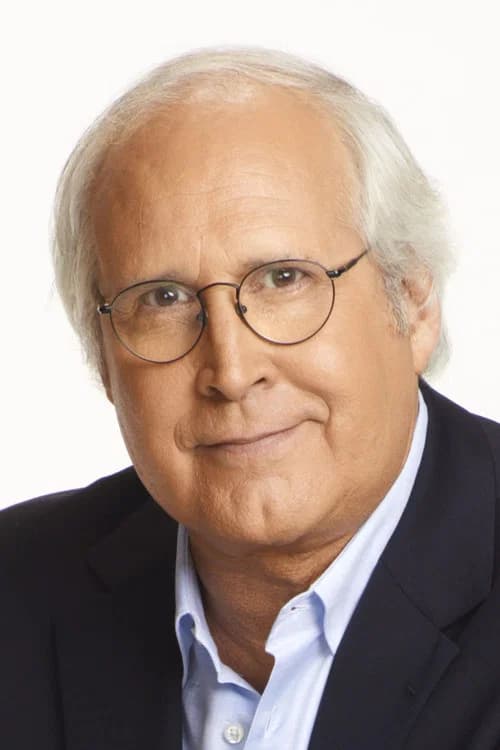
Chevy Chase
Lower Manhattan
Chevy Chase is an American actor, comedian and writer whose best-known screen work combines dry confidence, physical comedy and a knack for playing men who remain pleased with themselves while everything around them falls apart. Born in Lower Manhattan on October 8, 1943, Chase first became widely known as an original cast member of Saturday Night Live, where his pratfalls and deadpan delivery helped establish his comic persona. That persona translated naturally to the movies. In Caddyshack, Chase played the relaxed, faintly mysterious Ty Webb, while Seems Like Old Times and Modern Problems gave him further leading comedy work at the start of the 1980s. National Lampoon’s Vacation then introduced his Clark Griswold, a determined family man whose optimism tends to survive every humiliation. Chase returned as Clark in National Lampoon’s European Vacation and National Lampoon’s Christmas Vacation, with the latter becoming an especially durable part of holiday viewing. Fletch offered a different showcase. As reporter Irwin “Fletch” Fletcher, Chase could lean into disguises, verbal games and an amused distance from everyone else in the room. He returned to the character in Fletch Lives. Between those films, he appeared alongside Dan Aykroyd in Spies Like Us and joined Steve Martin and Martin Short in Three Amigos, extending a run of comedies built around clashing personalities and escalating absurdity. Funny Farm placed Chase in another story of plans going stubbornly wrong, while his later appearance in Last Action Hero connected him to a movie already busy playing with Hollywood image and genre. Across these films, Chase’s screen presence is remarkably consistent: casual, cutting and often funniest when his characters believe they have the situation under control. His comedy can be broad, but the defining touch is usually the straight face he keeps as the trouble piles up.
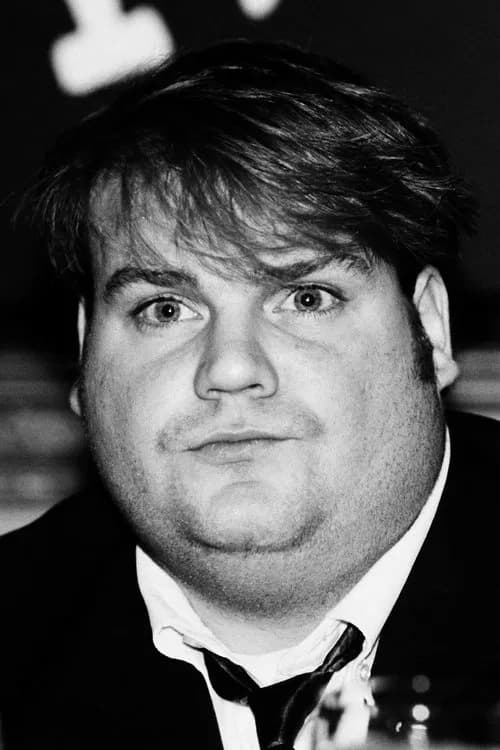
Chris Farley
Madison
Chris Farley was an American actor and comedian whose screen presence ran on total commitment. His comedy was loud, physical and often deliberately chaotic, but the force of his performances came from more than volume. Farley could make confidence and vulnerability collide in the same moment, turning embarrassment, enthusiasm and frustration into something recognizably human. Born in Madison, Wisconsin, on February 15, 1964, Farley studied communications and theatre at Marquette University, where he also discovered a love of comedy. He learned improvisation at Madison’s Ark Improv Theatre before moving into Chicago comedy, performing at Improv Olympic and joining Second City. He reached Second City’s main stage in 1989, bringing with him the physical energy and character work that would soon define his television career. Farley joined Saturday Night Live in 1990 alongside Chris Rock. Working frequently with Rock, Adam Sandler, Tim Meadows and David Spade, he developed characters including the overbearing motivational speaker Matt Foley, Bennett Brauer and the awkward host of The Chris Farley Show. The sketches gave Farley room to charge through a scene while also showing his gift for playing people who desperately wanted to connect. His film work carried that approach onto a larger canvas. Farley appears in both Wayne’s World and Wayne’s World 2, two comedies closely tied to the early-1990s Saturday Night Live generation. He also appears in Billy Madison, another meeting point for performers from that circle. Tommy Boy gave Farley one of his major film showcases, pairing him with David Spade. Their contrasting styles—Farley’s explosive openness against Spade’s dry restraint—helped shape the movie’s comic rhythm. Tommy Boy later gained a large following on home video, becoming central to Farley’s continuing appeal. His career was short, ending with his death in 1997, but these performances remain easy to return to because Farley never seemed half-present. He threw himself into the joke, and just as importantly, into the person underneath it.
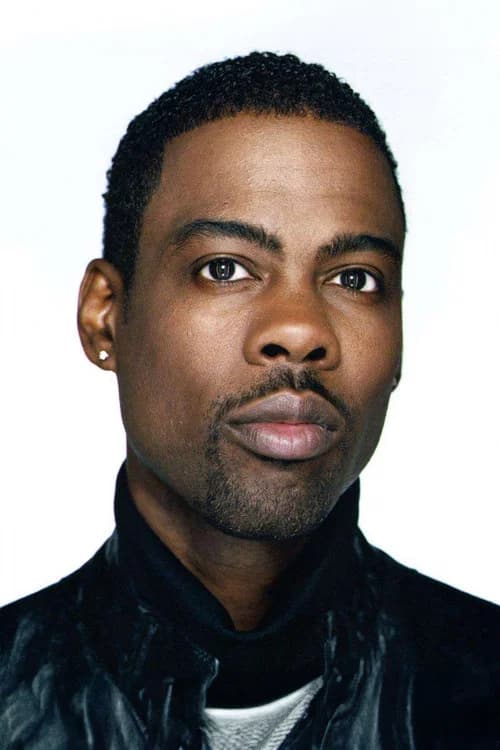
Chris Rock
Andrews
Chris Rock has built a screen career around a voice that is difficult to mistake—not just the sound of it, but the sharp, questioning comic perspective behind it. Born in Andrews, South Carolina, on February 7, 1965, he began performing stand-up in New York in 1984. Eddie Murphy later gave him his first film role in Beverly Hills Cop II, opening a career that would move between comedy, drama, animation, television and filmmaking. An early indication of Rock’s range came with New Jack City, where he played Pookie, a crack addict caught in the film’s bleak portrait of the drug trade. The role showed that his restless energy could carry pain as effectively as a punchline. By the end of the decade, he was part of the sprawling ensemble in Dogma, a fantasy comedy well suited to his talent for cutting through big ideas with direct, irreverent humor. Rock also appears in Me, Myself & Irene and A.I. Artificial Intelligence, two very different films that underline how freely he has moved across genres. His most widely recognizable screen character may be Marty, the excitable zebra he began voicing in Madagascar in 2005. The role makes full use of his verbal momentum and ability to turn nervous energy into comedy; he returned for two sequels. That flexibility reflects a career extending well beyond acting. Rock has worked as a screenwriter, director, producer, presenter and stand-up comedian. He wrote and directed Head of State and I Think I Love My Wife, starring in both, and later scripted, directed and starred in Top Five. He also created the documentary Good Hair and served as executive producer and narrator of Everybody Hates Chris, a series loosely based on his school years. Across those different forms, Rock’s screen presence remains consistent: alert, skeptical and always ready to test the assumptions in the room.
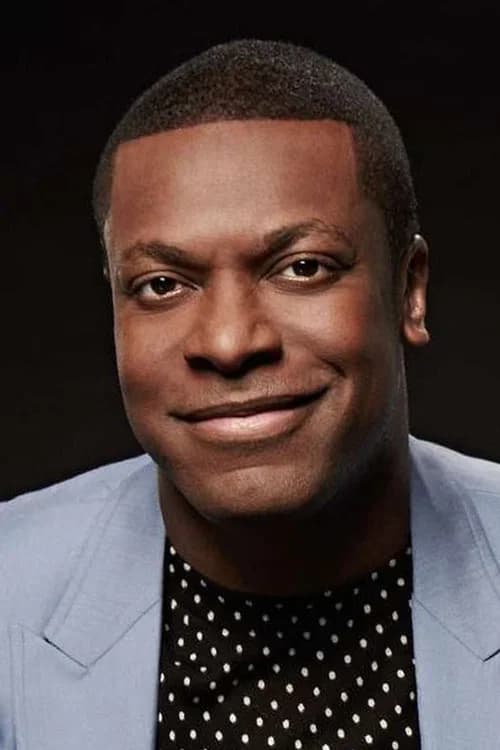
Chris Tucker
Atlanta
Chris Tucker brings the instincts of a stand-up comedian to the screen: rapid-fire delivery, elastic reactions and an ability to make nervous energy feel like its own form of momentum. Born in Atlanta on August 31, 1971, and raised in Decatur, Georgia, Tucker discovered early that humor could command a room. Richard Pryor and Eddie Murphy were among his comedy influences, and after graduating from Columbia High School, he moved to Los Angeles to pursue comedy. Tucker performed in Atlanta comedy clubs before becoming a frequent presence on HBO’s Def Comedy Jam in 1992. His film debut came in House Party 3 in 1994, but Friday gave him greater recognition the following year. As Smokey, Tucker turned talk, panic and swagger into a restless comic rhythm, helping make the character central to the film’s laid-back chemistry. His next stretch showed how well that energy could travel across genres. In The Fifth Element, Tucker pushed his performance toward flamboyant science-fiction spectacle. Money Talks followed in 1997, before Rush Hour paired him with Jackie Chan as LAPD detective James Carter. The combination of Tucker’s verbal speed and Chan’s action-comedy precision became the foundation of the series, with Tucker returning for Rush Hour 2 in 2001 and Rush Hour 3. Tucker later returned to stand-up comedy in 2011 and to film in Silver Linings Playbook the following year. He subsequently appeared in Billy Lynn’s Long Halftime Walk and portrayed Nike executive Howard White in Air. Across comedy, action and supporting dramatic work, his screen presence remains closely tied to timing: the pause before an outburst, the reaction that keeps escalating and the sense that every conversation might suddenly become a routine.
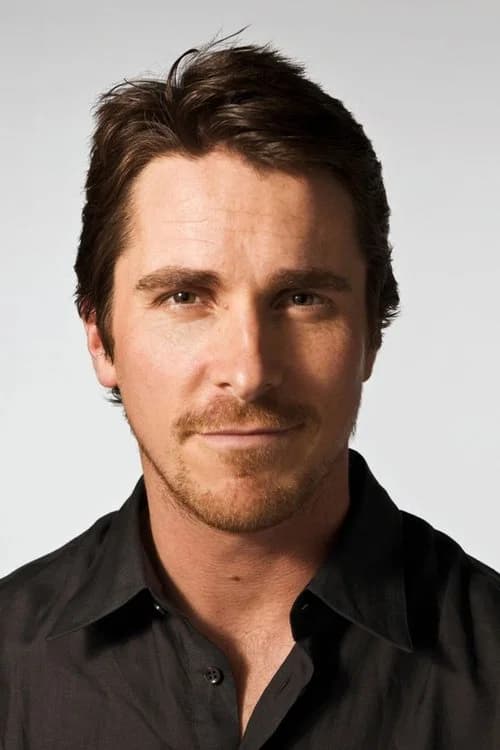
Christian Bale
Haverfordwest
Christian Bale has built a career around intensity, control and a willingness to make difficult characters compelling without smoothing away their rough edges. Born on 30 January 1974 in Haverfordwest, he began acting as a child and had no formal acting training. His early breakthrough came at 13, when he was chosen from more than 4,000 actors to play a British boy held in a Japanese internment camp in Steven Spielberg’s Empire of the Sun. That early performance was followed by an appearance in Kenneth Branagh’s Henry V, while Little Women gave Bale the role of Theodore “Laurie” Laurence. He also moved into voice acting as Thomas in Disney’s Pocahontas. Together, those films show an actor finding his footing across historical drama, literary adaptation and animation long before his adult screen persona took shape. American Psycho changed the temperature. As Patrick Bateman, Bale played narcissism, menace and absurdity in the same immaculate suit, helping the film develop a cult following and establishing himself as a leading man. Equilibrium later placed him in a futuristic society as a police officer performing the film’s fictional gun kata, a role that made strong use of his physical precision and tightly contained presence. His work with Christopher Nolan brought that combination of discipline and darkness to Bruce Wayne and Batman. Batman Begins approached the character through motivation and psychology, with Bale giving Wayne and Batman distinct voices. The Prestige reunited him with Nolan for a story about rival Victorian magicians, allowing his fierce inwardness to work in a more secretive register. Between those films and The Dark Knight, Bale also played a justice-seeking cattleman in 3:10 to Yuma, proving equally suited to dust, moral pressure and the stripped-back tensions of a western. Bale’s career has continued through dramatic transformations and sharply observed character work, including an Academy Award-winning supporting performance in The Fighter and acclaimed roles in American Hustle, The Big Short, Vice and Ford v Ferrari. Across genres, his best performances are driven by commitment rather than display: he gets inside a character’s habits, contradictions and private damage, then lets the audience decide how close it wants to stand.
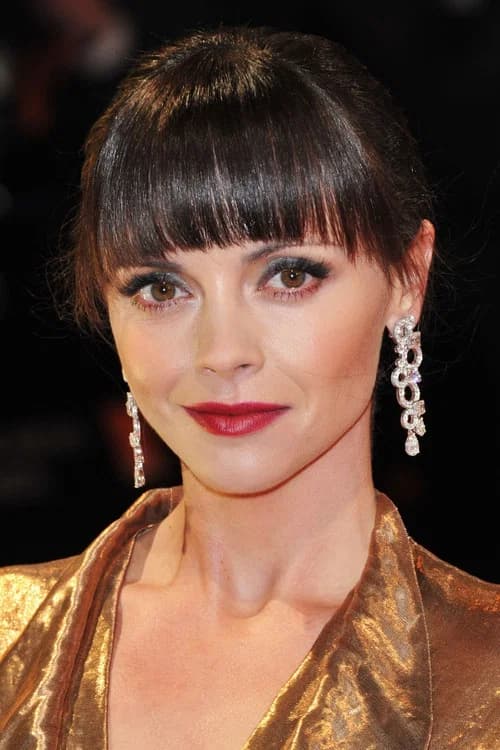
Christina Ricci
Santa Monica
Christina Ricci has built a career around characters who are difficult to overlook: outsiders, sharp observers and women with a taste for trouble. Born in Santa Monica on February 12, 1980, she made her film debut in Mermaids before finding the role that established her early screen identity. As Wednesday Addams in The Addams Family and Addams Family Values, Ricci brought a wonderfully controlled severity to a character surrounded by extravagant oddballs. Her performance in the sequel was praised for showing a depth beyond her years. She soon moved into her first leading role with Casper, playing the human half of a supernatural friendship. Those three Please Rewind movies capture the unusual assurance of her early work: even as a young performer, she could hold the frame without pushing for attention. The transition from child stardom to adult roles took Ricci toward stranger, darker material. She appeared briefly in Terry Gilliam’s Fear and Loathing in Las Vegas, then played Katrina Van Tassel in Tim Burton’s Sleepy Hollow, earning a Saturn Award for the performance. Both films suited her ability to seem entirely at home in heightened, off-centre worlds. Elsewhere, The Ice Storm demonstrated her range in more grounded drama, while her acid-tongued lead performance in The Opposite of Sex brought critical acclaim and a Golden Globe nomination. Ricci’s career has continued across film, television, theatre and voice work, with producing becoming another part of her creative life. Roles in Monster, Black Snake Moan and Penelope further showed her willingness to enter difficult or unconventional territory rather than settle into one familiar type. On television, she played Lizzie Borden in Lizzie Borden Took an Ax and The Lizzie Borden Chronicles, and later took on Misty Quigley in Yellowjackets, receiving a Primetime Emmy nomination. Her appearance as Marilyn Thornhill in Wednesday also created a neat connection to the role that first made her widely known. It is a fitting turn in a career that has repeatedly returned to the macabre while continuing to find new angles within it.
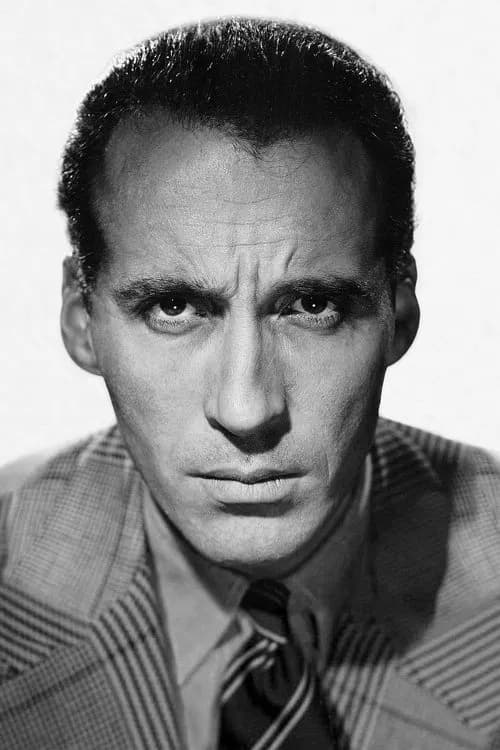
Christopher Lee
Belgravia
Christopher Lee had the kind of screen presence that could change the temperature of a scene before he said a word. Tall, imposing and equipped with an operatic bass voice, the English actor and singer became closely associated with sinister figures, yet his career was far broader than any single genre or character. Born in Belgravia, London, on 27 May 1922, Lee made his film debut in 1948’s Corridor of Mirrors. His breakthrough came through Hammer Film Productions, where he played Frankenstein’s monster in The Curse of Frankenstein and began a long screen partnership with Peter Cushing. Lee subsequently played Count Dracula ten times, bringing the vampire a brooding physicality and helping establish the commanding, dangerous persona that followed him through much of his career. Lee was never limited to Dracula. He considered The Wicker Man his best film, played the assassin Francisco Scaramanga in The Man with the Golden Gun and portrayed Muhammad Ali Jinnah in Jinnah, a performance he regarded as his finest. His work could be elegant, severe, slyly comic or quietly unsettling, often finding the person inside roles that might otherwise have been treated as straightforward villains. That range runs through the films on Please Rewind. He appears in An Eye for an Eye and provides the voice of King Haggard in The Last Unicorn, where his distinctive delivery gives the animated fantasy real dramatic weight. He also appears in Sleepy Hollow, a film whose gothic atmosphere suited his long connection with screen horror. In Star Wars: Episode II – Attack of the Clones, he plays Count Dooku, bringing old-school authority and measured menace to a new generation of blockbuster filmmaking. Lee also worked extensively as a stage, television and voice actor, as well as a singer and musician. From Hammer horror to fantasy animation and Star Wars, his career kept returning to the same essential strength: a voice, bearing and precision that made even the most fantastical character feel fully in command.
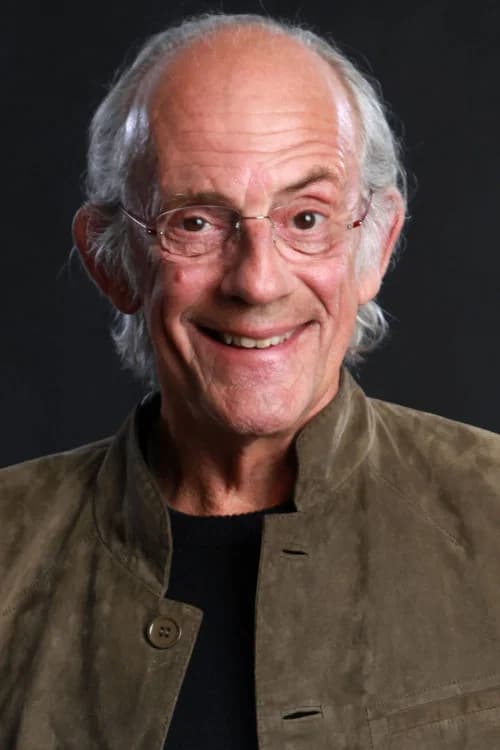
Christopher Lloyd
Stamford
Christopher Lloyd has a gift for making eccentricity feel completely purposeful. Across comedy, science fiction, fantasy and drama, he has played characters who seem to operate by their own peculiar rules—and he commits to them without winking at the audience. Born on October 22, 1938, in Stamford, Connecticut, Lloyd developed his craft in the theatre. He apprenticed at summer theatres, studied acting in New York and trained with Sanford Meisner at the Neighborhood Playhouse. After extensive stage work, his first film role came as psychiatric patient Max Taber in One Flew Over the Cuckoo’s Nest in 1975. Television audiences later knew him as Reverend Jim Ignatowski on Taxi, a performance that brought him two Primetime Emmy Awards for supporting actor in a comedy series. For movie fans, Lloyd’s defining role is Emmett “Doc” Brown, the eccentric inventor at the heart of Back to the Future and its two sequels. His restless energy, sudden shifts in volume and total belief in Doc’s impossible ideas helped give the trilogy its distinctive momentum. He later returned to the character for Back to the Future: The Game and other appearances. Lloyd’s range becomes even clearer across the films featured by Please Rewind. He played Klingon Commander Kruge in Star Trek III: The Search for Spock, the sinister Judge Doom in Who Framed Roger Rabbit and Uncle Fester in The Addams Family and Addams Family Values. He also appears in The Adventures of Buckaroo Banzai Across the 8th Dimension, Eight Men Out, The Dream Team, Mr. Mom and To Be or Not to Be. His credits extend to The Pagemaster and Anastasia, reflecting a career that also includes voice acting. That career has continued across stage, television, film and games. Lloyd appeared in The Mandalorian in 2023 and the live-action Knuckles series in 2024. Through it all, his most compelling characters share a quality: however strange the role becomes, Lloyd plays the person rather than the punchline.
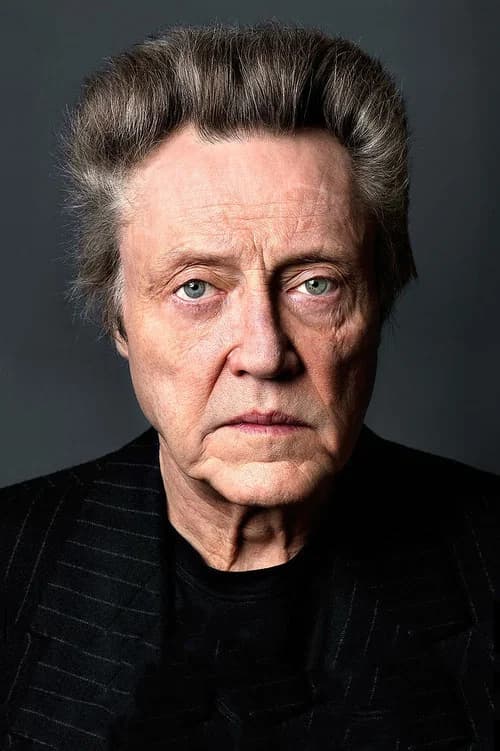
Christopher Walken
Astoria
Christopher Walken has the rare ability to make a scene feel slightly less predictable simply by entering it. His measured delivery, unusual pauses and watchful presence can suggest menace, melancholy or comedy—sometimes within the same performance. That flexibility has made him a natural fit for filmmakers looking for someone who cannot be reduced to a conventional hero or villain. Born Ronald Walken in Astoria, Queens, on March 31, 1943, he worked as a child actor on television before training as a dancer and moving into dramatic stage roles and film. That performance background helps explain the physical precision beneath his distinctive screen manner. Walken can command attention while remaining almost perfectly still, but he has also repeatedly found opportunities to dance on stage, on film and in music videos. His career includes an Academy Award-winning supporting performance in The Deer Hunter and a second Academy Award nomination for playing Frank Abagnale Sr. in Catch Me If You Can. Across the Please Rewind movies featuring Walken, the range is striking. He played psychic schoolteacher Johnny Smith in David Cronenberg’s The Dead Zone, James Bond villain Max Zorin in A View to a Kill and Pennsylvania crime boss Brad Whitewood in At Close Range. Batman Returns gave him another powerful antagonist in industrialist Max Shreck. Walken could also turn a short appearance into the scene people carried away. True Romance placed him opposite Dennis Hopper, while Pulp Fiction cast him as Vietnam veteran Captain Koons. In Sleepy Hollow, he became the Headless Horseman, a role built around ferocity and physical presence rather than his familiar voice. His later appearances continued to move easily between tones: Frank Abagnale Sr.’s wounded dignity in Catch Me If You Can, Paul Rayburn’s calm authority in Man on Fire and Secretary Cleary’s dry severity in Wedding Crashers. From The Dogs of War to Wayne’s World 2, Walken’s filmography resists a single category. The constant is his control: he knows exactly how long to hold a silence and how much a small shift in rhythm can change a scene.
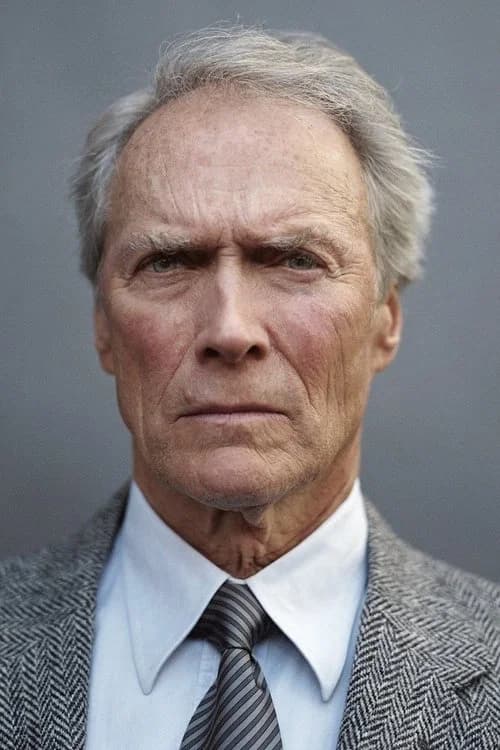
Clint Eastwood
San Francisco
Clint Eastwood has built a screen career around economy: a measured look, a clipped line and the sense that his characters have already considered every available option. Born in San Francisco on May 31, 1930, he worked several jobs before acting, then found his breakthrough as Rowdy Yates in the television western Rawhide. The Dollars trilogy turned him into a major film star, while Play Misty for Me marked his feature directorial debut and the beginning of a long career behind the camera. Eastwood’s stern presence made him a natural fit for westerns, crime stories and military dramas, but his filmography has rarely stayed in one lane for long. Any Which Way You Can pairs him with the offbeat comedy of an orangutan sidekick, while Firefox places him inside a Cold War thriller. Sudden Impact returned him to the hard edges of Harry Callahan, and Tightrope used his familiar lawman persona for something darker and more psychologically unsettled. Pale Rider brought Eastwood back to the western as a mysterious preacher who sides with threatened miners. Heartbreak Ridge cast him as a veteran Marine nearing the end of his service, combining abrasion, experience and reluctant responsibility. Those qualities would deepen with age rather than disappear. Unforgiven made that evolution central. As William Munny, an aging former gunfighter, Eastwood confronted the violence and mythology that had shaped so much of his screen image. He directed and starred in the film, which won Academy Awards for Best Picture and Best Director. In the Line of Fire followed with Eastwood as Frank Horrigan, a Secret Service agent burdened by an earlier failure. He even appeared briefly as himself in Casper. Million Dollar Baby, another film he directed and appeared in, won Best Picture and Best Director, with Eastwood playing boxing trainer Frankie Dunn. Gran Torino later gave him another weathered, difficult man whose guarded worldview is forced into contact with the people around him. Across these films, Eastwood’s restraint remains the constant, but the meaning behind it keeps changing.
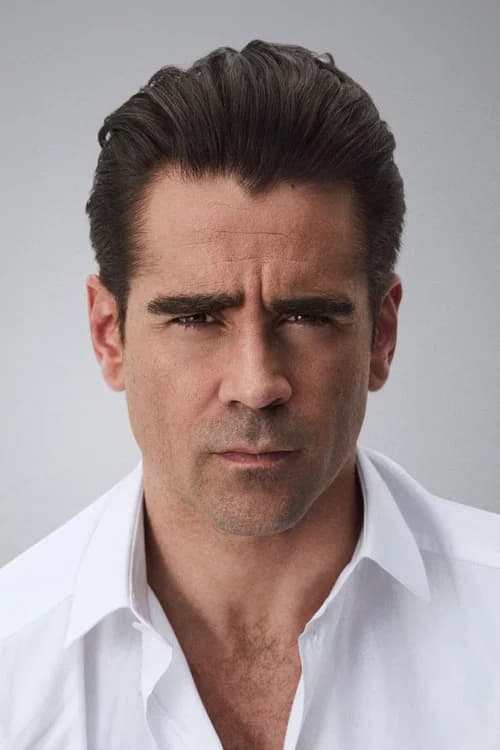
Colin Farrell
Castleknock
Colin Farrell has built a career around volatility, vulnerability and a willingness to look foolish, dangerous or wounded—sometimes within the same performance. Born in Castleknock, a western suburb of Dublin, on 31 May 1976, the Irish actor moved from early television work into film, quickly proving equally comfortable as a leading man and a sharply drawn character player. Several of his early American roles show how much ground he could cover. In Minority Report, Farrell plays the ambitious Justice Department agent pursuing Tom Cruise’s suspected future killer, bringing a cool, needling authority to the chase. Phone Booth gives him a different challenge: he spends most of the thriller onscreen, carrying its pressure through nervous energy and mounting panic. Then there is Daredevil, where he plays Bullseye with his Irish accent intact and embraces the villain’s deliberate comic-book excess. Subtlety is not the point, and Farrell clearly understands that. In Bruges revealed a richer balance of those instincts. As Ray, a hitman stranded in Belgium alongside Brendan Gleeson’s character, Farrell moves between irritation, mordant comedy and deep sadness without smoothing away the character’s uglier edges. Directed by Martin McDonagh, the film earned Farrell his first Golden Globe Award and became a defining example of his ability to make despair funny without making it weightless. That range continued across film and television. He reunited with McDonagh and Gleeson for The Banshees of Inisherin, earning a Volpi Cup, another Golden Globe and an Academy Award nomination. Elsewhere, projects including The Lobster, True Detective and The Penguin have made use of his talent for finding human uncertainty inside heightened or abrasive characters. Farrell’s screen presence does not depend on a fixed persona. He can drive a thriller, disrupt a comic-book movie or sit quietly inside a character’s regret—and each mode feels recognisably his.
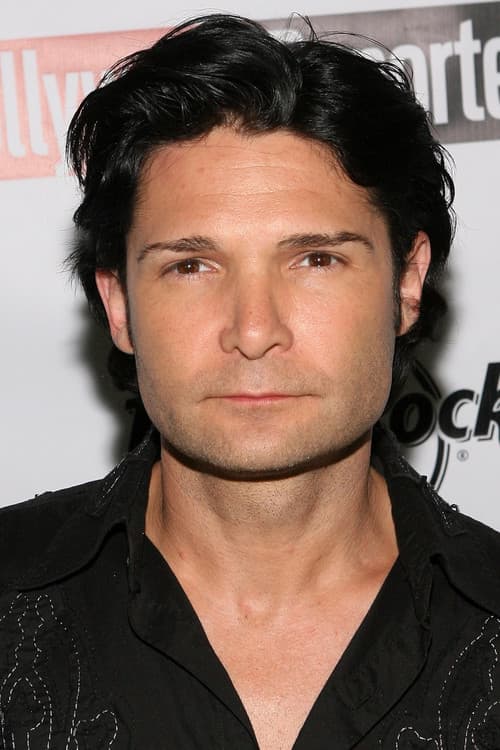
Corey Feldman
Chatsworth
Corey Feldman’s screen career is closely tied to the restless energy of 1980s movies. Born in Chatsworth on July 16, 1971, he began working at three and appeared in more than 100 television commercials and 50 television series while still young. By the middle of the decade, he had become one of the era’s best-known teen performers. The range of films from that period helps explain his lasting place in movie culture. Feldman appeared in The Fox and the Hound before moving through the horror of Friday the 13th: The Final Chapter and Friday the 13th: A New Beginning, the creature chaos of Gremlins and the adventure of The Goonies. In Stand by Me, he played Teddy Duchamp, bringing a volatile edge to a film built around friendship, vulnerability and the uneasy passage out of childhood. The Lost Boys gave Feldman another role that stuck: Edgar Frog, the young vampire hunter whose absolute seriousness is part of the joke and part of the movie’s charm. The film was also his first onscreen pairing with Corey Haim. The two became known as “The Two Coreys” and appeared together again in License to Drive and other projects. Feldman later returned as Edgar Frog in two direct-to-video Lost Boys sequels. His Please Rewind filmography also includes The ’Burbs, where his presence fits neatly into the movie’s suburban paranoia, as well as Friday the 13th Part VII: The New Blood and Maverick. Beyond acting for the camera, Feldman has worked as a voice actor, singer, composer, producer and director. He voiced Donatello in the original live-action Teenage Mutant Ninja Turtles and returned to the character for Teenage Mutant Ninja Turtles III. Feldman’s career has taken several turns across film, television, stage, reality programming and music, but his defining screen run remains unusually concentrated: a sequence of horror, adventure and coming-of-age movies that audiences continue to revisit.
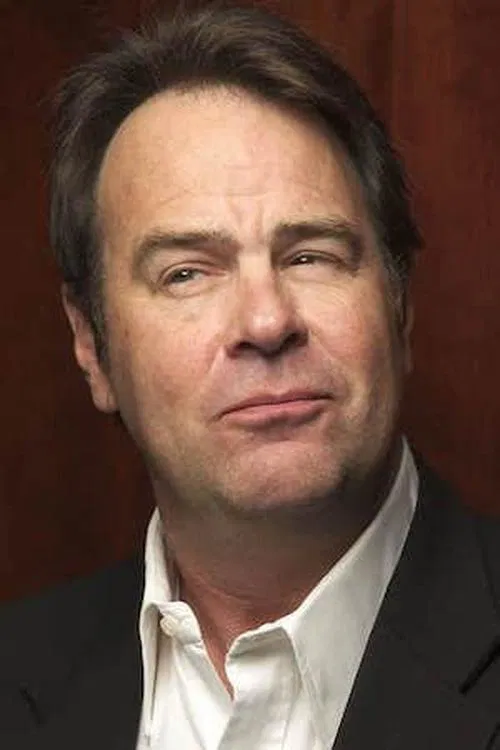
Dan Aykroyd
Ottawa
Dan Aykroyd has always brought an unusual combination of straight-faced authority and barely contained eccentricity to the screen. Born in Ottawa on July 1, 1952, the Canadian-American actor, comedian, writer and musician first built his reputation through sketch comedy. He joined the original cast of Saturday Night Live, appearing from 1975 to 1979, and received an Emmy Award for his writing in 1977. His gift was not simply for delivering jokes, but for creating characters with their own peculiar logic. That quality carried naturally into The Blues Brothers. Aykroyd played Elwood Blues opposite John Belushi and co-wrote the 1980 film, turning a musical act developed on television into a full-scale movie. In Trading Places, he played a privileged man abruptly stripped of his comfortable life, while Ghostbusters gave his fascination with parapsychology a lasting screen form. Aykroyd began the script that became the 1984 comedy, later working on it with Harold Ramis, and appeared as Dr. Ray Stantz. He returned for Ghostbusters II in 1989. His comedies often benefit from the seriousness with which he approaches absurd material. Spies Like Us and Dragnet, both co-written by Aykroyd, let him play variations on institutional confidence: men who believe in the job even when the world around them has gone sideways. The Great Outdoors paired him with John Candy, while Tommy Boy found him playing Ray Zalinsky. In Grosse Pointe Blank, he appeared as a rival hit man, giving the film another dose of cheerful menace. Aykroyd’s film work also reaches beyond broad comedy. His performance in Driving Miss Daisy earned an Academy Award nomination for Best Supporting Actor, and he appeared in the coming-of-age drama My Girl. Elsewhere on the Please Rewind movie list, his credits range from Neighbors and Indiana Jones and the Temple of Doom to Casper and 50 First Dates. Across these films, Aykroyd remains a distinctive presence: formal, energetic and entirely willing to treat the strangest premise as serious business.
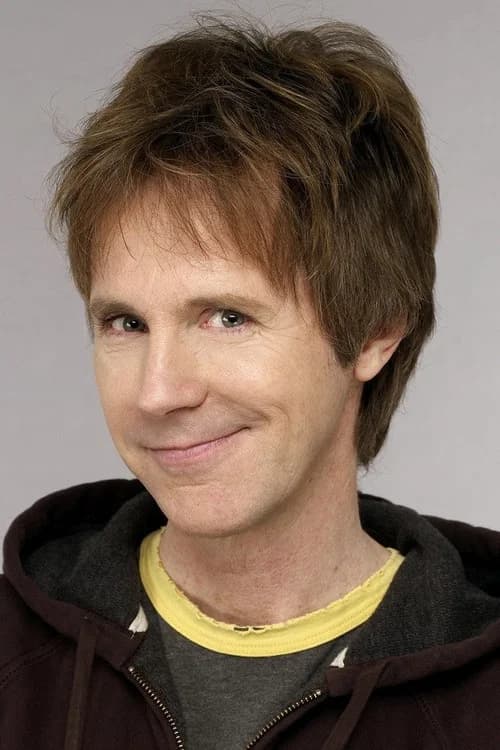
Dana Carvey
Missoula
Dana Carvey’s screen career has always made the most sense as an extension of his comedy: character-driven, impression-heavy and alert to the smallest vocal or physical detail. Born in Missoula, Montana, on June 2, 1955, Carvey won the San Francisco Open Stand-Up Comedy Competition in 1977 before beginning to find work on television and in movies. One of his earliest film appearances was a minor role in Halloween II in 1981, an intriguing footnote beside the comedy that would later define his career. His big break arrived with Tough Guys in 1986, the same year he joined Saturday Night Live. Over seven years on the show, Carvey built a remarkable collection of characters and impressions, including the Church Lady, Hans, the Grumpy Old Man and his versions of George H. W. Bush and Ross Perot. His work earned him an Emmy Award in 1993, among six Emmy nominations. Garth Algar gave Carvey his clearest route from sketch comedy to the big screen. Loosely based on his brother Brad, Garth is shy, fidgety and wonderfully peculiar, a natural counterweight to Mike Myers’ Wayne Campbell. Carvey played him in Wayne’s World in 1992 and returned for Wayne’s World 2 the following year. The performance captures what Carvey does particularly well: turning nervous pauses, clipped reactions and odd little gestures into the center of a scene. After leaving Saturday Night Live in 1993, Carvey starred in Clean Slate and Trapped in Paradise, filmed the HBO stand-up special Critic’s Choice and brought his sketch sensibility to The Dana Carvey Show. Later screen work included The Master of Disguise and voice roles in Hotel Transylvania 2 and the Secret Life of Pets films. He has also continued performing stand-up, returned repeatedly to Saturday Night Live and co-hosted the podcasts Fly on the Wall and Superfly with David Spade. Across those different formats, Carvey remains a performer whose comedy begins with close observation and becomes something distinctly, delightfully strange.
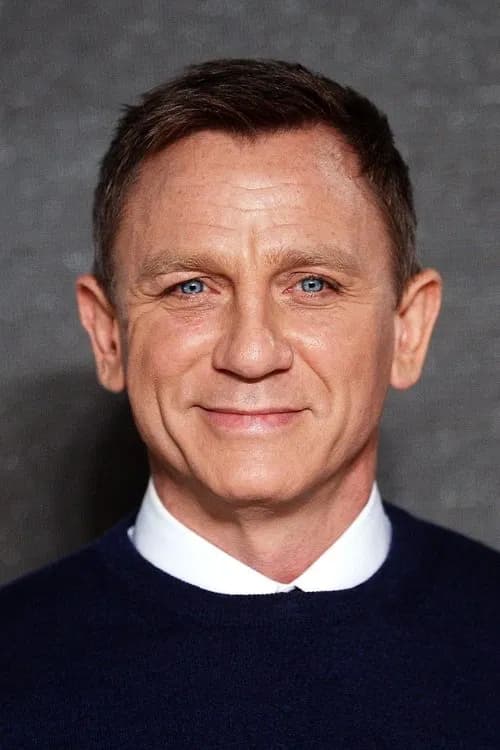
Daniel Craig
Chester
Daniel Craig brings a tightly wound intensity to the screen, whether he is playing a man in control or one whose composure is beginning to crack. Born in Chester on 2 March 1968, the English actor started performing in school plays as a child before joining the National Youth Theatre and training at the Guildhall School of Music and Drama. His first screen role came in The Power of One in 1992, followed by work across television, film and theatre. The BBC drama Our Friends in the North became an important breakthrough, while later performances showed how comfortably he could move between intimate drama and large-scale filmmaking. In Lara Croft: Tomb Raider, Craig played the love interest of Angelina Jolie’s adventurer. Road to Perdition gave him the darker role of Connor Rooney, the volatile son of a crime boss, and Steven Spielberg’s Munich cast him as a South African driver involved in a covert Israeli government mission. Craig’s career changed decisively when he became James Bond in Casino Royale. He approached the part with an emphasis on emotional depth, bringing physical force and visible vulnerability to a character often defined by polish. Quantum of Solace, one of the Craig films featured by Please Rewind, continued his tenure as Bond. He ultimately played the character across five films, ending with No Time to Die in 2021. Bond may have brought worldwide recognition, but Craig has continued to make room for less predictable work. He played investigative journalist Mikael Blomkvist in The Girl with the Dragon Tattoo, embraced comedy in Logan Lucky and found another sharply tailored detective role as Benoit Blanc in Knives Out and Glass Onion. Alongside his film career, he has repeatedly returned to the stage, including productions of Othello, Betrayal and Macbeth. Across those choices, the consistent quality is tension: Craig is especially compelling when stillness feels like something that could break at any moment.
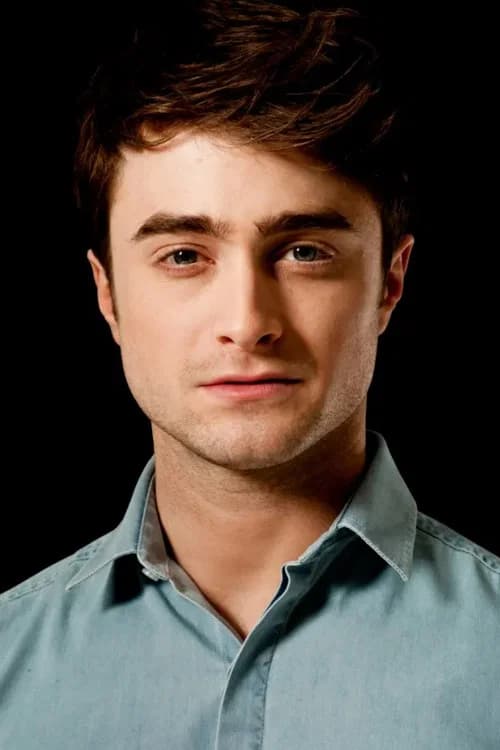
Daniel Radcliffe
Hammersmith
Daniel Radcliffe has spent much of his career testing how far an actor can travel from the role that first defined him. Born in Hammersmith on 23 July 1989, he began acting as a child, appearing in the BBC adaptation of David Copperfield before making his film debut in The Tailor of Panama. His casting as Harry Potter changed the scale of that career almost immediately. In Harry Potter and the Philosopher's Stone, Radcliffe gives the young wizard a watchful curiosity that makes the wonder of the magical world feel immediate. Harry Potter and the Chamber of Secrets builds on that openness, while Harry Potter and the Prisoner of Azkaban asks more of him emotionally as the series moves into darker territory. By Harry Potter and the Goblet of Fire and Harry Potter and the Order of the Phoenix, his performance has grown with the character: more guarded, more frustrated and increasingly aware of the weight placed on him. All five films are featured by Please Rewind. Rather than remain within the boundaries of a familiar screen persona, Radcliffe has repeatedly chosen parts that disrupt it. He moved into adult stage work with Equus, later taking the lead in the Broadway revival of How to Succeed in Business Without Really Trying. On film, The Woman in Black gave him a traditional gothic horror role, while Kill Your Darlings cast him as Allen Ginsberg. Swiss Army Man, in which he plays a talkative corpse opposite Paul Dano, shows his willingness to commit fully to an eccentric premise; Imperium placed him in the very different role of an FBI agent infiltrating a white supremacist group. His work has continued to move between film, television and theatre, including Miracle Workers, The Lost City and his performance as Weird Al Yankovic in Weird: The Al Yankovic Story. On Broadway, he played Charley Kringas in Merrily We Roll Along and won the Tony Award for Best Featured Actor in a Musical. It is a career shaped by an unusually famous beginning, but sustained by curiosity, range and a clear appetite for the unexpected.
Danny DeVito
Neptune Township
Danny DeVito has built a screen career around a rare combination of comic timing, restless energy and a willingness to make abrasive characters genuinely entertaining. Born on November 17, 1944, in Neptune Township, New Jersey, he trained at the American Academy of Dramatic Arts after working as a beautician at his sister’s salon. Early theatre work eventually led to the role of Martini in One Flew Over the Cuckoo’s Nest, which he had previously played off-Broadway. His major television breakthrough came as Louie De Palma, the domineering dispatcher on Taxi. The performance earned DeVito both a Primetime Emmy and a Golden Globe, while establishing the confrontational comic presence that would carry easily into movies. During the 1980s, he moved between supporting parts and larger comic roles, appearing in Terms of Endearment, Johnny Dangerously, Romancing the Stone and its sequel, The Jewel of the Nile. Ruthless People, Twins and The War of the Roses gave him further opportunities to play men driven by greed, resentment or sheer exasperation. DeVito has also shaped films from behind the camera. He made his feature-directing debut with Throw Momma from the Train, in which he starred alongside Billy Crystal and Anne Ramsey, then directed and starred in The War of the Roses with Michael Douglas and Kathleen Turner. His work as a producer includes Pulp Fiction, Get Shorty, Erin Brockovich and Garden State. As an actor, he can fit into heightened worlds without losing his own distinct rhythm. In Batman Returns, he played Oswald Cobblepot, better known as the Penguin, while the 1990s also brought appearances in Last Action Hero, Mars Attacks!, Space Jam and Men in Black. His voice work as Phil in Disney’s Hercules turned the familiar DeVito mix of impatience and warmth into animated form. Whether playing a schemer, a reluctant partner, a villain or a fed-up authority figure, DeVito tends to make every scene feel a little less predictable.
Danny Glover
San Francisco
Danny Glover has the kind of screen presence that can steady a drama, sharpen a thriller or give an action movie some much-needed human weight. Born in San Francisco on July 22, 1946, he worked in city administration and community development before leaving that career for the stage. He trained at San Francisco’s Black Actors’ Workshop of the American Conservatory Theater and with Jean Shelton, then moved to Los Angeles in pursuit of more acting opportunities. After making his film debut in Escape from Alcatraz in 1979, Glover began building a career notable for both its range and its sense of gravity. In Places in the Heart, Witness and Silverado, he became part of three very different films released within a short span. The Color Purple gave him a major dramatic role as Albert, the husband of Celie, played by Whoopi Goldberg. For many viewers, Glover remains most closely associated with Sergeant Roger Murtaugh in Lethal Weapon. Across Lethal Weapon, Lethal Weapon 2 and Lethal Weapon 3, his grounded, frequently exasperated presence provides the series with its emotional center and much of its humor. Predator 2 placed him at the front of another action franchise, this time with top billing, while Maverick offered a lighter variation on his established screen persona. Glover’s work has never stayed inside one genre. He moved into voice acting with The Prince of Egypt, played Detective David Tapp in Saw and appeared as Colonel Isaac Johnson in Shooter. His wider career has also included film and television production, directing and peace activism. In 1994, he co-founded Los Angeles’ Robey Theatre Company with Ben Guillory to focus on theater by and about Black people. Whether playing a weary detective, a figure of authority or a man carrying difficult contradictions, Glover brings a measured intelligence to the screen. His films reward revisiting because he rarely treats strength as something simple.
David Spade
Birmingham
David Spade has made a career out of sharp edges: clipped delivery, well-aimed sarcasm and the sense that his characters are already tired of everyone else in the room. Born on July 22, 1964, in Birmingham, Michigan, he began performing stand-up after leaving college and landed an early film role in Police Academy 4: Citizens on Patrol in 1987. Spade joined Saturday Night Live in 1990, initially as a writer before becoming a cast member. His dismissive flight attendant, cutting “Hollywood Minute” reports and other recurring characters established the comic approach that would follow him across film and television. He remained through the 1995–96 season, helping bridge the show’s former cast with newcomers including Will Ferrell, Molly Shannon and Cheri Oteri. That dry, needling presence proved an ideal counterweight to Chris Farley’s physical exuberance in Tommy Boy. Released in 1995, the buddy comedy paired two performers with radically different energies: Farley charging forward while Spade stood back, watched the damage and supplied the verbal jab. The two also starred together in Black Sheep the following year. Spade found another strong fit in voice acting as Kuzco in The Emperor’s New Groove. The 2000 Disney comedy gave him a character built for his particular rhythm—vain, impatient and quick with a dismissive remark. He later returned to the role in Kronk’s New Groove. His television work has been similarly sustained. Spade played Dennis Finch in Just Shoot Me!, joined 8 Simple Rules for its final season and starred as Russell Dunbar in Rules of Engagement. He has also written and starred in films including Joe Dirt and Dickie Roberts: Former Child Star, hosted The Showbiz Show with David Spade and Lights Out with David Spade, and continued performing stand-up. Across those different formats, his appeal remains consistent: he knows how to turn a pause, a sideways look or a short sentence into the sharpest joke in the scene.

Demi Moore
Demi Moore’s screen presence is built on a compelling balance: she can project control while keeping uncertainty close to the surface. Across the films represented on Please Rewind, that tension gives her performances a directness that works in intimate moments, crowded ensembles and sharply heightened material. In St. Elmo’s Fire (1985), Moore is part of a film whose characters are trying to work out who they are and what comes next. About Last Night... (1986) places her in another emotionally exposed setting, allowing her to bring weight to the hesitation, friction and vulnerability surrounding a relationship. Together, the two movies show how naturally she can hold the screen without smoothing away a character’s more difficult edges. Ghost (1990) draws on that same openness. Moore gives the film an emotional anchor, meeting its larger moments with a performance grounded in grief and connection. It remains a strong example of her ability to convey feeling without overplaying it. Her appearance in A Few Good Men (1992) reveals a firmer register. Surrounded by forceful personalities and verbal confrontation, Moore brings focus and resolve, holding her place in a film driven by pressure and competing convictions. The performance reinforces the sense that restraint is one of her most effective tools. Beavis and Butt-Head Do America (1996) offers a very different entry in this group of films, widening the tonal range of Moore’s work represented here. Taken together, these five movies provide a compact view of a performer comfortable moving between emotional immediacy, composure and comedy. Moore’s best moments often come from that contrast: the surface may be steady, but there is usually something more complicated moving underneath.
Dennis Quaid
Houston
Dennis Quaid has built a screen career around a useful tension: the easy grin and restless energy of a movie star, paired with a willingness to play men under pressure. Born in Houston on April 9, 1954, he studied at the University of Houston before leaving for Hollywood. Early work was difficult to secure, but appearances in Breaking Away and The Night the Lights Went Out in Georgia helped bring him wider notice. His breakthrough came as astronaut Gordon Cooper in Philip Kaufman’s The Right Stuff. Released in 1983, the film gave Quaid a role well suited to his confidence and high spirits. That same year, he took on the very different demands of Jaws 3-D. The science-fiction run continued with Dreamscape, Enemy Mine and Innerspace, three films that remain a lively demonstration of his ability to move between suspense, adventure, comedy and spectacle without losing his grounded presence. Quaid’s filmography has rarely stayed in one lane. He played Jerry Lee Lewis in Great Balls of Fire!, led the fantasy adventure Dragonheart and appeared as an aging professional quarterback in Oliver Stone’s Any Given Sunday. His performance opposite Julianne Moore in Far From Heaven brought further acclaim, including an Independent Spirit Award and a New York Film Critics Circle Award, along with a Golden Globe nomination. He also played former baseball pitcher Jim Morris in The Rookie, showing how naturally his open, direct style could fit the sports drama. In The Day After Tomorrow, Quaid brought that steadiness to large-scale disaster filmmaking. Later roles have ranged from Vice Admiral William “Bull” Halsey in Midway to a voice performance in Strange World, President Ronald Reagan in Reagan and television executive Harvey in The Substance. Across comedy, drama, science fiction, sports films and thrillers, his appeal lies less in reinvention than in adaptability: whatever the scale of the movie, Quaid tends to give it a recognizably human center.
Denzel Washington
Mount Vernon
Denzel Washington has built a screen career around authority, intensity and the sense that there is always more happening beneath the surface. Born on December 28, 1954, in Mount Vernon, New York, he studied drama and journalism at Fordham University before beginning his professional acting career. The Please Rewind movies featuring Washington trace a particularly rich stretch of that career. In Cry Freedom, he played South African anti-apartheid activist Stephen Biko, earning his first Academy Award nomination. Two years later, his performance as a Civil War soldier in Glory won him the Academy Award for Best Supporting Actor. Those films established his ability to give historical drama both weight and immediacy. His title performance in Malcolm X remains central to any discussion of his work. Reuniting with director Spike Lee, Washington brought psychological depth, intelligence and reserve to the Black nationalist leader, earning his first Academy Award nomination for Best Actor. Philadelphia then placed him in a different register as the lawyer defending a gay man with AIDS, while Crimson Tide made sharp use of his controlled intensity in a military thriller. Washington moved easily between drama, crime stories and action as his career continued. The Bone Collector put him inside a crime thriller; Remember the Titans cast him as high school football coach Herman Boone; and Training Day gave him the rare role of a villain. As corrupt Los Angeles police officer Alonzo Harris, he delivered a performance that won the Academy Award for Best Actor. The 2000s reinforced his command of thrillers without making the performances feel interchangeable. Man on Fire, Inside Man and Déjà Vu each drew on his ability to hold a film steady amid escalating tension. American Gangster returned him to crime drama on a larger canvas. Across these movies, Washington’s presence is direct and commanding, but never merely imposing: the real pull comes from watching judgment, conviction and danger shift behind his composure.
Diane Keaton
Los Angeles
Diane Keaton brought an unusual combination of nervous energy, comic timing and emotional directness to the screen. Born Diane Hall in Los Angeles on January 5, 1946, she took her mother’s maiden name after joining Actors’ Equity, since another actress was already registered as Diane Hall. Her early interest in performance was encouraged by school singing and acting clubs, and she later studied acting before pursuing a career in Manhattan. After appearing on Broadway in Hair and earning a Tony Award nomination for Play It Again, Sam, Keaton made her film debut in Lovers and Other Strangers. Her breakthrough came as Kay Adams in The Godfather, a role she reprised in The Godfather Part II and The Godfather Part III. In films that were often dominated by men, her restrained performance gave Kay a crucial perspective on the Corleone family and its costs. Comedy revealed another side of Keaton’s screen presence. Annie Hall turned her hesitations, quick shifts of thought and self-deprecating humor into the center of a romantic comedy, earning her the Academy Award for Best Actress. Yet she was never limited to one rhythm or register. In Reds, featured by Please Rewind, she played journalist and feminist Louise Bryant opposite Warren Beatty, receiving another Academy Award nomination for a performance that balanced drive, insecurity and political conviction. Keaton also makes a brief but fitting appearance as a nightclub singer in Radio Days, revisiting the singing act she had performed earlier in her career. In Father of the Bride, she plays Nina Banks, bringing steadiness and warmth to the family comedy while Steve Martin’s George struggles with their daughter’s wedding. Her career extended beyond acting into directing, including the documentary Heaven, the narrative feature Unstrung Heroes, television work and music videos. Across drama, comedy and filmmaking, Keaton repeatedly found room for women who could be anxious, independent, funny, difficult and fully engaged with the lives around them.
Dolph Lundgren
Stockholm
Dolph Lundgren arrived on screen with the kind of physical presence movies rarely need to explain. Born in Stockholm on November 3, 1957, the Swedish actor and martial artist brought genuine athletic discipline to the imposing fighters, soldiers and larger-than-life heroes that shaped his career. Before acting took over, Lundgren studied chemical engineering, earning a degree from Stockholm’s Royal Institute of Technology and a master’s degree from the University of Sydney. Alongside his academic work, he trained extensively in Kyokushin karate, attained a black belt and won European championships in 1980 and 1981. That combination of technical focus and physical control would become central to his screen persona. His film debut came in the James Bond adventure A View to a Kill, where he played KGB assassin Venz. Later in 1985, he found his breakthrough as Soviet boxer Ivan Drago in Rocky IV. Lundgren reportedly beat 5,000 other hopefuls to win the role, then trained intensively in bodybuilding and boxing. Drago’s controlled menace made economical dialogue and stillness as important as sheer size; Lundgren did not need many words to dominate a scene. His first leading role followed in Masters of the Universe, with Lundgren stepping into the fantasy world as He-Man. The role asked him to carry a different kind of spectacle: not a grounded sports antagonist, but a heroic figure drawn from a toy line and animated series. In Universal Soldier, he returned to more volatile territory as Sergeant Andrew Scott, opposite Jean-Claude Van Damme’s Luc Deveraux. Lundgren’s performance pushed his familiar military severity toward something increasingly unstable, giving the science-fiction action film a formidable adversary. Lundgren later expanded his work beyond acting, becoming a director, screenwriter and producer. He made his feature directorial debut with The Defender and subsequently directed several more films. He also returned to Ivan Drago in Creed II, playing an older version of the character who had first transformed his career. Across those decades, Lundgren’s best-known work has depended on more than muscle: it uses restraint, posture and controlled intensity to turn physical scale into screen character.
Don Cheadle
Kansas City
Don Cheadle has built a career around range, precision and an ability to sharpen an ensemble without overwhelming it. Born in Kansas City on November 29, 1964, he studied theater at the California Institute of the Arts and worked across film and television before earning wider attention in the 1990s. One of his early film roles was Rocket in Colors, the 1988 crime drama represented on Please Rewind. By 1997, he was part of the sprawling cast of Paul Thomas Anderson’s Boogie Nights, fitting naturally into a film driven by intersecting personalities and shifting fortunes. Between those appearances, his performance as Mouse Alexander in Devil in a Blue Dress brought awards from the Los Angeles Film Critics Association and the National Society of Film Critics. Cheadle later became a key player in Steven Soderbergh’s Ocean’s series. As Basher Tarr in Ocean’s Eleven, he joined an ensemble that included George Clooney, Brad Pitt, Matt Damon, Andy García and Julia Roberts. He returned for Ocean’s Twelve and Ocean’s Thirteen, bringing his own energy to three films built on chemistry, timing and the pleasure of watching accomplished performers bounce off one another. His career has also moved comfortably between serious drama, television, large-scale franchise filmmaking and work behind the camera. Cheadle received an Academy Award nomination for playing Paul Rusesabagina in Hotel Rwanda. He starred in and co-produced Crash, and later won a Golden Globe for House of Lies. Beginning with Iron Man 2, he took over the role of James “Rhodey” Rhodes, also known as War Machine, and continued playing the character across multiple Marvel films and television series. Miles Ahead brought several parts of his career together: Cheadle wrote, produced, directed and starred in the film about Miles Davis. It is a fitting example of an actor whose work has never stayed in a single lane, whether he is anchoring a drama, adding texture to an ensemble or taking greater creative control behind the camera.
Drew Barrymore
Drew Barrymore’s screen career, as represented on Please Rewind, stretches across more than two decades of movies with sharply different moods. The earliest title in that lineup is Altered States (1980), followed by E.T. the Extra-Terrestrial (1982), Firestarter (1984) and Cat’s Eye (1985). Together, those appearances established an early connection to imaginative, supernatural and sometimes unsettling material. Barrymore continued to move easily between tones. She appears in Wayne’s World 2 (1993), then in Scream (1996), a movie that turns familiarity with horror into part of the experience. The Wedding Singer (1998) brought her into a warmer comic setting, giving her space to play sincerity and humor without making either feel forced. That approachable quality would remain a key part of her screen presence. The turn of the millennium shows another side of her range. In Charlie’s Angels (2000), Barrymore fits into a fast, playful action ensemble, while Donnie Darko (2001) places her within something stranger and more ominous. Those films could hardly be mistaken for one another, yet her presence works in both: relaxed enough for broad entertainment, grounded enough for darker material. With 50 First Dates (2004), Barrymore returned to romantic comedy territory. Alongside The Wedding Singer, it demonstrates why that mode suits her so well. She can make heightened premises feel emotionally accessible, bringing an open, unaffected warmth to the screen. From science fiction and horror to comedy, romance and action, Barrymore’s Please Rewind lineup is unusually varied. What connects these movies is not a single type of role but her ability to meet each film on its own terms—sometimes playful, sometimes vulnerable, and often with a directness that makes even an unusual story feel inviting.
Dustin Hoffman
Los Angeles
Dustin Hoffman has built his screen career around transformation, discomfort and the sense that a character is thinking faster than he can explain himself. Born in Los Angeles on August 8, 1937, Hoffman initially hoped to become a classical pianist and entered Santa Monica College intending to study medicine. An acting class changed his direction, leading to training at the Pasadena Playhouse and the Actors Studio, years of theatre work and a long stretch of odd jobs while he searched for roles. His major film breakthrough came as Benjamin Braddock in The Graduate, a performance that earned him an Academy Award nomination and challenged the conventional idea of a Hollywood leading man. He followed it with the radically different Ratso Rizzo in Midnight Cowboy, establishing the character-first approach that would define his work. Hoffman later won his first Academy Award for Kramer vs. Kramer, playing a father forced to reconsider both parenthood and himself. The Please Rewind movies capture several sides of that range. In Tootsie, Hoffman plays Michael Dorsey, a struggling actor who disguises himself as a woman to secure a soap-opera role. The comedy depends on precision, but Hoffman keeps the character's vulnerability and ambition in view beneath the complications. Rain Man offered a very different challenge: as Raymond Babbitt, an autistic savant, he created a carefully physical performance opposite Tom Cruise and won his second Academy Award. Hoffman could also bring his intensity into broader entertainment. His title-role performance in Hook turns Captain Hook into a theatrical bundle of vanity, menace and comic frustration. He later appeared in the revenge drama and legal thriller Sleepers, while Being John Malkovich placed him within one of the stranger American films of the late 1990s. Across comedy, drama and large-scale studio filmmaking, Hoffman has repeatedly resisted settling into one screen identity. Whether playing an anxious young man, a desperate actor, a difficult father or an extravagant pirate, he approaches the part from the inside out—and makes the character's contradictions the main attraction.
Ed Harris
Englewood
Ed Harris brings a particular kind of authority to the screen: direct, tightly controlled and often carrying more pressure than his characters care to show. Born in Englewood, New Jersey, in 1950, Harris began his career onstage before moving into film and television. His early movie work included the lead role of Billy Davis in George A. Romero’s Knightriders and a smaller part in Romero’s Creepshow. The Right Stuff gave Harris one of his defining early roles as astronaut John Glenn. It established how naturally he could play figures shaped by discipline and responsibility without reducing them to simple symbols. Places in the Heart followed, while Field of Dreams used his voice in one of the film’s most mysterious elements. In James Cameron’s The Abyss, Harris played Bud Brigman, a demanding role at the center of an intense science-fiction drama. That combination of force and restraint made Harris a natural fit for sharply drawn supporting parts. He played Dave Moss in Glengarry Glen Ross, appeared in The Firm and earned an Academy Award nomination for portraying NASA flight director Gene Kranz in Apollo 13. As General Francis Hummel in The Rock, he brought conviction and gravity to an action-movie antagonist who might otherwise have been far less interesting. Harris continued moving comfortably between large-scale productions and character-driven drama. He appeared in A Beautiful Mind and played German sniper Major Erwin König in Enemy at the Gates, then brought a stern adversarial presence to National Treasure: Book of Secrets as Mitch Wilkinson. His work has never been limited to acting. Harris made his feature directing debut with Pollock, starring as painter Jackson Pollock and receiving an Academy Award nomination for Best Actor. He later co-wrote, directed and starred in the western Appaloosa. Across these films, his appeal remains consistent: Harris can command a scene without crowding it, finding the tension inside men accustomed to being listened to.
Eddie Murphy
Brooklyn
Eddie Murphy has spent his screen career moving between fast-talking comedy, action, character work and animation without losing the lively comic presence that first brought him national attention. Born in Brooklyn on April 3, 1961, Murphy began performing comedy as a teenager and broke through as a cast member on Saturday Night Live in the early 1980s. Characters including Buckwheat, Mr. Robinson and Gumby showed his taste for voices, impersonation and sharply defined comic personalities. His big-screen debut came in 48 Hrs. in 1982, followed by Trading Places the next year. Both films established how easily Murphy could turn verbal speed and reactive energy into movie-star momentum. Beverly Hills Cop gave him his first solo leading role as Axel Foley, a part he reprised in Beverly Hills Cop II. The Golden Child placed that quick-witted screen persona inside a supernatural comedy, while Coming to America gave him room to combine romantic comedy with the kind of character play that became a recurring part of his work. Murphy expanded his role behind the camera with Harlem Nights, serving as director, producer and star while sharing co-writing duties with his brother Charlie Murphy. The film also brought him together with two of his early comic influences, Richard Pryor and Redd Foxx. Later, The Nutty Professor made especially full use of his ability to inhabit multiple performances within a single movie. By the late 1990s and early 2000s, Murphy had become just as familiar to family audiences. Mulan drew on his skills as a voice actor, while Shrek and Shrek 2 introduced another durable Murphy performance in Donkey. His musical instincts also found a place in the series, including “I’m a Believer” in Shrek and “Livin’ La Vida Loca” with Antonio Banderas in Shrek 2. Across these movies, Murphy’s appeal comes from more than punchlines. He can drive a scene through confidence, rhythm and an alertness to everyone around him—whether playing a streetwise lead, disappearing into several comic personalities or giving an animated character a voice that never seems to run out of momentum.
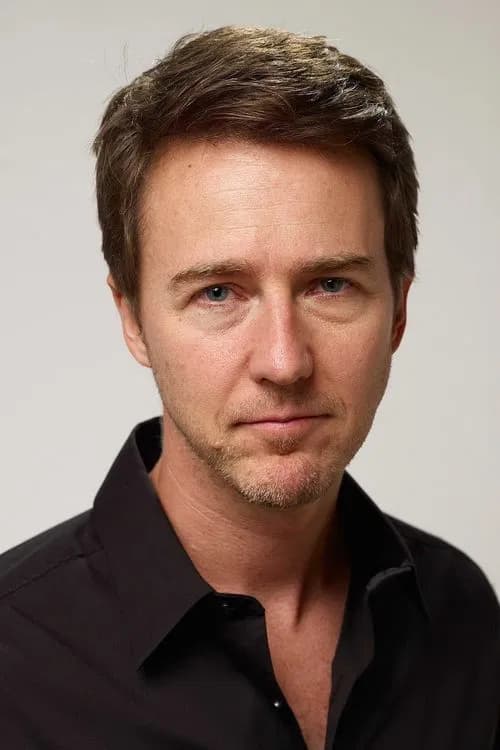
Edward Norton
Boston
Edward Norton has built a career around characters whose composure rarely tells the whole story. Whether playing tightly controlled professionals, volatile outsiders or men caught between competing versions of themselves, the Boston-born American actor brings a watchful intelligence to the screen. His interest in acting began with theatre, and he performed onstage from childhood before later working in off-Broadway productions in New York. His film breakthrough came with Primal Fear in 1996, earning him a Golden Globe and an Academy Award nomination for supporting actor. Two years later, he took on sharply contrasting roles in two Please Rewind movies. Rounders placed him alongside Matt Damon in a poker drama about friends urgently trying to clear a debt, while American History X cast him as Derek Vinyard, a neo-Nazi who begins abandoning his ideology after prison. The latter performance earned Norton an Academy Award nomination for best actor. Those films established the tension that runs through much of his work: he can appear cerebral and contained while suggesting something more dangerous underneath. That quality suited the heist mechanics of The Italian Job in 2003, where even his measured delivery could hold attention. In 2008, he moved into superhero territory as Bruce Banner in The Incredible Hulk, bringing a more inward, burdened quality to the character’s struggle with his destructive alter ego. Norton’s career has never been limited to acting. He made his directing debut with Keeping the Faith in 2000, has worked as a producer and screenwriter, and later directed Motherless Brooklyn. His screen work has continued to move between studio films and distinctive ensemble pieces, including collaborations with Wes Anderson and an Academy Award-nominated supporting turn in Birdman. More recently, he appeared as Miles Bron in Glass Onion: A Knives Out Mystery and portrayed Pete Seeger in A Complete Unknown, earning further Golden Globe, BAFTA and Academy Award nominations. It is a varied body of work, but the appeal remains consistent: Norton is often most compelling when a character’s certainty begins to crack.
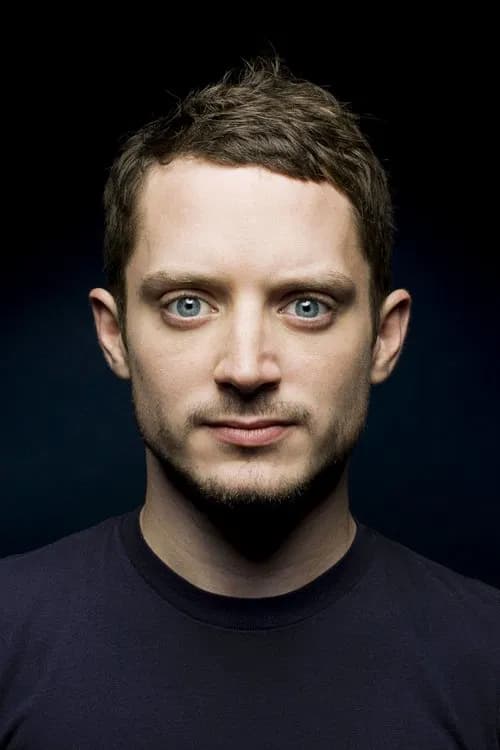
Elijah Wood
Cedar Rapids
Elijah Wood has spent much of his career balancing an open, approachable screen presence with a clear appetite for stranger and darker material. Born on January 28, 1981, in Cedar Rapids, Iowa, he began modeling and taking piano lessons at seven before moving to Los Angeles with his family in 1989 to pursue acting. His early appearances included Paula Abdul’s “Forever Your Girl” music video and a small role in Back to the Future Part II as a boy unimpressed by Marty McFly’s hand-operated arcade game. By 1998, Wood was taking leading parts in the science-fiction disaster movie Deep Impact and the high-school alien thriller The Faculty. Together, those films showed how naturally he could carry big emotions while fitting into effects-heavy genre storytelling. The role most closely tied to Wood remains Frodo Baggins in Peter Jackson’s The Lord of the Rings films. A fan of The Hobbit, he submitted an audition tape dressed as Frodo and reading from the novel. He became the first actor cast for the trilogy, appearing in The Fellowship of the Ring and The Two Towers as the young hobbit carrying an increasingly punishing burden. His performance rests on vulnerability rather than conventional action-hero confidence, giving the enormous fantasy production a human center. Wood’s choices after Middle-earth resisted easy repetition. In Eternal Sunshine of the Spotless Mind, he played Patrick, an unscrupulous lab technician pursuing Kate Winslet’s character. A year later, he appeared as the silent serial killer Kevin in Sin City, turning his familiar wide-eyed look into something deeply unsettling. The contrast between Frodo, Patrick and Kevin captures the range of tones he has been willing to explore. That curiosity extends beyond live-action film. Wood voiced Mumble in Happy Feet, Wirt in Over the Garden Wall and Spyro in The Legend of Spyro games. He also starred in the television series Wilfred and co-starred in Dirk Gently’s Holistic Detective Agency. Whether working in fantasy, horror, comedy, animation or intimate drama, Wood has built a career around taking sincerity seriously—and then finding interesting ways to disturb it.

Emma Watson
Paris
Emma Watson’s screen career began with the kind of role that could easily overshadow everything after it. Born in Paris on 15 April 1990, the English actress trained in acting, dancing and singing at the Oxford branch of Stagecoach Theatre Arts, performing in school plays and Stagecoach productions before entering films. At nine, she auditioned for Hermione Granger; after eight auditions, she secured the part despite having no previous film experience. Harry Potter and the Philosopher’s Stone became Watson’s screen debut in 2001. From the start, her Hermione had an alertness and certainty that made her more than a dutiful companion to the story’s hero. Watson returned in Harry Potter and the Chamber of Secrets, then found a more assertive version of the character in Harry Potter and the Prisoner of Azkaban. By Harry Potter and the Goblet of Fire, the tensions and changing relationships among the young leads gave her more emotionally complicated material to play. Harry Potter and the Order of the Phoenix continued that progression as both Watson and Hermione grew into the scale of the series. Those five films, all featured by Please Rewind, capture an unusual screen education: a child actor developing her craft inside one of cinema’s largest fantasy franchises. Watson was tutored on set while making the Harry Potter films, later completing a degree in English literature at Brown University in 2014. Her work beyond the series has included My Week with Marilyn, The Perks of Being a Wallflower, The Bling Ring, Noah, Beauty and the Beast and Greta Gerwig’s Little Women. The roles moved between independent films, large-scale studio productions and literary adaptations, allowing Watson to test her familiar intelligence and composure against very different characters. She has also worked as a model, activist, voice actor and film director. Yet the Harry Potter films remain the clearest place to watch her screen presence take shape: precise, self-possessed and increasingly willing to reveal the uncertainty beneath the confidence.
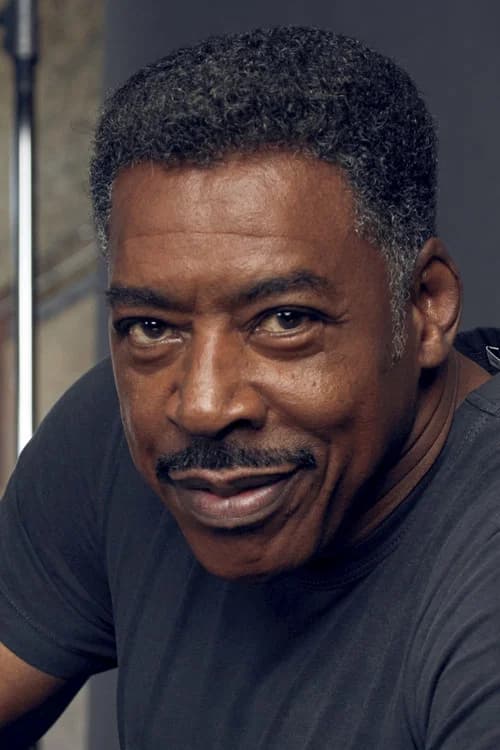
Ernie Hudson
Benton Harbor
Ernie Hudson has built a screen career around an unusually flexible kind of authority. He can play the steady professional, the intimidating official or the grounded presence who keeps a heightened movie from floating away entirely. That quality is central to his best-known role: Winston Zeddemore in Ghostbusters (1984). Joining the team as someone looking for a job rather than a believer in the paranormal, Winston gives the film a practical point of view amid the proton packs, spectral chaos and deadpan comedy. Hudson returned for Ghostbusters II (1989), and later reprised the role in Ghostbusters: Afterlife. Born on December 17, 1945, in Benton Harbor, Michigan, Hudson joined the U.S. Marine Corps after high school but received a medical discharge because of asthma. His path into acting was closely tied to the stage. After moving to Detroit, he became resident playwright at Concept East and later graduated from Wayne State University in 1973. He also established the Actors’ Ensemble Theatre, where young Black writers could direct and perform their own work. Hudson’s film and television roles have repeatedly made use of his commanding presence. He played Police Sergeant Albrecht in The Crow, Munro in Congo and Warden Leo Glynn on the HBO series Oz. In Miss Congeniality (2000), he appears as Harry McDonald, the FBI superior to Sandra Bullock’s character, bringing another firm institutional figure into a comedy built on undercover transformation and clashing personalities. His work has extended well beyond those roles, from The Hand That Rocks the Cradle and The Basketball Diaries to recurring parts in Grace and Frankie and The Secret Life of the American Teenager. He also starred in L.A.’s Finest, joined the Quantum Leap reboot as a co-lead and has worked as a voice actor. Across comedy, drama, science fiction and crime stories, Hudson’s range comes through in how naturally he fits the world of each project—whether that means managing federal agents, overseeing a prison or helping save New York from ghosts.
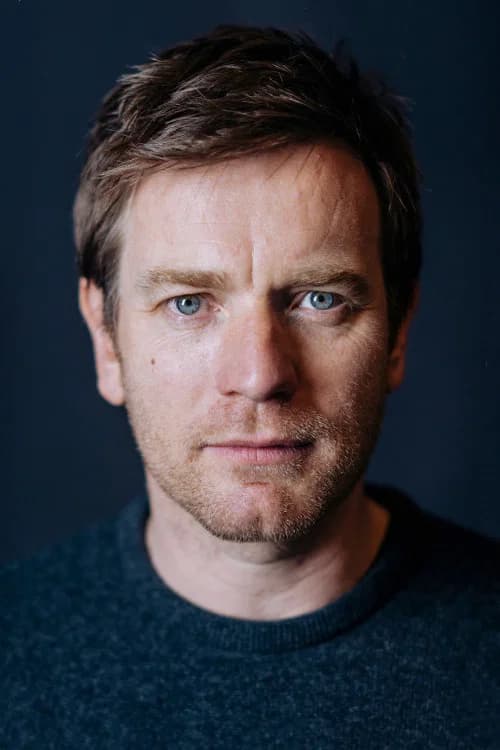
Ewan McGregor
Perth
Ewan McGregor has built a career around movement: between intimate British drama and large-scale Hollywood filmmaking, leading-man warmth and frayed nerves, stage work and voice performance. Born in Perth, Scotland, on 31 March 1971, he left school at 16, worked as a stagehand at Perth Theatre and later studied drama at the Guildhall School of Music and Drama in London. His early screen work included Dennis Potter's Lipstick on Your Collar and Bill Forsyth's Being Human, but his first collaboration with director Danny Boyle, Shallow Grave, helped establish the sharp, restless energy that would define his breakthrough. In Boyle's Trainspotting (1996), McGregor played Mark Renton, a heroin addict attempting to negotiate friendship, addiction and escape. It remains a central performance in his film career, driven by equal parts nerve, humour and desperation. McGregor soon moved comfortably into very different cinematic worlds. He appeared as John Grimes in Ridley Scott's Black Hawk Down (2001), then became the young Obi-Wan Kenobi in the Star Wars prequel trilogy. Please Rewind's films include Star Wars: Episode II – Attack of the Clones (2002) and Star Wars: Episode III – Revenge of the Sith (2005), where his performance carries Obi-Wan from composed mentor to a man facing the collapse of his closest bond. He later returned to the role for the 2022 television series Obi-Wan Kenobi. That range has continued across musicals, thrillers, fantasy films and television. McGregor played Christian in Moulin Rouge!, the younger Edward Bloom in Big Fish, dual roles Emmit and Ray Stussy in Fargo, and fashion designer Halston in the Netflix miniseries Halston. He made his film-directing debut with American Pastoral in 2016 and has also maintained a substantial theatre career, including Guys and Dolls, Othello and The Real Thing. Whether working inside the raw immediacy of Trainspotting or the operatic scale of Star Wars, McGregor brings an accessible human quality to characters caught between confidence and uncertainty.
Forest Whitaker
Longview
Forest Whitaker has built a screen career around a rare combination of physical presence, emotional openness and carefully measured intensity. Born on July 15, 1961, in Longview, Texas, he studied opera and acting at the University of Southern California, graduating with a Bachelor of Fine Arts in Acting in 1982. That same year, he made an early impression as a high school football player in Fast Times at Ridgemont High. The films that followed quickly showed how naturally Whitaker could move between different kinds of stories. He appeared in Martin Scorsese’s The Color of Money and Oliver Stone’s Platoon in 1986, then joined Stakeout and the Robin Williams comedy Good Morning, Vietnam in 1987. Bloodsport arrived in 1988, the same year Whitaker took his first leading film role as jazz saxophonist Charlie Parker in Clint Eastwood’s Bird. His deeply researched performance earned him the Best Actor award at the Cannes Film Festival and a Golden Globe nomination. Whitaker’s work has often found humanity in characters who could easily have been played in simpler terms. That quality served him in films as different as The Crying Game, Species, Ghost Dog: The Way of the Samurai and Phone Booth. In Ghost Dog, his warmth and restraint sit beside the character’s life as a mob hit man, creating one of the clearest examples of his ability to hold opposing qualities in the same performance. His career has also extended behind the camera. Whitaker made his feature directorial debut with Waiting to Exhale and later directed Hope Floats and First Daughter, while also working as a producer and television director. His portrayal of Idi Amin in The Last King of Scotland brought him the Academy Award for Best Actor, along with BAFTA, Golden Globe and Screen Actors Guild honors. Whether occupying the center of a film or giving weight to a supporting role, Whitaker brings the same sense of concentration: quiet when the moment needs it, forceful when it cannot be avoided.
Frank Oz
Hereford
Frank Oz has spent much of his career making performance look effortless, whether working through a puppet, supplying a distinctive voice, stepping briefly in front of the camera or directing an ensemble. Born Frank Richard Oznowicz in Hereford on May 25, 1944, he began working as an apprentice puppeteer at Children’s Fairyland in Oakland and joined Jim Henson in New York at 19. His long collaboration with Henson helped shape some of the Muppets’ best-known personalities. Oz performed Miss Piggy, Fozzie Bear, Animal and Sam Eagle on The Muppet Show, as well as Cookie Monster, Bert and Grover on Sesame Street. That work depended on more than vocal invention: his character pairings with Henson created a lively rhythm of affection, irritation and comic timing. Please Rewind movies including The Muppets Take Manhattan, which Oz also directed and co-wrote, The Muppet Christmas Carol and Labyrinth represent different corners of that puppetry career. For many moviegoers, Oz is equally closely associated with Yoda. He performed the puppet and provided the character’s voice in Star Wars: Episode V – The Empire Strikes Back and Star Wars: Episode VI – Return of the Jedi, then voiced the CGI version in Star Wars: Episode III – Revenge of the Sith. The performance gives Yoda his unusual balance of humour, mystery and authority. Oz’s live-action appearances often arrive as compact comic turns. He played corrections officers in The Blues Brothers and Trading Places, both directed by John Landis, and also appeared in Landis films An American Werewolf in London and Spies Like Us. His Please Rewind filmography also includes The Santa Clause. Behind the camera, Oz moved from co-directing The Dark Crystal with Henson to directing films including Little Shop of Horrors, Dirty Rotten Scoundrels, What About Bob?, In & Out, Bowfinger and Death at a Funeral. Across these different roles, his career is connected by an exact understanding of character, timing and how much personality can be conveyed through the smallest gesture or vocal turn.
Frank Welker
Denver
Frank Welker’s screen presence is more often heard than seen, but his range has helped shape decades of animation, fantasy and creature-driven filmmaking. Born in Denver on March 12, 1946, Welker studied theatrical arts at Santa Monica College, where his performance as the Cowardly Lion in a 1966 production of The Wizard of Oz earned honors. He began working as a stand-up comedian and impressionist the following year before moving into acting and voice work. His first voice-over job was a Friskies commercial, but the defining early turn came when he was cast as Fred Jones in Scooby-Doo, Where Are You! in 1969. Welker went on to voice Fred in almost every incarnation of the franchise, becoming the only original voice actor to remain with Scooby-Doo. That long association sits alongside another major piece of his career: Transformers. In the original animated series, he voiced Megatron, Soundwave and a substantial roster of Autobots and Decepticons, later returning to several of those characters across television, films, games and theme-park attractions. Welker’s particular gift for animal sounds, monsters and voices that seem to come from somewhere beyond an ordinary recording booth made him a natural fit for movies built around strange worlds. Among the films represented on Please Rewind, he voiced the Martians in Mars Attacks!, Alien Sil in Species and Malebolgia in Spawn. His work also reaches into Disney animation through Pegasus in Hercules and Cri-Kee in Mulan, while his credits include Beauty and the Beast, Pocahontas and The Pagemaster. That variety continues through such different films as The Chipmunk Adventure, Bill & Ted’s Bogus Journey, Stargate, The Santa Clause, Godzilla and The Iron Giant. Whether supplying a recognizable character voice or the sound of a creature that could not exist without him, Welker has built a career around making the impossible feel physically present. In 2016, that body of work was recognized with a Lifetime Achievement Emmy Award.
Gary Oldman
Gary Oldman’s screen career is the kind that rewards a long look back. Across the films gathered here, he moves between heightened characters and quieter authority, bringing a sense of purpose to even the most unpredictable material. The details may change from movie to movie, but his ability to command attention remains a constant. Sid and Nancy offers an early showcase for that intensity, while JFK and Bram Stoker’s Dracula place Oldman in two very different films from the early 1990s. True Romance and Léon: The Professional continue a stretch of performances with real volatility around them. These are movies filled with strong personalities, and Oldman never seems in danger of disappearing into the crowd. By 1997, he could be found in both The Fifth Element and Air Force One, bringing his distinctive presence to two large-scale productions released in the same year. Hannibal followed in 2001, another film in which transformation and menace were central to the impression he made on screen. Oldman also appears in two of the defining fantasy and superhero series of the 2000s. He is part of Harry Potter and the Prisoner of Azkaban and Harry Potter and the Order of the Phoenix, as well as Batman Begins and The Dark Knight. Within this selection, those films reveal another side of his screen presence: measured, grounded and able to hold its place amid expansive worlds and crowded ensembles. Taken together, these movies show why Oldman remains such a compelling actor to revisit. Whether the performance is flamboyant, unsettling or restrained, he has a way of making the character feel fully connected to the particular world of the film.
Geena Davis
Wareham
Geena Davis has a way of making composure feel active. Across comedy, science fiction, horror and drama, she often brings a grounded intelligence to stories growing increasingly strange around her—a quality that links several of the films featured on Please Rewind. Born in Wareham, Massachusetts, in 1956, Davis was working as a model when director Sydney Pollack cast her as a soap opera actor in Tootsie (1982). She followed it with television work before appearing in Fletch (1985) as a colleague of Chevy Chase’s undercover newspaper reporter. The Fly (1986) gave her a more substantial dramatic showcase: as a science journalist drawn into an eccentric scientist’s experiment, she helped anchor the film’s escalating horror in recognisable human emotion. That steadiness also made her a natural fit for Beetlejuice (1988). Playing one half of a recently deceased couple haunting their former home, Davis meets Tim Burton’s supernatural chaos without losing the character’s warmth or bewilderment. The same period brought The Accidental Tourist, for which she received the Academy Award for Best Supporting Actress. Two of Davis’s defining roles arrived in quick succession. In Ridley Scott’s Thelma & Louise (1991), she starred opposite Susan Sarandon as friends whose road trip takes unforeseen turns. Her performance earned Academy Award, BAFTA and Golden Globe nominations. A year later, she played a baseball player on an all-women’s team in A League of Their Own (1992), bringing authority and emotional restraint to a sports comedy-drama built around competition, friendship and opportunity. Davis has also worked as a television actor, voice actor and producer. Yet the run from Tootsie through A League of Their Own remains a particularly vivid demonstration of her range: she could play directly into a comedy’s rhythm, hold the centre of an effects-driven thriller, or give a large-scale crowd-pleaser a distinctly human pulse.
Gene Hackman
San Bernardino
Gene Hackman (1930–2025) brought a direct, grounded force to the screen. He could play authority without making it look secure, menace without reducing it to noise, and decency without sanding away a character’s rough edges. That range made him equally convincing as a stubborn coach, a compromised lawman, a military commander or a criminal mastermind. Born in San Bernardino on January 30, 1930, Hackman served four and a half years as a field radio operator in the U.S. Marine Corps before pursuing acting in 1956. Early stage work led to film roles, including Buck Barrow in Bonnie and Clyde, which brought his first Academy Award nomination. His performance as detective Jimmy “Popeye” Doyle in The French Connection won him the Academy Award for Best Actor, while his surveillance expert in The Conversation showed how much tension he could create through restraint. The Please Rewind movies trace the remarkable durability of his career. He reprised Lex Luthor with a sly comic touch in Superman II and Superman IV: The Quest for Peace, appeared in Reds and starred in Uncommon Valor, then played high school basketball coach Norman Dale in Hoosiers. No Way Out and Mississippi Burning placed him back in taut political and crime dramas; the latter earned him another Best Actor nomination. As Little Bill Daggett in Unforgiven, Hackman made cruelty feel disturbingly practical rather than theatrical, winning the Academy Award for Best Supporting Actor. He followed that performance with the corrupt lawyer Avery Tolar in The Firm and submarine captain Frank Ramsey opposite Denzel Washington in Crimson Tide. In Enemy of the State, his surveillance specialist deliberately recalled the uneasy world of The Conversation. Hackman continued working across thrillers, westerns and comedies until Welcome to Mooseport, his final film role in 2004. He later confirmed his retirement from acting and also worked as a novelist. Across the films represented here, his appeal remains clear: he played powerful men while always letting us see the pressure, pride and uncertainty underneath.
Goldie Hawn
Washington, D.C.
Goldie Hawn has built a screen career around a deceptively difficult balance: buoyant comic energy paired with sharp timing and an ability to let vulnerability show beneath the joke. Born in Washington, D.C., in 1945 and raised in Takoma Park, Maryland, she began ballet and tap lessons at three. Dance led to the stage, including a 1964 appearance as Juliet at the Virginia Shakespeare Festival, before television brought her wider attention through Good Morning World and Rowan & Martin’s Laugh-In. Her Laugh-In persona played on the era’s idea of the dizzy blonde, but Hawn’s control was evident from the start. Her first major film role, in Cactus Flower, earned her the Academy Award for Best Supporting Actress. She followed it with comedy, satire and drama, appearing in films including Butterflies Are Free, The Sugarland Express, Shampoo and Foul Play. The Please Rewind movies capture a particularly rich stretch of that career. In 1980, Hawn led and co-produced Private Benjamin, earning an Academy Award nomination for Best Actress, and also appeared in the Neil Simon comedy Seems Like Old Times. Protocol arrived in 1984, followed by Overboard in 1987, a comedy opposite Kurt Russell. Death Becomes Her, released in 1992, placed her alongside Meryl Streep and Bruce Willis in a darkly comic story of rivalry and mortality. Across these films, Hawn could be glamorous, exasperated, resilient or gloriously self-involved without losing the human pulse of a performance. Her work has never been limited to acting. Hawn’s career also includes stage performance, professional dancing, television specials, singing, producing and directing. After The Banger Sisters in 2002, she spent fifteen years away from live-action film before returning in Snatched in 2017. She later played Mrs. Claus in The Christmas Chronicles and took a leading role in its sequel. It is a varied career, but the through line remains clear: Hawn knows how to make comedy feel light without treating it as lightweight.

Halle Berry
Cleveland
Halle Berry has built a screen career around a compelling contrast: movie-star poise paired with a willingness to play characters under real physical or emotional pressure. Born in Cleveland on August 14, 1966, she first gained public attention through beauty pageants, winning Miss Teen All American in 1985 and Miss Ohio USA the following year. She later moved to New York City to pursue acting, making her film debut in Spike Lee’s Jungle Fever in 1991. Berry’s early work quickly showed her range. She played opposite Eddie Murphy in Boomerang, took on the demanding role of a mother fighting to regain custody of her son in Losing Isaiah, and portrayed Zola Taylor in Why Do Fools Fall in Love. Her performance as Dorothy Dandridge in HBO’s Introducing Dorothy Dandridge also became a major career marker, earning her a Primetime Emmy and a Golden Globe. For many moviegoers, Berry became inseparable from Storm, the weather-controlling mutant she first played in X-Men in 2000. She returned for X2 and X-Men: The Last Stand, bringing a calm authority to a series crowded with outsized personalities and elaborate powers. Between those films, she entered the Bond world as Giacinta “Jinx” Johnson in Die Another Day. Her arrival from the surf deliberately echoed Ursula Andress in Dr. No, but Berry gave Jinx a self-possessed action presence of her own. Her work in Monster’s Ball demonstrated a different kind of intensity. Playing Leticia Musgrove, Berry became the first African-American woman to win the Academy Award for Best Actress. She has continued moving between drama, thrillers, action and television, with roles in Gothika, Things We Lost in the Fire, Cloud Atlas, The Call, Extant and John Wick: Chapter 3 – Parabellum. Berry has also expanded her work behind the camera. She launched the production company 606 Films and made her feature directing debut with Bruised, in which she also played disgraced MMA fighter Jackie Justice. It is a fitting extension of a career drawn repeatedly to resilience, danger and characters who refuse to stay down.
Harold Ramis
Harold Allen Ramis built a career that moved easily between writing, directing and performing, helping shape a run of American comedies that remain rewarding to revisit. Born in Chicago on November 21, 1944, he graduated from Washington University in St. Louis with a degree in English literature before finding his way into Chicago improvisational theatre with The Second City. He also worked as a jokes editor for Playboy and contributed to National Lampoon projects and Second City Television. His screenwriting breakthrough came with National Lampoon's Animal House in 1978. He went on to earn writing credits on Meatballs and Stripes, appearing in the latter alongside frequent collaborator Bill Murray. Ramis made his feature directing debut with Caddyshack in 1980, then directed National Lampoon's Vacation, another Please Rewind movie in which he also appears. For many viewers, though, Ramis is inseparable from Dr. Egon Spengler. He co-wrote Ghostbusters and Ghostbusters II and played Egon in both films, bringing a controlled, matter-of-fact presence to stories filled with supernatural chaos. The performance captures an important part of his comic sensibility: the joke often lands harder when the person delivering it refuses to make a fuss. Ramis continued balancing large-scale comedy with ideas about behavior, frustration and self-improvement. That combination found one of its clearest expressions in Groundhog Day, which he directed and co-wrote. He and Danny Rubin shared the 1994 BAFTA Award for Best Original Screenplay for the film. Later directing and writing work included Analyze This, Analyze That and Year One, his final feature as writer, producer, director and actor. An autoimmune inflammatory illness curtailed his ability to work from 2010. Ramis died on February 24, 2014, at age 69. His career remains closely tied to a collaborative comedy generation that included Murray, Dan Aykroyd, John Belushi and Ivan Reitman—and to movies whose craft becomes clearer each time around.
Harrison Ford
Chicago
Harrison Ford has built a career on making extraordinary circumstances feel remarkably practical. Whether facing an empire, chasing ancient artifacts or trying to clear his name, he brings a grounded, wary presence to the screen—a sense that danger is inconvenient, but still has to be dealt with. Born in Chicago on July 13, 1942, Ford worked as a carpenter while pursuing acting. His career changed dramatically when George Lucas cast him as Han Solo in Star Wars. Please Rewind’s movie collection picks up with Ford returning to the role in Star Wars: Episode V – The Empire Strikes Back and Star Wars: Episode VI – Return of the Jedi, films that gave his dry delivery and reluctant heroism plenty of room to work. Indiana Jones offered another defining role. In Raiders of the Lost Ark, Ford combines physical confidence with exasperation, making the archaeologist feel vulnerable even at his most capable. He returned for Indiana Jones and the Temple of Doom, Indiana Jones and the Last Crusade and, nearly two decades later, Indiana Jones and the Kingdom of the Crystal Skull. Those franchises could easily have overshadowed everything else, but Ford’s filmography kept testing his screen persona. Blade Runner placed him in the uneasy world of science fiction noir as Rick Deckard. Witness and The Mosquito Coast gave him substantial dramatic material, while Frantic turned his controlled manner into the engine of a tense disappearance story. Working Girl showed how comfortably he could shift into comedy-drama and romance. By the 1990s, Ford had become particularly effective at playing capable men trapped in escalating crises. The Fugitive benefits from his understated urgency, while Air Force One pushes his authority into full-scale action-thriller territory. Across these movies, Ford rarely seems interested in polishing away a character’s frustration, fatigue or doubt. That resistance to easy heroics is a large part of why his performances remain worth returning to.
Heath Ledger
Perth
Heath Ledger brought a rare combination of openness and intensity to the screen. Born in Perth, Western Australia, on 4 April 1979, he began acting in a school production of Peter Pan at ten and left school at sixteen to pursue acting professionally. Early parts in Australian television, followed by his feature debut in Blackrock, gave way to the film that introduced him to a much wider audience: the 1999 teen comedy 10 Things I Hate About You. Ledger’s charm suited the movie, but his later work made clear that he was never interested in remaining one kind of leading man. That range is especially visible across the three Ledger films featured by Please Rewind. In Brokeback Mountain, he played Wyoming ranch hand Ennis Del Mar, whose relationship with Jack Twist becomes an anguished story of love and loss. Ledger built the performance through restraint, making Ennis’s silences and guarded physicality carry enormous weight. The role earned him best actor prizes from the New York Film Critics Circle and San Francisco Film Critics Circle, along with Academy Award, BAFTA, Golden Globe and Screen Actors Guild nominations. Three years later, The Dark Knight revealed a radically different side of his work. As the Joker, Ledger gave Christopher Nolan’s film a volatile, menacing centre, turning the character into something both theatrical and deeply unsettling. The performance brought him a posthumous Academy Award and Golden Globe for supporting actor after his death in 2008. Ledger’s career also included The Patriot, Monster’s Ball, A Knight’s Tale, Candy and I’m Not There, as well as work behind the camera. He directed music videos for artists including N’fa and Ben Harper and hoped to move into feature directing. His screen career was brief, but its shape remains striking: from the approachable romantic energy of 10 Things I Hate About You to the emotional containment of Brokeback Mountain and the controlled chaos of The Dark Knight, Ledger kept searching for new ways to transform.

Heather Graham
Milwaukee
Heather Graham has built a career around an easygoing screen presence that can turn playful, vulnerable or sharply comic depending on the movie around her. Born in Milwaukee on January 29, 1970, she was introduced to acting in a school production of The Wizard of Oz and later left her English studies at UCLA to pursue acting full time. Her early film work quickly placed her in some distinctive company. In License to Drive, she played Mercedes Lane, the popular girl at the center of the teenage comedy, and she appeared in flashbacks in Twins. A year later, Gus Van Sant’s Drugstore Cowboy gave her a more dramatic showcase as Nadine, a young drug-addicted accomplice, earning Graham an Independent Spirit Award nomination for supporting actress. A Calvin Klein commercial directed by David Lynch led to Graham playing Annie Blackburn in Twin Peaks, a role she reprised in Twin Peaks: Fire Walk with Me. That connection to Lynch’s strange, unsettled world sits neatly beside the lighter touch she brought to Swingers, where her small but important role as Lorraine helps shift the movie’s emotional direction. The late 1990s showed how comfortably Graham could move between tones. She played a young adult-film performer in Boogie Nights, sharing in the cast’s Screen Actors Guild Award nomination, then appeared in Scream 2 as a fictionalized version of herself playing Casey Becker in the movie-within-the-movie Stab. In Austin Powers: The Spy Who Shagged Me, she leaned fully into broad spy-movie parody as Felicity Shagwell, one of her best-known roles. Graham’s work has since extended beyond acting. Her credits include television, voice performance, producing, writing and directing. She wrote, directed and starred in Half Magic, released in 2018, and did the same with Chosen Family, released in 2024. It is a fitting expansion for a career that has repeatedly moved between studio comedy, independent film and stranger corners of American cinema.
Helena Bonham Carter
London
Helena Bonham Carter has built a career around refusing to remain in one neat category. Born in London in 1966, she began without formal acting training and was initially closely associated with period drama. Her breakthrough as Lucy Honeychurch in A Room with a View, followed by the title role in Lady Jane, helped establish an image she would later describe as the “corset queen” or “English rose.” It did not contain her for long. By the late 1990s, Bonham Carter was finding roles with sharper edges. Her performance as Kate Croy in The Wings of the Dove brought her first Golden Globe and Academy Award nominations, while Marla Singer in Fight Club showed how naturally she could handle damaged, darkly funny characters. That ability to move between emotional precision, theatrical menace and off-centre comedy has remained central to her screen presence. Several sides of that range appear in movies featured by Please Rewind. In 2005, she appeared in Corpse Bride and Charlie and the Chocolate Factory, and voiced the aristocratic Lady Tottingham in Wallace & Gromit: The Curse of the Were-Rabbit. Two years later, she arrived in Harry Potter and the Order of the Phoenix as Bellatrix Lestrange, the evil witch she would play across the final four Harry Potter films. Bellatrix gave Bonham Carter’s taste for heightened performance a particularly dangerous outlet. Her wider work has continued across film, television, stage and voice acting. She played Mrs. Lovett in Sweeney Todd: The Demon Barber of Fleet Street, the Red Queen in Alice in Wonderland, Madame Thénardier in Les Misérables and Miss Havisham in Great Expectations. As Queen Elizabeth in The King’s Speech, she won her first BAFTA Award, while television roles have included Enid Blyton in Enid and Princess Margaret in The Crown. Whether working in period drama, fantasy, animation or contemporary film, Bonham Carter tends to make polish and disorder feel like natural companions.
Hugh Grant
Charing Cross Hospital
Hugh Grant has spent much of his screen career finding fresh uses for charm. The pauses, dry delivery and air of mild discomfort that made him a romantic-comedy fixture could suggest vulnerability, calculation or both—and his later work has increasingly brought the sharper possibilities to the surface. Born on 9 September 1960, Grant studied English literature at New College, Oxford, where he joined the Oxford University Dramatic Society and appeared in his first film, Privileged. Stage and television work followed, while Maurice brought him and co-star James Wilby the Volpi Cup for Best Actor at the Venice Film Festival. In 1988, Grant took a leading role in Ken Russell’s cheerfully strange horror film The Lair of the White Worm, an early reminder that his filmography was never confined to polite drawing rooms. Four Weddings and a Funeral transformed his career in 1994, earning him a Golden Globe and a BAFTA for his leading performance. Notting Hill later placed his self-effacing comic rhythm opposite Julia Roberts, turning awkward encounters and deadpan reactions into the film’s natural language. In Bridget Jones’s Diary, he played Daniel Cleaver, weaponising the polished side of his persona as a charming, manipulative publisher. Love Actually gave him another memorable variation: a British prime minister whose authority competes with romantic uncertainty and an enthusiastic dance through Downing Street. Grant has also made a rewarding habit of pushing against the image those films established. Florence Foster Jenkins brought him major award nominations, while Paddington 2 let him embrace theatrical vanity as Phoenix Buchanan. On television, A Very English Scandal and The Undoing drew darker implications from his familiar charm. Roles in The Gentlemen, Wonka and Heretic continued that late-career taste for cads, schemers and men whose pleasant surfaces deserve suspicion. Whether playing romantic hesitation or controlled menace, Grant remains especially good at letting an audience see the thought behind the smile.
Hugh Jackman
Sydney
Hugh Jackman has built a career around a useful contradiction: he can bring the physical directness of an action star to the screen while retaining the precision and openness of a musical-theatre performer. Born in Sydney on October 12, 1968, he studied communications before committing to acting and training at Sydney’s Actors’ Centre and the Western Australian Academy of Performing Arts. His early career was rooted in Australian television and theatre, followed by wider attention for playing Curly in the Royal National Theatre’s 1998 production of Oklahoma! The major screen breakthrough came with X-Men in 2000. As Wolverine, Jackman had relatively little dialogue but plenty to communicate, building the character through movement, contained anger and an imposing physical presence. He returned in X2 and X-Men: The Last Stand, extending a performance that would remain a defining thread throughout his film career. The Prestige, also released in 2006, gave Jackman a very different kind of obsession to play. As aristocratic magician Robert Angier, locked in an escalating rivalry with Christian Bale’s Alfred Borden, he channels showmanship into something increasingly severe and destructive. It is a role that makes particularly good use of his stage instincts: Angier understands that performance depends on control, misdirection and the need to hold an audience. Jackman’s work has continued to move between film, television, theatre, musicals, presenting, producing and voice acting. He won a Tony Award for portraying Peter Allen in The Boy from Oz and later received an Academy Award nomination and a Golden Globe win for playing Jean Valjean in Les Misérables. Whether singing under stage lights or letting Wolverine’s silence do the work, Jackman’s appeal comes from the same place: a performer’s awareness of the audience, matched with the discipline to serve the character.
Ian McKellen
Burnley
Born in Burnley on 25 May 1939, Ian McKellen found acting early at Bolton Little Theatre before studying English literature at Cambridge, where he appeared in 23 productions with the Marlowe Society. His first professional appearance came in 1961, and theatre remained the foundation of a career that would eventually stretch across stage, film, television and voice work. By the 1970s, McKellen was firmly established in British theatre, taking leading Shakespearean roles with the Royal Shakespeare Company and the National Theatre. His command of language and ability to make theatrical scale feel personal became equally valuable on camera. A Broadway performance as Antonio Salieri in Amadeus brought him a Tony Award, while his screen adaptation of Richard III showcased him as both actor and screenwriter. His title performance earned BAFTA and Golden Globe nominations and won the European Film Award for Best Actor. Gods and Monsters later brought an Academy Award nomination for Best Actor. The films on Please Rewind trace an especially interesting route through his screen career. Michael Mann’s The Keep placed him inside a brooding supernatural horror story in 1983, while Last Action Hero gave him a place in a knowingly oversized Hollywood spectacle a decade later. Then came two roles that brought his theatrical authority to blockbuster fantasy without sanding away its edges. As Magneto in X-Men, X2 and X-Men: The Last Stand, McKellen played a comic-book antagonist with conviction and gravity. As Gandalf in The Lord of the Rings: The Fellowship of the Ring and The Two Towers, he could be stern, playful and reassuring, often within the same scene. His work in Fellowship earned a Screen Actors Guild Award and an Academy Award nomination for Best Supporting Actor. That range is central to McKellen’s appeal: he can enlarge a scene without overwhelming it. Whether facing mutants, monsters or Middle-earth, he brings the precision of a stage actor and the ease of someone who understands exactly how much the camera needs.
Jack Black
Santa Monica
Jack Black has built a career around a rare combination of comic force, musical commitment and genuine range. Born Thomas Jacob Black in Santa Monica on August 28, 1969, he studied drama at Crossroads School and later attended UCLA before leaving during his second year to pursue entertainment. His early work included stage productions with the Actors’ Gang and television appearances, followed by a run of small movie roles that placed his distinctive energy inside some very different worlds. Several of those early films are on Please Rewind: Demolition Man, Waterworld, The Cable Guy, Mars Attacks! and Enemy of the State. The parts were not yet leading roles, but together they show Black moving through science fiction, action, satire and dark comedy. His scene-stealing turn as an unruly record-store employee in High Fidelity became his Hollywood breakout, opening the way to larger roles. School of Rock gave Black an especially fitting showcase. As the film’s star, he could bring acting, comedy and music together rather than treating them as separate talents. The performance earned critical praise and a Golden Globe nomination for Best Actor in a Musical or Comedy. His musical background also extends beyond the screen: Black is the lead singer and rhythm guitarist of the comedy-rock duo Tenacious D with Kyle Gass. Black has never been limited to one volume or genre. He voiced Zeke in Ice Age, then took a comparatively dramatic turn as filmmaker Carl Denham in Peter Jackson’s King Kong, basing the performance on Orson Welles. In Tropic Thunder, he joined Ben Stiller and Robert Downey Jr. in a war-movie satire built around actors behaving badly. That flexibility is central to Black’s screen presence. He can charge into a comedy with full physical and vocal intensity, carry music as part of the character, shift into voice work or pull that energy back for a more dramatic performance. Across his career, the constant has been a willingness to commit completely to the particular movie he is in.
Jack Nicholson
Neptune City
Jack Nicholson has a way of making control and chaos look like two sides of the same performance. A raised eyebrow, a clipped line or a sudden burst of anger can shift the temperature of an entire scene. That unpredictable screen presence has served him across horror, drama, comedy, crime and comic-book spectacle. Born on April 22, 1937, in Neptune City, New Jersey, Nicholson began with small stage and television parts before making his film debut in The Cry Baby Killer in 1958. He also pursued writing and directing, including writing the screenplay for The Trip and co-writing Head. His acting breakthrough came with Easy Rider, followed by the defining run of Five Easy Pieces, Chinatown and One Flew Over the Cuckoo’s Nest. The latter brought him his first Academy Award for Best Actor. The Please Rewind movies capture just how wide his range became. In The Shining, he plays writer Jack Torrance, turning agitation, resentment and dark humor into something increasingly frightening. Reds finds him working at a quieter pitch as playwright Eugene O’Neill, while Terms of Endearment casts him as retired astronaut Garrett Breedlove, a performance that earned his second Academy Award. Nicholson could also step into an ensemble and immediately alter its rhythm. He appears in both The Witches of Eastwick and Broadcast News, then embraces grand theatricality as the Joker in Tim Burton’s Batman. In A Few Good Men, his hot-headed Colonel Jessup brings concentrated force to the courtroom drama. Mars Attacks! gave him two roles—President James Dale and property developer Art Land—within the same gleefully unruly comedy. He won a third Academy Award for As Good as It Gets and later returned to darker territory as Boston mob boss Frank Costello in Martin Scorsese’s The Departed. Across these films, Nicholson’s gift is not simply intensity. It is the sense that amusement, menace, charm and defiance might all arrive in the same moment.
Jackie Chan
Victoria Peak
Jackie Chan’s screen identity brings acting, martial arts, stunt work and comedy together, often making a fight scene feel as much like a piece of choreography as a physical confrontation. Born Chan Kong-sang in Victoria Peak on 7 April 1954, he spent a decade training in martial arts and acrobatics at the China Drama Academy. That demanding foundation became central to a career in which movement, timing and personality are inseparable. After early screen appearances and stunt work, Chan found his breakthrough with Snake in the Eagle’s Shadow and Drunken Master in 1978. Their comedic approach to kung fu gave him room to develop a style distinct from the more severe martial-arts heroes around him. By The Young Master in 1980, he was firmly established as a leading action performer. That same year brought his first Hollywood film, The Big Brawl, followed by a smaller role in the all-star road comedy The Cannonball Run. Chan’s initial attempts to reach American audiences did not immediately take hold. The Protector arrived in 1985, but it was his return to Hong Kong filmmaking that produced one of his defining movies: Police Story. Chan performed dangerous stunts in the crime-action film, which won Best Film at the 1986 Hong Kong Film Awards. It captures what makes his work so distinctive—the action is elaborate, but his vulnerability and comic instincts keep it human. His North American breakthrough came much later. Rumble in the Bronx gained a cult following in the United States, while Rush Hour paired Chan with Chris Tucker in a buddy-cop action comedy that made him a Hollywood star. Rush Hour 2 reunited the pair in 2001 and became an even larger worldwide success. Chan’s career extends beyond acting to directing, producing, screenwriting, stunt performance and choreography. Across films as different as The Young Master, Police Story and Rush Hour, the constant is his understanding that action can reveal character—and that a well-timed reaction can matter as much as the stunt itself.
Jake Gyllenhaal
Los Angeles
Jake Gyllenhaal has built a career around characters who rarely feel settled. Whether they are chasing answers, enduring pressure or struggling to understand their own lives, he brings a watchful intensity that can turn inward as easily as it can drive a thriller. Born in Los Angeles on December 19, 1980, Gyllenhaal made his film debut as the son of Billy Crystal’s character in City Slickers (1991). His first lead film role came in October Sky, but Donnie Darko (2001) established a more defining screen persona. As a troubled teenager experiencing visions of a humanoid rabbit and warnings that the world will end, Gyllenhaal balances suburban normality with something deeply disturbed. The film was not a box-office success on release, but eventually became a cult favorite. The Day After Tomorrow (2004) placed him inside large-scale science fiction, while 2005 showed how much ground he could cover. In Jarhead, he played a U.S. Marine deployed during the Gulf War. In Brokeback Mountain, he and Heath Ledger played young sheep herders whose relationship begins in 1963 and continues across 20 years. Gyllenhaal received an Academy Award nomination for Best Supporting Actor for the film. Zodiac (2007) gave his curiosity a different shape. Playing political cartoonist Robert Graysmith in David Fincher’s mystery thriller, Gyllenhaal made obsession feel less like a sudden break than a steady narrowing of the world. He prepared by videotaping Graysmith and studying his mannerisms. His later work has continued across thrillers, action films, drama and theatre. He produced and starred in Nightcrawler, played a detective in Prisoners, took dual roles in Enemy and appeared on Broadway in productions including Constellations, Sunday in the Park with George and Sea Wall/A Life. The range is substantial, but the connecting thread remains his interest in pressure: what it reveals, what it distorts and how long a person can live inside it.
James Earl Jones
Arkabutla
James Earl Jones brought a stage actor’s command to the screen, along with a voice that could suggest authority, warmth, danger or sly comedy before a scene had fully settled around him. Born in Arkabutla, Mississippi, on January 17, 1931, Jones was raised by his maternal grandparents in Michigan. After developing a severe stutter, he spent years reluctant to speak; an English teacher, Donald Crouch, encouraged him to read his poetry aloud and helped him find his way back to his voice. Jones studied drama at the University of Michigan, served in the military and moved to New York, where he studied at the American Theatre Wing. His early career was rooted in theatre, including Shakespearean roles such as Othello and King Lear. Stanley Kubrick saw him perform in The Merchant of Venice and later cast him in Dr. Strangelove, Jones’s feature-film debut. His stage performance in The Great White Hope earned him a Tony Award, and the film adaptation brought an Academy Award nomination for Best Actor. For movie audiences, Jones became inseparable from two major vocal performances. He supplied Darth Vader’s dialogue in the original Star Wars trilogy, giving the character a measured, intimidating presence, and voiced Mufasa in Disney’s The Lion King. He is also associated with Star Wars: Episode III – Revenge of the Sith, one of the films featured by Please Rewind. His screen work was never confined to one register. Jones could fit the mythic scale of Conan the Barbarian, play regal comedy as King Jaffe Joffer in Coming to America, and bring gravity to Field of Dreams and The Hunt for Red October. Best of the Best and Three Fugitives further show the range of projects he moved through during a particularly busy stretch from the late 1980s into the early 1990s. Across film, television, stage and voice work, Jones built a career around precision rather than volume. Whether appearing in person or heard from beyond the frame, he knew how to make language carry weight.

Jamie Lee Curtis
Santa Monica
Jamie Lee Curtis has built a screen career around a rare ability to shift registers without losing her direct, grounded presence. Born in Santa Monica on November 22, 1958, she made her film debut as Laurie Strode in John Carpenter’s Halloween, the role that established her early connection with horror. That association continued through a remarkable run of genre films, including The Fog, Prom Night, Terror Train and Halloween II. Those performances made Curtis a natural point of identification for audiences: alert, practical and emotionally convincing even as danger closed in. Her early-1980s work represented on Please Rewind also includes Escape from New York, Halloween III: Season of the Witch and the cheerfully unclassifiable The Adventures of Buckaroo Banzai Across the 8th Dimension. Trading Places marked an important turn. Curtis’s performance helped move her beyond the horror roles with which she had become closely associated and earned her a BAFTA Award for Best Actress in a Supporting Role. A Fish Called Wanda later gave her another strong comic showcase, placing her amid an ensemble while making full use of her timing, confidence and ability to play exasperation without flattening it into a single note. Her range remained visible across My Girl, the large-scale action comedy True Lies and Halloween H20: 20 Years Later, which brought her back to Laurie Strode. She received a Golden Globe for True Lies, a film that asked her to move between domestic comedy, suspense and action while keeping the character recognisably human. Freaky Friday offered another especially good fit for Curtis’s physical and comic instincts. Playing opposite Lindsay Lohan, she committed fully to the film’s body-swap premise and received another Golden Globe nomination. Curtis’s later work has added major recognition to a career already defined by longevity and flexibility. She won an Academy Award and a Screen Actors Guild Award for Everything Everywhere All at Once, and a Primetime Emmy for her guest performance in The Bear. Across horror, comedy, family drama and action, she has remained a performer who understands that conviction is often what makes an improbable movie premise work.
Jason Bateman
Rye
Jason Bateman has built a career around straight-faced control. Whether he is playing comedy or drama, he tends to keep something in reserve, letting a small pause or wary reaction carry more weight than a louder choice. It is a style that has served him across television, film and his work behind the camera. Born in Rye, New York, in 1969, Bateman began working young, appearing in a Golden Grahams commercial before joining Little House on the Prairie. Roles in Silver Spoons, It’s Your Move and The Hogan Family made him a familiar television presence during the 1980s. That early success also brought pressure: his acting income helped support his family, and he later described feeling anxious about the need to keep working. At 18, he directed three episodes of The Hogan Family and became the Directors Guild of America’s youngest-ever director. A defining adult role arrived with Michael Bluth in Arrested Development. Bateman’s measured delivery proved an ideal fit for the show’s escalating absurdity, earning him a Golden Globe and an Emmy nomination. The series later returned with its original cast, giving him another chance to play the put-upon center of a spectacularly unruly family. His film work has moved freely between broad comedy and more restrained material. He appeared in Dodgeball: A True Underdog Story, Starsky & Hutch and The Break-Up before a busy 2007 that included Smokin’ Aces, The Kingdom, Mr. Magorium’s Wonder Emporium and Juno—the Please Rewind movie represented on this profile. Later credits include Hancock, Extract, Horrible Bosses, The Gift, Game Night and Air. He also voiced Nick Wilde in Zootopia. Bateman made his feature directing debut with Bad Words, in which he also starred, and later directed and starred in The Family Fang. On television, Ozark brought his acting and directing together in darker territory. He played Marty Byrde, directed seven episodes and won a Primetime Emmy for directing the second-season premiere. That combination of dry composure, unease and behind-the-camera precision neatly captures the range of his career.
Jason Statham
Shirebrook
Jason Statham’s screen persona runs on precision: clipped delivery, controlled movement and the sense that trouble is already being measured for its consequences. Born in Shirebrook, Derbyshire, on 26 July 1967, the English actor took an unusual route to film. He practised martial arts, spent 12 years with Great Britain’s National Swimming Squad and represented England in diving at the 1990 Commonwealth Games. Modelling work followed, but his experience selling goods on the street proved especially useful when Guy Ritchie needed a streetwise con artist for Lock, Stock and Two Smoking Barrels (1998). That debut gave Statham a natural setting for his dry, hard-edged presence. He reunited with Ritchie for Snatch (2000), another crime comedy thriller built around fast talk, bad decisions and volatile characters. Across those two films, Statham showed that he did not need to dominate every scene physically; watchfulness and timing could do plenty of the work. The Transporter (2002) moved him decisively into leading-man territory. As driver Frank Martin, Statham found a role that matched his particular strengths: discipline, economy and sudden physical force. The film produced two sequels and helped establish the kind of efficient action performance with which he became closely associated. He took a supporting role in The Italian Job (2003), then pushed that action persona into more frantic territory with the lead role in Crank (2006). Where The Transporter depends on rules and composure, Crank turns momentum into the whole point. Statham remains the steady centre even as the film accelerates around him. His later career expanded through ensemble action films including The Expendables and the Fast & Furious series, while Spy gave him room to play his severe screen image for comedy. Whether surrounded by elaborate machinery or criminal chaos, Statham’s appeal rests in the same contrast: restraint on the surface, impact waiting underneath.
Jean-Claude Van Damme
Berchem-Sainte-Agathe
Jean-Claude Van Damme built his screen career around something the camera could not fake: years of disciplined physical training. Born Jean-Claude Camille François Van Varenberg on 18 October 1960 in Berchem-Sainte-Agathe, Brussels, he began martial arts at ten and later trained in Shōtōkan karate, kickboxing, Taekwondo and Muay Thai. He earned a karate black belt at 18, competed in full-contact karate and also studied ballet for five years. That combination of force, control and flexibility would become central to his screen presence. Van Damme moved to the United States with childhood friend Michel Qissi in 1982, hoping to work as an actor. Among his earliest film appearances was an extra role in Breakin' (1984), where he can be spotted dancing in the background. His breakthrough arrived with Bloodsport (1988), a martial-arts showcase that turned his athletic ability into a persuasive leading-man identity. Black Eagle followed that year, casting him as a Russian villain opposite Sho Kosugi. The next stretch established the shape of a Van Damme movie: high-concept action, physical jeopardy and a star whose movement was often as important as his dialogue. He chose the cyberpunk martial-arts film Cyborg (1989) and then led Kickboxer (1989), one of the films most closely associated with his rise. Universal Soldier (1992) expanded the formula into science fiction, with Van Damme playing reanimated soldier Luc Deveraux opposite Dolph Lundgren. He also made a cameo in Last Action Hero (1993), a playful appearance within a movie already examining action-star mythology. Timecop (1994) gave him another science-fiction vehicle, this time as a time-traveling police officer. It became his highest-grossing film in a lead role. Later, JCVD (2008) offered a more self-aware use of his persona and earned positive reviews, showing that his appeal could extend beyond straightforward combat. Across these films, Van Damme’s particular draw remains clear: a martial artist who understood that action on screen is also choreography, posture and performance.
Jeff Bridges
Los Angeles
Jeff Bridges has built a career on making sharply different characters feel entirely lived-in. Born in Los Angeles on December 4, 1949, he grew up in an acting family and began appearing on screen in his youth. His first major film role came in The Last Picture Show, earning him an Academy Award nomination for Best Supporting Actor, and the decades that followed showed just how comfortably he could move between genres. Several of those turns sit at the heart of the Please Rewind movie list. In Tron, Bridges plays programmer Kevin Flynn, bringing an easy human presence to a pioneering digital world. The same year, he voiced Prince Lir in the animated fantasy The Last Unicorn. Starman gave him a very different science-fiction challenge: playing an alien opposite Karen Allen, a performance that earned him a Best Actor Oscar nomination. Against All Odds and The Fabulous Baker Boys further demonstrated his place in adult dramas and romances, with the latter pairing him on screen with Michelle Pfeiffer and his brother Beau Bridges. In The Fisher King, Bridges plays a misanthropic radio shock jock whose life becomes entwined with a homeless man on a quest for love and the Holy Grail. The role makes good use of his ability to let charm, damage and self-reproach occupy the same frame. Then came Jeffrey “The Dude” Lebowski in The Big Lebowski, the Coen brothers’ noir comedy and the role most closely associated with him. Bridges plays the character without forcing the eccentricity, allowing the Dude’s loose rhythms and stubborn personal code to carry the film. He later entered the Marvel universe as Obadiah Stane in Iron Man, shaving his head for the role and giving the film a formidable corporate antagonist. Beyond these Please Rewind titles, Bridges won the Academy Award for Best Actor for Crazy Heart and received further Oscar nominations for True Grit and Hell or High Water. Across science fiction, comedy, drama, animation and westerns, his screen work is connected by a relaxed naturalism that can turn guarded, tender or threatening without losing its sense of character.
Jeff Goldblum
West Homestead
Jeff Goldblum has made a career out of bringing an unusual rhythm to the screen. He can seem thoughtful and restless at once, delivering a performance as though every idea has arrived half a second before the words needed to express it. That quality has served him across science fiction, drama, comedy and the stranger territory between them. Born in West Homestead, Pennsylvania, on October 22, 1952, Goldblum moved to New York City at 17 to pursue acting. He studied at the Neighborhood Playhouse under Sanford Meisner and made his Broadway debut in the musical Two Gentlemen of Verona. His first film role came in Death Wish in 1974, playing a home-invading thug—a sharp contrast with the curious, conversational screen persona audiences would later come to know. The Please Rewind movies capture a particularly rich stretch of his work. In 1983, he appeared in both The Right Stuff and The Big Chill, followed by The Adventures of Buckaroo Banzai Across the 8th Dimension in 1984 and Silverado in 1985. Together, those films place him comfortably inside ensembles without making him feel interchangeable with anyone else. The Fly arrived in 1986 as one of his defining leading roles, demanding an intensity that pushed his familiar intelligence and nervous energy into darker territory. He later appeared in The Fly II. Jurassic Park gave Goldblum another major role as Dr. Ian Malcolm, a part he continued in The Lost World: Jurassic Park and later reprised in Jurassic World: Fallen Kingdom and Jurassic World Dominion. He also appears in The Prince of Egypt, while other supporting work has included Independence Day, The Life Aquatic with Steve Zissou, The Grand Budapest Hotel, Thor: Ragnarok and Asteroid City. Goldblum is also an accomplished jazz pianist. With the Mildred Snitzer Orchestra, he released The Capitol Studios Sessions in 2018, followed by I Shouldn’t Be Telling You This and Plays Well with Others. Acting and jazz suit the same qualities in him: timing, improvisational spirit and an evident pleasure in finding an unexpected note.
Jennifer Aniston
Jennifer Aniston has a screen presence built on timing, clarity and an easy sense of connection. She can make a reaction carry as much weight as a line, bringing a grounded quality to movies that might otherwise pull toward the heightened or absurd. That steadiness is especially clear across the three films represented on Please Rewind. In Office Space (1999), Aniston fits naturally into the movie’s sharply observed world. Her performance has an understated confidence, finding humor without forcing it and giving the film another human point of contact. It is the kind of work that benefits from restraint: alert, responsive and comfortable letting the surrounding comedy do its job. The same year, Aniston also appeared in The Iron Giant (1999). Placed alongside Office Space, it shows how varied her screen work could be even within a single year. The films ask for different energies, but her instinct for warmth and directness remains a recognizable part of what she brings. Bruce Almighty (2003) offers another example of that grounding presence. Aniston’s performance helps keep the movie connected to everyday emotion, balancing its larger turns with a sense of sincerity. She does not need to compete with everything happening around her; the performance works because she keeps its emotional focus clear. Taken together, Office Space, The Iron Giant and Bruce Almighty make a compact but revealing Jennifer Aniston retrospective. Across all three, her appeal comes from precision rather than display. She understands the value of a well-judged pause, a believable response and a performance that holds its place without calling attention to the effort behind it.
Jennifer Connelly
Cairo
Jennifer Connelly has a screen presence that suits movies with worlds slightly out of joint. Whether navigating fantasy, noir, science fiction or grounded drama, she brings a watchful quality to characters caught between what they know and what they fear. Born on December 12, 1970, in Cairo, New York, Connelly began modeling as a child before making an early film appearance as the young Deborah Gelly in Sergio Leone’s Once Upon a Time in America. Her first leading role followed in Dario Argento’s Phenomena, where she played a student able to communicate psychically with insects—a fittingly strange introduction to the kinds of heightened stories that would recur throughout her career. For many viewers, Connelly remains closely associated with Labyrinth. As Sarah Williams, the teenager crossing a goblin world to rescue her infant brother, she gives the elaborate fantasy a determined human center. The Rocketeer later placed her in another lovingly constructed cinematic world, this time as aspiring actress Jenny Blake opposite a stunt pilot turned masked hero. Dark City made especially good use of her composure and classic screen presence. Playing Emma, a torch singer whose identity and memories become entangled in the film’s shifting reality, Connelly fits naturally within its shadowy blend of noir and science fiction. Her performance as Alicia Nash in A Beautiful Mind marked another major turn. Opposite Russell Crowe as mathematician John Nash, she played a woman balancing love, fear and endurance, earning the Academy Award, Golden Globe and BAFTA Award for Best Supporting Actress. She subsequently brought emotional gravity to Ang Lee’s Hulk as scientist Betty Ross, then played journalist Maddy Bowen in Blood Diamond, investigating the trade behind conflict diamonds. Across these films, Connelly’s career resists a single neat category. She can anchor spectacle without being swallowed by it, while quieter dramas benefit from the restraint and intelligence she brings to the frame.
Jennifer Jason Leigh
Hollywood
Jennifer Jason Leigh has built a career around characters who rarely fit neatly into the frame. Vulnerable, abrasive, funny or volatile—sometimes all at once—her performances tend to find the tension beneath a role rather than smooth it away. Born in Hollywood on February 5, 1962, Leigh grew up with filmmaking close at hand: her father, Vic Morrow, was an actor, and her mother, Barbara Turner, was a screenwriter. She attended acting workshops at 14 and began working on screen while still young. Her turn as Stacy Hamilton in Fast Times at Ridgemont High (1982) became an early defining role, giving the film’s teenage comedy a more complicated emotional center. She followed it with a supporting part opposite Rodney Dangerfield in Easy Money (1983). Leigh’s early work often placed her in darker territory. In The Hitcher (1986), she played an innocent waitress drawn into the path of its psychopathic title character. Backdraft (1991) brought her into a large-scale studio firefighter drama, while The Hudsucker Proxy (1994) let her change the rhythm completely as fast-talking reporter Amy Archer in the Coen brothers’ comedy. Her brief appearance as a gangster’s doomed wife in Road to Perdition (2002) showed how effectively she could register within a limited amount of screen time. Beyond those films, Leigh repeatedly sought difficult material. Her performances in Last Exit to Brooklyn and Miami Blues earned supporting actress awards from the New York Film Critics Circle and Boston Society of Film Critics. As troubled singer Sadie Flood in Georgia, she won the New York Film Critics Circle Award for Best Actress. She later received her first Academy Award nomination for her supporting performance in The Hateful Eight. Leigh has also worked as a screenwriter, producer and director. She co-wrote and co-directed The Anniversary Party with Alan Cumming in 2001, extending the same interest in messy relationships and uncomfortable truths that has run through so much of her acting. It is a career shaped less by a single screen persona than by a willingness to keep testing its limits.

Jennifer Love Hewitt
Waco
Jennifer Love Hewitt has built a career around an approachable screen presence that works especially well when ordinary people are pushed into extraordinary situations. Born in Waco, Texas, on February 21, 1979, she was drawn to music and dance as a child before moving to Los Angeles at ten to pursue acting and singing. Her early work included television commercials and a regular place on the Disney Channel variety show Kids Incorporated. A defining shift came with Party of Five, where she played Sarah Reeves Merrin. Initially planned as a nine-episode role, the character became a series regular and established Hewitt as a familiar face on 1990s television. For movie audiences, however, Julie James in I Know What You Did Last Summer remains one of her essential roles. The 1997 horror film turns on Julie’s vulnerability, fear and determination, qualities Hewitt carries without losing the character beneath the genre mechanics. As the story’s final girl, she gives the escalating pursuit an emotional center rather than simply moving from one scare to the next. She returned for the 1998 sequel, I Still Know What You Did Last Summer, and also starred as Amanda Beckett in the teen comedy Can’t Hardly Wait that year. Hewitt’s subsequent film work ranged from the con-artist comedy Heartbreakers to the action comedy The Tuxedo and the live-action Garfield films. Television remained an equally important part of her career. She led Ghost Whisperer for five seasons as Melinda Gordon, a woman able to communicate with ghosts, while also producing the series and directing three episodes. Later roles included The Client List, Criminal Minds and 9-1-1, where she began playing emergency operator Maddie Buckley in 2018. Across horror, comedy, romance and procedural drama, Hewitt’s most consistent strength is sincerity. Even when the premise grows heightened, she plays the emotional stakes directly—a quality that made Julie James such a durable part of late-1990s horror.
Jim Carrey
Newmarket
Jim Carrey has always treated performance as something physical. Born in Newmarket, Ontario, in 1962, the Canadian-American actor and comedian discovered an early talent for impressions, began performing stand-up at 15 and built his reputation in Toronto before moving to Hollywood. His years as a regular on In Living Color helped open the door to major film roles, but the roots of his screen presence were already there: a face that could transform in an instant, restless movement and a willingness to push a joke beyond its expected limit. Please Rewind’s selection catches Carrey at several distinct points in that journey. Once Bitten and his supporting appearance in Peggy Sue Got Married belong to his early film career, before his explosive rise in the 1990s. Ace Ventura: When Nature Calls shows him working at full comic velocity, while The Cable Guy turns that energy into something darker. As the lonely, menacing cable installer Chip Douglas, Carrey made his familiar intensity feel invasive rather than merely chaotic. Liar Liar offered a more straightforward comic showcase. Playing lawyer Fletcher Reede, suddenly unable to lie, Carrey used every part of his body to dramatize a simple premise, earning a Golden Globe nomination for the performance. Me, Myself & Irene gave him another role built around sharp personality shifts, this time as state trooper Charlie Baileygates. Bruce Almighty paired his comic frustration with an outsized fantasy premise, casting him as a television newsman unexpectedly granted divine powers. Yet Eternal Sunshine of the Spotless Mind revealed how effective Carrey could be when he pulled that energy inward. His performance as Joel Barish was widely praised and brought him Golden Globe and BAFTA nominations, showing a quieter, more vulnerable side of his work. By Yes Man, Carrey could play directly with the audience’s expectations of him: the reluctant figure pushed into increasingly expansive comic situations. Across these films, his career is not simply a move from broad comedy to drama, but a continuing experiment in how much emotion, anxiety and momentum one performer can bring to the frame.
Joaquin Phoenix
San Juan
Joaquin Phoenix has built a career around characters who rarely seem comfortable in their own skin. Whether playing wounded outsiders, compromised authority figures or men coming apart under pressure, he brings an uneasy physicality to the screen. His performances often feel active even in silence, as though the real argument is happening somewhere behind his eyes. Born in San Juan on October 28, 1974, Phoenix began acting as a child. In Please Rewind’s Parenthood, he plays Garry, the withdrawn teenage nephew of Steve Martin’s character. The role gave him an early opportunity to show the vulnerability and frustration that would become recurring features of his work. After stepping away from acting for a period, he returned in the mid-1990s and gradually moved toward darker, more complicated parts. Gladiator marked a major turning point. As Commodus, Phoenix avoids treating the Roman emperor as a straightforward villain. He makes him needy, resentful and dangerously insecure, creating a counterweight to Russell Crowe’s Maximus. The performance brought Phoenix his first Academy Award, Golden Globe and BAFTA nominations, all for supporting actor. His later work has repeatedly tested his range. He performed and sang as Johnny Cash in Walk the Line, played troubled naval veteran Freddie Quell in The Master and carried the intimate science-fiction romance Her as a man who falls in love with an operating system. In You Were Never Really Here, his contained performance as a traumatized veteran earned him the Cannes Film Festival Award for Best Actor. Joker brought another kind of physical and psychological transformation, along with the Academy Award, Golden Globe, BAFTA and SAG Award for Best Actor. Phoenix can also work at a gentler register, as C’mon C’mon demonstrated through his role as a radio journalist travelling with his young nephew. Across those shifts, the constant is his willingness to let characters remain difficult, exposed and unresolved. From the adolescent isolation of Parenthood to the imperial damage of Gladiator, Phoenix has made uncertainty one of his most compelling tools.
Jodie Foster
Los Angeles
Jodie Foster has spent much of her career playing people who think before they move. Whether facing institutional indifference, psychological danger or a crisis at 30,000 feet, she brings a watchful intelligence to the screen—a sense that her characters are always assessing the room. Born Alicia Christian Foster in Los Angeles on November 19, 1962, she began working at three in a television advertisement and accumulated extensive television experience before moving into films. Her childhood career included Taxi Driver, which earned her an Academy Award nomination for supporting actress. Foster later attended Yale University, graduating magna cum laude in 1985 after studying African-American literature. Her transition into adult roles found its decisive moment in The Accused (1988). Playing a rape survivor fighting for justice, Foster won the Academy Award and Golden Globe for her performance. The Silence of the Lambs (1991) gave her another defining role as FBI trainee Clarice Starling. Foster’s controlled, attentive performance makes Clarice’s intelligence central to the film, and it brought her a second Academy Award as well as Golden Globe and BAFTA wins. The Please Rewind movies also show how comfortably she can shift tone. In Maverick (1994), she plays a con artist in a Western comedy, bringing a lighter, more playful rhythm to the kind of sharp-minded character she handles so well. Flightplan (2005) puts her at the centre of an airborne mystery as a mother searching for her missing daughter. A year later, she appeared in Spike Lee’s bank-heist thriller Inside Man (2006), alongside Denzel Washington and Clive Owen. Foster’s career has never been limited to acting. She made her feature directing debut with Little Man Tate in 1991 and later directed Home for the Holidays, The Beaver and Money Monster, as well as episodes of Orange Is the New Black, House of Cards and Black Mirror. Across acting, directing and producing, her work reflects a sustained interest in capable, complicated people under pressure—and in stories that trust audiences to pay attention.
Joe Pantoliano
Hoboken
Joe Pantoliano has made a career out of characters who bring friction into a movie the moment they arrive. Born in Hoboken, New Jersey, on September 12, 1951, he studied at HB Studio under Herbert Berghof and John Lehne before becoming one of the screen’s most dependable sources of nervous energy, sharp talk and questionable motives. Pantoliano first grew to fame as Guido in Risky Business, then played the villainous Francis Fratelli in The Goonies. Those performances established a knack for making antagonists lively rather than merely threatening. His run through the 1980s also included Running Scared, La Bamba and Empire of the Sun, followed by Eddie Moscone, the foul-mouthed and double-crossing bail bondsman in Midnight Run. He continued to fit naturally into busy ensembles. In The Fugitive, he played Deputy U.S. Marshal Cosmo Renfro alongside Tommy Lee Jones. In Bad Boys, he appeared as Captain Conrad Howard, a role he would return to in later films in the series. Whether playing an authority figure, a criminal or someone operating uneasily between the two, Pantoliano has a way of making exposition, confrontation and comic irritation feel like part of the same performance. A new generation met him as Cypher in The Matrix, the 1999 science-fiction landmark. He followed that with John “Teddy” Gammell in Memento, a role especially suited to his ability to keep trust and suspicion in constant competition. In 2003’s Daredevil, he played investigative journalist Ben Urich. Beyond these Please Rewind movies, Pantoliano won a Primetime Emmy Award for Outstanding Supporting Actor in a Drama Series for playing Ralph Cifaretto in The Sopranos. He is also associated with work as a screenwriter and film producer, but acting remains the clearest thread: a long line of restless, slippery and forceful characters who are rarely content to stay at the edge of the frame.
Joe Pesci
Newark
Joe Pesci brings an unusual kind of tension to the screen: even at his funniest, there is often a hint that the temperature could change without warning. That combination of menace, impatience and sharp comic timing runs through many of the movies that define his career. Born Joseph Frank Pesci in Newark, New Jersey, on February 9, 1943, he began appearing in New York plays at five and became a regular on the television variety show Startime Kids at ten. Before his film career took hold, Pesci worked as a barber, played guitar with several bands and performed with Frank Vincent in the comedy duo Vincent and Pesci. He also released the 1968 album Little Joe Sure Can Sing! under the name Joe Ritchie. A decisive screen opportunity came when Martin Scorsese and Robert De Niro, impressed by Pesci in The Death Collector, asked him to play Joey LaMotta in Raging Bull. The performance brought him an Academy Award nomination for Best Supporting Actor and a BAFTA award for Most Promising Newcomer. He later appeared alongside De Niro again in Once Upon a Time in America. Pesci could move between brutality and broad comedy without losing his distinctive edge. In Goodfellas, he played the volatile Tommy DeVito and won the Academy Award for Best Supporting Actor. That same year, he became Harry Lime, one of the two hapless burglars in Home Alone, returning for Home Alone 2: Lost in New York. As Leo Getz in Lethal Weapon 2 and Lethal Weapon 3, his rapid-fire agitation provided comic friction alongside the films’ detectives. He also played David Ferrie in JFK. Casino brought another major Scorsese and De Niro collaboration, with Pesci playing Nicky Santoro. After retiring from acting in 1999 to pursue music and life away from the camera, he eventually returned for selected roles, including Russell Bufalino in The Irishman. Across crime films, comedies and thrillers, Pesci’s work remains grounded in precision: a pause, a stare or a sudden burst of language can shift an entire scene.
John Candy
Toronto
John Candy brought an unusually generous presence to comedy. He could play bluster, panic and wounded pride, but the warmth underneath was rarely far from view. That balance made him equally effective as the centre of a film, a scene-stealing supporting player or a welcome face arriving for only a few minutes. Born on October 31, 1950, and raised in Toronto, Candy emerged from the city’s comedy scene after joining The Second City in 1972. He reached a wider North American audience through SCTV, where his characters included Johnny LaRue, Doctor Tongue and Mayor Tommy Shanks. The programme showcased his range as a sketch performer and helped open the way to a substantial film career. Early movie roles in The Blues Brothers and Stripes established Candy as an easygoing comic presence. He followed them with appearances in National Lampoon’s Vacation and Splash, playing Tom Hanks’s brother in the latter. By the middle of the 1980s, films including Brewster’s Millions, Summer Rental, Armed and Dangerous and Little Shop of Horrors had made him a dependable part of American screen comedy. Spaceballs gave him another memorable supporting turn, but Planes, Trains and Automobiles showed particularly well how much feeling he could carry alongside the laughs. Candy’s work with John Hughes became a defining part of his film career. After National Lampoon’s Vacation and Planes, Trains and Automobiles, he starred in The Great Outdoors and Uncle Buck, then made a cameo in Home Alone. These films made good use of his ability to play men who were chaotic, exasperating and deeply human without sanding away their flaws. His smaller dramatic role as lawyer Dean Andrews Jr. in JFK offered a notable change of register. Cool Runnings, released in 1993, placed him in another ensemble comedy and became one of his later successes. Across all these films, Candy’s appeal came from more than size or volume: he understood embarrassment, frustration and kindness, and he could let all three occupy the same scene.
John Cusack
Evanston
John Cusack has built a screen career around an appealing contradiction: he can seem approachable and guarded, romantic and cynical, often within the same performance. Born in Evanston, Illinois, on June 28, 1966, he began acting in films in the early 1980s, appearing in a minor role in Sixteen Candles before breaking through in The Sure Thing. Better Off Dead gave him another teenage comedy with a darker, stranger edge, while Broadcast News and Eight Men Out placed him within sharply observed ensemble filmmaking. Say Anything... made especially good use of Cusack’s ability to play sincerity without sanding away a character’s awkwardness. As Lloyd Dobler, he brought dimension to a role that became closely associated with the film’s boombox scene. That mixture of vulnerability, wit and stubborn conviction would remain central to much of his screen appeal. His 1997 run shows how readily he could shift registers. Cusack co-wrote and starred in Grosse Pointe Blank, playing an assassin who returns home for his ten-year high school reunion. The film lets romance, anxiety and crime collide around his dry, tightly wound presence. The same year, he played U.S. Marshal Vince Larkin in Con Air and voiced Dimitri in Anastasia, moving from action spectacle to animation without losing his recognizable rhythms. Cusack also became a natural fit for films with unusual premises and uneasy atmospheres. In Being John Malkovich, he played a puppeteer who discovers a portal into John Malkovich’s mind, meeting Charlie Kaufman’s surreal screenplay with a performance grounded in human frustration and selfishness. His appearance in The Thin Red Line placed him within a very different kind of ensemble, while 1408 pushed him into the sustained psychological pressure of a Stephen King adaptation. An actor, producer and screenwriter, Cusack has moved between comedy, romance, crime, action, animation, war drama and horror. Across those shifts, his most distinctive quality is a sense of thought in motion: the feeling that his characters are questioning the room, themselves and the story even as they move through it.
John Goodman
Affton
John Goodman has the kind of screen presence that can turn forcefulness into comedy, menace or unexpected tenderness—sometimes within the same performance. Born on June 20, 1952, in Affton, Missouri, he studied drama at what is now Missouri State University after a football injury redirected him from the field to the stage. He later moved to New York, working in voice-overs, commercials and plays before finding character roles in movies. The films gathered by Please Rewind show how quickly Goodman became a dependable and unusually flexible presence. After appearances in The Survivors, Revenge of the Nerds and C.H.U.D., he began working with the Coen brothers on Raising Arizona. That collaboration continued through Barton Fink, The Hudsucker Proxy and The Big Lebowski, films that made good use of his ability to fill a room while keeping a character unpredictable. His work as Walter Sobchak in The Big Lebowski remains a particularly concentrated example: loud, combative and very funny, but played with total commitment rather than a wink. Goodman could also bring authority and humor to more grounded genre pictures. Sea of Love placed him in a crime story, while Arachnophobia let him operate within a comic creature feature. At the same time, his role as Dan Conner on Roseanne made him widely known on television, giving him space to play working-class frustration, affection and comic exasperation over many seasons. His voice work opened another rich part of his career. Goodman voiced Pacha in The Emperor's New Groove and James P. “Sulley” Sullivan in Monsters, Inc., using warmth, weight and precise comic timing without relying on his physical presence. He later returned as Sulley in Monsters University and Monsters at Work. Across film, television, animation and the stage, Goodman has built a career around range rather than vanity. Whether booming, muttering, threatening or reassuring, he knows how to make a supporting role feel central to the movie around it.
John Ratzenberger
Bridgeport
John Ratzenberger’s career has taken an unusually varied route, moving from European theatre and supporting film roles to a long television run and one of animation’s most extensive voice-acting résumés. Born in Bridgeport, Connecticut, on April 6, 1947, he moved to London in 1971 and began working as an actor, writer and director. During the 1970s, he toured Europe with Ray Hassett as the comedy duo Sal’s Meat Market before making his first major feature-film appearance in The Ritz. His early screen work placed him inside several very different kinds of movies. Ratzenberger appeared as a missile controller in Superman, returned as a NASA control man in Superman II and played Major Derlin in Star Wars: Episode V – The Empire Strikes Back. Roles in Reds, Outland, Firefox and Gandhi followed, alongside the cult-horror detour Motel Hell. Please Rewind’s selection also finds him in Protocol and House II: The Second Story, further evidence of a filmography comfortable moving between historical drama, science fiction, comedy and horror. For television audiences, Ratzenberger became closely associated with Cheers as mail carrier Cliff Clavin. The character began with Ratzenberger’s suggestion of a bar know-it-all and brought him Emmy nominations for Outstanding Supporting Actor in a Comedy Series in 1985 and 1986. Cliff’s outlandish trivia and “It’s a little known fact…” refrain made particularly good use of Ratzenberger’s comic instincts. His voice work opened another major chapter. Beginning with Hamm the piggy bank in Toy Story, Ratzenberger went on to voice characters in 24 Pixar films. He returned as Hamm in Toy Story 2, played the Yeti in Monsters, Inc., Mack in Cars and John, an Axiom passenger, in WALL-E. These performances made his voice a recurring thread across Pixar’s changing worlds, whether attached to a toy, a truck, a snow creature or a passenger in deep space. Across stage, television, live-action film and animation, Ratzenberger has built a career around making supporting characters count.
John Travolta
Englewood
John Travolta has built a screen career around movement, charm and an ability to shift the mood beneath both. Born on February 18, 1954, in Englewood, New Jersey, he began in theatre before moving into television and film. His role as Vinnie Barbarino in Welcome Back, Kotter helped bring him wider attention, while Saturday Night Fever and Grease turned his ease as a dancer, singer and actor into international stardom. His performance as Tony Manero in Saturday Night Fever earned him an Academy Award nomination for Best Actor. The Please Rewind films in Travolta’s career show just how varied that presence can be. Urban Cowboy placed him inside another music-driven cultural moment, this time built around country music rather than disco. Brian De Palma’s Blow Out gave him darker material, with a bleak thriller that drew on his likability while steadily tightening the tension around him. Look Who’s Talking then found room for his lighter, romantic-comedy instincts. His most famous reinvention arrived with Pulp Fiction. As Vincent Vega, Travolta turned coolness into something funny, awkward and dangerous, earning another Academy Award nomination and returning to a run of major roles. The performance remains a useful summary of what he can do: command the frame without making his character seem fully in control. Travolta also appeared in the ensemble of The Thin Red Line, extending a filmography that has moved between musicals, comedy, thrillers, drama and action. In Bolt, he brought that flexibility to voice acting as the title character, a canine television star forced to confront a world beyond the one he knows. Across those shifts, Travolta’s defining quality has been his physical awareness on screen. Whether dancing, talking his way through a scene or letting uncertainty interrupt a character’s confidence, he understands that performance is often as much about rhythm as dialogue.
John Turturro
Brooklyn
John Turturro has built a career around characters who rarely seem settled, even when they are trying very hard to appear in control. Born in Brooklyn on February 28, 1957, he studied theater at SUNY New Paltz before completing an MFA at the Yale School of Drama. His first film appearance was a non-speaking extra role in Raging Bull, but the parts soon grew larger and more distinctive. During the 1980s, Turturro appeared in Desperately Seeking Susan, To Live and Die in L.A., The Color of Money and Hannah and Her Sisters. His performance in Five Corners caught the attention of Spike Lee, who cast him in Do the Right Thing. That film began a long-running collaboration between the actor and director, extending across nine films. Turturro also developed an important screen partnership with the Coen brothers. After appearing in Miller's Crossing, he took the lead role in Barton Fink, playing a writer caught between artistic ambition and an increasingly nightmarish reality. He later appeared in The Big Lebowski, bringing tightly wound comic energy to one of the film's most conspicuous supporting characters. Rounders offered another place for his ability to make a supporting performance feel precisely observed rather than merely functional. His range stretches from drama to broad studio comedy and spectacle. In Transformers, he played Sector 7 agent Seymour Simmons, a role he continued across four films in the live-action series. His television work includes an Emmy-winning performance as Ambrose, the brother of Adrian Monk, in Monk, as well as an Emmy-nominated turn in The Night Of. Since 2022, he has played Irving Bailiff in Severance. Turturro's work extends beyond acting. He has written and directed films, including Romance and Cigarettes, and produced, directed and acted in Illuminata. Whether leading a psychologically charged drama or cutting into a larger ensemble, he brings an alert, restless quality that makes even brief appearances worth watching closely.
Johnny Depp
Owensboro
Johnny Depp has built a screen career around characters who rarely fit comfortably into the ordinary world. Born on June 9, 1963, in Owensboro, Kentucky, he first pursued music, playing guitar in bands before acting became his profession. His early film appearances included A Nightmare on Elm Street and a supporting role in Platoon, but the shape of his career became clearer with two very different 1990 releases: John Waters’s musical comedy Cry-Baby and Tim Burton’s romantic fantasy Edward Scissorhands. Edward Scissorhands established Depp’s gift for finding vulnerability inside an outlandish figure. That balance—part theatrical flourish, part wounded reserve—would recur throughout his work, especially in his collaborations with Burton. In Ed Wood, he played the relentlessly optimistic filmmaker of the title; Sleepy Hollow gave him the delicate, easily rattled Ichabod Crane; Charlie and the Chocolate Factory cast him as Willy Wonka; and the stop-motion Corpse Bride used his voice for Victor Van Dort. Depp has also proved effective when the costumes and fantasy are stripped away. Donnie Brasco placed him opposite Al Pacino as undercover FBI agent Joseph Pistone, while Fear and Loathing in Las Vegas pushed his appetite for transformation into the feverish territory of Hunter S. Thompson’s alter ego, Raoul Duke. Together, those films show the range beneath his reputation for eccentricity: he can hold a crime drama steady or make instability the entire point of the performance. His most widely recognized role arrived with Captain Jack Sparrow in Pirates of the Caribbean: The Curse of the Black Pearl. Depp returned for Dead Man’s Chest and At World’s End, carrying the series with a comic performance built on loose-limbed movement, strange calculation and a constant sense that Jack may be improvising his way out of trouble. Across horror, fantasy, animation, comedy and crime, Depp’s filmography is tied together by an enduring interest in outsiders—and by his determination to make each one move, speak and think according to a peculiar rhythm of their own.
Jude Law
Lewisham
Jude Law has built a career around an unusually flexible screen presence. He can play charm as something inviting, dangerous or both at once, while his stage background gives even his quieter performances a sense of control. Born David Jude Heyworth Law in Lewisham on 29 December 1972, he began acting with the National Youth Music Theatre in 1987 and established himself in theatre before becoming a prominent film actor. His performance as Lord Alfred Douglas in Wilde brought wider attention, but The Talented Mr. Ripley gave Law one of his defining early roles. As Dickie Greenleaf, he turns privilege and magnetism into weapons, making the character’s casual cruelty as important as his appeal. Law learned to play the saxophone for the film, and the performance earned him the BAFTA Award for Best Actor in a Supporting Role, alongside Golden Globe and Academy Award nominations. The Please Rewind movies capture the striking range of his work around the turn of the century. In Enemy at the Gates, he plays Russian sniper Vasily Zaytsev, placing him at the centre of a period war film. He followed it with an appearance in A.I. Artificial Intelligence, for which he learned ballet dancing. Road to Perdition then cast him as a mob hitman, allowing Law to push his polished appearance toward something colder and more unsettling. Taken together with The Talented Mr. Ripley, those films show how quickly he could move between romantic allure, physical precision and outright menace. Law’s career has continued across film, television and theatre. He played Dr. Watson in Sherlock Holmes and Sherlock Holmes: A Game of Shadows, portrayed Lenny Belardo in The Young Pope and The New Pope, and took on Albus Dumbledore in Fantastic Beasts: The Crimes of Grindelwald. His return to the stage as Hamlet in 2009 also earned him a Tony Award nomination. Whether working in intimate drama, large-scale fantasy or psychological thriller territory, Law remains most interesting when a role lets warmth and calculation occupy the same frame.

Julia Roberts
Atlanta
Julia Roberts has built a screen career around a rare combination of immediacy, comic timing and resolve. Born in Atlanta on October 28, 1967, she moved to New York after high school to pursue acting, signing with a modeling agency and taking acting classes. Her early breakthrough came with Mystic Pizza, in which she played a Portuguese-American teenager working at a pizza parlor. The performance already carried the fierce energy that would become central to her appeal. Pretty Woman turned Roberts into a worldwide star in 1990. As an assertive sex worker opposite Richard Gere, she brought wit and self-possession to a role that earned her a second Academy Award nomination and second Golden Globe win. Released that same year, Flatliners placed her in a much darker ensemble as one of five students conducting dangerous near-death experiments. Hook followed in 1991, with Roberts taking on the fantasy role of Tinkerbell. Her command of romantic comedy remained especially clear in Notting Hill. Playing a famous actress who falls for a struggling bookstore owner, Roberts had to make celebrity seem both dazzling and burdensome. The film’s balance of movie-star glamour and emotional wariness suited her particularly well. Roberts later joined Steven Soderbergh’s ensemble for Ocean’s Eleven as Tess Ocean, the ex-wife of Danny Ocean. She returned in Ocean’s Twelve, where the sequel playfully blurred actor and character by having Tess impersonate Julia Roberts herself. It is a knowingly strange gag, and one that depends entirely on the audience recognizing the particular weight of her screen persona. Beyond these Please Rewind movies, Roberts won the Academy Award for Best Actress for Erin Brockovich and has worked across film, television, stage and voice acting. From the restless young women of Mystic Pizza and Pretty Woman to the poised, self-aware figures of Notting Hill and the Ocean’s films, her career shows how warmth can coexist with sharpness—and how a familiar smile can still leave room for surprise.

Kate Winslet
Reading
Kate Winslet has built a career on emotional directness, restless choices and a willingness to let characters appear difficult, wounded or contradictory. Born in Reading on 5 October 1975, the English actress grew up in a family of performers and began acting on stage while still a child. Her screen debut came in the 1991 BBC series Dark Season, followed by an early film breakthrough in Peter Jackson’s Heavenly Creatures. For a vast audience, Winslet remains closely associated with Rose DeWitt Bukater in Titanic. James Cameron’s 1997 romance made her a global star and earned her an Academy Award nomination for Best Actress, but she did not simply chase larger blockbusters afterward. She moved toward independent films and challenging parts, shaping a career that could accommodate period drama, contemporary romance, comedy and psychologically demanding television. That appetite for variation is especially clear in Eternal Sunshine of the Spotless Mind. As an impulsive woman who chooses to erase memories of a former relationship, Winslet brought volatility, humour and bruised vulnerability to Michel Gondry’s inventive 2004 romance. She has described it as a turning point that encouraged directors to offer her a wider range of roles, and it remains one of the clearest examples of how naturally she can move between heightened ideas and recognisable emotion. Her later work continued across film and television. She won the Academy Award and BAFTA Award for Best Actress for The Reader, while Mildred Pierce and Mare of Easttown brought major television awards. Winslet also expanded into producing, including work on Mare of Easttown, Lee and The Regime, before making her feature directorial debut with Goodbye June. Across Titanic and Eternal Sunshine of the Spotless Mind, the two Winslet films featured by Please Rewind, her range is striking: one performance operates against epic scale, the other inside the unstable geography of memory. In both, she keeps the spectacle anchored to a person making emotionally complicated choices.
Keanu Reeves
Beirut
Keanu Reeves has built a screen career around an unusual combination of stillness, sincerity and physical commitment. Born in Beirut on September 2, 1964, the Canadian actor and musician moved through early film work with a versatility that was already apparent in Youngblood and Dangerous Liaisons. By 1989, he could fit comfortably into the ensemble comedy-drama of Parenthood while giving Bill & Ted’s Excellent Adventure its wonderfully unguarded comic energy. Bill & Ted’s Bogus Journey kept that cheerful absurdity going, but Point Break revealed how well Reeves could carry an action film. As undercover FBI agent Johnny Utah, he brought a straight-ahead seriousness that played neatly against the movie’s surfing, robbery and adrenaline. Bram Stoker’s Dracula took him into Gothic horror, while Speed made his calm focus central to a near-continuous crisis. Reeves rarely seems interested in showing the audience how hard he is working; in his strongest action roles, the effort is absorbed into movement, posture and concentration. That quality also made him a natural fit for movies preoccupied with temptation, reality and belief. In The Devil’s Advocate, he played a successful young lawyer drawn into a supernatural trap. Two years later, The Matrix gave him the defining role of Neo, a computer programmer and hacker who discovers that humanity is living inside a simulated reality. Reeves’s reserve became an asset: Neo’s uncertainty, discipline and gradual conviction gave the film an emotional line through its philosophy, martial arts and visual effects. He returned as Neo in The Matrix Reloaded, expanding the character’s place within the series’ increasingly elaborate world. Constantine offered another variation on the Reeves screen persona. As occult detective John Constantine, he brought dry weariness to a story of half-angels, half-demons and spiritual consequences. Across comedy, period drama, horror, science fiction and action, Reeves has repeatedly found roles where an understated presence can hold the centre of a heightened world. The settings may change dramatically, but the appeal is consistent: he commits to the movie’s reality and lets the audience meet him there.
Kevin Bacon
Philadelphia
Kevin Bacon has built the kind of career that rewards looking beyond the obvious headline. Born in Philadelphia on July 8, 1958, he studied theater at the Pennsylvania Governor’s School for the Arts before leaving home at 17 to pursue the stage in New York. Early film and television work followed, but Diner gave him a role that caught the attention of critics and audiences. Two years later, Footloose made him a leading man. That success brought typecasting, and Bacon responded by moving toward parts that complicated his screen image. His brief appearance in Planes, Trains and Automobiles was followed by two very different 1990 releases: Tremors, in which he battles creatures attacking a small town, and Flatliners, where he plays a medical student experimenting with death. Together, they show the range that would become central to his career: approachable one moment, uneasy or morally slippery the next. By the early 1990s, Bacon had deliberately begun remaking himself as a character actor. JFK placed him inside Oliver Stone’s sprawling political drama, while A Few Good Men gave him the role of a prosecuting attorney in a military courtroom. In The River Wild, opposite Meryl Streep, he took another dark turn and received a Golden Globe nomination. Apollo 13 then put him in a major ensemble production, followed by another unsettling role in Sleepers. Bacon’s choices have rarely suggested an interest in protecting one fixed screen persona. He can carry youthful energy, dry humor, menace or tightly controlled authority, often making a supporting role feel essential to the movie around it. That quality remained evident in Mystic River, where he appeared alongside Sean Penn and Tim Robbins in Clint Eastwood’s drama. Across these films, his career is less a straight climb than a steady process of reinvention—and a strong argument for the value of the character actor who can also be the star.
Kevin Costner
Lynwood
Kevin Costner’s best-known movies often place an ordinary-looking, quietly determined man inside a story larger than himself. That quality helped make him one of the defining American screen stars of the late 1980s and early 1990s, equally comfortable in baseball dramas, political thrillers, Westerns and full-scale adventures. Born on January 18, 1955, in Lynwood, California, Costner became interested in acting during his final year at California State University, Fullerton. An early screen appearance came as “Frat Boy #1” in Night Shift (1982), but Silverado (1985) provided his breakout role. By 1987, he had reached movie-star territory with two sharply different pictures: The Untouchables, in which he played federal agent Eliot Ness, and the twist-driven thriller No Way Out. Bull Durham (1988) and Field of Dreams (1989) made baseball central to his screen identity, while also showing the appeal of his restrained style. Costner could play certainty without making it seem effortless; there was often a trace of doubt, stubbornness or longing under the surface. Dances with Wolves (1990) expanded his ambitions behind the camera. Costner directed and starred in the Western epic, which won seven Academy Awards, including Best Picture and Best Director. He followed it with two major 1991 releases: the action-adventure Robin Hood: Prince of Thieves, which he also produced, and Oliver Stone’s JFK, where he played district attorney Jim Garrison with a measured intensity that suited the film’s consuming search for answers. Waterworld (1995) pushed Costner into post-apocalyptic spectacle. Although the film was regarded as a commercial disappointment at the time, its scale and unusual marine setting have kept it part of the conversation around his most ambitious work. Costner’s career extends beyond acting to directing, producing and screenwriting, but his strongest screen persona remains remarkably consistent: self-contained, purposeful and drawn toward stories about conviction, landscape and the difficult pull of a personal code.
Kevin Spacey
South Orange
Kevin Spacey’s screen work has often relied on a particular tension: the sense that calculation, insecurity and menace may be operating at once. Born in South Orange, New Jersey, on July 26, 1959, he developed his craft onstage, studying drama at Juilliard and making his first professional stage appearance in 1981. Theatre remained a substantial part of his career even as film brought him wider recognition. His early movie roles included businessman Bob Speck in Working Girl and an appearance in the comedy See No Evil, Hear No Evil. By Glengarry Glen Ross, where he played the office manager in the film adaptation of David Mamet’s play, Spacey had become firmly associated with character parts that could turn authority into something needling, defensive or quietly threatening. That quality was central to The Usual Suspects. As the enigmatic Verbal Kint, Spacey occupied the apparent weak point in an ensemble of criminals while keeping the character’s full significance carefully out of reach. The performance won him the Academy Award for Best Supporting Actor. Four years later, American Beauty placed him at the centre of the story as Lester Burnham, a depressed suburban father and advertising executive who begins recklessly pursuing a sense of freedom. The role brought Spacey a second Academy Award, as well as BAFTA and Screen Actors Guild honours. His career has extended beyond film acting into television, stage performance, directing, producing and screenwriting. He served as artistic director of London’s Old Vic for ten years and continued appearing in major theatre productions during that period. On television, he played Frank Underwood in House of Cards and received major award recognition for the role. Spacey’s career was sharply disrupted after multiple allegations of sexual misconduct emerged in 2017. He was fired from House of Cards, and his completed performance in All the Money in the World was replaced. He subsequently maintained a lower profile before taking roles in smaller international and independent productions.
Kiefer Sutherland
St Mary's Hospital
Kiefer Sutherland has always been especially good at making stillness feel threatening. Born on 21 December 1966 at St Mary’s Hospital in London’s Paddington district, the British-Canadian actor is the son of Canadian actors Donald Sutherland and Shirley Douglas. His screen career soon developed around a presence that could be watchful, volatile or coldly controlled—sometimes all within the same performance. Stand by Me was the first film he made in the United States, and his neighbourhood bully brought real danger to the edges of Rob Reiner’s coming-of-age story. After a supporting part in At Close Range, Sutherland played David in The Lost Boys, giving Joel Schumacher’s vampire film one of its defining faces. Appearances in Bright Lights, Big City and the Western Young Guns followed, with Sutherland starring alongside Emilio Estevez and Lou Diamond Phillips in the latter. He worked with Phillips again in the crime-action film Renegades. Flatliners moved him into a lead role within an ensemble that included Julia Roberts and Kevin Bacon. The film also reunited him with Schumacher, beginning a run of collaborations that later included Phone Booth. Sutherland’s early-1990s work showed how naturally he could fit into very different cinematic worlds: he played agent Sam Stanley in Twin Peaks: Fire Walk with Me and a junior officer serving under Jack Nicholson’s colonel in A Few Good Men. Dark City gave him another place inside a shadowy, disorienting genre film, while Phone Booth demonstrated the continuing usefulness of his tightly wound screen presence. Across these movies, Sutherland rarely feels casual; even when supporting the story, he brings tension with him. Since 2001, he has been most widely associated with Jack Bauer in the television series 24. After four nominations for the Primetime Emmy Award for Outstanding Lead Actor in a Drama Series, he won in 2006 for the show’s fifth season. Alongside acting, his work has also extended to directing, producing, voice acting and music, including the albums Down in a Hole and Reckless and Me.

Kirsten Dunst
Point Pleasant
Kirsten Dunst has one of those careers that can be traced through several distinct eras of moviegoing without ever feeling confined to one of them. Born on April 30, 1982, in Point Pleasant, New Jersey, she began working as a child model in television commercials at age three before moving into film and television. Her breakthrough came as Claudia in 1994’s Interview with the Vampire, a role that asked her to suggest an adult’s experience within a child’s appearance. That same year, she appeared in Little Women, followed by a place in the adventure and chaos of Jumanji in 1995. Those early performances established more than precocious confidence: Dunst could hold the screen alongside experienced casts without seeming overly polished or rehearsed. As a young adult, she proved equally comfortable with comedy. Bring It On gave her a showcase as cheerleading captain Torrance Shipman, letting her move quickly between anxiety, competitiveness and genuine hurt. Two years later, she stepped into blockbuster filmmaking as Mary Jane Watson opposite Tobey Maguire in Sam Raimi’s Spider-Man. She brought warmth and vulnerability to the role, then returned as Mary Jane in Spider-Man 3. Dunst has consistently balanced large-scale movies with stranger, more intimate work. In Eternal Sunshine of the Spotless Mind, she became part of a romantic science-fiction story built around memory, regret and the temptation to start over. Her performance in Lars von Trier’s Melancholia, as a woman living with depression while the world approaches its end, earned her the Best Actress Award at Cannes and the National Society of Film Critics’ Best Actress Award. Television offered another strong turn with Peggy Blumquist in Fargo, which brought Golden Globe and Primetime Emmy nominations. Dunst later received Academy Award, Golden Globe and Screen Actors Guild nominations for her supporting performance in The Power of the Dog. In Civil War, she took on the notably different role of world-weary photojournalist Lee Smith. Across child stardom, superhero spectacle, comedy and severe adult drama, Dunst’s appeal lies in how grounded she remains, even when the movie around her is anything but.
Kurt Russell
Springfield
Kurt Russell has spent much of his career moving between genres without losing the relaxed, grounded presence that makes him immediately recognizable. Born on March 17, 1951, in Springfield, Massachusetts, he began acting as a child and signed a ten-year contract with Walt Disney Productions in 1966. He also pursued baseball, playing two seasons in the Class A Northwest League before a shoulder injury ended that career in 1973 and brought his focus back to acting. His work with director John Carpenter helped reshape his screen image. As Snake Plissken in Escape from New York, Russell found a defining antihero: terse, wary and cool without looking as though he was trying to impress anyone. The Thing placed that same self-possession under increasingly severe pressure, while Big Trouble in Little China let him turn action-star confidence into comedy. Between those Carpenter films, he returned to Disney as the voice of the adult Copper in The Fox and the Hound. Russell’s range across the 1980s and 1990s is well represented on Please Rewind. Overboard paired him with Goldie Hawn for broad romantic comedy, while Tequila Sunrise gave him a more restrained dramatic setting. He played firefighter Stephen “Bull” McCaffrey in Backdraft, Wyatt Earp in Tombstone and Colonel Jack O’Neil in Stargate. He also contributed the uncredited voice of Elvis Presley to Forrest Gump. By the time Russell appeared as a court psychologist in Vanilla Sky, his presence carried decades of associations: Disney star, Carpenter antihero, Western lawman, action lead and comic foil. That history never confines him to one mode. Whether facing paranoia in an isolated research station, swaggering through supernatural chaos or holding the center of a large-scale drama, Russell brings a directness that makes heightened movie worlds feel solid. His career is not simply long; it is unusually varied, with each new genre revealing a different use for the same steady screen confidence.
Lance Henriksen
New York City
Lance Henriksen has built a screen career around a presence that can suggest authority, danger or hard-earned understanding—sometimes all at once. Born in Manhattan on May 5, 1940, he took an unconventional route into acting. After leaving school at an early age, he worked as a muralist and laborer on ships before finding theater work as a set designer around the age of 30. His first acting role came after he built the set for a production; still learning to read, he recorded the full script with a friend and memorized every part. Henriksen later graduated from the Actors Studio and began acting in New York. His early film work included appearances in Sidney Lumet’s Network and Prince of the City. In The Right Stuff, he played astronaut Walter Schirra, bringing his naturally grounded manner to a story of enormous ambition and risk. Science fiction and horror gave Henriksen some of his most recognizable roles. As the android Bishop in Aliens, he made restraint compelling, playing a synthetic character whose calm intelligence carried its own tension. He later returned to the wider Alien mythology as Charles Bishop Weyland in Alien vs. Predator. Between those films came two very different 1980s horror performances: vampire leader Jesse Hooker in Kathryn Bigelow’s Near Dark and an appearance in Pumpkinhead. His work has never been confined to one genre or even one kind of performance. Henriksen starred as former FBI agent Frank Black in the television series Millennium, a role created specifically for him, and became an active voice actor. In Disney’s Tarzan, he voiced Kerchak, the powerful ape who serves as Tarzan’s surrogate father. He has also worked as a painter and screenwriter. Across film, television, animation and games, Henriksen’s distinctive voice and controlled intensity have made him especially well suited to characters standing somewhere between human vulnerability and imposing authority.
Laura Dern
Los Angeles
Laura Dern has built a career around characters who are alert, complicated and rarely content to stand at the edge of the story. Born in Los Angeles on February 10, 1967, she is the daughter of actors Diane Ladd and Bruce Dern. Her first film appearances came as a child, including an uncredited part in White Lightning and a role opposite her mother in Alice Doesn’t Live Here Anymore. By the mid-1980s, Dern was taking on roles that quickly established her range. In Mask, she played Diana Adams, the blind teenager who becomes a love interest for Rocky Dennis. A year later, she appeared as Sandy Williams in David Lynch’s Blue Velvet, bringing an open, searching quality to a film filled with menace. That performance became a breakthrough and began a long-running collaboration with Lynch that later included Wild at Heart, Inland Empire and Twin Peaks. Dern reached a much wider audience as paleobotanist Ellie Sattler in Steven Spielberg’s Jurassic Park. Ellie is practical, self-possessed and fully engaged with the science as well as the danger, and Dern gives the spectacle a grounded human presence. She later returned to the role in Jurassic Park III and Jurassic World Dominion. Her career has repeatedly moved between major studio films, independent work and television. She played the provocative title character in Citizen Ruth, co-created and starred in Enlightened, and won an Emmy and Golden Globe for playing technology executive Renata Klein in Big Little Lies. Other later roles include Bobbi in Wild, Marmee March in Little Women and divorce lawyer Nora Fanshaw in Marriage Story. Her performance in Marriage Story brought her an Academy Award, BAFTA, SAG Award and Golden Globe. Dern has also worked as a producer, executive producer, voice actor, screenwriter and director. Across those different roles, her acting remains distinguished by its willingness to let confidence, unease, humour and anger occupy the same frame—a quality already visible in Mask and Blue Velvet, and one that helped make Ellie Sattler far more than a passenger in Jurassic Park.
Laurence Fishburne
Augusta
Laurence Fishburne has the kind of screen presence that can steady a film or make it feel more dangerous. Born in Augusta, Georgia, in 1961 and raised in Brooklyn, he began acting as a child, initially working under the name Larry Fishburne. His early career included television, theatre and a role in Apocalypse Now, filmed after he lied about his age to join the production. Through the 1980s, Fishburne moved easily between very different corners of American cinema. He appeared in Death Wish II and The Color Purple, played a hospital orderly in A Nightmare on Elm Street 3: Dream Warriors, and featured alongside Arnold Schwarzenegger and James Belushi in Red Heat. By the time he starred in Boyz n the Hood in 1991, his ability to project intelligence, discipline and hard-earned authority had become central to his appeal. His work was never confined to film. Fishburne won a Tony Award for August Wilson’s Two Trains Running and an Emmy for the TriBeCa episode “The Box.” He later received an Oscar nomination for playing Ike Turner in What’s Love Got to Do with It and took the title role in Othello. As a playwright, director and actor, he also created the stage production Riff-Raff. For many viewers, Fishburne remains most closely associated with Morpheus, Neo’s hacker-mentor in The Matrix. His measured delivery and commanding stillness helped give the film’s elaborate science-fiction ideas their weight. He returned as Morpheus in The Matrix Reloaded and The Matrix Revolutions in 2003. That role sits within a career willing to move between genres rather than settle into one lane. Fishburne brought his authority to the science-fiction horror of Event Horizon and appeared in the crime drama Mystic River. His later work has extended across television, stage, voice acting, writing, directing and producing, reinforcing the range behind one of modern cinema’s most recognisable voices and presences.
Leonardo DiCaprio
Los Angeles
Leonardo DiCaprio has built a career around characters in motion: young men chasing freedom, status, reinvention or a way out. Born in Los Angeles on November 11, 1974, he began appearing in commercials as a teenager before moving into television and film. Early performances in This Boy’s Life and What’s Eating Gilbert Grape brought recognition, with the latter earning him an Academy Award nomination for Best Supporting Actor at 19. Romeo + Juliet turned his youthful intensity into the engine of Baz Luhrmann’s modern Shakespeare adaptation. A year later, Titanic made him a worldwide star, though DiCaprio subsequently worked to move beyond the teen-idol and romantic-lead image attached to its success. The Beach found him playing an American backpacker drawn toward a secret island community, a role that pushed his screen persona into more unsettled territory. His two 2002 films show how quickly that persona could shift. In Catch Me If You Can, he played Frank Abagnale Jr., bringing charm and vulnerability to a young con man living through a series of assumed identities. Gangs of New York marked his first collaboration with Martin Scorsese and a move toward more mature leading roles as Amsterdam Vallon, the young leader of an Irish-American street gang. By 2006, DiCaprio was firmly established in darker, more demanding material. In The Departed, he played Billy Costigan, a state trooper working undercover in Boston’s Irish Mob and living under relentless pressure. Blood Diamond cast him as a Rhodesian diamond smuggler caught up in the Sierra Leone Civil War, a performance that earned Academy Award and Golden Globe nominations. Across these Please Rewind films, the consistent thread is DiCaprio’s ability to make ambition feel dangerous. Whether he is playing a romantic idealist, a gifted impostor or a man trapped inside a violent system, his best work keeps confidence and panic uncomfortably close together. His career also extends beyond acting into film production, screenwriting and environmental work.
Leslie Nielsen
Regina
Leslie Nielsen built one of the movies’ most satisfying second acts by discovering that the same gravity that made him a dependable dramatic actor could also make absurd comedy land with perfect force. Born in Regina, Saskatchewan, on February 11, 1926, the Canadian-American performer began his screen career in the live-television era, appearing in 46 programs in 1950 alone. Film and television kept him busy for decades, often casting him as an authoritative leading man, police officer or other serious presence. That history mattered when Nielsen appeared as Dr. Rumack in Airplane! in 1980. Surrounded by escalating nonsense, he played every exchange with complete sincerity. The role turned his established dramatic manner into a comic instrument and shifted the course of his career toward deadpan comedy. Yet 1980 also found him in the horror film Prom Night, while Creepshow followed in 1982, reminders that his dramatic screen persona did not immediately disappear. His defining comic character arrived through the television series Police Squad!, where he played Lt. Frank Drebin as a man seemingly unaware of the sight gags, pratfalls and accidental one-liners happening around him. Nielsen returned to the role in The Naked Gun: From the Files of Police Squad! in 1988. His refusal to signal the joke made Drebin work: the character could walk through chaos with the confidence of a conventional police hero, even as the movie dismantled everything around him. Nielsen continued working extensively in parody, with mixed results, but his particular gift remained unmistakable. He could give ridiculous material the weight of a crisis briefing. Scary Movie 3 brought that approach to a younger wave of spoof comedy in 2003, casting him as President Harris and giving him another successful supporting role. Across more than 100 films and 150 television episodes, Nielsen portrayed over 220 characters. The remarkable shape of that career rests on a simple comic discovery: he did not need to stop being the serious actor in the room. He only needed the room around him to become much stranger.
Liam Neeson
Ballymena
Liam Neeson has built a screen career around a rare combination of physical authority and emotional restraint. Born in Ballymena, Northern Ireland, on 7 June 1952, he developed an interest in acting through school productions before working on stage in Belfast and Dublin. Director John Boorman saw him in a production of Of Mice and Men and cast him as Sir Gawain in Excalibur, an early film role that made good use of Neeson’s height, gravity and ability to hold the frame without overplaying it. That commanding presence proved flexible. He appeared in The Mission and The Delta Force, played the title character in Sam Raimi’s Darkman and took supporting roles in Next of Kin and Gangs of New York. His performance as Oskar Schindler in Steven Spielberg’s Schindler’s List brought him an Academy Award nomination for Best Actor, while demonstrating how effectively he could let uncertainty and moral conflict register beneath a controlled exterior. Neeson has also shown a warmer, more playful side. In Love Actually, he plays a recently widowed writer trying to connect with his stepson, bringing quiet tenderness to the film’s crowded ensemble. His voice work as Aslan in The Chronicles of Narnia: The Lion, the Witch and the Wardrobe and Prince Caspian relies on the same qualities that shape his live-action performances: calm, weight and an unmistakable sense of authority. Batman Begins cast that authority in a more threatening light with Neeson as Ra’s al Ghul. Then Taken reshaped his career again. As retired CIA operative Bryan Mills, he turned patience, precision and contained anger into the foundations of a new action-screen persona. The film led to a long run of thrillers, but the appeal was never simply that Neeson looked convincing in a fight. He could make the danger feel personal. Across historical drama, fantasy, romance, superhero cinema and action thrillers, Neeson’s work is connected by presence. Whether offering reassurance, concealing menace or pursuing a desperate objective, he knows the value of stillness—and exactly when to break it.
Linda Hamilton
Salisbury
Linda Hamilton’s screen career is anchored by one of science fiction’s most striking character transformations. In The Terminator (1984), she plays Sarah Connor as a young waitress suddenly trapped in a nightmare involving a time-travelling soldier and a cyborg assassin. Hamilton gives the danger a human scale: Sarah is frightened and vulnerable, but the resilience that will define her is already beginning to show. When Hamilton returned in Terminator 2: Judgment Day (1991), Sarah had changed completely. Years of knowing what the future might hold have left her troubled, fiercely prepared and physically formidable. Hamilton underwent intense training for the film, but the performance is more than a physical reinvention. Her intensity makes Sarah’s strength feel hard-earned, while her fear and anger keep the character from becoming a simple action figure. The role earned Hamilton two MTV Movie Awards and a Saturn Award for Best Actress. The Terminator was one of two prominent Hamilton films released in 1984. In Children of the Corn, adapted from Stephen King’s short story, she stars as Vicky Baxter, a traveller whose journey through rural Nebraska turns dangerous. Taken together, the two films show how effectively Hamilton could ground heightened genre material, whether facing rural horror or a threat from the future. Her work has never been limited to those films. Born in Salisbury, Maryland, on September 26, 1956, Hamilton studied at Washington College before pursuing acting studies in New York, including workshops given by Lee Strasberg. Her career has moved through film, television, voice acting and the stage, with roles ranging from district attorney Catherine Chandler in Beauty and the Beast to small-town mayor Rachel Wando in Dante’s Peak. She also returned to Sarah Connor in Terminator: Dark Fate. Yet it is the distance between the two Sarah Connors represented on Please Rewind—the unsuspecting woman of The Terminator and the battle-ready survivor of Terminator 2—that best captures Hamilton’s particular screen power: toughness made convincing by the vulnerability underneath.
Liv Tyler
East Harlem
Liv Tyler has built a screen career around a quality that works equally well in intimate drama, large-scale fantasy and nerve-shredding horror: a calm, open presence that can carry considerable emotional weight. Born in East Harlem on July 1, 1977, Tyler began modeling at 14 before moving into acting, making her feature debut in Silent Fall in 1994. Empire Records arrived the following year, placing her within the young ensemble of a comedy-drama that became one of the defining early titles in her filmography. She described making it as one of her best experiences. Her breakthrough came with Bernardo Bertolucci’s Stealing Beauty in 1996, where her composed performance drew favorable attention and established her as more than a familiar face from modeling and music videos. By Armageddon in 1998, Tyler had moved firmly into blockbuster territory, playing the daughter of Bruce Willis’s character and the love interest of Ben Affleck’s. She initially turned the role down, then accepted partly because the scale of the project frightened her and she wanted to take that risk. Her casting as Arwen Undómiel in The Lord of the Rings gave Tyler one of her best-known roles. She learned Tolkien’s Elvish language for The Fellowship of the Ring and returned for The Two Towers and The Return of the King, bringing an earnest stillness to a story crowded with battles, creatures and kingdoms. The year 2008 showed another side of her range. In The Strangers, she played one half of a couple terrorized by masked assailants in a remote house, later calling it the most challenging role of her career. She also appeared as Dr. Betty Ross opposite Edward Norton in The Incredible Hulk, balancing the film’s physical spectacle with its central relationship. Tyler reprised Betty Ross in Captain America: Brave New World in 2025, returning to the character 15 years after her first appearance.

Lucy Liu
Jackson Heights
Lucy Liu has built a screen career around precision, wit and an ability to hold her ground in almost any ensemble. Born on December 2, 1968, in Jackson Heights, Queens, she grew up speaking Mandarin at home before beginning to study English at five. She later graduated from the University of Michigan with a degree in Asian languages and cultures, having taken the lead in a student production of Alice in Wonderland while there. After early stage, television and film work, Liu found a defining television role as Ling Woo on Ally McBeal. She had initially auditioned for a different part, but Ling was created specifically for her and expanded from a temporary appearance into a permanent place in the cast. The performance brought her Primetime Emmy and Screen Actors Guild Award nominations. Her film career soon demonstrated how effectively she could shift between comedy, action and menace. She appears in Jerry Maguire, one of her earlier big-screen credits represented on Please Rewind, before starring alongside Drew Barrymore and Cameron Diaz in Charlie's Angels. As Alex Munday, Liu brought cool control and dry humor to the movie's playful action spectacle. In Kill Bill: Volume 1, she played O-Ren Ishii, giving the film one of its most commanding adversaries and winning the MTV Award for Best Movie Villain. Liu's work has never been limited to acting. Her career also includes producing, voice performance and directing, with credits behind the camera on episodes of Elementary, Graceland, Law & Order: Special Victims Unit and Luke Cage. On Elementary, she played Joan Watson, a fresh interpretation of a role traditionally played by men. She is also a painter, photographer, collage artist and sculptor who has exhibited her work internationally. That range feels consistent with her screen career: Liu has repeatedly resisted being confined to one format, genre or kind of character, moving between mainstream movies, television, theatre, filmmaking and visual art on her own terms.
Macaulay Culkin
New York City
Macaulay Culkin became one of the most successful child actors of the 1990s, but the movies themselves explain his appeal better than the label. Born in New York City on August 26, 1980, he began acting at four and worked across stage, television and film before his career took off. In Uncle Buck, Culkin played Miles Russell opposite John Candy, showing the quick timing and watchful, deadpan presence that would soon become familiar. A year later, Home Alone made him widely known as Kevin McCallister. The role gave Culkin room to carry a comedy through physical gags, direct-to-camera mischief and the quieter vulnerability beneath Kevin’s elaborate self-reliance. He returned as Kevin in Home Alone 2: Lost in New York, relocating the formula to the city of his birth. His early filmography was not limited to broad comedy. Culkin also appeared in Jacob’s Ladder and My Girl, while The Pagemaster placed him in a fantasy adventure that combined live action and animation. Together, those films capture the range of his childhood screen career: comic confidence, emotional sensitivity and a knack for making young characters feel like active participants rather than accessories to the adults around them. After appearing in Richie Rich in 1994, Culkin stepped away from acting in search of a more normal life. He returned to the stage in 2000 and later took film and television roles that moved beyond the image established by Home Alone, including Party Monster, Saved!, American Horror Story: Double Feature and The Righteous Gemstones. His work has also extended into voice acting, music and podcasting. Culkin’s place in movie culture remains closely tied to the films he made young, especially Home Alone. Yet the broader career shows a performer willing to leave the expected path, return on his own terms and choose projects across several different corners of entertainment.
Mark Wahlberg
Boston
Mark Wahlberg’s route to the screen was anything but conventional. Born in Boston on June 5, 1971, he first found fame in music as Marky Mark, recording with the Funky Bunch and reaching number one on the Billboard Hot 100 with “Good Vibrations.” He made his acting debut in the 1993 television film The Substitute, dropped the Marky Mark name and moved into feature films the following year with Renaissance Man. By Boogie Nights in 1997, Wahlberg had begun to establish himself as more than a musician trying his hand at acting. The film brought him positive reviews and showed the combination that would define much of his screen career: physical confidence matched by a more exposed, uncertain quality. He can play characters who charge ahead while still suggesting that their control may be temporary. That directness suited The Italian Job in 2003, while The Departed gave him a sharper role as Sean Dignam, a foul-mouthed Massachusetts State Police staff sergeant. Wahlberg’s Boston background added an easy local connection, but the performance works because he makes Dignam abrasive, funny and difficult to dismiss. It earned him an Academy Award nomination and a Golden Globe nomination for supporting actor, as well as a National Society of Film Critics award. For Shooter in 2007, Wahlberg prepared by attending long-range shooting training near Pahrump, Nevada, reportedly hitting a target at 1,100 yards on his second day. That commitment reflects the practical, grounded energy he often brings to action roles. Wahlberg’s career has continued across drama, comedy and large-scale action, alongside extensive work as a film and television producer. Whether working inside an ensemble or carrying a film, his most effective performances draw on tension between toughness and vulnerability—a screen presence built not on polish alone, but on pressure.
Martin Lawrence
Frankfurt
Martin Lawrence has built a screen career around fast reactions, restless energy and the ability to make frustration funny. Born on April 16, 1965, in Frankfurt, West Germany, while his father was serving in the United States Air Force, he later grew up in the Washington, D.C., area. His first and middle names, Martin Fitzgerald, were chosen in honor of Martin Luther King Jr. Before acting took over, Lawrence pursued boxing and became a Mid-Atlantic Golden Gloves contender. He also performed comedy around Washington while supporting himself with odd jobs. After comedian Ritch Shydner encouraged him to make connections in New York, Lawrence moved to the city and performed at The Improv. Television soon followed, with Maurice Warfield in What's Happening Now!! becoming his first acting role. His breakthrough in movies came as Cee in Spike Lee's Do the Right Thing. It is a supporting part within a large ensemble, but Lawrence fits naturally into the film's lively neighborhood rhythms. More film roles followed, including House Party, House Party 2, Boomerang and Talkin' Dirty After Dark. At the same time, Lawrence became a major television presence. He hosted HBO's Def Comedy Jam, a series that gave wider exposure to numerous comedians, and starred in the Fox sitcom Martin from 1992 to 1997. The show gave him room to build comedy through characters, voices and physical performance rather than relying on punchlines alone. Bad Boys expanded that energy into action comedy. Appearing opposite Will Smith, Lawrence played Detective Marcus Burnett, the more anxious and exasperated half of the central partnership. The role became one of his most durable, and he returned as Burnett in Bad Boys for Life in 2020. His wider film work includes Nothing to Lose, Life, Blue Streak, Big Momma's House, Wild Hogs and College Road Trip. He also voiced Boog in Open Season. Across television, stand-up, voice acting and movies, Lawrence's appeal has remained rooted in a recognizable comic pressure: a man trying to keep control while everything around him pushes in the opposite direction.
Matt Damon
Cambridge
Matt Damon has built a career around a useful tension: he can appear completely at home in a movie while still keeping part of a character out of reach. Born in Cambridge, Massachusetts, on October 8, 1970, Damon acted in high-school theater before attending Harvard University. He left without completing his degree, but an English-class film treatment he began there eventually became Good Will Hunting. That 1997 film changed the shape of his career. Damon co-wrote the screenplay with Ben Affleck, and the pair won the Academy Award for Best Original Screenplay. As Will, Damon also found an early template for his screen presence: outwardly capable, inwardly guarded and never too eager to explain himself. Appearances in Chasing Amy and Saving Private Ryan followed, while Rounders gave him a reformed gambler drawn back to high-stakes poker. The Talented Mr. Ripley pushed his restraint somewhere darker, with Damon playing Tom Ripley’s movement from eager outsider to cold calculation. Dogma, released the same year, let him shift into irreverent comedy as a fallen angel opposite Affleck. The 2000s brought two very different film series. In Ocean’s Eleven, Ocean’s Twelve and Ocean’s Thirteen, Damon played thief Linus Caldwell as part of Steven Soderbergh’s relaxed ensemble. The Bourne Identity gave him the opposite challenge: an amnesiac assassin whose body knows more than his mind. Damon trained extensively for the role and carried its focused physicality through The Bourne Supremacy and The Bourne Ultimatum. Those films made his economy an asset; a glance, a pause or a sudden burst of movement could do the work of a speech. The Departed used that same contained quality for menace, casting Damon as an undercover mobster inside the Massachusetts State Police. Across these films, his range is less about showy transformation than calibration. Whether he is playing a mathematical prodigy, a poker player, a con man, a soldier, a thief or a hunted operative, Damon is especially effective when competence and uncertainty occupy the same frame.

Matthew Broderick
Manhattan
Matthew Broderick has built a career around an unusually flexible screen presence: quick-witted and approachable in comedy, restrained in drama, and equally at home behind an animated character. Born in Manhattan on March 21, 1962, he trained at HB Studio and developed his craft onstage before becoming one of the defining young film actors of the 1980s. His early breakthrough came with WarGames in 1983, playing teenage hacker David Lightman, whose curiosity pulls him into a potentially catastrophic military crisis. Two years later, he brought comic energy to the medieval fantasy Ladyhawke as Philippe Gaston. Then came his best-known screen role: the charming, calculating title character in Ferris Bueller's Day Off. Broderick's relaxed delivery and direct connection with the audience helped make Ferris a lasting 1980s comedy favorite. He soon showed a more serious side in Glory, portraying American Civil War officer Robert Gould Shaw alongside Morgan Freeman, Denzel Washington and Cary Elwes. His 1990s work continued to move between tones and formats. He voiced the adult Simba in The Lion King, played Steven Kovacs opposite Jim Carrey in the dark comedy The Cable Guy, and took the role of Dr. Niko Tatopoulos in Godzilla. Broderick's film career has always run alongside substantial stage work. He won the Tony Award for Best Featured Actor in a Play for Brighton Beach Memoirs and later won another Tony for How to Succeed in Business Without Really Trying. He also starred with Nathan Lane in the stage production of The Producers, later reprising the role of Leo Bloom in its 2005 film adaptation. Across comedy, drama, animation and theatre, Broderick's strength is often his measured quality. Even when the circumstances around his characters become enormous, he can play the person trying to think his way through them—and sometimes enjoying the trouble far more than he should.
Matthew Lillard
Lansing
Matthew Lillard has built a career around restless energy, sharp comic timing and a willingness to push a character right to the edge. Born in Lansing, Michigan, on January 24, 1970, he grew up in Tustin, California, and studied at Fullerton College, the American Academy of Dramatic Arts in Pasadena and Circle in the Square Theatre School in New York. After co-hosting the short-lived SK8-TV and working as an extra in Ghoulies 3: Ghoulies Go to College, Lillard appeared in John Waters’ Serial Mom in 1994. Hackers followed in 1995, placing him inside the film’s heightened vision of teenage computer culture. His breakthrough came a year later as Stu Macher in Scream. Lillard’s performance gives Stu a volatile mix of goofiness, nervous momentum and menace, making him a crucial part of the horror film’s distinctive tone. That same ability to turn exaggerated mannerisms into a fully committed performance made him a natural choice for Norville “Shaggy” Rogers in the 2002 live-action Scooby-Doo. He returned for Scooby-Doo 2: Monsters Unleashed in 2004 and, after Casey Kasem retired, took over as the voice of Shaggy across animated series and direct-to-video films. Few roles better demonstrate Lillard’s gift for physical comedy and vocal characterization. His work extends well beyond those three Please Rewind movies. Lillard played Stevo in SLC Punk!, appeared in The Descendants, Trouble with the Curve and Match, and took television roles in Bosch, Twin Peaks and Good Girls. He also directed the feature Fat Kid Rules the World after making the short film Come Home Soon. In 2023, Lillard played William Afton in Five Nights at Freddy’s, bringing a more controlled and imposing presence to the video-game adaptation, and he reprised the role in its 2025 sequel. Across horror, comedy, drama, television and voice work, his career shows an actor equally comfortable with wild movement and carefully held tension.
Matthew McConaughey
Uvalde
Matthew McConaughey has built a career around an unusual combination of relaxed charm and restless ambition. Born on November 4, 1969, in Uvalde, Texas, he studied Radio-Television-Film at the University of Texas at Austin, graduating in 1993. That same year brought the role that still feels like the clearest starting point for his screen persona: Wooderson in Richard Linklater’s Dazed and Confused. Wooderson is part of a large ensemble, but McConaughey gives him an easy, slightly disreputable confidence that makes every appearance count. The role was initially small, then expanded during production, with much of it improvised or written on the spot. It established McConaughey as an actor who could hold the frame without seeming to push for attention. His career soon widened through films including Lone Star, A Time to Kill, Contact, Amistad and The Newton Boys. In the early 2000s, romantic comedies such as The Wedding Planner, How to Lose a Guy in 10 Days, Fool’s Gold and Ghosts of Girlfriends Past made his laid-back appeal central to his public image. McConaughey later sought more dramatic material, beginning the stretch commonly called the “McConaissance.” That change included Bernie, Magic Mike and Mud, followed by Dallas Buyers Club, in which he played Ron Woodroof. The performance earned him the Academy Award, Golden Globe and Screen Actors Guild Award for leading actor. He also appeared as Mark Hanna in The Wolf of Wall Street, played Rust Cohle in True Detective and starred as Cooper in Interstellar. Together, those roles showed how effectively his familiar ease could be redirected into obsession, weariness and emotional pressure. McConaughey’s work extends beyond film acting to television, voice acting, screenwriting and producing. Yet Dazed and Confused remains an essential rewind: an early performance with the looseness, timing and self-possession that would keep resurfacing throughout his career.

Meg Ryan
Fairfield
Meg Ryan’s best performances run on a particular kind of screen energy: quick, open and alert to every shift in a conversation. That made her a defining presence in romantic comedy, but her filmography also shows an actor willing to move between broad comedy, drama, animation and darker material. Born on November 19, 1961, and raised in Fairfield, Connecticut, Ryan studied journalism at the University of Connecticut and New York University. She acted in commercials and the soap opera As the World Turns while in college, then left before graduating as her acting career gathered momentum. Early film appearances included Armed and Dangerous, Top Gun and Innerspace. In Top Gun, she played Carole Bradshaw, the wife of naval flight officer Nick “Goose” Bradshaw. When Harry Met Sally gave Ryan her first leading role and established the conversational rhythm that would become central to her appeal. As Sally Albright, opposite Billy Crystal, she could turn precision and nervous momentum into comedy without losing the character’s vulnerability. The performance earned her a Golden Globe nomination. Her partnership with Tom Hanks took several forms. In Joe Versus the Volcano, Ryan played three different women; Sleepless in Seattle reunited the pair in a romantic comedy built around distance and anticipation. They came together again for You’ve Got Mail, with Ryan receiving Golden Globe nominations for both Sleepless in Seattle and You’ve Got Mail. The three films show how well she could make romantic uncertainty feel active rather than passive. Elsewhere, Ryan appeared in Oliver Stone’s The Doors and voiced the lead role in Anastasia, extending that expressive warmth into animation. She also pushed away from familiar romantic-comedy territory in films including When a Man Loves a Woman, Courage Under Fire and In the Cut. Ryan later moved behind the camera, making her feature directing debut with Ithaca in 2015. She returned to romantic comedy in 2023 with What Happens Later, which she both directed and starred in—a fitting continuation for a performer whose sharpest work has always understood that romance depends as much on timing and conversation as chemistry.
Mel Gibson
Peekskill
Mel Gibson built his screen career on a combination of physical intensity, restless energy and an instinct for comedy that could surface even in the middle of an action scene. Born in Peekskill, New York, on January 3, 1956, he moved with his family to Australia at 12 and later studied at Sydney’s National Institute of Dramatic Art. His early work included the title role in Mad Max, followed by films that quickly showed more range than the action-hero label might suggest. That range is clear across several films featured by Please Rewind. In Peter Weir’s Gallipoli and The Year of Living Dangerously, Gibson worked in historical drama and romantic thriller territory, while Mad Max 2 and Mad Max Beyond Thunderdome made his hard-edged physical presence central to large-scale action filmmaking. The River, his first American film, placed him opposite Sissy Spacek as one of two struggling Tennessee farmers. Lethal Weapon changed the shape of his Hollywood career. As Martin Riggs, Gibson brought danger, volatility and comic timing to a role he returned to in Lethal Weapon 2 and Lethal Weapon 3. Tequila Sunrise offered another kind of crime drama, while Maverick gave his lighter side room to lead. By What Women Want, comedy was no longer an occasional detour but an established part of his screen persona. His 1990s work also included the thriller Ransom and voice acting as John Smith in Pocahontas, alongside appearances in Casper and the animated Chicken Run. Away from acting, Gibson expanded into producing, writing and directing. He made his directing debut with The Man Without a Face, then directed Braveheart, The Passion of the Christ, Apocalypto, Hacksaw Ridge and Flight Risk. Taken together, his career moves between Australian drama, Hollywood action, comedy, animation and ambitious work behind the camera—a filmography driven less by one fixed mode than by repeated shifts in scale and tone.
Meryl Streep
Summit
Meryl Streep has built a screen career around transformation, but the pleasure of watching her goes beyond accents or physical detail. She can make restraint feel charged, authority quietly comic and broad comedy unexpectedly precise. Born Mary Louise Streep on June 22, 1949, in Summit, New Jersey, she studied drama at Vassar College and earned an MFA from the Yale School of Drama before establishing herself on the New York stage. The French Lieutenant’s Woman gave Streep her first leading film role, pairing her with Jeremy Irons across intertwined contemporary and Victorian stories. She won a BAFTA for the performance. A year later, Sophie’s Choice asked for an altogether more harrowing emotional range; her portrayal of a Polish survivor of Auschwitz earned her the Academy Award for Best Actress. Out of Africa placed her opposite Robert Redford as Danish writer Karen Blixen, while the following decade showed how readily she could change register. Death Becomes Her let her embrace farcical black comedy alongside Goldie Hawn and Bruce Willis. In The River Wild, she brought toughness and urgency to the role of a mother confronting violent criminals during a rafting trip. Her brief voice appearance in Steven Spielberg’s A.I. Artificial Intelligence added science fiction to an already varied body of work. The Devil Wears Prada then gave her one of her most widely recognized roles: Miranda Priestly, a powerful fashion magazine editor whose control is conveyed as much through stillness as dialogue. Rather than simply playing Miranda as loud or monstrous, Streep makes composure itself intimidating. Mamma Mia! offered another turn, casting her as a single mother and former girl-group singer in a musical built around ABBA songs. Taken together, these films show the shape of Streep’s career: serious drama, romance, thriller, fantasy comedy, science fiction and musical performance, approached with an attention to character that remains visible even when the surrounding movie changes completely.
Michael Biehn
Anniston
Michael Biehn has built a career around characters who look capable under pressure—even when that pressure is beginning to crack them. Born on July 31, 1956, in Anniston, Alabama, Biehn spent time in Lincoln, Nebraska, and Lake Havasu City, Arizona, while growing up. After participating in his high school drama club, he attended the University of Arizona’s drama program before moving to Hollywood. His early film work included a small, uncredited appearance in Grease, followed by his first leading role as a stalker opposite Lauren Bacall in the 1981 thriller The Fan. The part that firmly shaped his screen persona arrived in The Terminator. As Kyle Reese, the soldier sent back through time to protect Sarah Connor, Biehn brought urgency and vulnerability to a film driven by relentless pursuit. He later briefly reprised Reese in footage restored for the Director’s Cut of Terminator 2: Judgment Day. His work with director James Cameron continued in Aliens, where he played Colonial Marine Corporal Hicks. Biehn’s restrained performance gives Hicks an authority rooted in calm rather than swagger, making him a natural counterweight to the chaos around him. The role earned him a Saturn Award nomination for Best Actor. Their third collaboration, The Abyss, gave Biehn a darker assignment as Lieutenant Hiram Coffey, a Navy officer suffering from high-pressure nervous syndrome. Biehn was equally well suited to the dust and danger of Tombstone, playing Johnny Ringo and facing Val Kilmer’s Doc Holliday in the film’s showdown. In The Rock, he returned to military territory as a Navy SEAL, part of a career that has also extended across television, independent films, video games, producing, writing and directing. Across these roles, Biehn’s strength has been his ability to make action-movie competence feel human. Whether playing a protector, a soldier or a threat, he brings an edge that suggests the situation may be under control—but never easily.
Michael Caine
Rotherhithe
Michael Caine built a screen career around an unusually durable combination of authority, dry humour and emotional directness. Born Maurice Joseph Micklewhite in Rotherhithe, London, on 14 March 1933, he grew up in Southwark and first acted at school. After early repertory work under the name Michael Scott, he became Michael Caine after spotting The Caine Mutiny on a Leicester Square cinema marquee. His breakthrough years established a working-class screen presence that stood apart from the period’s preferred polish. Zulu made him a film star, while The Ipcress File and Alfie showed how easily he could move between guarded intelligence and disarming charm. That adaptability became the shape of his career: Caine could lead a thriller, sharpen a comedy or give an ensemble drama its emotional centre without making the performance feel overworked. The films on Please Rewind’s shelves capture that range particularly well. In the 1980s, he moved from the psychological tension of Dressed to Kill and the theatrical gamesmanship of Deathtrap to Educating Rita, Hannah and Her Sisters, Mona Lisa and Dirty Rotten Scoundrels. He won a BAFTA and Golden Globe for Educating Rita, then his first Academy Award for his supporting performance in Hannah and Her Sisters. Dirty Rotten Scoundrels gave him room to play elegance as both weapon and punchline. For many viewers, his Ebenezer Scrooge in The Muppet Christmas Carol remains a defining example of his approach: he played the drama seriously, allowing the comedy and sentiment around him to work without a knowing wink. Later appearances in Miss Congeniality and Austin Powers in Goldmember again made good use of his precise comic timing. Caine found another major screen chapter as Alfred Pennyworth in Batman Begins and The Dark Knight. Around those films, Children of Men and The Prestige placed his calm, grounded presence inside ambitious stories with very different worlds. After a career stretching from an uncredited 1950 film appearance to The Great Escaper, Caine confirmed his retirement from acting in October 2023. Few careers demonstrate quite so clearly how understatement can carry across genres and generations.
Michael Douglas
New Brunswick
Michael Douglas has built a screen career around men who appear to have everything under control—until ambition, desire or sheer bad luck begins pulling the structure apart. Born in New Brunswick, New Jersey, on September 25, 1944, he is the son of actors Kirk Douglas and Diana Dill. His work has extended beyond acting from the start: he produced One Flew Over the Cuckoo’s Nest with Saul Zaentz, winning the Academy Award for Best Picture, before becoming one of Hollywood’s most dependable leading men. Romancing the Stone helped establish that leading-man identity in 1984. Douglas produced and starred in the romantic adventure comedy alongside Kathleen Turner and Danny DeVito, then returned for The Jewel of the Nile. A Chorus Line followed in 1985, but the sharper edge of his screen presence came fully into focus later in the decade. In Fatal Attraction, Wall Street, Black Rain and The War of the Roses, Douglas moved between domestic anxiety, corporate appetite, crime drama and corrosive comedy. His Gordon Gekko in Wall Street earned him the Academy Award for Best Actor, confirming how effectively he could turn confidence into something seductive and dangerous. The War of the Roses reunited him with Turner and DeVito, placing that authority inside a marriage collapsing into open conflict. The tension continued into the 1990s. Basic Instinct made calculated suspicion central to the drama, while Falling Down pushed Douglas into a more exposed and volatile register. In David Fincher’s The Game, he again played to one of his great strengths: making composure feel like a temporary condition. The film steadily strips certainty away, and Douglas gives that unraveling real weight. Across these films, his appeal lies in the friction between polish and pressure. Whether navigating adventure, temptation, status or paranoia, Douglas has repeatedly found the unease beneath outward success—and made it compelling to watch.
Michael J. Fox
Edmonton
Michael J. Fox has the kind of screen energy that makes stillness seem almost impossible. Quick, alert and naturally funny, he built a career around characters trying to keep pace with circumstances that have already escaped their control. Yet his best work also finds the vulnerability beneath that momentum. Born in Edmonton on June 9, 1961, Fox began acting as a teenager in the Canadian television series Leo and Me before moving to Los Angeles in 1979. Early film roles included the tough high-school drama Class of 1984, but television gave him his major breakthrough as Alex P. Keaton in Family Ties. The role earned him three consecutive Emmy Awards and helped establish the comic precision he would bring to the movies. Back to the Future turned that precision into movie-star appeal. As Marty McFly, Fox made time travel feel less like a grand science-fiction concept than a particularly stressful week in a teenager’s life. His performance is fast, physical and consistently grounded, giving the film’s elaborate mechanics a relatable centre. He returned for Back to the Future Part II and Part III, carrying Marty through alternate realities and the Old West without losing the character’s recognisable mix of nerve and panic. Fox’s 1980s films also showed how easily he could shift tone. Teen Wolf leaned into broad fantasy comedy, while The Secret of My Success placed his restless energy inside corporate farce. Bright Lights, Big City asked for something more bruised and dramatic, revealing a darker register than his best-known roles suggested. In Doc Hollywood, Fox played a talented doctor unexpectedly stranded in a small South Carolina town, a premise that made good use of his ability to play ambition gradually knocked off course. Later appearances in Mars Attacks! and Peter Jackson’s The Frighteners brought him into two very different kinds of genre chaos. Alongside film, Fox continued to work extensively in television, including Spin City, The Good Wife and Curb Your Enthusiasm, as well as voice acting and producing. Across those roles, his appeal remains remarkably clear: speed without emptiness, charm without smugness, and a gift for making frantic characters feel fully human.
Michael Keaton
Coraopolis
Michael Keaton has always been difficult to pin down, and that flexibility is central to his appeal. Born Michael John Douglas in Coraopolis, Pennsylvania, in 1951, he began working in Pittsburgh television, appearing on Where the Heart Is and Mister Rogers’ Neighborhood while also serving as a production assistant on the latter. Early theatre and stand-up work helped sharpen the quick, slightly unruly comic energy that would become one of his signatures. After moving to Los Angeles and adopting Michael Keaton as his stage name, he found his film breakthrough as fast-talking schemer Bill “Billy Blaze” Blazejowski in Night Shift. Mr. Mom followed in 1983, establishing him as a comedy leading man, while Johnny Dangerously and The Dream Team gave him more room to play with that restless screen presence. Keaton could make a character seem as if he were thinking faster than everyone else in the room—and occasionally faster than himself. The decisive shift came in 1988. His wild title performance in Beetlejuice displayed his gift for turning chaos into character, while Clean and Sober showed audiences a dramatic side. That range made his casting as Bruce Wayne in Batman less unlikely than it first appeared. Despite complaints from fans before the film’s release, Keaton’s restrained, brooding performance earned broad approval. He returned for Batman Returns, giving the two Tim Burton films a masked hero whose stillness was as important as the spectacle around him. Keaton continued moving between comedy, drama, villains and voice work rather than settling into one lane. In Cars, he voiced the impatient race car Chick Hicks. Later roles brought renewed recognition: Birdman earned him a Golden Globe and an Academy Award nomination, while Spotlight, The Founder and the miniseries Dopesick further demonstrated his dramatic reach. He has also revisited two defining characters, returning as Batman in The Flash and as Beetlejuice in Beetlejuice Beetlejuice. Across those shifts, the constant is Keaton’s ability to make nervous momentum, guarded silence and off-centre humour feel equally natural.

Michelle Pfeiffer
Santa Ana
Michelle Pfeiffer has built a career on the tension between composure and volatility. She can appear perfectly controlled while suggesting that something sharper, stranger or more vulnerable is moving underneath—a quality that has served her across crime films, period drama, fantasy, comedy and animation. Born on April 29, 1958, in Santa Ana, California, Pfeiffer began auditioning for television and film after appearing in beauty pageants and acquiring an agent. Her early career included television work and a first starring film role in Grease 2, but Scarface gave her a more substantial showcase. As Elvira Hancock, she brought a chilly weariness to a world defined by appetite and excess. The films that followed quickly demonstrated her range. She played Isabeau d’Anjou in Ladyhawke and Sukie Ridgemont in The Witches of Eastwick, then appeared in both Tequila Sunrise and Dangerous Liaisons in 1988. Her performance as Madame de Tourvel in the latter earned her a BAFTA Award and an Academy Award nomination. In The Fabulous Baker Boys, Pfeiffer played lounge singer Susie Diamond, performed her character’s vocals and received a Golden Globe for Best Actress. It remains one of the clearest examples of her ability to make glamour feel like both a weapon and a defence. Batman Returns found another ideal use for that duality. As Selina Kyle and Catwoman, Pfeiffer moved between nervous restraint and fierce theatricality, giving the film one of its defining performances. She later played teacher and former Marine LouAnne Johnson in Dangerous Minds, which she also co-produced. Her work has never belonged to one kind of movie. She voiced Tzipporah in The Prince of Egypt and recorded “When You Believe” for the film, while her appearance in Being John Malkovich placed her within one of the 1990s’ most playfully unusual comedies. After a four-year acting hiatus, she returned to cinemas in 2007, including a turn as the ancient witch Lamia in Stardust. Across these films, Pfeiffer’s appeal lies in how rarely she settles for a single note: elegance can become menace, reserve can reveal hurt, and fantasy can still feel grounded in recognisable human instincts.

Michelle Yeoh
Ipoh
Michelle Yeoh has built a screen career around poise under pressure. Whether moving through an action sequence or holding a scene in stillness, she brings the same sense of control: calm, alert and ready to strike. Born in Ipoh, Malaysia, in 1962, Yeoh began ballet at four and later trained as a dancer in England. A spinal injury ended her hopes of becoming a professional ballet dancer, but that grounding in movement would become central to her work on screen. After winning the Miss Malaysia World contest in 1983, Yeoh entered acting through Hong Kong action cinema. She learned Cantonese as her career developed and performed her own stunts, taking her first lead role in Yes, Madam in 1985. Following a period away from acting, she returned with Police Story 3: Supercop and continued through films including The Heroic Trio, Tai Chi Master and Wing Chun. Her move into Hollywood brought Tomorrow Never Dies, one of the films featured by Please Rewind. As Wai Lin opposite Pierce Brosnan, Yeoh was more than a supporting presence in the Bond machinery. She performed her own fighting scenes and gave the film a capable, self-possessed agent who could meet Bond on equal terms. Crouching Tiger, Hidden Dragon offered another defining showcase. Playing Yu Shu Lien, Yeoh balanced martial precision with restraint and emotional weight. She learned her Mandarin dialogue phonetically for the role, and the performance earned her a BAFTA nomination for Best Actress in a Leading Role. Yeoh’s later career has moved comfortably across genres and formats, from Crazy Rich Asians and Shang-Chi and the Legend of the Ten Rings to Star Trek: Discovery. In Everything Everywhere All at Once, she played laundromat owner Evelyn Quan Wang and won the Academy Award for Best Actress, becoming the first Malaysian and the first Asian woman to receive the award. It was a role that drew on the full range of her screen presence: physical command, comic timing, vulnerability and the ability to make chaos feel deeply human.
Mike Myers
Scarborough
Mike Myers has built a screen career around total commitment to a comic character. Whether buried in makeup, working through an elaborate accent or giving an animated ogre his gruff warmth, he rarely seems interested in playing things halfway. His comedy is broad but carefully constructed, driven by verbal rhythms, physical details and the pleasure of seeing one performer disappear into several personalities. Born in Scarborough, Ontario, on May 25, 1963, Myers began appearing in commercials as a child. His later work with The Second City and the Comedy Store Players helped establish the improvisational foundation he brought to Saturday Night Live, where he joined the cast in 1989. Among his recurring creations was Wayne Campbell, a character Myers had already performed on Canadian television. Wayne made the jump to film in Wayne's World in 1992, with Myers and Dana Carvey adapting their sketch for the feature, followed by Wayne's World 2 in 1993. The movies gave Myers an ideal showcase: loose, playful and packed with the kind of catchphrase comedy that works because the characters believe every word. Austin Powers: International Man of Mystery arrived in 1997 and expanded that approach into a full comic universe. Myers played both Austin Powers and Dr. Evil, then added further roles in Austin Powers: The Spy Who Shagged Me and Austin Powers in Goldmember. The films let him switch between hero, villain and supporting grotesques while sending up the conventions of spy movies. Shrek revealed another side of the same talent. As the voice of the title character in Shrek and Shrek 2, Myers found personality without relying on costume or facial transformation. The performance balances irritation, vulnerability and deadpan timing, giving the fairy-tale comedy an emotional centre beneath its irreverence. Myers has also worked as a screenwriter, producer and director, including directing the documentary Supermensch: The Legend of Shep Gordon. Across his best-known movies, his defining instinct remains the same: create a distinctive voice, build a world around it and commit to the joke.
Molly Ringwald
Roseville
Molly Ringwald became one of the defining faces of the 1980s teen movie by playing young women who could be vulnerable, funny and quietly resistant all at once. Across Sixteen Candles, The Breakfast Club and Pretty in Pink, she brought emotional weight to characters who might otherwise have been reduced to familiar high-school types. Born in Roseville, California, on February 18, 1968, Ringwald began acting at five in a stage production of Alice in Wonderland. She later appeared in the West Coast production of Annie and joined the cast of The Facts of Life before moving into film. A supporting role in Paul Mazursky’s Tempest earned her a Golden Globe nomination, but Sixteen Candles was the breakthrough. As Samantha Baker, whose family forgets her sixteenth birthday, Ringwald found the awkward comedy and genuine hurt inside a premise built around adolescent embarrassment. The Breakfast Club gave her a different kind of role. Claire Standish arrives in detention as the wealthy, seemingly untouchable popular girl, but Ringwald gradually reveals the pressures beneath that polished surface. In Pretty in Pink, she played Andie Walsh, a high-school student negotiating romance and class divisions without surrendering her sense of self. Together, these performances explain why Ringwald remains so closely connected to teen cinema: she treated teenage concerns as real concerns, never as something to be dismissed from an adult distance. Ringwald resisted being neatly contained by that period. She turned down Some Kind of Wonderful because she felt it was too similar to her earlier work and pursued more mature roles after Pretty in Pink. Her later career has moved between American and French films, television and theatre, including The Stand, The Secret Life of the American Teenager and a recurring role as Mary Andrews on Riverdale. Also associated with writing, novels and translation, Ringwald’s career extends well beyond the three films most often linked to her, even as those movies remain essential examples of her perceptive, emotionally direct screen presence.
Morgan Freeman
Memphis
Morgan Freeman has built a screen career around a rare kind of authority: calm without passivity, commanding without unnecessary noise. Born in Memphis on June 1, 1937, he first acted in a school play at nine, later served in the United States Air Force and developed his craft through acting classes, theatre and television. His years on stage and his role in the PBS series The Electric Company came well before the film performances that made him a major presence. A small part in Brubaker offered an early glimpse, while Street Smart became his breakthrough and earned him an Academy Award nomination. By 1989, Freeman could move between the historical weight of Glory, the hard-edged school drama Lean on Me and the finely measured companionship of Driving Miss Daisy. That range became a defining feature of his work. Freeman is often cast as a voice of experience, but his best performances complicate that familiar quality. As Ned Logan in Unforgiven, he brings humanity to a bleak western. As Red in The Shawshank Redemption, his restrained performance and narration give the film much of its reflective power. In Deep Impact, he plays a president facing catastrophe, while Bruce Almighty turns his natural gravity toward comedy by casting him as God. Million Dollar Baby reunited Freeman with Clint Eastwood and gave him the role of an elderly former boxer whose clear-eyed narration frames the story. The performance earned Freeman the Academy Award for Best Supporting Actor. He later shifted comfortably into heightened action and comic-book worlds, leading the Fraternity in Wanted and returning as Lucius Fox in The Dark Knight. Across drama, westerns, comedy, disaster movies and action films, Freeman’s presence remains remarkably adaptable. He can steady a story, sharpen its moral tension or quietly suggest that a character has lived far beyond the edges of the scene.

Natalie Portman
Hadassah University Hospital, Mt. Scopus
Natalie Portman has spent her career moving between intimate character work and the machinery of large-scale filmmaking without letting either define her. Born Natalie Hershlag on June 9, 1981, at Hadassah Medical Center on Mount Scopus in Jerusalem, she moved to the United States with her family as a child and later adopted her paternal grandmother’s maiden name as her stage name. Her early films immediately placed her in demanding territory. In Léon: The Professional, Portman played Mathilda, an orphan who forms a bond with Jean Reno’s hitman. The role announced a young performer capable of conveying grief, defiance and watchfulness at once, even as Portman has since described her relationship with aspects of the film as complicated. Michael Mann then cast her as the troubled stepdaughter of Al Pacino’s character in Heat, drawing on her ability to portray distress without tipping into hysteria. A brief appearance in Tim Burton’s Mars Attacks! showed another side of her early screen career: she could fit into an unruly comic spectacle as readily as a severe crime drama. The Star Wars prequels brought Portman to blockbuster scale as Padmé Amidala. In Attack of the Clones and Revenge of the Sith, she played a political figure caught between public duty and private catastrophe. The films made her part of one of cinema’s largest fictional worlds, but her subsequent choices repeatedly returned to characters under intense psychological or political pressure. That quality is central to V for Vendetta, in which she played Evey Hammond, a young woman transformed by life under a neo-fascist regime. Portman worked with a dialect coach for the English accent and shaved her head on camera for the film’s torture sequence, committing fully to Evey’s fear and hard-won resolve. Beyond these Please Rewind films, Portman’s work has expanded across acting, producing, writing and directing. Her performance as a ballerina in Black Swan earned her the Academy Award for Best Actress, while Jackie brought another Academy Award nomination. Whether working inside genre cinema, political thrillers or psychologically charged dramas, she remains most compelling when composure begins to crack and something more difficult emerges underneath.
Neve Campbell
Guelph
Neve Campbell brings a rare steadiness to roles built around turmoil. Born in Guelph, Ontario, in 1973, the Canadian actress began with ballet, training at the National Ballet School of Canada and performing in The Nutcracker and Sleeping Beauty. Dance-related injuries eventually pushed her toward acting, but that physical discipline remained part of her screen presence: poised, alert and capable of suggesting strength without overselling it. Her television breakthrough came as Julia Salinger in Party of Five, but 1996 established the shape of her film career. In The Craft, Campbell joined a supernatural story about teenage friendship, power and alienation. That same year, she took on Sidney Prescott in Scream, playing the material straight even as the film knowingly pulled apart the rules of the slasher genre. Campbell gave Sidney vulnerability and resolve in equal measure, making her more than a character simply trying to reach the final scene. She returned as Sidney in Scream 2 in 1997, carrying the consequences of the first film into a sequel that placed its heroine under renewed scrutiny and danger. Across Scream and Scream 2, Campbell’s grounded performance gives the series an emotional centre amid its jokes, shocks and genre games. Both films, along with The Craft, remain central to her association with 1990s horror. Campbell has resisted being limited to that territory. Her later work has moved between independent film, television and theatre, while also drawing on her dance background. She co-wrote, produced and starred in Robert Altman’s The Company, a film about Chicago’s Joffrey Ballet, and appeared on the West End in Resurrection Blues and Love Song. Television roles have included political consultant LeAnn Harvey in House of Cards and Maggie McPherson in The Lincoln Lawyer. Still, Sidney Prescott remains a defining part of Campbell’s career. Her repeated returns to the role work because she never treats Sidney as a fixed horror archetype. Campbell plays her as someone shaped by experience—guarded, resilient and recognisably human.
Nicolas Cage
Long Beach
Few actors move between tender romance, eccentric comedy, heavy drama and large-scale action as freely as Nicolas Cage. Born Nicolas Kim Coppola in Long Beach on January 7, 1964, he adopted the Cage name early in his career to avoid the appearance of benefiting from his connection to uncle Francis Ford Coppola. The name drew inspiration from Marvel superhero Luke Cage and composer John Cage. Cage’s early screen work included a minor role in Fast Times at Ridgemont High and an appearance in The Outsiders. His first starring role came in Valley Girl, playing a punk who falls for the title character. Birdy and Peggy Sue Got Married followed, but 1987 offered an especially clear view of his range: he played a dim-witted ex-con in Raising Arizona and a hot-tempered baker opposite Cher in Moonstruck, earning a Golden Globe nomination for the latter. Vampire’s Kiss then pushed his taste for heightened, unpredictable performance into territory that later attracted a cult following. Leaving Las Vegas brought Cage his most acclaimed role, as an alcoholic screenwriter in Las Vegas, and won him both the Academy Award and Golden Globe for Best Actor. Rather than remain in prestige drama, he pivoted into action. The Rock cast him as an FBI chemical-weapons specialist, while Con Air placed him at the centre of an ensemble thriller. Gone in 60 Seconds continued that run with Cage as a retired car thief. His willingness to commit to unusual characters also shaped his later blockbusters. In National Treasure, he played an eccentric historian hunting for treasure hidden by the United States’ Founding Fathers, returning for National Treasure: Book of Secrets. Lord of War and Ghost Rider showed two more sides of a career that has rarely stayed in one lane for long. Across comedy, romance, drama and spectacle, Cage’s screen presence depends on that restless quality: the sense that even a familiar kind of movie might take an unexpected turn once he enters it.
Nicole Kidman
Honolulu
Nicole Kidman has built a career around an unusual tension: she can appear composed and controlled while letting uncertainty, fear or desire gather just beneath the surface. That quality has made her especially compelling in films where seemingly secure lives begin to fracture. Born in Honolulu on 20 June 1967 to Australian parents, Kidman holds Australian and US citizenship. She pursued acting full-time as a teenager after studying drama and mime in Sydney, and her early Australian work led to the role that brought her international attention: Rae Ingram in Dead Calm. As a woman menaced at sea by a dangerous castaway, Kidman gave the 1989 thriller much of its tenacity and nervous energy. Days of Thunder followed in 1990, casting her as a young doctor opposite Tom Cruise’s NASCAR driver. She reunited with Cruise for the Irish epic Far and Away and, later, Stanley Kubrick’s Eyes Wide Shut. In Kubrick’s final film, Kidman and Cruise play a married couple drawn into a troubling sexual odyssey. Her performance suits the film’s dreamlike unease, turning intimate conversation into something charged and destabilising. The Others offers another sharp example of what Kidman can do with restraint. As Grace Stewart, a mother living with her children in an isolated Channel Islands house during the Second World War, she holds the psychological horror film together through precision rather than excess. Her reserve becomes part of the atmosphere, allowing dread to build around a character determined to maintain order. Beyond these Please Rewind films, Kidman’s career has moved between dark comedy, musicals, literary drama, independent cinema and television. She won the Academy Award for Best Actress for her portrayal of Virginia Woolf in The Hours and later expanded her television work as both an actor and executive producer on Big Little Lies. Across those different forms, her appeal remains consistent: she is drawn to characters whose polished surfaces conceal far more complicated inner lives.
Owen Wilson
Dallas
Owen Wilson has built a screen career around a deceptively relaxed style. His easygoing delivery can make a character seem as though he has wandered into the scene without a plan, but the timing underneath is precise. That combination has served him across broad comedy, action spectacles, animation and more eccentric character work. Born in Dallas on November 18, 1968, Wilson met Wes Anderson while attending the University of Texas at Austin. The pair co-wrote the short film Bottle Rocket, in which Wilson made his acting debut, before expanding it into a 1996 feature. Their collaboration continued with Rushmore and The Royal Tenenbaums, the latter earning Wilson and Anderson an Academy Award nomination for Best Original Screenplay. Writing has remained an important part of Wilson’s career story, even as acting made him a familiar presence far beyond those early films. Several stages of that rise can be found among the movies covered by Please Rewind. Wilson had a supporting role as Leslie Mann’s date in Ben Stiller’s dark comedy The Cable Guy, followed by a part in the large-scale science-fiction disaster film Armageddon. He then appeared in Meet the Parents and joined Stiller and Will Ferrell in Zoolander, films that made particularly good use of his ability to play confidence, confusion and sincerity in the same register. Wedding Crashers placed Wilson opposite Vince Vaughn in one of the defining studio comedies of the mid-2000s. A year later, he found a different kind of leading role by voicing Lightning McQueen in Pixar’s Cars. The performance carried his familiar warmth and comic rhythm into animation, and he later returned to the character for Cars 2 and Cars 3. Wilson’s filmography also stretches into romantic comedy, thrillers, television and further collaborations with Anderson. Whether playing the laid-back counterweight in an ensemble or carrying a story himself, he tends to make polished movie comedy feel loose, spontaneous and conversational.
Patrick Stewart
Mirfield
Patrick Stewart brings a particular kind of authority to the screen: measured, direct and grounded in a voice that can carry gravity without losing its warmth. Born in Mirfield in the West Riding of Yorkshire on 13 July 1940, he found acting as a means of self-expression in his youth. After training at the Bristol Old Vic Theatre School, he made his professional stage debut in 1959 and joined the Royal Shakespeare Company in 1966, remaining with it until 1982. That classical foundation is visible throughout his film work. In John Boorman’s Excalibur, Stewart played King Leondegrance, while David Lynch’s Dune cast him as Gurney Halleck. He followed those appearances with the role of Dr Armstrong in Lifeforce. His earlier screen work also included The Plague Dogs, giving this stretch of his career an unusually varied mix of Arthurian drama, animation, science fiction and horror. Stewart became widely known as Captain Jean-Luc Picard in Star Trek: The Next Generation, a role he played from 1987 to 1994 and later reprised on film and television. His stage discipline proved a natural fit for Picard’s composure and moral seriousness, even if Stewart initially expected the series to be short-lived. He later said that Star Trek changed everything for him. A second major screen role arrived with Professor Charles Xavier in X-Men. Stewart played the founder and mentor of the superhero team in X-Men, X2 and X-Men: The Last Stand, bringing restraint and conviction to a character built around persuasion as much as power. The part also reunited him on screen with his friend and fellow stage actor Ian McKellen, who played Magneto. His range extends well beyond solemn authority. Stewart appears in the broad comedy Robin Hood: Men in Tights and lent his voice to The Pagemaster and The Prince of Egypt. Taken together, these films show a performer equally at home in Shakespearean spectacle, ambitious science fiction, superhero drama, animation and comedy—always recognisable, but never confined to a single kind of movie.
Patrick Swayze
Houston
Patrick Swayze brought together qualities that rarely shared the screen so comfortably: a dancer’s control, an action star’s physical confidence and a romantic lead’s openness. Born in Houston on August 18, 1952, he trained in classical ballet and studied martial arts before building a career across film, television, music and the stage. His early film work placed him in ensembles filled with young talent. He played Darrel “Darry” Curtis in Francis Ford Coppola’s The Outsiders, appeared as a Marine Corps trainer in Uncommon Valor and joined the resistance of Red Dawn. Youngblood further established his place in muscular 1980s drama, but Dirty Dancing revealed the full range of what he could do. As dance instructor Johnny Castle, Swayze could make movement part of the character rather than a break from it. He also co-composed and sang “She’s Like the Wind” for the soundtrack, drawing on his work as a singer-songwriter as well as an actor and dancer. Road House, Next of Kin and Point Break leaned into his action presence without making him seem invulnerable. In Point Break, opposite Keanu Reeves, he played Bodhi and performed many of his own skydiving stunts. Between those films came Ghost, where his performance as Sam Wheat opposite Demi Moore gave the supernatural romance its emotional centre and earned him a Golden Globe nomination. That run alone would have made Swayze one of the defining screen presences of his era, but his later choices added unexpected shades. In Donnie Darko, he played a motivational speaker whose polished public image conceals something far darker. The role turns his familiar charisma inside out, using the audience’s trust in his presence to unsettling effect. Across romance, action, drama and darker comedy, Swayze understood how physical performance could reveal character. Whether dancing, fighting or simply holding the frame, he made commitment visible.
Paul Rudd
Passaic
Paul Rudd has built a screen career around an unusually useful contradiction: he can seem like the most reasonable person in the room while quietly being every bit as ridiculous as everyone around him. That balance has made him equally effective as a romantic lead, an exasperated straight man and a committed participant in full-scale comic chaos. Born on April 6, 1969, in Passaic, New Jersey, Rudd studied theater at the University of Kansas, the American Academy of Dramatic Arts and the British American Drama Academy. His early film work included two defining 1990s movies with very different energies: Clueless, the sharp high-school comedy that helped establish him on screen, and Baz Luhrmann’s feverish Romeo + Juliet. A particularly rich run of comedy followed. In Anchorman: The Legend of Ron Burgundy, Rudd played confidently absurd reporter Brian Fantana. He went on to appear in The 40-Year-Old Virgin and Knocked Up, extending his work with director and producer Judd Apatow. Forgetting Sarah Marshall gave him a wonderfully spaced-out change of pace as a drug-addled surf instructor, while Role Models placed him opposite Seann William Scott as one of two energy-drink salesmen sentenced to community service in a child mentoring program. Rudd also co-wrote the film, reflecting a career that has included work as a writer, screenwriter and producer as well as an actor. His range extends beyond contemporary comedy. Rudd has performed on Broadway in The Last Night of Ballyhoo, Twelfth Night, Three Days of Rain and Grace, and appeared in London productions of Long Day’s Journey Into Night and The Shape of Things. On television, his work has included Friends, Parks and Recreation, Living with Yourself and Only Murders in the Building. Rudd later took on blockbuster leading-man duties as Scott Lang in Ant-Man, returning to the role across several Marvel films. Through all of these shifts in scale, his appeal remains grounded in timing, understatement and a willingness to let dignity collapse whenever a comedy needs it.
Penélope Cruz
Alcobendas
Born in Alcobendas, Spain, on 28 April 1974, Penélope Cruz came to acting with a dancer’s discipline. She studied classical ballet for nine years at Spain’s National Conservatory, followed by training in Spanish ballet and theatre. Her interest in acting took hold after she saw Pedro Almodóvar’s Tie Me Up! as a teenager, and at 15 she secured representation after an audition involving more than 300 applicants. Cruz’s feature debut came in Jamón, jamón, but the shape of her career soon became more interesting than any simple breakthrough story. She moved between Spanish and American productions, comedy and melodrama, while developing a screen presence that can shift from warmth to volatility without losing its grounding. Her collaborations with Almodóvar have been central to that range. She appeared in Live Flesh and All About My Mother before taking the role of Raimunda in Volver, a performance that brought her a Goya Award and made her the first Spanish actress nominated for an Academy Award. For Please Rewind viewers, Cruz appears in Cameron Crowe’s Vanilla Sky as Sofia Serrano. It was a role she already knew: the film remade Alejandro Amenábar’s Open Your Eyes, in which she had also played Sofia. That unusual continuity gives her a distinctive place in both versions of the story, carrying the same character from a Spanish science-fiction drama into a major American production. Her American work has included Blow, Vicky Cristina Barcelona, Nine and Pirates of the Caribbean: On Stranger Tides. As María Elena in Vicky Cristina Barcelona, she won the Academy Award and BAFTA Award for Best Supporting Actress, becoming the first Spanish actress to receive an Oscar. Later performances continued to show her reach, from Donatella Versace in The Assassination of Gianni Versace to Janis in Almodóvar’s Parallel Mothers. The latter earned Cruz the Volpi Cup for Best Actress and another Academy Award nomination. Across languages, genres and industries, Cruz has built a career defined less by a single screen persona than by her ability to make glamour, comedy, hurt and determination occupy the same frame.
Pierce Brosnan
Drogheda
Pierce Brosnan has built a screen career around poise, charm and the willingness to loosen both when a film calls for it. Born in Drogheda on 16 May 1953, the Irish actor initially trained in commercial illustration before studying acting at the Drama Centre London. His early work was rooted in theatre, followed by brief appearances in British films including The Long Good Friday and The Mirror Crack’d in 1980. Television gave Brosnan a larger platform. After appearing in the miniseries Manions of America and Nancy Astor, he found American popularity in the title role of the romantic detective series Remington Steele. That combination of polished confidence and light comedy made James Bond an obvious possibility, although contractual obligations delayed his chance to take the part. Brosnan was announced as the fifth actor to play Bond in 1994 and made his debut in GoldenEye the following year. He returned for Tomorrow Never Dies, The World Is Not Enough and Die Another Day, bringing an easy wit to the tuxedo while retaining the character’s harder edge. His Bond years did not keep him confined to espionage: he played a scientist in Tim Burton’s Mars Attacks! and had already shown his comic touch in Mrs. Doubtfire. His work beyond Bond has continued to test and play against that carefully tailored screen image. In The Matador, he portrayed a jaded, neurotic assassin, earning a Golden Globe nomination for Best Actor in a Musical or Comedy. Mamma Mia! offered an even sharper change of pace, casting him as Sam Carmichael opposite Meryl Streep in the film adaptation of the ABBA musical. He later reprised the role in Mamma Mia! Here We Go Again. Across thrillers, comedies, musicals and television, Brosnan’s appeal lies in that flexibility: he can carry the air of a classic leading man, then let a character’s awkwardness, weariness or humour show through.
Ralph Fiennes
Ipswich
Ralph Fiennes has built a screen career around control: the measured voice, the watchful stillness and the sense that something volatile may be waiting underneath. Born in Ipswich on 22 December 1962, he studied painting before training at RADA and establishing himself in theatre, including work with the Royal Shakespeare Company. His film debut came as Heathcliff in the 1992 adaptation of Emily Brontë’s Wuthering Heights. A year later, Fiennes played Nazi concentration camp commandant Amon Göth in Steven Spielberg’s Schindler’s List. The performance brought him a BAFTA Award for Best Supporting Actor and an Academy Award nomination, while firmly establishing his ability to make menace feel disturbingly human rather than theatrical. In The English Patient, he shifted into romantic tragedy as László Almásy, earning another Academy Award nomination alongside BAFTA and Golden Globe recognition. His voice work shows another side of that precision. Fiennes voiced Ramesses II in The Prince of Egypt and the vain, cruel Lord Victor Quartermaine in Wallace & Gromit: The Curse of the Were-Rabbit. Both performances use his formal delivery differently: one for grave dramatic weight, the other for sharp comic pomposity. For a generation of viewers, Fiennes is closely associated with Lord Voldemort. He first played the Harry Potter antagonist in Harry Potter and the Goblet of Fire, returning in Harry Potter and the Order of the Phoenix and later instalments. The role turned his gift for physical and vocal threat into something fit for large-scale fantasy without losing its unnerving intimacy. His appearance in Martin McDonagh’s In Bruges places that severity inside a black comedy, where danger and absurdity occupy the same narrow space. Beyond acting, Fiennes has also worked as a director and producer, directing and starring in Coriolanus, The Invisible Woman and The White Crow. Across historical drama, animation, fantasy and comedy, he remains an actor drawn to characters whose composure is rarely the whole story.
Reese Witherspoon
New Orleans
Reese Witherspoon has built a career around characters whose polish, determination or apparent sweetness often conceals something sharper. Born in New Orleans on March 22, 1976, she began acting young, taking the lead role of Dani Trant in The Man in the Moon after attending an open casting call in 1991. By the end of that decade, she had become especially good at finding the tension inside familiar screen types. Pleasantville gave Witherspoon the role of Jennifer, a popularity-minded 1990s teenager transported with her brother into the carefully ordered world of a 1950s television series. In Cruel Intentions, she played Annette Hargrove, the comparatively sincere figure caught in an elaborate game of manipulation. Election, released the same year, let her push ambition and comic precision much further as Tracy Flick, earning her Golden Globe and Independent Spirit Award nominations as well as Best Actress honors from the National Society of Film Critics. A supporting turn as Patrick Bateman’s girlfriend in American Psycho followed in 2000. Legally Blonde changed the scale of her career. As Elle Woods, Witherspoon made pep, style and relentless optimism feel like genuine strengths rather than punchlines. Her comic timing powered the film, while the character’s refusal to accept other people’s assumptions gave the performance its staying power. The role brought her another Golden Globe nomination and an MTV Movie Award for Best Comedic Performance. Her career has ranged well beyond comedy. Witherspoon played June Carter Cash in Walk the Line, performed her own vocals and won Best Actress at the Academy Awards, Golden Globes, BAFTAs and Screen Actors Guild Awards. She later produced Gone Girl and produced and starred in Wild, receiving a second Academy Award nomination for the latter. As a producer and television actor, she continued pursuing substantial female-led stories through projects including Big Little Lies, The Morning Show and Little Fires Everywhere. Across comedy, drama and satire, Witherspoon’s best work shares a clear quality: she understands how quickly a character can be underestimated, and how satisfying it is to watch that assumption fall apart.
Richard Dreyfuss
Brooklyn
Richard Dreyfuss has built a screen career around a quality that is difficult to fake: the sense that his characters are always thinking, worrying or arguing their way through the moment. He can bring nervous momentum to a scene without losing its human stakes, making intelligence, impatience and vulnerability feel like parts of the same personality. Born in Brooklyn on October 29, 1947, Dreyfuss began acting in his youth and made early appearances across television, theatre and film. After brief parts in The Graduate and Valley of the Dolls, he took on more substantial work, including a key role in American Graffiti and his first film lead in The Apprenticeship of Duddy Kravitz. His performances in Steven Spielberg’s Jaws and Close Encounters of the Third Kind placed him at the centre of two major 1970s films, while The Goodbye Girl brought him the 1978 Academy Award for Best Actor for playing a struggling actor. The films on Please Rewind’s Talent Wall catch Dreyfuss at three different points in the following decade. He appears in The Competition from 1980, then in Down and Out in Beverly Hills in 1986 and Stakeout in 1987. The latter two formed part of his return to prominent Hollywood work during the 1980s. Together, the three films offer a useful route back into a performer whose energy can sharpen an ensemble and whose reactions are often as important as his dialogue. Dreyfuss later reunited with Steven Spielberg for Always and appeared opposite Bill Murray in What About Bob? He received a second Academy Award nomination for playing Glenn Holland in Mr. Holland’s Opus. His work has continued across movies, television and the stage, including portrayals of Dick Cheney in W. and Bernie Madoff in Madoff. Across those varied parts, his most distinctive quality remains the same: an alert, unsettled presence that keeps a character’s inner argument visible.
Richard Gere
Philadelphia
Richard Gere’s screen career is closely tied to a particular kind of leading man: composed, sharply dressed and confident, but rarely as settled as he first appears. Born in Philadelphia on August 31, 1949, Gere studied philosophy at the University of Massachusetts Amherst on a gymnastics scholarship before leaving after two years. His professional acting work began onstage in 1969, and he later appeared in the original London production of Grease and the 1979 Broadway production of Bent, earning a Theatre World Award for the latter. After moving into films during the 1970s, Gere found a defining early role in American Gigolo (1980). The crime drama significantly raised his profile and established the controlled screen presence that would become central to his appeal. An Officer and a Gentleman (1982) pushed him further into stardom. Gere studied karate for the role, and his performance brought him his first Golden Globe nomination. Pretty Woman (1990) marked another major turn. Playing opposite Julia Roberts, Gere brought restraint to a romantic comedy built around contrasting worlds and personalities. The film earned him a second Golden Globe nomination, while Gere also composed and performed its piano theme. Together, American Gigolo, An Officer and a Gentleman and Pretty Woman offer a useful map of his early star persona: elegance on the surface, emotional distance underneath, and enough vulnerability to complicate both. Gere continued across romance, thrillers, drama and musicals. His performance in Chicago (2002) earned him his first Golden Globe win, and he studied tap for three months for the role of lawyer Billy Flynn. Later, independent films gave him room to move away from the polished romantic lead. His portrayal of businessman Robert Miller in Arbitrage (2012) brought a fourth Golden Globe nomination, while Norman (2016) presented a notable departure from his traditional screen persona. It is a career shaped not just by movie-star assurance, but by a recurring willingness to test what sits behind it.

Rick Moranis
Toronto
Rick Moranis has a particular gift for turning anxiety into comedy. His characters may be flustered, overly precise or completely out of their depth, but he plays them with enough sincerity that they remain people rather than punchlines. That balance made him a natural fit for some of the most distinctive comedies of the 1980s. Born in Toronto on April 18, 1953, Moranis began as a radio disc jockey under the name Rick Allan. His comedy career developed through CBC projects before he joined SCTV in 1980. There, alongside Dave Thomas, he created Bob and Doug McKenzie for the Great White North sketches. The characters became a pop-culture phenomenon and led to Strange Brew, Moranis’s first major film role. His subsequent run of movies shows how adaptable his comic presence could be. He appeared in Streets of Fire and Club Paradise, while Ghostbusters gave him the role of Louis Tully, a tightly wound accountant whose nervous enthusiasm fits perfectly into the film’s supernatural chaos. He returned in Ghostbusters II. In Little Shop of Horrors, Moranis brought his anxious, openhearted screen persona to the centre of a much stranger world, while Spaceballs let him push in the opposite direction as the absurdly self-important Dark Helmet. The remarkable year of 1989 included Ghostbusters II, Parenthood and Honey, I Shrunk the Kids. As inventor Wayne Szalinski in the latter, Moranis found another ideal part: well meaning, distracted and suddenly responsible for a problem far beyond ordinary domestic repair. Moranis stepped away from the film industry in 1997, explaining that the demands of travel were difficult to manage while raising his children as a single parent. He later clarified that he had not retired, but had become selective about future roles. That long absence only sharpened appreciation for what his performances do so well: make eccentricity feel grounded, vulnerability feel funny and panic look meticulously timed.
Robbie Coltrane
Rutherglen
Robbie Coltrane was the kind of actor who could fill the frame without flattening everyone around him. His imposing presence came with a playful, often gentle comic instinct, but he was just as capable of finding abrasion, melancholy and danger in a character. Born Anthony Robin McMillan in Rutherglen in 1950, he studied painting at the Glasgow School of Art before moving into acting in his early twenties. He took the name Coltrane in tribute to jazz saxophonist John Coltrane and built his early career through theatre and comedy, including the first stage production of John Byrne’s The Slab Boys and television work on The Comic Strip Presents and Alfresco. His film appearances quickly demonstrated an unusual range. Flash Gordon placed him inside lavish science fiction, while National Lampoon’s European Vacation drew on his comic background. Mona Lisa offered tougher British drama, and in Kenneth Branagh’s Henry V he played Falstaff, a role well suited to his ability to combine physical scale with human vulnerability. Television gave Coltrane one of his defining parts: forensic psychologist Dr. Edward “Fitz” Fitzgerald in Cracker. The performance won him three BAFTA awards and showed how effectively he could make intelligence, humour and difficult behaviour coexist. Later, he brought similarly complicated weight to the four-part drama National Treasure. For many moviegoers, his most familiar work came through two major franchises. He appeared in the James Bond films GoldenEye and The World Is Not Enough before taking the role of half-giant Rubeus Hagrid in the Harry Potter series. From Harry Potter and the Philosopher’s Stone through Chamber of Secrets, Prisoner of Azkaban and Goblet of Fire, Coltrane made Hagrid feel protective, funny and formidable without losing the character’s essential softness. Across comedy, drama, fantasy and blockbuster filmmaking, Coltrane’s career was held together by that contrast: a commanding figure with a remarkably light touch.
Robert De Niro
New York City
Born in Manhattan on August 17, 1943, Robert De Niro has built a screen career around intensity, control and a remarkable willingness to change shape. He studied acting at HB Studio, the Actors Studio and Stella Adler’s conservatory before emerging in the early 1970s. His performance as the young Vito Corleone in The Godfather Part II brought his first Academy Award, for supporting actor; Raging Bull later earned him the Oscar for best actor. Raging Bull remains a defining example of De Niro’s physically committed approach. Yet the breadth of his work is just as important as the preparation behind it. In Once Upon a Time in America, he brings restraint to the role of Noodles, while The Mission places him in a period drama far removed from the New York crime stories often associated with him. Angel Heart, The Untouchables and Midnight Run each use his authority differently, with the latter giving his severe, tightly wound presence a strong comic counterweight. The 1990s offer an especially rich run. Goodfellas, Awakenings, Cape Fear and Backdraft arrived within two years, moving from controlled menace to vulnerability and psychological terror. Casino and Heat followed in 1995, two crime films that draw on De Niro’s gift for making watchfulness feel active. Sleepers and Ronin continued that harder-edged stretch, with De Niro playing priest Bobby Carillo in the former and American mercenary Sam in the latter. He has also shown how well that imposing presence can serve comedy and fantasy. As suspicious former CIA operative Jack Byrnes in Meet the Parents, every look becomes an interrogation. In Stardust, his Captain Shakespeare plays knowingly against expectations. Men of Honor gives him another forceful authority figure in Master Chief Billy Sunday. De Niro’s work extends beyond acting to producing and directing, including his directorial debut A Bronx Tale and the spy drama The Good Shepherd. Across crime films, dramas, thrillers and comedies, his best performances share a particular tension: the sense that even when he is still, the character is thinking several moves ahead.
Robert Englund
Glendale
Robert Englund has spent much of his career proving that a familiar face can still keep an audience uneasy. Born in Glendale, California, on June 6, 1947, he began studying acting at twelve and later trained at UCLA, Oakland University and the Meadow Brook Theater. Five years in regional theatre, including work in plays by Shakespeare and Bernard Shaw, gave him a foundation that would serve him well once his screen career took a darker turn. Early film roles often cast Englund as a nerd or a redneck. By 1981, he was firmly in genre territory, appearing in Dead & Buried and playing Ranger in Roger Corman’s Galaxy of Terror. He gained wider attention as Willie, a Visitor technician and resistance fighter, in the television miniseries V and its follow-ups. Then came the role that changed the shape of his career. Englund went against type as Freddy Krueger in Wes Craven’s A Nightmare on Elm Street in 1984. Behind the makeup, he created a villain who was not merely threatening but theatrical, using movement, timing and a cruel sense of play to make Freddy more than a standard movie monster. Englund returned for A Nightmare on Elm Street 2: Freddy’s Revenge, Dream Warriors, The Dream Master, The Dream Child and Freddy’s Dead: The Final Nightmare, later reprising the role again in Wes Craven’s New Nightmare and another film. His long association with Freddy became one of horror cinema’s most sustained actor-character pairings. Englund’s work extends well beyond Elm Street. He has accumulated more than 100 film and television appearances, along with voice roles including Felix Faust, the Riddler, the Vulture and Dormammu. He also moved behind the camera, making his feature directing debut with 976-EVIL in 1988 and later directing Killer Pad and two episodes of Freddy’s Nightmares. In 2022, he appeared in Stranger Things as Victor Creel, a casting choice that drew neatly on his long history with screen horror. He received a star on the Hollywood Walk of Fame on Halloween 2025—a fitting date for an actor whose career has made fear feel like performance.
Robert Redford
Santa Monica
Robert Redford brought an unusual combination of movie-star ease and watchful intelligence to the screen. He could be charming without seeming lightweight, principled without losing his edge, and quietly guarded even when playing a romantic lead. That range helped sustain a career that moved through stage work, television, major Hollywood productions and directing. Born in Santa Monica on August 18, 1936, Redford began acting in New York, working on stage and television before becoming a major film presence. Butch Cassidy and the Sundance Kid paired him with Paul Newman and established the intelligent, sometimes sardonic screen persona that would follow him through much of his career. The Sting reunited the pair and earned Redford an Academy Award nomination for Best Actor, while All the President’s Men placed his understated intensity inside a serious political drama that he also executive produced. The four Redford films featured by Please Rewind capture a particularly rich stretch of his work. In Brubaker, he plays a prison warden attempting to reform a corrupt system, making restraint and moral determination the center of the performance. The Natural gives him the role of a baseball player whose return to the game carries the weight of myth and lost time. In Sydney Pollack’s Out of Africa, opposite Meryl Streep, his reserve becomes part of the romance. Legal Eagles finds him working in a lighter legal setting alongside Debra Winger. Redford’s ambitions extended well beyond acting. His first film as director, Ordinary People, won Academy Awards for Best Picture and Best Director. He continued directing projects including The Milagro Beanfield War, A River Runs Through It and Quiz Show, while remaining an active screen performer. Later roles ranged from the nearly wordless survival drama All Is Lost to Captain America: The Winter Soldier and The Old Man & the Gun. Across those different modes, Redford rarely needed to force a scene. His screen presence depended on composure, suggestion and the feeling that more was happening behind the expression than the character intended to reveal.
Robin Williams
Chicago
Robin Williams brought the instincts of a stand-up comedian and the training of a stage actor to the screen, creating performances that could move from rapid-fire invention to quiet vulnerability without losing their human center. Born in Chicago on July 21, 1951, he studied theater at the College of Marin before receiving a scholarship to Juilliard. He left during his junior year and began performing stand-up in the San Francisco Bay Area, where improvisation became a defining part of his work. His first starring film performance came as the title character in Popeye in 1980. The movies that followed quickly showed that his energy could serve more than straightforward comedy. Moscow on the Hudson gave him the role of a Russian musician who defects to the United States, while Good Morning, Vietnam turned his gift for voices and improvisation into the engine of a wartime comedy-drama. Dead Poets Society and Awakenings drew on a more restrained side of his acting, proving how effective he could be when the performance depended on patience, empathy and silence. Williams was equally at home in stories that made room for fantasy. He played an adult Peter Pan in Hook, Alan Parrish in Jumanji and a divorced father disguised as a nanny in Mrs. Doubtfire. Yet even his broadest family movies often carried an undercurrent of sadness or longing. That balance was central to The Fisher King, in which his troubled homeless character earned Williams an Academy Award nomination for Best Actor. In Good Will Hunting, his performance as a therapist brought that emotional directness fully to the foreground and earned him the Academy Award for Best Supporting Actor. Later appearances included the holographic Dr. Know in A.I. Artificial Intelligence and Theodore Roosevelt in Night at the Museum. Across comedy, drama and fantasy, Williams rarely seemed interested in choosing between laughter and pain. His best screen work understood how closely the two can sit together—and how quickly one can reveal the other.
Rupert Grint
Harlow
Rupert Grint found his defining screen role before he had ever acted professionally. Born in Harlow on 24 August 1988 and raised in Watton-at-Stone, Hertfordshire, he developed an interest in theatre through school productions and a local stage group. When open casting began for Harry Potter and the Philosopher's Stone, Grint sent in an audition video that included a rap about why he should play Ron Weasley. In 2000, he was cast alongside Daniel Radcliffe and Emma Watson. Harry Potter and the Philosopher's Stone became Grint's screen debut in 2001. As Ron, he brought humour, unease and an approachable warmth to the friendship at the centre of the series. His comic instincts were evident early, but the performance also grew with the increasingly serious material. That progression can be traced through Harry Potter and the Chamber of Secrets, Harry Potter and the Prisoner of Azkaban, Harry Potter and the Goblet of Fire and Harry Potter and the Order of the Phoenix. Grint continued in the role through the final film, completing a part that had occupied his entire professional childhood. Even while the series was underway, he began testing a life beyond Ron. He appeared in Thunderpants, played an oppressed teenager opposite Julie Walters in Driving Lessons, and later took on parts in Cherrybomb, Wild Target and the wartime drama Into the White. The choices did not suggest an actor chasing a polished leading-man image; they gave him room to work with awkwardness, darker comedy and characters who sit slightly outside the expected mould. Grint has also moved between television, voice work and the stage. He made his stage debut in Jez Butterworth's Mojo, winning the WhatsOnStage Award for Best London Newcomer, before appearing on Broadway in It's Only a Play. On television, he starred as Julian Pearce in the psychological horror series Servant, and his later screen work has included Guillermo del Toro's Cabinet of Curiosities and Knock at the Cabin. It is a career still inevitably connected to Hogwarts, but one that has repeatedly looked for stranger and less comfortable territory beyond it.
Ryan Gosling
London
Ryan Gosling has built a screen career around contrast: romantic sincerity and dry comedy, quiet restraint and sudden volatility, mainstream stardom and a persistent interest in stranger, less comfortable characters. Born on November 12, 1980, in London, Ontario, the Canadian actor began performing young and entered television at 12 through The All New Mickey Mouse Club. After further television work, including the title role in Young Hercules, he turned his attention to film. An early supporting role in Remember the Titans placed him inside a large ensemble, while The Believer gave him a far more confrontational showcase as a young Jewish neo-Nazi. That willingness to play difficult or emotionally isolated men continued through The United States of Leland, Half Nelson and Lars and the Real Girl. Half Nelson brought him his first Academy Award nomination for Best Actor. For many viewers, though, Gosling became a movie star with The Notebook. As Noah Calhoun, he brought quiet strength to a sweeping romance, helping make the 2004 film a lasting audience favourite. It remains one of the clearest examples of his ability to hold the screen without overworking a scene. His later choices have repeatedly tested that presence in different registers. Blue Valentine and The Place Beyond the Pines leaned into vulnerability and damage; Drive turned his economy of movement and speech into the centre of an action film. Crazy, Stupid, Love and The Nice Guys made room for his comic instincts, while La La Land paired romance with music and earned him a second Academy Award nomination for Best Actor. He brought deadpan control to Blade Runner 2049 and First Man, then pushed his comedy much further as Ken in Barbie, receiving another Academy Award nomination. Gosling’s interests also extend beyond acting. He wrote and directed Lost River, has worked as a producer, and contributed vocals and several instruments to the band Dead Man’s Bones. Across those different pursuits, his appeal remains rooted in the same quality: a readiness to let reserve, awkwardness or contradiction do more than easy charm.

Salma Hayek
Born in Coatzacoalcos, Veracruz, Mexico, on September 2, 1966, Salma Hayek began her screen career on Mexican television. She debuted in Un Nuevo Amanecer in 1988 before taking the title role in Teresa, the 1989–1991 telenovela that made her a star in Mexico. Her Hollywood profile took shape in the mid-1990s, with two films that remain essential parts of her screen story. In Desperado, Hayek plays Carolina opposite the film’s heightened action and swagger, bringing warmth, nerve and a grounded presence to the role. A year later, she appeared as Santanico Pandemonium in From Dusk till Dawn, making a commanding impression in a film built to shift beneath the audience’s feet. By the end of the decade, Hayek had become a familiar presence in American studio movies without settling into one lane. She appeared in the science-fiction horror film The Faculty in 1998, then played Serendipity in Dogma in 1999. Those four Please Rewind titles capture the shape of her early U.S. career: genre-driven, playful and willing to move between action, horror and irreverent comedy. Hayek also expanded her work behind the camera through Ventanarosa. The company produced the Mexican feature No One Writes to the Colonel and later served as a producer or co-producer on Frida. Hayek produced and starred in that 2002 film as artist Frida Kahlo, earning an Academy Award nomination for Best Actress as well as Golden Globe, BAFTA and SAG nominations. Her directing work includes the television film The Maldonado Miracle, for which she received a Daytime Emmy Award for directing. She also served as an executive producer on Ugly Betty during its 2006–2010 run. Later screen credits such as Once Upon a Time in Mexico, Beatriz at Dinner, Eternals and House of Gucci reflect a career that has continued across American and international filmmaking. Whether acting, producing or directing, Hayek has built her career by refusing to be limited to a single kind of screen presence.
Sam Neill
Omagh
Sam Neill brought a rare combination of composure and unease to the screen. He could play the steady hand in the middle of chaos, but there was often something less settled beneath the surface—a quality that served him equally well in psychological drama, horror, thrillers and large-scale adventure. Born in Omagh in 1947, Neill moved with his family to New Zealand in 1954. He studied English literature at Victoria University of Wellington and worked at Wellington’s Downstage Theatre before establishing himself on screen. His career also extended beyond acting into writing, directing, producing and editing, alongside his work as a winegrower. The pair of films represented on Please Rewind from 1981 show his range early. In Omen III: The Final Conflict, he took on the role of Damien Thorn, while Possession placed him at the centre of Andrzej Żuławski’s feverish psychological drama. Both films made productive use of Neill’s ability to remain controlled even as the world around his characters became increasingly unstable. Dead Calm followed in 1989, with Neill appearing opposite Nicole Kidman in a tightly contained thriller. The Hunt for Red October then demonstrated how naturally he fitted into an ensemble built around authority, strategy and mounting tension. In 1993, Jurassic Park gave that grounded quality its biggest showcase: amid the spectacle, Neill’s Dr Alan Grant provided a convincingly human point of view. His later appearances in Event Horizon and Jurassic Park III returned him to dangerous environments on a much larger scale. The former pushed his screen presence into science-fiction horror, while the latter brought him back to the Jurassic series as Grant. Neill’s film work moved easily between New Zealand, Australian, British and American productions. Across that varied career, he remained a performer who could anchor extraordinary material without flattening its strangeness—a dependable presence, but seldom a predictable one.
Samuel L. Jackson
Washington, D.C.
Samuel L. Jackson has the kind of screen presence that can change a movie’s temperature the moment he appears. Forceful without being one-note, he can turn sharp dialogue into a rhythm, bring authority to genre material and make even a supporting role feel essential. Born in Washington, D.C., on December 21, 1948, Jackson studied drama at Morehouse College and began his career onstage. His early film work included The Exterminator and a small role in Coming to America, followed by appearances in Sea of Love, Do the Right Thing and Goodfellas. Those films placed him inside very different cinematic worlds and established the adaptability that would define his screen career. By 1993, Jackson was appearing across Menace II Society, Jurassic Park and True Romance. The following year brought Pulp Fiction and Jules Winnfield, the role that made him internationally recognized and earned him an Academy Award nomination for Best Supporting Actor and a BAFTA win. Jackson’s command of the film’s winding speeches remains a clear example of what he does best: making language feel physical. He carried that momentum into DIE HARD WITH A VENGEANCE, Deep Blue Sea and Unbreakable, where he played the enigmatic Mr. Glass. His range widened further with Mace Windu in Star Wars: Episode II – Attack of the Clones and Revenge of the Sith, while his voice performance as Frozone gave The Incredibles some of its coolest comic energy. Coach Carter put him at the center of a sports drama as a coach who insists education matters more than basketball. Jackson’s filmography is unusually broad, but the through line is clear. Whether he is navigating crime, science fiction, horror, animation or drama—as he does across films from Do the Right Thing to 1408—he brings precision, pressure and a distinct sense of momentum. He does not simply occupy the frame; he gives the scene somewhere to go.
Sandra Bullock
Arlington County
Sandra Bullock has built a career on a particularly useful kind of screen presence: approachable without seeming ordinary, funny without losing dramatic weight, and capable of holding her ground when a movie turns up the pressure. Born on July 26, 1964, in Arlington County, Virginia, she spent part of her childhood in Germany and Austria, studied ballet and vocal arts, and later earned a BFA in Drama from East Carolina University. Her early screen work led to a supporting role in Demolition Man, the 1993 science-fiction action film that gave her space to bring warmth and wit to a heightened futuristic world. A year later, Speed made especially good use of her alert, grounded energy. As Annie Porter, a passenger forced to take the wheel of a bomb-rigged bus, Bullock helped turn an ingenious action premise into something immediate and human. The film became a worldwide success and established her as a major Hollywood actress. Bullock has repeatedly moved between action, comedy, drama and voice work without losing the directness that connects her to an audience. In the animated biblical epic The Prince of Egypt, she voiced Miriam. In Miss Congeniality, she played an FBI agent sent undercover as a beauty pageant contestant, finding the comic rhythm in a character caught between professional impatience and an unfamiliar social world. The film became a global financial success and earned her a Golden Globe nomination. That range continued across romantic comedy, thrillers and large-scale drama. Her performance in The Blind Side brought her the Academy Award, Golden Globe, Actor Award and Critics’ Choice Movie Award for Best Actress. Gravity later placed her near the centre of a demanding science-fiction survival story, earning another Academy Award nomination. She has also worked as a film and television producer, screenwriter, voice actor and director. Across the varied roles represented here—from Demolition Man and Speed to The Prince of Egypt and Miss Congeniality—Bullock’s appeal rests on a steady combination of comic timing, vulnerability and practical resolve.

Sarah Michelle Gellar
New York City
Born in New York City on April 14, 1977, Sarah Michelle Gellar began acting at four and spent much of her childhood working across television, commercials and the stage. Her early film connection to Funny Farm (1988) came with a scene that was ultimately cut, but by her teens she had found a substantial television role as Kendall Hart on All My Children. The performance earned her a Daytime Emmy Award for Outstanding Younger Actress in a Drama Series in 1995. Gellar’s defining television role arrived with Buffy the Vampire Slayer. Across seven seasons and 144 episodes, she played Buffy Summers as a teenager carrying both ordinary pressures and the responsibility of fighting supernatural threats. The series established a useful tension in her screen persona: she could be vulnerable without seeming fragile, and tough without losing her comic timing. That range carried directly into her late-1990s film work. In I Know What You Did Last Summer (1997), she played beauty queen Helen Shivers, while Scream 2 (1997) cast her as sorority sister Cici Cooper. Both roles placed her inside the decade’s slasher revival, but Cruel Intentions (1999) gave her something colder to play. As the calculating Kathryn Merteuil, Gellar turned composure, social polish and manipulation into the character’s sharpest weapons. Scooby-Doo (2002) let her shift the balance toward comedy and action as Daphne Blake. She trained with a Hong Kong wire team for the production while continuing her work on Buffy, and her performance pushed beyond Daphne’s familiar ditzy stereotype. She later reprised the role in Scooby-Doo 2: Monsters Unleashed. Her career since has continued across live action, voice acting and producing. She starred in Ringer and The Crazy Ones, voiced characters in projects including Star Wars Rebels and Masters of the Universe: Revelation, and served as an executive producer as well as the lead of Wolf Pack. Whether playing a horror target, a polished schemer or a mystery-solving adventurer, Gellar brings a directness that makes the character’s intentions immediately clear—even when those intentions are anything but trustworthy.
Sean Astin
Santa Monica
Sean Astin has built a career around characters who keep going. Whether he is chasing adventure, pursuing an improbable goal or helping carry an enormous burden, Astin brings a grounded sincerity that makes determination feel human rather than heroic by default. Born in Santa Monica on February 25, 1971, Astin made his film debut at 13 as Mikey Walsh in The Goonies (1985). The role established an early version of the qualities that would recur throughout his work: openhearted enthusiasm, loyalty and the ability to hold the emotional center of a large ensemble. His subsequent appearances in the dark comedy The War of the Roses (1989) and the broad prehistoric comedy Encino Man (1992) showed how comfortably he could move between very different tones. Rudy (1993) gave Astin one of his defining leading roles. Playing Daniel Ruettiger, he carried a college football story built on struggle, persistence and hard-earned rewards. Astin’s performance works because he does not smooth away the character’s frustration or vulnerability; the drive matters because the setbacks do too. That balance became even more important when Astin played Samwise Gamgee in Peter Jackson’s The Lord of the Rings trilogy. In The Fellowship of the Ring (2001) and The Two Towers (2002), Sam’s steadfastness develops from companionable loyalty into something essential to the journey. Surrounded by spectacle, Astin keeps the character rooted in friendship, fear and practical resolve. His performance received seven award nominations and five wins, including supporting-actor honors from several critics groups and the Saturn Awards. Astin later appeared in 50 First Dates (2004), continuing a screen career that has also included film, television, directing, producing and voice acting. From Mikey and Rudy to Samwise, his best-known roles share a clear thread: Astin understands that courage is often less about looking fearless than choosing not to leave.
Sean Connery
Fountainbridge
Sean Connery brought physical confidence, dry humour and a formidable sense of authority to the screen. Born Thomas Sean Connery in Fountainbridge, Edinburgh, on 25 August 1930, he worked as a milkman, lorry driver, lifeguard, labourer and artist’s model, and served in the Royal Navy before acting became his path. Early stage and television work eventually led to the role that changed his career: James Bond in Dr. No. He played Bond across seven films, making his final appearance as the agent in Never Say Never Again in 1983. Yet Connery’s career was always larger and stranger than Bond alone. In Time Bandits, he played Agamemnon, while Outland placed him at the centre of a science-fiction thriller as Marshal William T. O’Niel. The Name of the Rose earned him the BAFTA Award for Best Actor, and Highlander made effective use of the older-mentor presence that would recur in his later work. That authority came with warmth when the part called for it. As Henry Jones Sr. in Indiana Jones and the Last Crusade, Connery found comedy and friction in the relationship between father and son. In The Untouchables, his performance as a hard-nosed Irish-American police officer opposite Kevin Costner brought him the Academy Award, Golden Globe and a BAFTA nomination for Best Supporting Actor. The Hunt for Red October and The Rock showed how comfortably Connery could anchor large-scale thrillers without getting lost in their machinery. He also made a brief appearance as King Richard the Lionheart in Robin Hood: Prince of Thieves. Dragonheart found another use for that unmistakable voice, casting him as Draco the dragon. Across these films, Connery could be stern, playful, worldly or intimidating, often within the same performance. Bond made him globally famous, but the monks, mentors, policemen, kings, soldiers and dragons around that role reveal the fuller shape of his screen career.

Seth Rogen
Vancouver
Seth Rogen has built a career on making disreputable characters feel oddly approachable. His deadpan delivery, rumpled screen presence and willingness to let a joke become painfully awkward have made him a natural fit for comedies about friendship, arrested development and bad decisions. Just as importantly, he has often shaped that material from behind the camera as a writer, producer and director. Born in Vancouver on April 15, 1982, Rogen started performing stand-up as a child. At 13, he and his friend Evan Goldberg began drafting Superbad, drawing on their teenage experiences. By 16, Rogen had placed second in the Vancouver Amateur Comedy Contest and landed the role of Ken Miller in Freaks and Geeks. He left high school, moved with his family to Los Angeles and began working with Judd Apatow, a collaboration that helped establish the direction of his early career. A small role in Donnie Darko offered an early glimpse of Rogen on film, but The 40-Year-Old Virgin brought his dry, casually abrasive humour to a much wider audience. He played Cal, co-produced the movie and improvised his dialogue. That supporting turn led into his breakthrough as the slacker at the centre of Knocked Up, where his comic persona had to carry both crude jokes and the consequences underneath them. Superbad arrived the same year, with Rogen appearing as an irresponsible police officer in the film he co-wrote with Goldberg. The pair also wrote Pineapple Express, in which Rogen plays a process server forced to go on the run with his marijuana dealer, played by James Franco. Together, these films captured what Rogen does particularly well: finding genuine loyalty inside stories powered by panic, immaturity and terrible planning. His career has since expanded across live action, animation, producing and directing. Rogen and Goldberg made their feature directing debut with This Is the End, while Rogen has also taken roles beyond his familiar laid-back mode, including Steve Wozniak in Steve Jobs. Whether he is leading a comedy, voicing an animated character or helping build a project behind the scenes, his work retains a recognisable interest in messy people trying, with mixed success, to grow up.
Sharon Stone
Meadville
Sharon Vonne Stone, born March 10, 1958, in Meadville, Pennsylvania, built her career around a screen presence that can shift from inviting to dangerous without much warning. Before acting, she worked as a fashion model, signing with the Ford Modeling Agency and spending time in Milan and Paris. She eventually returned to New York to pursue film work, beginning a career that would span movies, television, voice acting and producing. Her early roles covered plenty of genre territory. In King Solomon’s Mines, Stone played a resourceful heroine opposite Richard Chamberlain, while Police Academy 4: Citizens on Patrol cast her as a reporter. She also appeared in the late-1980s action films Above the Law and Action Jackson, steadily moving toward the parts that would define the next stage of her career. That shift arrived with Paul Verhoeven’s Total Recall. Playing the seemingly loving wife of Arnold Schwarzenegger’s construction worker, Stone brought a sharp edge to the film’s unstable reality and received a major career boost from its success. She reunited with Verhoeven for Basic Instinct, taking on the role of novelist and suspected killer Catherine Tramell. The performance made her a star and earned her a Golden Globe nomination, establishing how effectively she could combine control, wit and menace. Stone made a cameo in Last Action Hero before delivering one of her most acclaimed performances in Martin Scorsese’s Casino. As Ginger McKenna, the self-absorbed and increasingly volatile wife of Robert De Niro’s gambling handicapper, she found room for glamour, anger and desperation within the same character. The role brought her a Golden Globe win and an Academy Award nomination for Best Actress. Her career has continued across mainstream films, independent productions and television. She produced and starred in The Quick and the Dead, later earned an Emmy for a guest role on The Practice, and returned to substantial television work in Mosaic and Ratched. Across those different settings, Stone remains most compelling when a part gives her charm and danger to play at once—the tension running through Total Recall, Basic Instinct and Casino alike.
Sigourney Weaver
Manhattan
Few actors move between science fiction, comedy and adult drama as comfortably as Sigourney Weaver. Born in Manhattan on October 8, 1949, Weaver studied English at Stanford before earning an MFA from the Yale School of Drama in 1974. Her early career was grounded in theatre, including Broadway work, but the screen soon gave her the roles that would define the shape of her career. Ellen Ripley established Weaver as a commanding presence in science fiction, and Aliens pushed the character—and Weaver’s performance—further into the centre of the action. The film brought her first Academy Award nomination for Best Actress, an unusual achievement for a performance in an action-driven science-fiction sequel. She later appeared in Alien 3 and Alien Resurrection, extending her association with one of cinema’s defining space-horror series. Weaver’s range was especially clear across the 1980s. She played British Embassy officer Jill Bryant in The Year of Living Dangerously, then brought a dry, grounded comic energy to Dana Barrett in Ghostbusters and Ghostbusters II. In 1988, she took on two sharply different parts: primatologist Dian Fossey in Gorillas in the Mist and corporate executive Katharine Parker in Working Girl. The performances earned her two Golden Globe wins in the same year, along with simultaneous Academy Award nominations for Best Actress and Best Supporting Actress. Her later work continued to make smart use of her authority and distinctive voice. She voiced the ship’s computer in WALL-E, a role that turns her calm delivery into part of the film’s futuristic machinery. In Avatar, she reunited with Aliens director James Cameron to play Dr. Grace Augustine, leader of the AVTR program on Pandora. Across these films, Weaver can be formidable, funny, severe or deeply sympathetic without losing the intelligence that anchors her screen presence. Whether facing extraterrestrial danger, paranormal chaos or corporate ambition, she makes competence dramatically compelling.
Skeet Ulrich
Lynchburg
Skeet Ulrich found his defining stretch of film work in 1996, appearing in both The Craft and Scream. The two movies gave him a natural place in the decade’s darker corners, where youthful charisma could carry an undercurrent of danger. That quality became especially potent in Wes Craven’s Scream, with Ulrich playing Billy Loomis opposite Neve Campbell. He returned to the role decades later in 2022’s Scream and again in Scream VI in 2023. Born Bryan Ray Trout on January 20, 1970, in Lynchburg, Virginia, Ulrich studied marine biology at the University of North Carolina Wilmington before moving to New York University, where he studied under playwright David Mamet. He also worked as an apprentice with the Atlantic Theater Company. After early uncredited appearances in Weekend at Bernie’s and Teenage Mutant Ninja Turtles, he secured a notable role in Boys and appeared in Albino Alligator, The Craft and Scream during a busy 1996. Ulrich’s later film work moved across genres. He played Juvenal, a young man with healing powers and stigmata, in Paul Schrader’s Touch, appeared in The Newton Boys and Ang Lee’s Civil War drama Ride with the Devil, and portrayed computer hacker Kevin Mitnick in Track Down. His screen career has also included television, voice acting and producing. On television, Ulrich led the post-apocalyptic drama Jericho as Jake Green. The series was revived for a shortened second season after a strong fan campaign following its initial cancellation. From 2017 to 2021, he played F.P. Jones, Jughead’s father, on Riverdale, while his voice work has included Duke in Robot Chicken’s G.I. Joe sketches. The Craft and Scream remain an especially sharp introduction to Ulrich’s appeal: a relaxed, watchful presence that can turn unsettling without losing its charm. His return as Billy Loomis only strengthened the connection between his career and the strain of 1990s horror that audiences continue to revisit.
Steve Buscemi
Brooklyn
Steve Buscemi has built a career around characters who seem slightly out of step with everyone else—and are often more interesting because of it. Born in Brooklyn on December 13, 1957, he worked as a New York City firefighter before establishing himself as a performer in the city’s downtown venues and independent film scene. His screen career has since moved easily between small, eccentric productions, large-scale action movies, comedy, television and animation. That range is all over the films featured by Please Rewind. In Jim Jarmusch’s Mystery Train, Buscemi plays Charlie the Barber, while Miller’s Crossing began a run of appearances in films by the Coen brothers. He returned for Barton Fink, played kidnapper Carl Showalter in Fargo and became Donny in The Big Lebowski. These parts make good use of his ability to be anxious, funny and faintly dangerous without forcing any one quality to the surface. Buscemi can also turn a brief appearance into a memorable interruption. In Pulp Fiction, he is the Buddy Holly-costumed waiter serving Vincent Vega and Mia Wallace. Elsewhere in the 1990s, he appears in The Hudsucker Proxy, Billy Madison and Desperado, then brings his offbeat presence to the action spectacles Con Air and Armageddon. The Wedding Singer gives him another supporting comedy role during the same remarkably varied period. His work has never been confined to one side of the camera. Buscemi is also a screenwriter, director and producer, and he wrote, directed and starred in Trees Lounge. On television, his career includes acting in The Sopranos and Boardwalk Empire, as well as directing episodes of The Sopranos, Oz, Nurse Jackie and 30 Rock. For a different generation of viewers, his voice may be just as recognizable: he plays Randall Boggs in Monsters, Inc. Whether seen in a Coen brothers crime story, a blockbuster or a Pixar comedy, Buscemi brings the sense that his character has a whole peculiar life continuing beyond the edges of the frame.
Steve Carell
Concord
Steve Carell has built a career on discomfort: the strained smile, the misplaced confidence and the sense that dignity could collapse at any second. Born on August 16, 1962, in Concord, Massachusetts, the actor and comedian developed his improvisational instincts with Chicago’s Second City before reaching a wider television audience as a correspondent on The Daily Show from 1999 to 2005. His early film roles quickly showed how much he could do with characters who take themselves far more seriously than anyone around them does. In Bruce Almighty, Carell played smug newscaster Evan Baxter, turning an on-air breakdown into a showcase for his physical precision. Anchorman: The Legend of Ron Burgundy gave him an even stranger creation in weatherman Brick Tamland, a character whose baffled pauses and blunt observations fit perfectly into the movie’s unruly ensemble. The 40-Year-Old Virgin moved Carell into the lead. He co-wrote the film with Judd Apatow and played Andy, the title character, finding humor in social panic without losing sight of the man underneath it. Released the same year he began playing Michael Scott in The Office, the film helped establish the balance that became central to Carell’s screen work: absurd behavior grounded by vulnerability. Little Miss Sunshine offered a quieter variation. As Uncle Frank, Carell joined the film’s fractious family road trip with a subdued, wounded performance. The role demonstrated that his stillness could be as effective as his most elaborate comic reactions. That range later opened the way to dramatic parts, including John du Pont in Foxcatcher, which brought Carell nominations for the Academy Award and Golden Globe for Best Actor. He has also worked as a screenwriter, director and producer, but his appeal as a performer remains especially clear across these four Please Rewind movies. Whether commanding a scene or standing at its bewildered edge, Carell understands that comedy often works best when the character has no idea why anyone else is laughing.
Steve Martin
Waco
Steve Martin’s screen comedy often begins with composure and then tests how long that composure can possibly survive. Whether playing an exasperated traveller, a schemer or a father overwhelmed by family life, he has a gift for making precision and absurdity work together. Born on August 14, 1945, in Waco, Texas, Martin developed his performing skills through magic, juggling and balloon animals before finding a national audience as a comedy writer and stand-up performer. He wrote for The Smothers Brothers Comedy Hour, sharing an Emmy Award with the show’s writing team in 1969, and became a frequent presence on Saturday Night Live. After his stand-up career expanded to arena-sized audiences, he stepped away from it in 1981 to concentrate on movies. The Please Rewind selection catches Martin during a particularly rich stretch of that film career. The Man with Two Brains and All of Me continued his run of comedies directed by Carl Reiner, while Three Amigos paired him with Martin Short and Chevy Chase in a film Martin also co-wrote. His turn as the sadistic dentist Orin Scrivello in Little Shop of Horrors gave its musical mayhem an extra jolt. Then came two sharply different 1987 performances. In Planes, Trains and Automobiles, Martin joined John Candy for John Hughes’s travel comedy. In Roxanne, his adaptation of Cyrano de Bergerac, he starred and co-wrote the screenplay, earning a Writers Guild of America Award. Dirty Rotten Scoundrels placed him opposite Michael Caine under director Frank Oz, while Ron Howard’s Parenthood made room for a more grounded strain of family frustration. Father of the Bride became another defining showcase for Martin’s ability to turn anxiety, affection and escalating disorder into comedy. He later moved into animation as the voice of Hotep in The Prince of Egypt. Beyond acting, Martin’s work has continued across screenwriting, plays, fiction and banjo music—a varied career connected by an unmistakably off-centre comic sensibility.
Steven Seagal
Lansing
Steven Seagal built his screen identity around a particular kind of action hero: controlled, physically assured and rarely interested in wasting words. Born on April 10, 1952, in Lansing, Michigan, he is an American actor, martial artist and film producer whose background in disciplines including aikido and judo became central to his work on screen. His first film as an actor was Above the Law, released in 1988 and directed by Andrew Davis. The movie established the approach that would define Seagal’s early career, combining police-thriller plotting with close-quarters martial arts and a notably severe leading presence. Its success was followed by Hard to Kill, Marked for Death and Out for Justice, a run of box-office hits that secured his place among the action stars of the period. Seagal reunited with Davis for Under Siege in 1992. Set largely aboard a battleship, the film found an effective framework for his economical performance style and brought him mainstream success. Critics also responded strongly to the film, with particular praise given to Tommy Lee Jones and Gary Busey as its villains. Under Siege remains widely regarded as a high point in Seagal’s filmography and in early-1990s action cinema. His career soon expanded beyond acting. Seagal directed and starred in the environmentally themed On Deadly Ground in 1994, then returned for Under Siege 2: Dark Territory the following year. Later theatrical work included Executive Decision, The Glimmer Man, Fire Down Below and Exit Wounds, which was viewed as a comeback on its 2001 release. From the early 2000s onward, much of Seagal’s output shifted toward direct-to-video action films, often with producer or writing credits alongside his performances. He also played a villain in Robert Rodriguez’s Machete and starred in the television action series True Justice. Across those different phases, Above the Law and Under Siege remain the clearest examples of the stern, martial-arts-driven screen persona that made his name.
Susan Sarandon
Jackson Heights
Susan Sarandon has built a screen career around characters who rarely take the easy or expected route. Born on October 4, 1946, in Jackson Heights, Queens, she studied drama at the Catholic University of America before landing a major role in Joe (1970). Early work in television and films including The Rocky Horror Picture Show, Pretty Baby and Atlantic City established her willingness to enter provocative, complicated territory. Atlantic City brought her first Academy Award nomination. The range of Sarandon’s work is especially clear in the movies featured by Please Rewind. She moved from Fame and the modern vampire story The Hunger to the comic fantasy of The Witches of Eastwick. Bull Durham gave her Annie Savoy, a performance central to the film’s mix of baseball, romance and self-aware comedy. Roger Ebert argued that the character might not have worked without her. Then came Louise Sawyer in Thelma & Louise, one of the defining roles of her career and another Academy Award-nominated performance. Sarandon brings Louise a tough, watchful quality, but never reduces her to toughness alone. That ability to hold resolve and vulnerability in the same frame also helps explain why she fits so naturally into an ensemble drama such as Little Women. Her 1990s work brought further Academy Award nominations for Lorenzo’s Oil and The Client, followed by a Best Actress win for Dead Man Walking, in which she played Sister Helen Prejean. The performance was praised by The New York Times for its bluntness and refusal to reach for easy compassion. Sarandon’s career has continued across film, television, voice work, producing and documentary narration. Her appearance in Enchanted shows another side of that durability: she can enter a heightened fairy-tale world without losing the force of her presence. Across drama, comedy, fantasy and genre filmmaking, she remains an actor drawn to strong points of view—and to characters with more going on than the movie first lets us see.
Sylvester Stallone
Hell's Kitchen
Sylvester Stallone has built a career around determination: characters who absorb punishment, hold their ground and keep moving when common sense suggests otherwise. Born in Hell’s Kitchen, New York City, on July 6, 1946, Stallone became not only a film actor but also a screenwriter, director and producer, giving him an unusual degree of authorship over his screen persona. That authorship began with Rocky. Stallone wrote the screenplay and refused to sell it unless he could play Rocky Balboa himself. The character became central to his career, with Stallone writing, directing and starring in Rocky III before returning for Rocky IV and Rocky V. Years later, Rocky Balboa brought him back to the role in a film he again wrote, directed and starred in. Across those movies, his performance matured from muscular ambition into something more reflective: a study of pride, age and the need to find one more reason to enter the ring. John Rambo offered a darker variation on Stallone’s endurance. In First Blood, he played a Vietnam veteran and former Green Beret, grounding the action in a wounded, hunted performance. Rambo: First Blood Part II and Rambo III expanded the scale, while Rambo returned to the character in 2008. There is more range in Stallone’s filmography than the two franchise names might suggest. In Escape to Victory, he played a prisoner of war drawn into a Nazi propaganda soccer match. Nighthawks cast him as a New York City cop pursuing a terrorist, while Cobra, Over the Top and Lock Up each placed his imposing presence in a different strain of 1980s genre filmmaking. Over the Top even combined family drama with an arm-wrestling competition. The 1990s found Stallone playing with the action-star image as well as reinforcing it. Demolition Man dropped him into satirical science fiction opposite Wesley Snipes and Sandra Bullock, and he also appeared in Last Action Hero and Men in Black. Whether bruised, defiant or knowingly larger than life, Stallone’s best-known work understands that physical strength is only part of the appeal. The real engine is persistence.
Tim Curry
Grappenhall
Tim Curry built a career around the pleasure of going all the way. Whether playing a flamboyant showman, a fantasy villain or a suspicious hotel concierge, the British actor, singer and comedian brought theatrical precision to performances that could be funny, menacing and knowingly excessive—sometimes all at once. Born in Grappenhall, Cheshire, on 19 April 1946, Curry developed his voice in church choirs before studying English and drama at the University of Birmingham. His first full-time role came in the original London cast of Hair in 1968, where he met Richard O’Brien. That connection led to Dr Frank-N-Furter in The Rocky Horror Show and its 1975 film adaptation, The Rocky Horror Picture Show. The film made Curry a household name and established the cult following that remained central to his screen persona. Curry never allowed that role to define the limits of his work. In Annie, he played the scheming Rooster Hannigan, while Ridley Scott’s Legend gave him the imposing role of the Lord of Darkness beneath elaborate makeup. The Hunt for Red October placed him in more restrained territory as Dr Yevgeni Petrov, demonstrating how effectively he could work within a tense ensemble thriller. Comedy made especially good use of Curry’s ability to suggest that his characters knew more than they were saying. As the suspicious Plaza Hotel concierge in Home Alone 2: Lost in New York, he turned officious concern into a small comic performance of its own. Later appearances included Roger Corwin in Charlie’s Angels and Professor Oldman in Scary Movie 2. His career also stretched well beyond film. Curry earned three Tony Award nominations, including recognition for Amadeus, My Favorite Year and Spamalot. As a voice actor, he played characters including Captain Hook in Peter Pan and the Pirates and Nigel Thornberry in The Wild Thornberrys. Across stage, screen, music and animation, Curry’s distinctive strength was commitment: however heightened the material became, he played it with purpose.
Tobey Maguire
Santa Monica
Tobey Maguire has built a career around a screen presence that can appear open and vulnerable one moment, guarded the next. Born in Santa Monica on June 27, 1975, he came to acting without a conventional plan: as a child, he considered becoming a chef before his mother offered him $100 to take a drama class. After leaving high school, he committed to pursuing acting. His early film work included Empire Records, followed by a run of late-1990s roles that made good use of his understated style. In Fear and Loathing in Las Vegas, he played the hitchhiker who crosses paths with Raoul Duke and Dr. Gonzo, briefly entering the movie’s hallucinatory journey. Pleasantville gave him a lead role in a very different kind of heightened reality, one whose polished surface gradually gives way to something more complicated. Maguire’s restrained delivery and wide-eyed watchfulness suited both the innocence and unease of the material. That combination became central to Spider-Man in 2002. As Peter Parker and the title hero, Maguire conveyed wonder, awkwardness and responsibility without losing the ordinary person beneath the costume. The film’s success made him a star, and he returned to the character for two sequels, including Spider-Man 3 in 2007. His version of Peter remained defined less by swagger than by uncertainty, making the pressures of heroism feel personal. Maguire’s career has also extended beyond superhero films. He played jockey Red Pollard in Seabiscuit, war veteran Sam Cahill in Brothers and narrator Nick Carraway in The Great Gatsby. He later portrayed chess player Bobby Fischer in Pawn Sacrifice, voiced the adult Tim Templeton in The Boss Baby and returned as Spider-Man in Spider-Man: No Way Home. Alongside acting, he has worked as a film producer and executive producer, including on projects in which he also appeared. Across comedy, drama, fantasy and blockbuster filmmaking, his most distinctive performances tend to begin with stillness—and let the strain beneath it do the talking.
Tobin Bell
Queens
Tobin Bell has built a screen career around patience, precision and an ability to make quiet menace more unsettling than noise. Born in Queens on August 7, 1942, and raised in Weymouth, Massachusetts, he initially studied liberal arts and journalism with writing and broadcasting in mind. A seminar by Hume Cronyn and Jessica Tandy helped steer him toward acting, followed by training at the Actors Studio and Sanford Meisner’s Neighborhood Playhouse. Bell spent years learning from the edges of the frame, taking background and stand-in work while performing off-Broadway and off-off-Broadway. He treated those early film sets as an education in how acting works on camera. That methodical streak continued into his character preparation: from the first script reading through the final shot, he has kept journals exploring a role’s questions and motivations. By the late 1980s and early 1990s, Bell was becoming a reliably severe presence in thrillers and dramas. He played FBI agent Stokes in Mississippi Burning, appeared in Goodfellas, and took sharply threatening roles in two 1993 films: assassin “The Nordic Man” in The Firm and Mendoza in In the Line of Fire. These were often compact parts, but Bell knew how to give them weight without overstating them. His defining screen role arrived with Saw in 2004. As John Kramer, also known as Jigsaw, Bell brought an unusually controlled intensity to a horror series built around elaborate traps and moral tests. Even when the films grew more structurally tangled, his measured delivery and grave physical presence gave the story a steady centre. He returned in Saw II, Saw III, Saw IV, Saw V and Saw VI, with later appearances using the series’ flashback-heavy construction to expand Kramer’s history. Bell’s career shows the value of an actor who understands that screen time and impact are not the same thing. From crime dramas and political thrillers to the machinery of the Saw films, he has repeatedly made restraint feel dangerous.
Tom Cruise
Syracuse, New York, U.S.
Tom Cruise has built a screen career around momentum: the confidence to command a blockbuster, the intensity to unsettle a drama and the physical commitment to make action feel immediate. Born Thomas Cruise Mapother IV on July 3, 1962, in Syracuse, New York, he made his credited film debut in Endless Love in 1981 and appeared in Taps the same year. The Outsiders followed in 1983, but Risky Business was the breakout. By Top Gun in 1986, Cruise had become a major international box-office star. His early filmography already showed a willingness to move between modes. Legend offered fantasy, The Color of Money placed him in a Martin Scorsese film, and Rain Man paired commercial reach with character-driven drama. Born on the Fourth of July marked a decisive turn toward serious dramatic work, earning Cruise his first Academy Award nomination for acting. Further nominations came for Jerry Maguire and Magnolia, two films that drew on very different sides of his presence: persuasive charm in one, volatile vulnerability in the other. That range runs throughout the movies on Please Rewind. He carries the pressure of A Few Good Men and The Firm, enters the intimate unease of Stanley Kubrick's Eyes Wide Shut, and navigates the fractured reality of Vanilla Sky and Minority Report. The Last Samurai gives him a historical epic, while Collateral makes striking use of his colder, more controlled edge. War of the Worlds returns him to large-scale spectacle without losing sight of human panic. Cruise is also closely identified with action filmmaking. He originated Ethan Hunt in Mission: Impossible in 1996, served as a producer and continued leading the franchise, including Mission: Impossible 2 and Mission: Impossible III. His reputation for performing many of his own stunts reflects the defining quality of his work: whatever the genre, he commits to keeping the movie in motion.
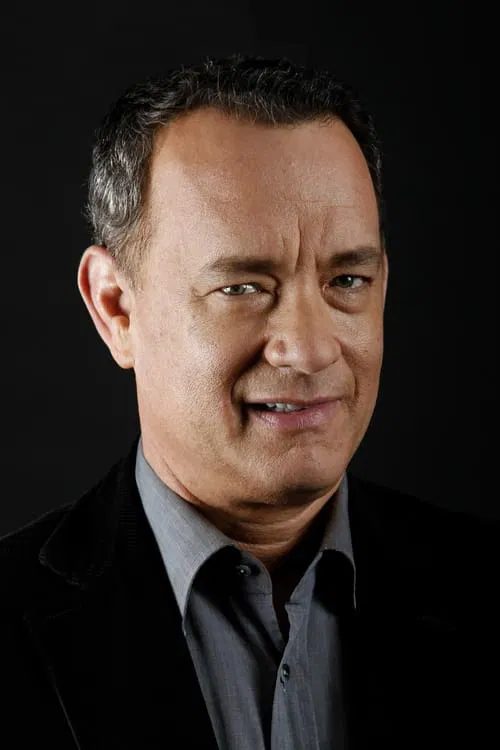
Tom Hanks
Tom Hanks has built a screen career around an unusual kind of versatility: he can make broad comedy feel grounded, carry intense drama without losing his warmth, and give an animated cowboy a recognizably human heart. Born Thomas Jeffrey Hanks on July 9, 1956, in Concord, California, he spent part of his childhood moving with his family after his parents divorced. His early movie run included Bachelor Party, Splash, The Man with One Red Shoe, The Money Pit and Dragnet, but Big marked the breakthrough. Playing Josh Baskin in Penny Marshall’s 1988 film earned Hanks his first Academy Award nomination for Best Actor and established the open, emotionally direct presence that would remain central to his work. The same period also produced the comic unease of The ’Burbs, the unlikely partnership of Turner & Hooch and the romantic leap of Joe Versus the Volcano. The 1990s showed just how much territory Hanks could cover. A League of Their Own, Sleepless in Seattle, Philadelphia, Forrest Gump and Apollo 13 arrived within a remarkably concentrated stretch. His performances in Philadelphia and Forrest Gump brought consecutive Academy Awards for Best Actor. He also became the voice of Sheriff Woody in Toy Story, returning for Toy Story 2 and later sequels. Saving Private Ryan and You’ve Got Mail further demonstrated how comfortably he could move between very different kinds of movies. That range continued with Cast Away, Road to Perdition, Catch Me If You Can and The Terminal. Several of these films grew from lasting collaborations, including his work with directors Robert Zemeckis, Steven Spielberg, Penny Marshall, Ron Howard and Nora Ephron. Hanks has also worked beyond acting. He co-founded Playtone with Gary Goetzman, wrote and directed That Thing You Do!, and co-wrote, directed and produced Larry Crowne. In 2013, he made his Broadway debut in Nora Ephron’s Lucky Guy, receiving a Tony Award nomination. Across comedy, drama, animation and production, his career is defined less by a single screen persona than by the steady sense that he understands exactly what each movie needs from him.
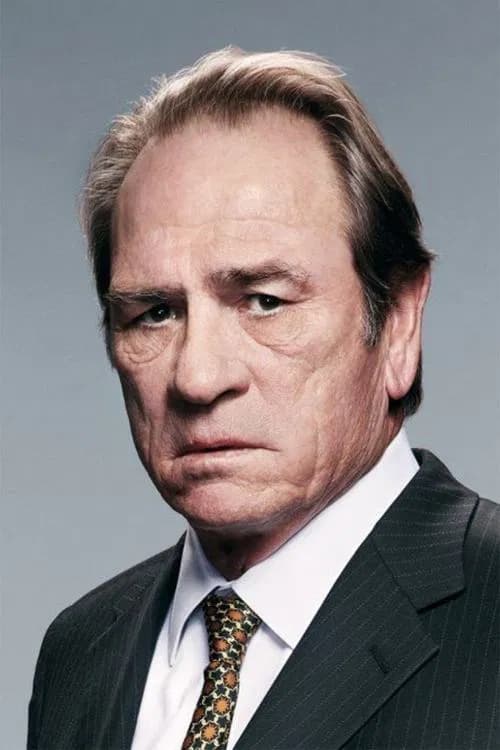
Tommy Lee Jones
San Saba
Tommy Lee Jones has built a screen career around authority, pressure and a particularly dry way of cutting through nonsense. Born on September 15, 1946, in San Saba, Texas, he studied English literature at Harvard, played guard on the university’s football team and moved to New York after graduating in 1969. His early work included Broadway, television and a first film role in Love Story, but the shape of his career would eventually become much harder to pin to any one genre. Coal Miner’s Daughter offered an important early showcase in 1980, with Jones playing Doolittle “Mooney” Lynn and receiving a Golden Globe nomination. Television brought another major turn when his performance as Gary Gilmore in The Executioner’s Song won a Primetime Emmy Award. By the 1990s, he had become an especially effective presence in thrillers and large-scale studio movies, moving from Clay Shaw in JFK and a battleship-hijacking terrorist in Under Siege to a prison warden caught in the chaos of Natural Born Killers. The Fugitive remains one of the clearest expressions of what Jones does so well. As Deputy U.S. Marshal Samuel Gerard, he made relentless pursuit feel sharp, practical and unexpectedly funny, winning the Academy Award for Best Supporting Actor. Men in Black then put his severity to comic use: opposite Will Smith, his Agent K treats extraterrestrial disorder as another demanding day at the office. He returned for Men in Black II in 2002. Jones’s work as a film actor has been matched by credits as a director and producer. He directed the television film The Good Old Boys and later the theatrical feature The Three Burials of Melquiades Estrada, winning the Best Actor Award at Cannes for his performance in the latter. In No Country for Old Men, Jones played a Texas sheriff hunting an assassin. The role drew on his familiar command without making that command seem invulnerable, giving the film a weary human perspective. Across comedy, crime, political drama and action, Jones has repeatedly shown how much can be done with restraint—and how forcefully a quiet reaction can land.
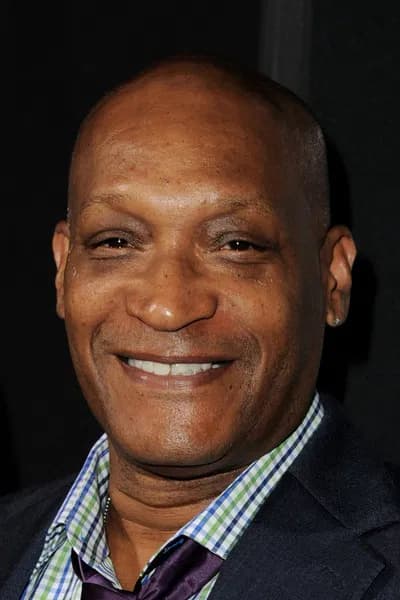
Tony Todd
Washington, D.C.
Tony Todd had the kind of screen presence that could change the temperature of a movie. His imposing physicality mattered, but his signature baritone was just as important: deliberate, resonant and capable of making even a few lines feel loaded with history. That combination made him especially effective in horror, though his career reached far beyond any single genre. Born in Washington, D.C., on December 4, 1954, Todd grew up in Hartford, Connecticut. He attended the University of Connecticut before studying theater at the Eugene O’Neill National Actors Theatre Institute and Trinity Repertory Company. That stage foundation remained a substantial part of his working life. He performed on and off Broadway, with credits including Othello, Aida and August Wilson’s King Hedley II, and received a Helen Hayes nomination for The Captain’s Tiger. On film, Todd appeared in more than 100 theatrical and television productions. His early credits included Platoon, Colors and Lean on Me, three very different films that placed him within war drama, urban crime cinema and the school drama. Candyman became a defining entry in his filmography, drawing on the authority and menace of his voice while giving him a lasting place in modern horror. He later appeared in the large-scale action thriller The Rock and brought his distinctive gravity to Final Destination as William Bludworth, a role he returned to for Final Destination Bloodlines. Todd’s television and voice work showed the same range. He played several characters across the Star Trek universe, appeared twice in different speaking roles on 24 and voiced Zoom in The Flash. His voice credits also included The Fallen in Transformers: Revenge of the Fallen, Dreadwing in Transformers: Prime and the title character in a 2016 audio adaptation of Dracula. Todd, who died in 2024, built a career across film, television, theater, games and audio. Whether occupying the center of a horror story or adding weight to a supporting role, he understood how presence, timing and voice could make the screen feel larger.

Uma Thurman
Boston
Uma Thurman has a screen presence that can shift from poised stillness to full theatrical force without losing its edge. Born in Boston on April 29, 1970, she began working as a fashion model at 15 before making her film debut in the 1987 thriller Kiss Daddy Goodnight. By 1988, she was already moving between very different kinds of cinema: a brief appearance as Venus in Terry Gilliam's The Adventures of Baron Munchausen and the more substantial role of a naive teenager drawn into manipulation in Dangerous Liaisons. That ability to balance composure with something stranger underneath became especially valuable in Pulp Fiction. As Mia Wallace, Thurman created a performance built on cool delivery, dry humor and an undercurrent of danger. The role earned her Academy Award and Golden Globe nominations for Best Supporting Actress and placed her at the center of one of the defining films of the 1990s. She has also shown a willingness to meet heightened material on its own terms. In Batman & Robin, she plays Poison Ivy with a knowingly extravagant style suited to the film's comic-book excess. It is a very different mode from Pulp Fiction, but both performances depend on her control of gesture, timing and attitude. Her reunion with Quentin Tarantino for Kill Bill: Volume 1 and Kill Bill: Volume 2 gave Thurman her most physically demanding role. As the revenge-driven assassin Beatrix Kiddo, she combines martial arts, swordsmanship and emotional resolve across the two films. Thurman trained for three months, and the character was developed by her and Tarantino from an idea conceived during Pulp Fiction. Her work in each volume brought another Golden Globe nomination. Thurman's wider career includes film, television, voice acting, producing and screenwriting, but these films show the shape of her appeal particularly clearly. Whether entering a fantasy as a goddess, navigating dangerous social games, playing a supervillain or carrying a two-part revenge epic, she brings an alert, distinctive presence that rewards another look.
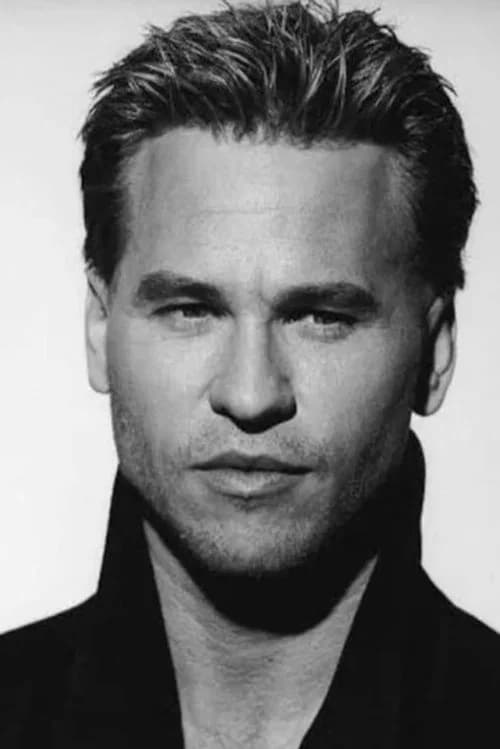
Val Kilmer
Val Kilmer’s filmography rewards a rewind because it refuses to settle into one lane. Across the movies featured by Please Rewind, he moves between wildly different tones while retaining a screen presence that can be playful, intense, elusive or quietly commanding. His early run makes the range clear. Kilmer appears in Top Secret! (1984), Real Genius (1985) and Top Gun (1986), three consecutive years that established him as a distinctive presence on screen. Willow followed in 1988, before The Doors in 1991 opened a new decade of sharply varied work. The two Kilmer films from 1993 on Please Rewind’s list, True Romance and Tombstone, make an especially revealing pairing. They are followed by Heat (1995), another film in which his presence fits naturally within a substantial ensemble. The Prince of Egypt (1998) then adds another kind of project to an already unpredictable selection of credits. That willingness to shift register remained visible in the following decade. Kilmer appears in Kiss Kiss Bang Bang (2005), a movie built around quick changes in mood and rhythm, and in Déjà Vu (2006). Seen alongside his earlier work, those films underline how comfortably he could occupy different corners of a story without losing his particular edge. From Top Secret! through Déjà Vu, the movies gathered here cover more than two decades of Val Kilmer’s screen career. What connects them is not a single type of performance, but his ability to make very different films feel like plausible places for him to turn up. Whether near the centre of the action or part of a larger group, Kilmer gives viewers a reason to keep watching—and to go back.
Viggo Mortensen
Watertown
Viggo Mortensen has built a career around a particular kind of screen presence: watchful, grounded and capable of suggesting far more than a character says aloud. Born on October 20, 1958, he spent part of his childhood in Argentina, became fluent in Spanish and later studied Spanish and government at St. Lawrence University. He returned to the United States in 1982 to pursue acting. His first onscreen film appearance came in Peter Weir’s Witness, where he played an Amish farmer. It was a small role, but the film established a quality that would remain central to his work—the sense that he fully belongs in a character’s physical world. Through the 1990s he became a steady presence in crime dramas, thrillers and studio productions, including Crimson Tide. His defining mainstream breakthrough arrived when Peter Jackson cast him as Aragorn in The Lord of the Rings trilogy. In The Fellowship of the Ring and The Two Towers, Mortensen gives the future king a weathered restraint. His Aragorn is credible with a sword, but the performance works because of its quieter notes: doubt, patience, loyalty and the gradual acceptance of responsibility. Mortensen performed many of his own stunts, and the films’ swordmaster Bob Anderson called him the best swordsman he had trained. Mortensen continued to seek out demanding roles after Middle-earth. His collaborations with David Cronenberg included A History of Violence, Eastern Promises, A Dangerous Method and Crimes of the Future. Eastern Promises brought him his first Academy Award nomination for Best Actor, followed by further nominations for Captain Fantastic and Green Book. Acting is only one part of his work. Mortensen is also a writer, poet, photographer, painter, musician, composer, producer and filmmaker. He made his feature directing debut with Falling, which he also wrote, produced, scored and starred in, and later wrote, directed and starred in the Western The Dead Don’t Hurt. That range helps explain the care in his performances: Mortensen approaches movies not simply as an actor waiting for a close-up, but as someone attentive to the entire frame.
Vince Vaughn
Minneapolis
Vince Vaughn built his screen career around a rare ability to make confidence, irritation and panic arrive in the same breath. Born in Minneapolis on March 28, 1970, he decided to pursue acting in 1987 and moved to Hollywood after appearing in a Chevrolet commercial the following year. His first film role came in Rudy, where he played Notre Dame tailback Jamie O’Hara. Swingers brought wider attention in 1996, giving Vaughn room to establish the quick, conversational energy that would become central to his comedy. Steven Spielberg subsequently cast him as Nick Van Owen in The Lost World: Jurassic Park, moving him from a talk-driven independent comedy into the machinery of a major adventure film. The mid-2000s made especially good use of Vaughn’s comic rhythm. In DodgeBall: A True Underdog Story, he played the comparatively grounded centre of an aggressively ridiculous sports comedy. He also appeared in Anchorman: The Legend of Ron Burgundy and the action-comedy Mr. & Mrs. Smith. Wedding Crashers paired him with Owen Wilson, and their chemistry helped turn the film’s bad behaviour and escalating complications into one of Vaughn’s defining comedy showcases. That run established him as a leading man in studio comedies, but his work has not stayed in one lane. His later roles include the second season of True Detective, the war film Hacksaw Ridge, Brawl in Cell Block 99, Dragged Across Concrete and the body-swap horror comedy Freaky. In 2024, he starred in the television drama Bad Monkey as a detective turned restaurant inspector. Vaughn has also worked as a screenwriter, film and television producer, and co-wrote The Internship. Across comedy, drama, thrillers and television, his most distinctive performances draw on the same underlying quality: a restless screen presence that can feel persuasive, combative or unexpectedly vulnerable, sometimes within a single exchange.
Wesley Snipes
Orlando
Wesley Snipes has built a screen career around range: comedy, crime drama, science fiction and martial-arts-driven action all sit comfortably within his filmography. Born in Orlando, Florida, on July 31, 1962, he grew up in the Bronx and studied acting at SUNY Purchase, earning a bachelor’s degree in fine arts. His background also includes karate and taekwondo, disciplines that would become particularly relevant to his action work. Snipes made his film debut in Wildcats in 1986, but Major League (1989) provided an early showcase for his comic energy. As Willie Mays Hayes, he brought speed and swagger to a baseball comedy built around a team of unlikely contenders. He soon moved into darker territory. In New Jack City (1991), he played drug lord Nino Brown, a role written specifically for him by Barry Michael Cooper. It remains a defining example of Snipes using charisma as something dangerous rather than reassuring. By the early 1990s, action had become a major part of his career. Demolition Man (1993) placed him opposite Sylvester Stallone in a futuristic showdown, with Snipes giving the chaos a playful, volatile charge. That combination of physical control and larger-than-life attitude later found its clearest vehicle in Blade. The 1998 film became his largest commercial success and launched a franchise, with Snipes returning to the title role in Blade II (2002) and also serving as a producer. He reprised the character again in Blade: Trinity and, twenty years later, in Deadpool & Wolverine. The Please Rewind films represented here capture the shape of Snipes’s appeal particularly well. Major League shows the comedian, New Jack City the commanding dramatic presence, Demolition Man the exuberant action antagonist and Blade II the disciplined franchise star. Together, they show an actor able to shift genres without sanding away the confidence and physicality that make his performances recognisably his own.
Whoopi Goldberg
New York City
Whoopi Goldberg has always been difficult to contain within a single lane. Born in New York City on November 13, 1955, she built a career across film, television, comedy, theatre and writing, bringing the instincts of a character performer to even her biggest screen roles. Her national breakthrough came through a one-woman stage show built around sharply drawn character monologues. Retitled Whoopi Goldberg for Broadway, it was recorded for HBO, and the resulting special earned the Grammy Award for Best Comedy Album. That ability to shift voice, rhythm and point of view became central to her film work. Steven Spielberg cast Goldberg as Celie in The Color Purple (1985), giving her a demanding lead role in her first major Hollywood film. Her performance brought an Academy Award nomination for Best Actress and a Golden Globe win. She followed it with a very different kind of vehicle, Penny Marshall’s Jumpin’ Jack Flash (1986), where her quick delivery and restless comic energy could drive the action. Ghost (1990) showed how effectively Goldberg could change a movie’s temperature. As psychic Oda Mae Brown, she supplied comedy without stepping outside the story’s supernatural romance, winning the Academy Award, BAFTA and Golden Globe for supporting actress. Sister Act (1992) then placed her comic presence at the centre of a crowd-pleasing musical comedy, allowing her to play irreverence, warmth and performance within the same role. Her 1994 appearances in The Little Rascals and the animated adventure The Pagemaster reflect another important part of her range: an ease with family entertainment and voice acting. Those films sit comfortably beside the dramatic force of The Color Purple, the genre play of Ghost and the star-led comedy of Sister Act. Goldberg later became the first Black woman to complete the EGOT, with Emmy, Grammy, Oscar and Tony wins. It is a distinction that fits a career never defined by one medium, even if the movies remain a particularly vivid showcase for her blend of character work, comic timing and direct emotional presence.
Will Ferrell
Irvine
Will Ferrell has built a screen career around absolute commitment. However ridiculous the character or situation, he rarely plays it as though he knows where the joke is. That straight-faced conviction—mixed with sudden bursts of panic, vanity or misplaced confidence—has made him a distinctive presence in American comedy. Born in Irvine, California, on July 16, 1967, Ferrell developed his improvisational skills with The Groundlings before joining Saturday Night Live in 1995. Across seven years on the show, his impersonations and original characters established the approach that would carry into his films: broad physical comedy anchored by remarkably specific behavior. His early movie appearances included both Austin Powers films, Jay and Silent Bob Strike Back and Zoolander, where he played fashion villain Jacobim Mugatu. After leaving Saturday Night Live in 2002, Ferrell moved into leading roles. The title role in Elf gave him a character whose innocence suited his willingness to look completely absurd without becoming cynical about it. Anchorman: The Legend of Ron Burgundy pushed his talent for swaggering self-importance to the foreground, while Talladega Nights: The Ballad of Ricky Bobby found another use for that oversized confidence. Step Brothers paired his puppy-dog energy with John C. Reilly’s cockiness, turning adult immaturity into a sustained comic worldview. The film received mixed reviews on release but later became a cult classic. Ferrell’s work has extended beyond acting into writing, screenwriting, producing and voice performance. He has also taken on dramatic material, with Stranger Than Fiction introducing audiences to a quieter side of his acting. Yet the comedies remain central to his screen identity: movies driven by characters who are loud, certain and spectacularly unequipped to understand themselves. Ferrell’s best performances do more than deliver punchlines. They make foolishness feel strangely sincere.
Will Smith
Philadelphia
Will Smith has built a screen career around an unusual flexibility: he can drive an action movie, loosen a scene with comedy and still make room for vulnerability when the story turns inward. Born in Philadelphia on September 25, 1968, Smith began rapping at 12 and first became widely known as part of DJ Jazzy Jeff & the Fresh Prince. His transition into acting took shape with the NBC sitcom The Fresh Prince of Bel-Air before film roles established him as a major leading man. The Please Rewind selection captures that rise particularly well. Bad Boys paired Smith with Martin Lawrence in 1995, giving his quick delivery and relaxed confidence an action framework. Men in Black then found an ideal use for his comic timing through Agent J, played opposite Tommy Lee Jones. Smith returned for Men in Black II, carrying forward the chemistry between the series’ mismatched partners. Enemy of the State placed him alongside Gene Hackman in a surveillance thriller, while I, Robot pushed him into science fiction built around technology and mistrust. Hitch gave Smith a romantic comedy showcase, drawing on the conversational ease that has remained central to his appeal. I Am Legend asked for something more solitary: Smith leads a film whose tension depends heavily on his ability to hold the screen with limited company. That combination of accessibility and star power has carried Smith across comedy, action, science fiction, drama, music and production. He portrayed Muhammad Ali in Ali and Richard Williams in King Richard, winning the Academy Award for Best Actor for the latter performance. He has also continued returning to earlier screen identities, including Bad Boys and Men in Black, while maintaining a music career that began before his film breakthrough. Across these movies, Smith’s defining quality is momentum. Whether trading jokes with a partner or carrying a high-concept story, he performs with a direct connection to the audience—energetic when the movie needs lift, controlled when the stakes become personal.
Willem Dafoe
Appleton
Willem Dafoe has built a career around an unusual kind of flexibility. He can bring menace, compassion, eccentricity or quiet authority to the screen, sometimes shifting between them within the same performance. Born in Appleton, Wisconsin, on July 22, 1955, Dafoe studied drama at the University of Wisconsin–Milwaukee before joining Milwaukee’s experimental Theatre X. After moving to New York, he became a co-founder of The Wooster Group and continued working with the company even after becoming a mainstream film actor. His early screen work quickly established his appetite for distinctive material. After a brief appearance in The Hunger, he played the principal antagonist in Walter Hill’s heightened action film Streets of Fire and counterfeiter Rick Masters in William Friedkin’s To Live and Die in L.A. Platoon gave him wider exposure as the compassionate Sergeant Elias Grodin and brought his first Academy Award nomination for Best Supporting Actor. Dafoe followed that breakthrough with roles that resisted easy categorisation. He portrayed Jesus in Martin Scorsese’s The Last Temptation of Christ, an FBI agent in Mississippi Burning and a Vietnam veteran in Born on the Fourth of July. Even a brief turn as a prison guard in Cry-Baby showed how comfortably he could step into a film’s particular tone. The English Patient, The Boondock Saints and American Psycho later placed him in very different corners of drama, action and psychological satire. For many viewers, Dafoe remains closely associated with Norman Osborn and the Green Goblin in Spider-Man, a performance driven by expressive voice and physicality even behind an imposing mask. A year later, he reached an entirely different audience by voicing Gill in Finding Nemo. His supporting role as a veteran police captain assisting a hostage negotiation in Inside Man offered another example of how effectively he can sharpen an ensemble. Across stage, live-action film and voice work, Dafoe’s career has never settled into one lane. The connecting thread is his commitment to characters who feel specific, whether they occupy the centre of the story or enter briefly and change its temperature.
Winona Ryder
Winona
Winona Ryder has always been especially good at characters who see the strangeness around them before anyone else does. Born in Winona on October 29, 1971, she began taking acting lessons at San Francisco’s American Conservatory Theater at 12. An early screen role in Lucas led to the run of films that established her particular presence: watchful, dryly funny and entirely at home among outsiders. After seeing Ryder in Lucas, Tim Burton cast her as the goth teenager at the center of Beetlejuice. Heathers gave that teenage disaffection a sharper edge, placing her inside a dark satire of high-school popularity that later became a cult film. Reuniting with Burton for Edward Scissorhands, Ryder played the female lead opposite Johnny Depp, bringing warmth to a romantic fantasy built around loneliness and difference. Her 1990s work moved comfortably between heightened genre filmmaking and literary adaptations. In Bram Stoker’s Dracula, she took the dual role of Mina Murray and Princess Elisabeta. As Jo March in Little Women, she brought spark and confidence to one of literature’s most determined young women, earning an Academy Award nomination for Best Actress. Alien Resurrection then sent her into harder-edged science fiction as the android Call, while Being John Malkovich added another singularly strange film to her screen history. Ryder also starred in and executive-produced Girl, Interrupted before taking a four-year career hiatus beginning in 2001. Her return included independent films, a supporting role in Black Swan and another major chapter with Stranger Things. As Joyce Byers, the mother searching for her missing son, she turned anxious energy and fierce resolve into the performance’s driving force; the cast won a Screen Actors Guild Award for its ensemble work in 2017. Across teen satire, gothic romance, period drama, science fiction and television horror, Ryder’s best work shares a recognizable tension. She can appear vulnerable without seeming passive, guarded without becoming remote. That quality is why movies such as Beetlejuice, Heathers, Edward Scissorhands and Little Women remain so rewarding to revisit.
Across the decades