How the 1980s Turned Horror Villains Into Movie Stars
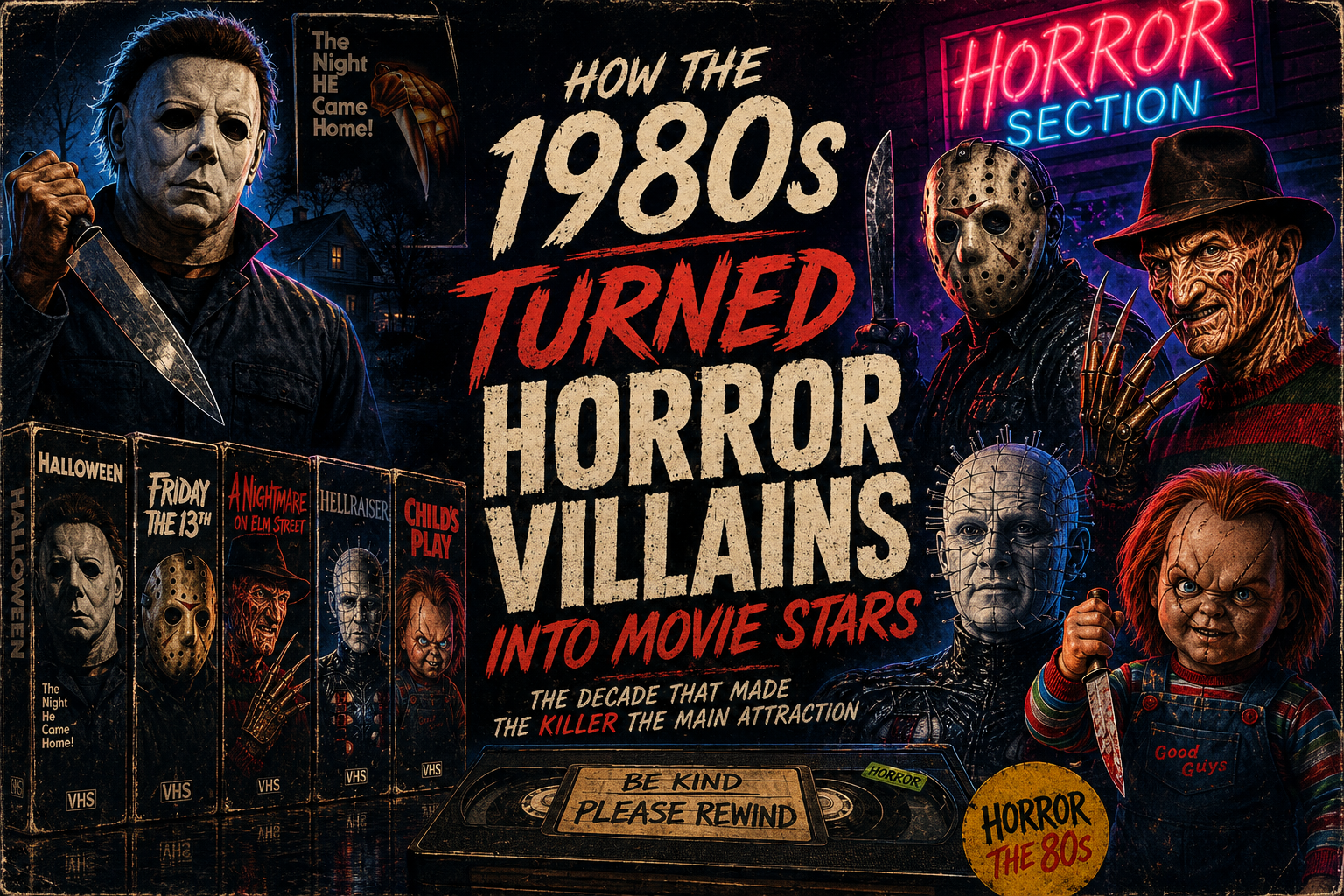
Horror once asked audiences to fear the monster. In the 1980s, something changed. Michael Myers, Jason Voorhees, Freddy Krueger, Pinhead and Chucky became the faces audiences paid to see — and horror's killers became movie stars.
STAFF PICK
ONE MORE MOVIE?
FEATURE PRESENTATION
STORIES WORTH REWINDING
FEATURE PRESENTATION
PLAY // READ // REWIND
BEFORE THE BOOGEYMEN
Horror Had Monsters — But the 80s Built Brands
None of this began from nothing.
Cinema had been turning monsters into celebrities since Boris Karloff's Frankenstein's monster and Bela Lugosi's Dracula became cultural icons in the 1930s.
But those characters belonged to mythology, literature and gothic horror as much as they belonged to individual film franchises.
The late 1970s began changing the formula.
The Texas Chain Saw Massacre introduced Leatherface in 1974.
Then Halloween arrived in 1978.
Michael Myers was different. He barely spoke.
He had almost no personality in the conventional sense.
Even the credits called him The Shape.
But that blank white mask did something extraordinarily powerful.
It gave evil a logo.
You could recognise Michael Myers instantly.
That idea would become incredibly important during the decade that followed.
MICHAEL MYERS
The Blueprint Was Already Standing in Haddonfield
Michael wasn't created in the 1980s, but his influence hangs over almost everything that followed.
John Carpenter's Halloween demonstrated how effective a simple silhouette could be.
Dark overalls.
White mask.
Kitchen knife.
That was virtually all you needed.
More importantly, Michael wasn't a monster hidden away in some distant castle.
He walked through an American suburb.
He stood behind hedges.
He appeared at the end of streets.
He watched from windows.
Then Halloween II arrived in 1981 and continued the story on the same night.
The idea of the recurring slasher villain was taking shape.
But another franchise was about to push it much further.
JASON VOORHEES
One Hockey Mask Changed Everything
The strange thing about one of the most recognisable horror villains ever created is that the version everybody remembers wasn't even there at the beginning.
Jason isn't the killer in the original Friday the 13th.
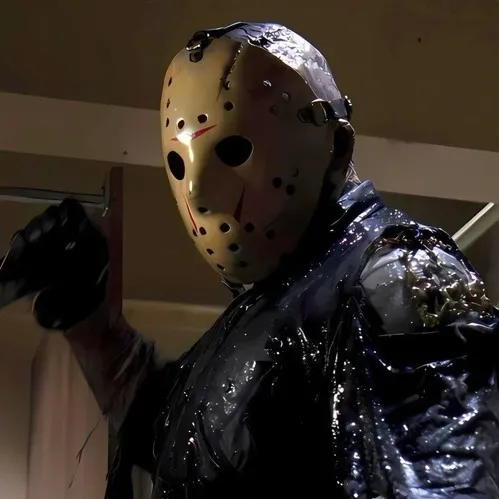
When he becomes the murderer in Friday the 13th Part 2, he still doesn't have the famous hockey mask.
Then came Friday the 13th Part III in 1982.
Jason puts on the hockey mask.
And horror history changes.
The film itself probably had no idea quite how valuable that image would become. But from that moment forward, the mask effectively became Jason's face. The franchise continued modifying and damaging it, but the fundamental silhouette was established.
A hockey mask no longer necessarily meant hockey.
It could mean Jason Voorhees.
That is an extraordinary achievement in visual branding.
You could put the mask on a poster without showing the actor beneath it.
People knew who was coming.
And Paramount kept bringing him back.
THE SEQUEL MACHINE
Death Became a Minor Inconvenience
The 1980s also taught horror audiences an important lesson.
Never believe the title.
Friday the 13th: The Final Chapter arrived in 1984.
It was the fourth movie.
There are considerably more than four Friday the 13th movies.
Once audiences responded to a horror villain, killing them permanently became commercially inconvenient.
Jason could be stabbed.
Burned.
Drowned.
Electrocuted.
Chained underwater.
It didn't really matter.
There was always another sequel.
That changed the relationship between audience and killer.
The victims changed.
Locations changed.
Supporting characters disappeared.
But the monster remained.
Jason became the franchise's constant.
People weren't necessarily going to the latest Friday the 13th because they were emotionally invested in whichever group of unfortunate teenagers had booked the wrong weekend away.
They were going to see Jason.
The villain had become the lead attraction.
THEN FREDDY ARRIVED
The Monster Learned How to Talk
If Jason demonstrated that a masked killer could carry a franchise, Freddy Krueger showed just how far the idea could go.
Wes Craven's A Nightmare on Elm Street arrived in 1984.
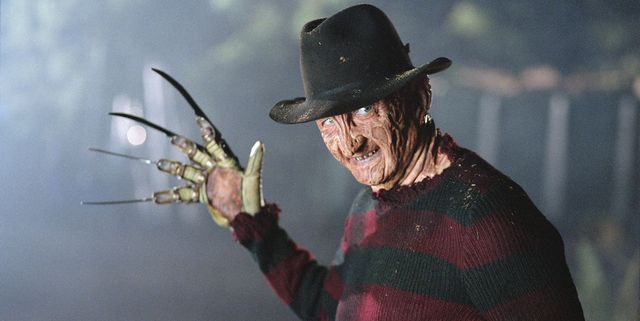
And Freddy was completely different.
Jason was silent.
Michael was silent.
Freddy wouldn't shut up.
He could speak.
Mock.
Laugh.
Play with his victims.
And because Freddy attacked through dreams, he wasn't bound by the physical rules that governed other slashers.
Anything could happen.
A bedroom could become a nightmare.
A telephone could become threatening.
Walls could stretch.
Reality itself could turn against you.
Robert Englund didn't just give Freddy a body.
He gave him a personality.
And audiences responded.
The original A Nightmare on Elm Street earned roughly $25.6 million domestically on a $1.8 million production budget, according to The Numbers.
Freddy wasn't going anywhere.
THE HOUSE THAT FREDDY BUILT
A Killer Became an Entertainment Franchise
Freddy's transformation during the decade might be the clearest example of what had changed.
The original Freddy is genuinely horrible.
He's a child murderer stalking teenagers in their dreams.
But sequel after sequel gradually pushed his personality further forward.
The jokes became bigger.
The kills became more elaborate.
And Freddy increasingly knew that everybody had come to see him.
That was the remarkable shift.
He wasn't simply the villain of A Nightmare on Elm Street anymore.
Freddy Krueger was the star of A Nightmare on Elm Street.
New Line Cinema's fortunes became so closely associated with the series that the studio famously acquired the nickname “The House that Freddy Built.”
And it's easy to understand why.
Freddy had everything a horror franchise could possibly want.
A recognisable face.
A recognisable voice.
A recognisable jumper.
A recognisable hat.
And perhaps most importantly of all...
That glove.
You could show four blades against a dark background, and audiences knew exactly who they belonged to.
Horror iconography had become marketing.
WHEN THE KILLER GOT THE BEST LINES
We Started Cheering for the Wrong Person
This presented horror with a wonderfully strange problem.
If audiences loved the villain, what exactly were filmmakers supposed to do?
The answer was increasingly obvious.
Give them more villain.
Kills became set pieces.
Entrances became applause moments.
Personality became important.
Freddy accelerated that transformation because Robert Englund could actually perform directly to the audience in a way that Michael and Jason couldn't.
The victims might be terrified of him.
The audience was having fun with him.
That doesn't mean viewers wanted the characters to die.
It means the traditional relationship between protagonist and antagonist had become complicated.
We still wanted the Final Girl to survive.
But we had also paid to see what Freddy was going to do.
The villain had become entertainment.
HORROR AT HOME
VHS Made the Monsters Bigger
And then there was the video shop.
This part matters enormously.
Before home video, a theatrical movie could disappear.
You might catch it later on television or during a re-release, but access wasn't guaranteed.
VHS changed that relationship.
Now Jason could live on a shelf.
Freddy could stare at you from a video box.
Michael Myers could sit beside Leatherface.
The horror aisle became a gallery of villains.
And those covers had to compete for attention.
That encouraged bold imagery.
Masks.
Weapons.
Faces.
Blood.
Titles.
You didn't necessarily need to have watched the film to recognise its monster.
Sometimes you'd seen the VHS cover twenty times before you were old enough to rent it.
The villains escaped their movies.
They became part of the visual landscape of growing up in the 1980s.
PINHEAD
Horror Found Another Face
Then Clive Barker gave horror something different.
Hellraiser arrived in 1987.
The Cenobites weren't slashers in the conventional sense, and the character audiences would eventually call Pinhead wasn't originally positioned quite like Freddy or Jason.
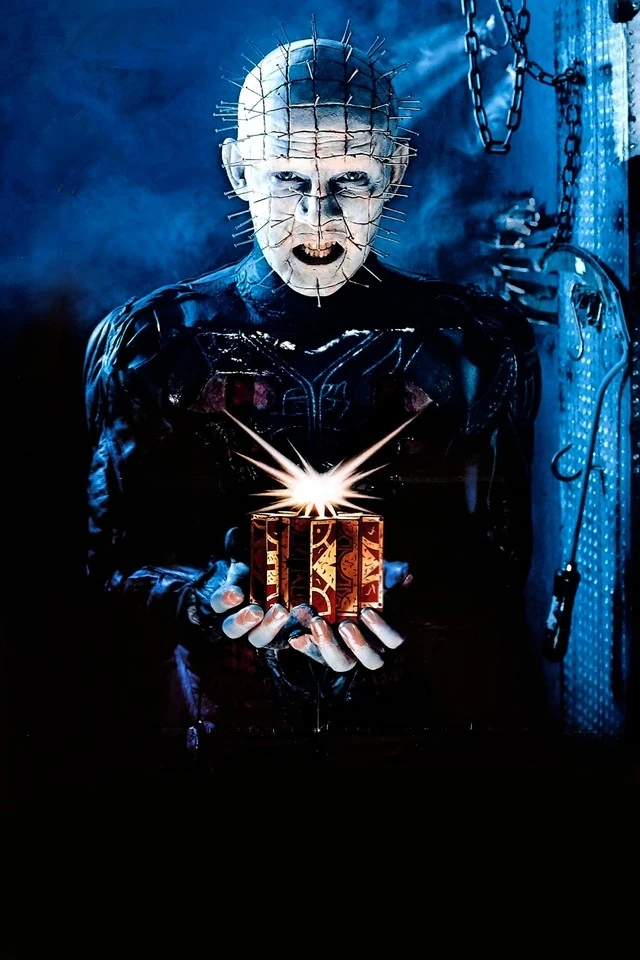
But look at him.
That design was practically impossible to forget.
Doug Bradley's cold, controlled performance made the character even more unsettling. He wasn't frantic.
He didn't need to be.
He looked like something that had calmly stepped out of another dimension.
Bradley would go on to portray the character across numerous subsequent Hellraiser films.
Once again, horror had created something incredibly valuable.
A face you couldn't mistake for anybody else.
CHUCKY
By 1988, Even the Doll Could Become the Star
Then the decade produced one more major horror personality.
Chucky.
Child's Play arrived in 1988 with an idea that sounds almost ridiculous until you see how effectively the film uses it.
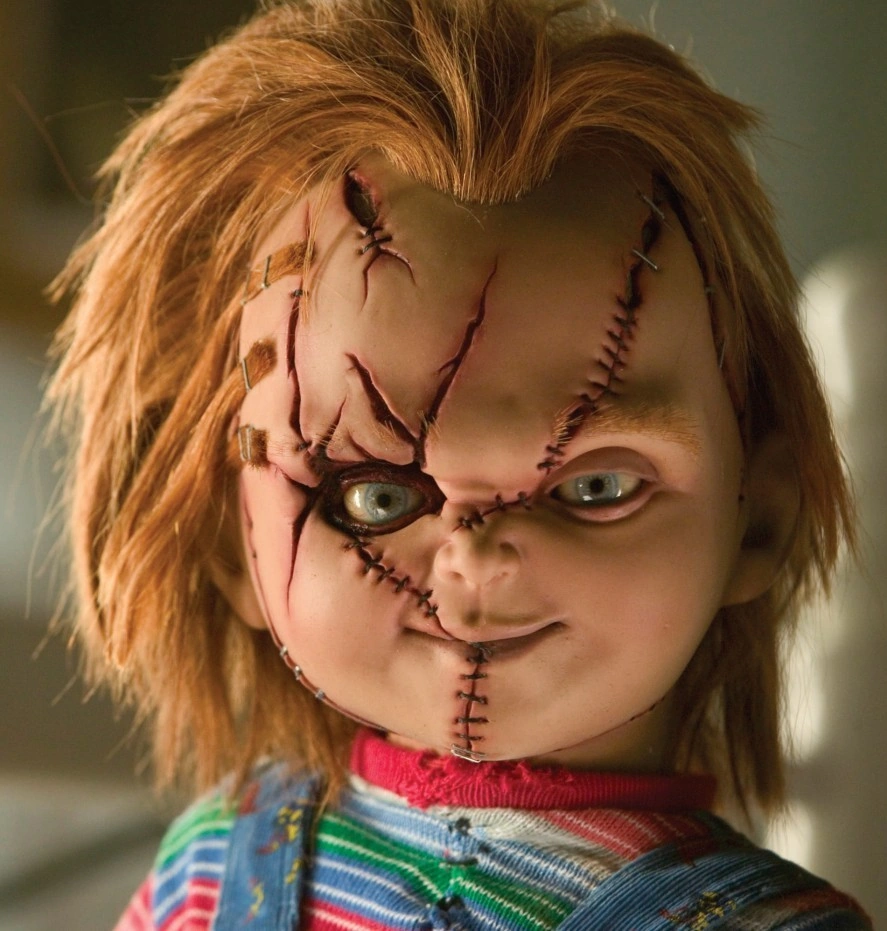
A killer doll.
But Chucky had something in common with Freddy.
He could perform.
Brad Dourif's voice gave the character anger, humour and personality.
And unlike the silent slashers, Chucky could increasingly participate in the joke.
The first film was commercially successful too, earning about $33.2 million domestically, while Box Office Mojo records a $6.58 million opening weekend.
Once again, horror had found a character audiences wanted to see return.
Not Andy Barclay.
Chucky.
THE LOOK MATTERED
Every Great Horror Star Had a Silhouette
Think about the biggest horror villains of this period without thinking about their movies.
Michael Myers.
White mask.
Jason.
Hockey mask.
Freddy.
Hat, striped jumper, glove.
Pinhead.
Pins.
Chucky.
Dungarees, striped shirt, red hair.
You could reduce these characters to a few visual ingredients and people would still recognise them.
That's exactly what successful movie stars have always needed.
A screen presence.
Except horror discovered that its stars didn't necessarily need handsome faces.
Sometimes they didn't need faces at all.
They needed silhouettes.
THE POSTER
Horror Learned How to Sell the Villain
Look at how franchises eventually presented themselves.
The monster could sell the movie.
The weapon could sell the movie.
The mask could sell the movie.
Audiences didn't require a lengthy explanation.
If Jason was back, that was the pitch.
If Freddy was back, that was the pitch.
This is one reason sequel numbers became almost irrelevant.
The franchise wasn't necessarily selling a continuing narrative.
It was selling another encounter with the star.
Horror had stumbled onto something comparable to James Bond.
Different situations.
Different supporting characters.
Different filmmakers.
But audiences came back for the familiar figure at the centre.
Except this time he carried a machete.
HALLOWEEN COSTUMES
Movie Stars Walked Out of the Cinema
Then something happened that proved these characters had escaped horror fandom entirely.
People started dressing as them.
Jason's hockey mask became Halloween shorthand.
Freddy's glove became instantly identifiable.
Michael Myers returned to the very holiday that had inspired his creation.
This is where horror villains and cultural icons become hard to separate.
You don't need to have watched every Friday the 13th film to understand a hockey mask and machete costume.
You don't need to know the mythology of A Nightmare on Elm Street to recognise Freddy.
The movies created characters.
The sequels created familiarity.
Television and VHS created repeated exposure.
Halloween turned them into folklore.
THE FINAL GIRL
The Villains Weren't the Only Stars
There is an important qualification here.
The 1980s didn't completely belong to the killers.
Horror also produced memorable survivors.
Laurie Strode had already helped establish the template.
Nancy Thompson fought Freddy.
Tommy Jarvis repeatedly confronted Jason.
And the Final Girl became one of the genre's defining archetypes.
But a fundamental imbalance ran through franchise horror.
Survivors could leave.
The killer usually couldn't.
A new group of teenagers could arrive at Crystal Lake.
Another generation could fall asleep on Elm Street.
But remove Jason or Freddy, and suddenly the franchise itself became harder to recognise.
That tells you who the studios believed the real star was.
THE MERCHANDISE
Fear Became Something You Could Own
Once a horror villain becomes recognisable enough, something else happens.
You can sell him.
Posters.
Masks.
T-shirts.
Figures.
Lunch boxes.
Models.
Video games.
Collectables.
Eventually almost anything.
That would grow enormously in later decades, but the foundations were already there.
Horror fans didn't merely want to watch these characters.
They wanted to own a piece of them.
That is movie-star behaviour.
The monsters had become celebrities.
WHY THE 1980s?
It Was the Perfect Decade for the Horror Superstar
Several things came together at exactly the right moment.
The slasher boom created repeatable villains.
Sequels kept them visible.
Practical effects allowed filmmakers to devise increasingly elaborate kills.
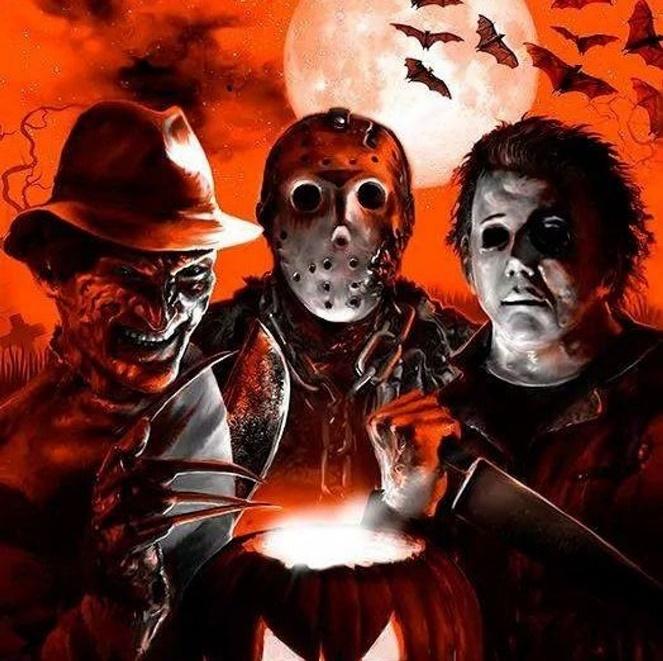
Distinctive costumes made characters instantly recognisable.
Posters sold their imagery.
VHS brought them into people's homes.
Video shops displayed their faces week after week.
And Halloween gave audiences an annual opportunity to become them.
Horror had accidentally built the perfect celebrity machine.
All it needed were stars.
Michael, Jason, Freddy, Pinhead and Chucky were waiting.
THEN THE 80s ENDED
But the Monsters Didn't
The really remarkable thing is what happened afterwards.
The decade ended.
The villains stayed.
Halloween continued.
Friday the 13th continued.
A Nightmare on Elm Street continued.
Hellraiser continued.
Child's Play continued.
Some franchises disappeared temporarily.
Some were rebooted.
Some crossed over.
Some went straight to video.
Some returned decades later.
But the characters survived because they had become bigger than individual movies.
Freddy versus Jason eventually became a film because audiences already understood the concept from the names alone.
The killers had become intellectual property.
But more importantly, they had become pop culture.
THE PLEASE REWIND TAKE
Horror Didn't Defeat the Monster — It Put Him Above the Title
The 1980s didn't invent the horror icon.
Dracula and Frankenstein had become movie stars generations earlier.
Michael Myers had already arrived before the decade began.
But the 80s industrialised the idea.
Again and again, horror discovered that the character audiences were supposedly meant to fear could also be the character they most wanted to see.
Jason got his hockey mask.
Freddy got his glove.
Pinhead got his impossible face.
Chucky got his Good Guys doll.
Michael kept coming home.
The victims changed.
The fashions changed.
The music changed.
The cinemas changed.
Eventually even the way we watched movies changed.
But those faces remained.
That's why, more than forty years later, you can walk into a Halloween shop and find characters born during the 1980s staring back at you.
That's why their films keep being restored, re-released, rebooted and rediscovered.
And it's why a hockey mask can still mean something completely different after dark.
The greatest trick 1980s horror ever pulled wasn't convincing us that its monsters were real.
It convinced us they were movie stars.
END OF FEATURE
Be kind. Rewind. Then pick another.
One more movie?
DON'T RETURN
THE TAPE YET.
Two more stories from the Please Rewind magazine rack.
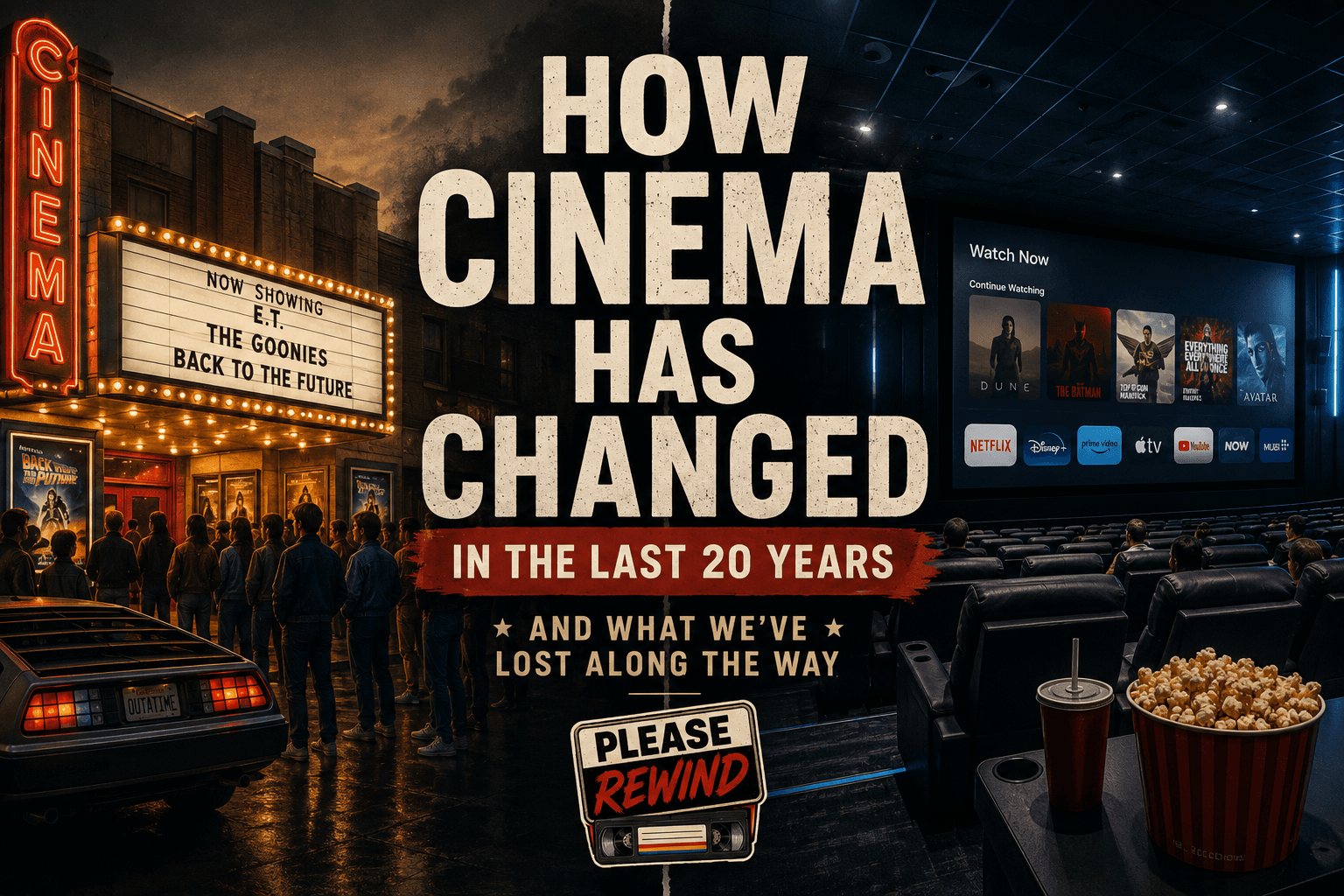
RENTAL_01
Movie Culture
How Cinema Has Changed in the Last 20 Years — And What We’ve Lost Along the Way
From Friday-night queues and packed multiplexes to streaming, phones and endless choice, going to the movies feels very different now.
PICK UP RENTAL →
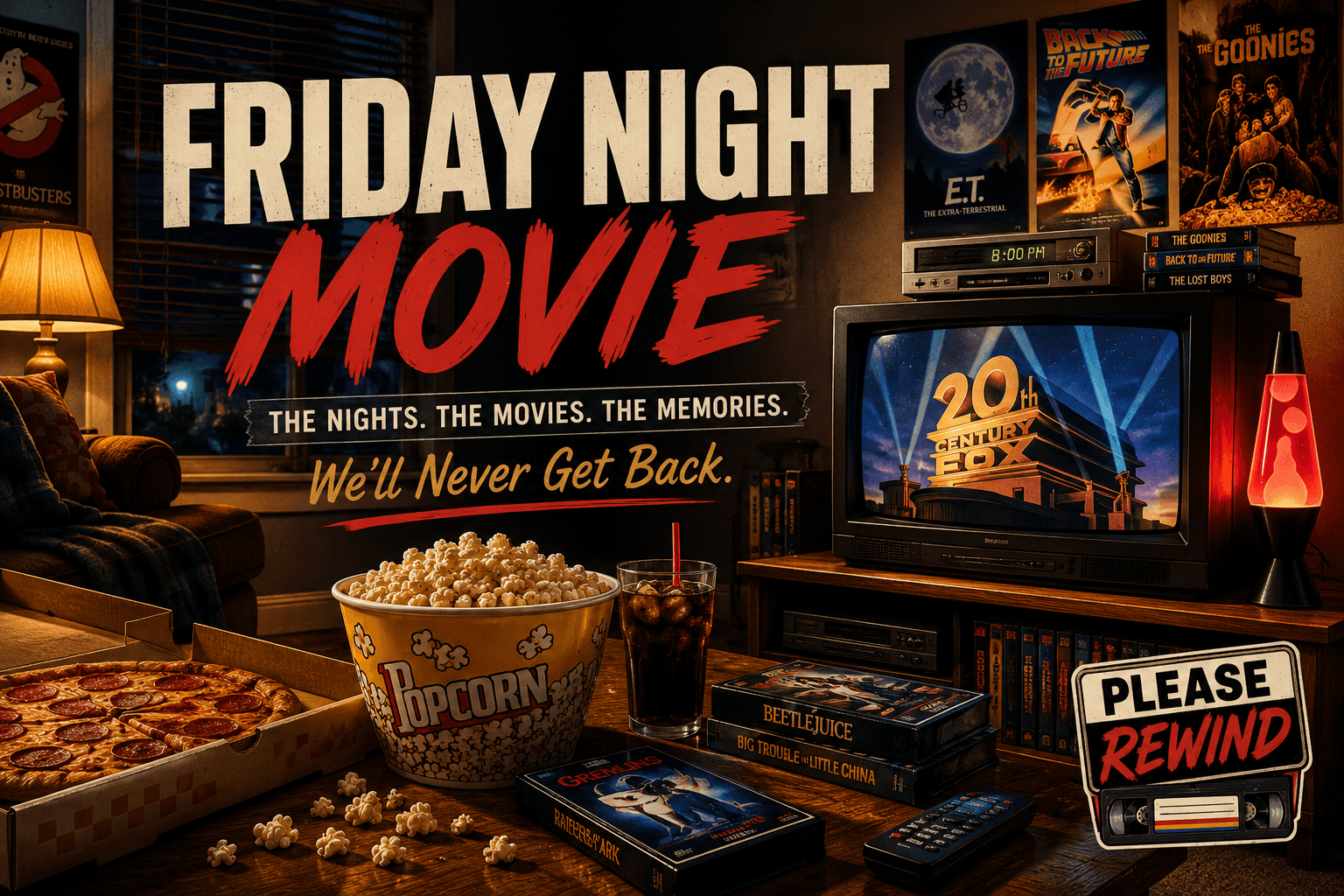
RENTAL_02
Nostalgia
Whatever Happened to the Friday Night Movie?
Before endless scrolling and infinite watchlists, Friday night meant choosing one film, getting the snacks in and actually pressing play.
PICK UP RENTAL →