
Rental copy● Available

Staff pick
Action
1988 // VHS
Die Hard
SPStereoTracking: Auto
Rewind Die Hard on Please Rewind.
Rewind this one →Be kind
Please Rewind // Franchise Archive
Explore every Die Hard movie, the cast and characters, John McClane's story, franchise history, features and the latest Die Hard news.
Latest from the Wizarding World
Cast Directory
The actors behind the Die Hard movies — from the faces that defined the series to the supporting players who helped bring the world to life.
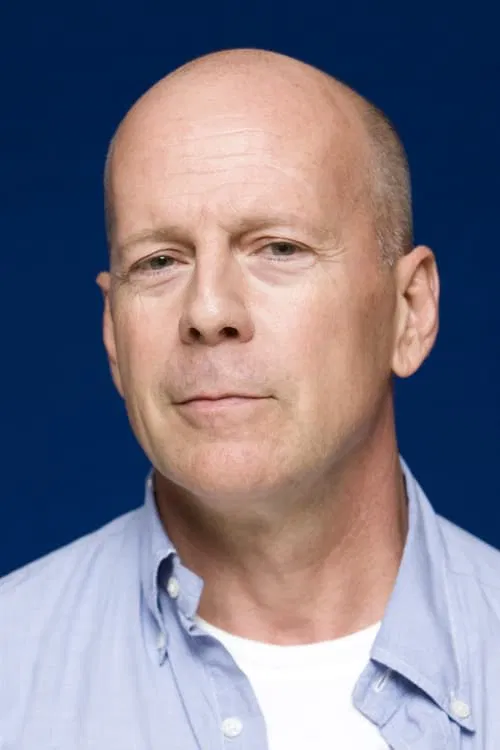
3 Films
Idar-Oberstein
Bruce Willis built his screen career on a useful contradiction: he could look completely at home in an action movie while suggesting that his character would rather be anywhere else. That blend of confidence, irritation and dry humor became central to his appeal, particularly as John McClane in Die Hard and its sequels. Born Walter Bruce Willis on March 19, 1955, in Idar-Oberstein, West Germany, he later grew up in Carneys Point, New Jersey. Willis joined his high school drama club and found that performing onstage reduced his stutter. After attending Montclair State University, he moved to New York City, where he worked as a bartender while pursuing acting. His major breakthrough came as David Addison Jr. opposite Cybill Shepherd in Moonlighting. The series established Willis as a comic actor and brought him an Emmy and a Golden Globe. Die Hard then gave that quick, argumentative energy a different setting. McClane was an action hero who bled, complained and improvised, and Willis returned to the role in four sequels over 25 years. His filmography was broader than that signature part suggests. Pulp Fiction placed him inside Quentin Tarantino's intersecting crime story, while 12 Monkeys, The Fifth Element and Armageddon moved him through very different forms of science fiction and spectacle. The Sixth Sense drew on a quieter, more restrained side of his presence. He also appeared in Unbreakable and Glass, played an older version of Joe in Looper, and joined the ensembles of Sin City and Moonrise Kingdom. Willis worked beyond live-action film as a voice actor, producer, screenwriter, singer and musician. His television work included an Emmy-winning guest appearance on Friends, and he made his Broadway debut in a 2015 adaptation of Misery. In 2022, his family announced that he was retiring from acting after being diagnosed with aphasia. His career remains defined not only by action, but by the comic timing and guarded vulnerability he carried into it.
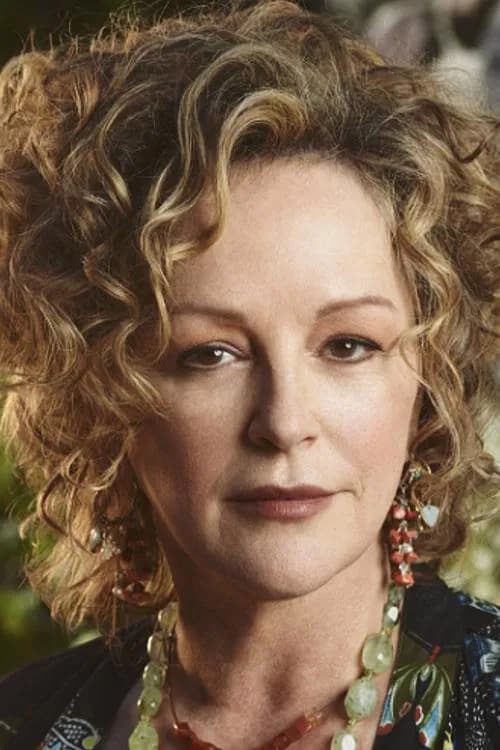
2 Films
Manhattan
Bonnie Bedelia has built a career around grounded, quietly forceful performances—work that often feels lived-in rather than displayed. Born in Manhattan in 1948, she began with dance, studying at the School of American Ballet and appearing in New York City Ballet productions including The Nutcracker. Her only onscreen dancing role came early, as Clara in a 1958 Playhouse 90 production of George Balanchine’s Nutcracker, before acting became her central pursuit. She later trained at HB Studio. Bedelia was still young when she became a regular on the CBS soap Love of Life, playing Sandy Porter from 1961 to 1967. Broadway work followed, including her 1962 debut in Isle of Children opposite Patty Duke and a Theatre World Award for My Sweet Charlie. By the end of the decade, she had moved into film, making her debut in The Gypsy Moths and appearing as a pregnant marathon dancer in They Shoot Horses, Don’t They? Her screen career has moved easily between intimate drama, genre filmmaking and television. In Heart Like a Wheel, she played drag racer Shirley Muldowney, earning a Golden Globe nomination for a performance that placed her firmly at the center of the story. Many viewers know her as Holly Gennero McClane in Die Hard and Die Hard 2, where she brought resolve and credibility to a role that could easily have been treated as secondary. She also played Barbara Sabich in Presumed Innocent and appeared in two Stephen King adaptations, Salem’s Lot and Needful Things. Television has been an equally substantial part of Bedelia’s work. She received Emmy nominations for Fallen Angels and Locked in Silence, led The Division as Captain Kate McCafferty, and later played Braverman family matriarch Camille in Parenthood from 2010 to 2015. Across those roles, Bedelia’s strength has remained consistent: she gives characters a sense of history, even when the story does not stop to explain it.
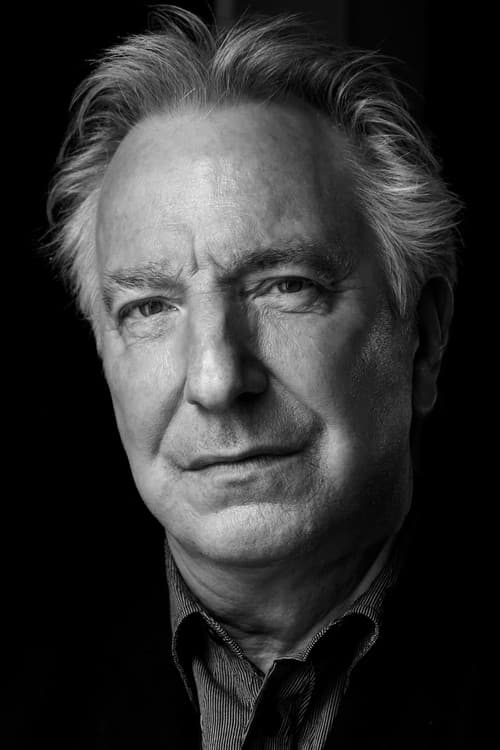
1 Film
Acton
Alan Rickman brought a deep, measured voice and languid delivery to the screen, qualities that could make menace, comedy or quiet tenderness feel equally natural. Born in Acton on 21 February 1946, he first pursued visual art, studying at Chelsea College of Art and Design and the Royal College of Art before working as a graphic designer. After three years running the design studio Graphiti with friends, he changed course and trained at RADA from 1972 to 1974. Rickman built his craft in British repertory and experimental theatre, later working with the Royal Shakespeare Company. His performance as the Vicomte de Valmont in Les Liaisons Dangereuses moved from the West End to Broadway and earned Tony and Drama Desk nominations. By the time he made his feature-film debut as Hans Gruber in Die Hard in 1988, his command of a scene was already thoroughly tested. Gruber became one of cinema’s best-known villains, although Rickman resisted being confined to that kind of role. The range that followed proved why. He played the gleefully wicked Sheriff of Nottingham in Robin Hood: Prince of Thieves, winning a BAFTA for the performance, but also brought romantic feeling to Truly, Madly, Deeply and restraint to Colonel Brandon in Sense and Sensibility. His comic instincts found especially good outlets in Galaxy Quest, as the exasperated Alexander Dane, and Dogma, as the angel Metatron. For a generation of viewers, Rickman became Severus Snape across the Harry Potter film series from 2001 to 2011. The role made full use of his ability to keep a character’s motives guarded without making him unreadable. Elsewhere, he voiced Marvin in The Hitchhiker’s Guide to the Galaxy and Absolem in Alice in Wonderland, and appeared in Love Actually, Sweeney Todd and Eye in the Sky. Rickman also directed for stage and screen, including The Winter Guest and A Little Chaos. Whether playing a villain, romantic lead, comic actor or compromised authority figure, he was rarely hurried and never careless about the weight of a line.
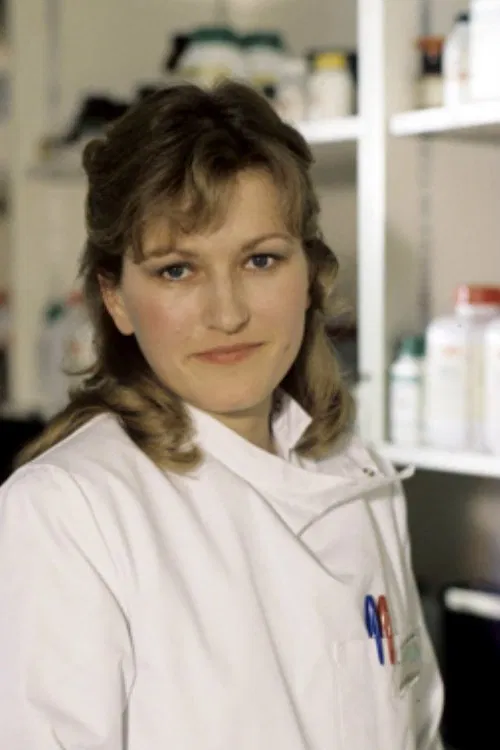
1 Film
Amanda Hillwood is an English actress, born on 26 February 1957. Her screen career is associated with television acting, placing her among those performers whose work has been shaped by the particular rhythms of the small screen. There is no Please Rewind movie currently connected to Hillwood, so this profile cannot yet centre on a specific film performance or trace her work through the titles featured by the publication. Instead, it serves as an introduction to an English performer identified with acting and, more specifically, television. That distinction matters. Film profiles often find their focus in a single role, scene or collaboration worth revisiting, while television actors may be familiar through work that develops in a different format. Without a connected movie to discuss, it would be misleading to assign Hillwood a defining film role or offer a broader account unsupported by the titles represented here. For now, Hillwood’s place on the Talent Wall is best understood as a starting point rather than a full retrospective. She is an English actress with a recognised association with television performance, and her profile remains open for a closer look when one of her movies joins the Please Rewind collection. Until then, the essentials are simple: a performer born in 1957, working as an actor and television actor, awaiting the film that gives this page its proper point of return.
1 Film
Berkeley
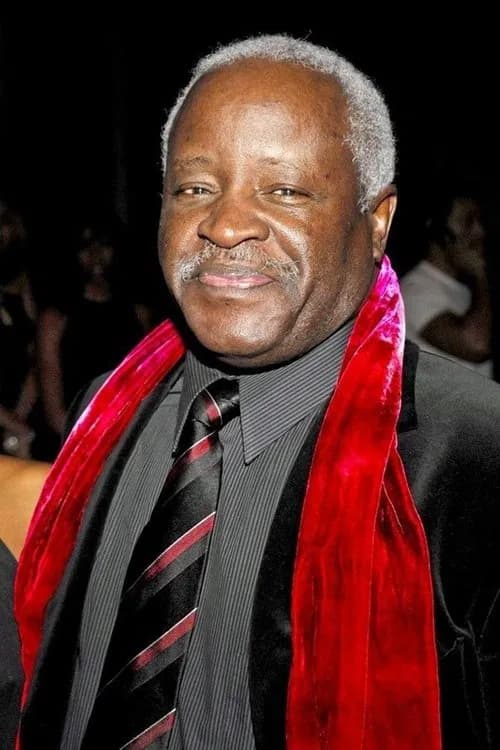
Art Evans brought a grounded, alert presence to roles across film, television and the stage. Born in Berkeley, California, on March 27, 1942, Evans built an acting career that lasted almost 40 years, moving comfortably between drama, comedy, horror and action without losing the sense that his characters had lives beyond the edges of the frame. His career began with Frank Silvera’s Theater of Being in Los Angeles. Evans took a starring role in The Amen Corner, which transferred to Broadway in 1965, before making his uncredited film debut in Claudine in 1974. His first credited television role came as Bubba in a 1976 episode of Chico and the Man. That same year, his ability to play several instruments proved useful when he portrayed blues musician Blind Lemon Jefferson in Leadbelly. Evans became a familiar face through sharply defined supporting parts. In John Carpenter’s Christine, he played the Detroit auto worker who becomes the possessed car’s first victim. A Soldier’s Story gave him the memorable role of Wilkie, while Die Hard 2 placed him at the centre of the airport crisis as Leslie Barnes, the chief engineer who helps John McClane prevent a terrorist plot. Barnes was capable, pressured and essential to the story—exactly the kind of role Evans could make feel substantial. His varied film credits also included Fright Night, Ruthless People, Native Son, School Daze, The Mighty Quinn, Trespass, CB4, Tales from the Hood and Metro. On television, he appeared in series including M*A*S*H, Hill Street Blues, The X-Files, Family Matters, Monk and Last Man Standing. His most recognizable television role was Mr. Johnson, Ron Johnson’s father, on A Different World. Evans continued working into the 2010s, appearing as the lead character’s grandfather in Anderson’s Cross and guest-starring in Last Man Standing. Across his career, he gave supporting characters humor, authority and a convincing sense of purpose.

1 Film
Tarrytown, New York, U.S.
Ben Lemon is an American actor born on 21 May 1955 in Tarrytown, New York, whose career has included action movies, comedy and decades of television appearances. For 90s movie fans, Lemon can be spotted in films including Die Hard 2, Hot Shots! Part Deux, Weekend at Bernie's II and the Jim Carrey comedy Liar Liar. His television work has been equally varied, with appearances in shows including Star Trek: The Next Generation, Murder, She Wrote, The Practice, JAG, True Blood, Desperate Housewives, House and 90210. From Television to Die Hard Lemon began building his screen career around the end of the 1980s, with early television work including thirtysomething and China Beach. One of his earliest movie appearances came in Die Hard 2 (1990). The second Die Hard movie brought Bruce Willis back as John McClane, this time battling a group of mercenaries who seize control of Washington Dulles International Airport. Lemon appears as a Sergeant, associated with the military group introduced during the crisis. It's a relatively small part within the movie's enormous supporting cast, but it gave Lemon an early connection to one of the biggest action franchises of the era. Comedy Became Part of the Story Lemon's career didn't keep him tied to action movies. In 1993 he appeared as Team 2 Leader in Hot Shots! Part Deux, the Charlie Sheen-led action parody that took aim at the sort of huge action movies that had dominated cinemas during the previous decade. The same year he appeared as a New York cop in Weekend at Bernie's II. Then came one of the most recognisable movies on his filmography. Ben Lemon in Liar Liar In 1997, Lemon appeared alongside Jim Carrey in Liar Liar. He played Randy, adding another major 90s comedy to a filmography that by this point had become surprisingly varied.

1 Film
Ludlow
Bob Braun’s screen career grew out of broadcasting rather than the usual path through film and theatre. Born in Ludlow on April 20, 1929, he started remarkably early, hosting a Saturday morning Knothole Baseball sports show on WSAI Radio at thirteen. That beginning set the pattern for a career built around an easy command of live entertainment. A major break came in 1957, when Braun won the $1,000 top prize on Arthur Godfrey’s Talent Scouts and was immediately hired by WLWT and WLW-AM. He became a regular presence on Ruth Lyons’ weekday program The 50-50 Club, sometimes filling in as host. After Lyons retired in 1967, Braun took over the time slot; the program later became The Bob Braun Show and, toward the end of its run, Braun and Company. He also hosted Bob Braun’s Bandstand, a local showcase for teenagers dancing to current hits, with visiting singers and groups sometimes appearing. Music remained another strand of Braun’s work. After several early pop recordings, he signed with Decca Records and reached the Top 40 in 1962 with “Till Death Do Us Part,” his only hit at that level. He continued recording afterward, including the 1982 album Women of My Dreams. Braun’s television work was closely tied to Cincinnati, including his annual support for the Ruth Lyons Christmas Fund. Much of his daytime broadcasting before 1982 was lost through tape wiping, although shorter segments and at least one earlier prime-time special survived. Preserved editions of The Bob Braun Show and Braun and Company are held by the Cincinnati Museum Center. In 1984, Braun moved to California, where he worked in commercials, talk shows and small movie roles. His film appearances included a part in Die Hard 2. It was a modest extension of a much longer broadcasting career: Braun was primarily a host and presenter, someone whose comfort in front of a camera carried naturally across television, advertising and film.
1 Film
Dublin
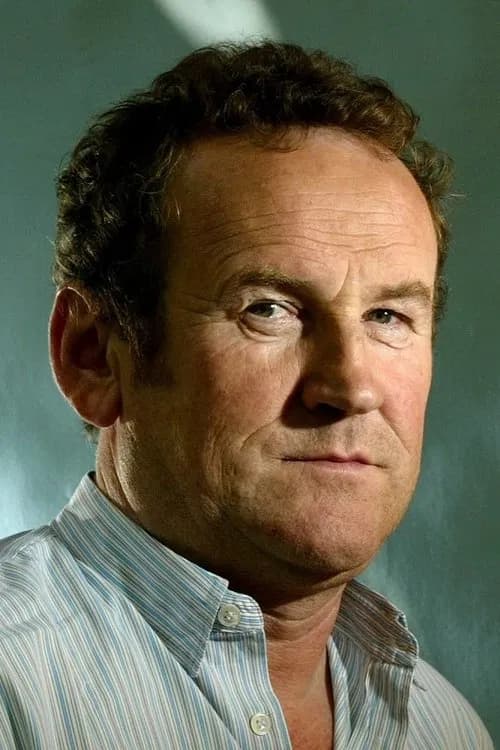
Colm Meaney is an Irish actor whose screen presence combines plain-spoken authority with a knack for revealing the strain beneath it. Born in Dublin in 1953, he developed an interest in acting at 14, trained at the Abbey Theatre School and joined the National Theatre of Ireland. He appeared in 24 productions with the company over nine years, building his craft through work by Shakespeare, Yeats, Shaw, Boucicault and O’Casey. That substantial stage background has remained a defining part of Meaney’s career, even as film and television brought him to a much wider audience. After his first television appearance in Z-Cars in 1978, he took guest roles in American series including Remington Steele and Moonlighting. His most sustained television role began with the 1987 pilot of Star Trek: The Next Generation, where an initially unnamed helm officer gradually became Miles O’Brien. Meaney later carried the character into Star Trek: Deep Space Nine, remaining with the series through its final episode in 1999. Across 225 Star Trek appearances, he gave the franchise one of its most grounded working professionals: capable, weary and recognisably human. Meaney’s film work has often made good use of that same directness. He was the only actor to appear in all three adaptations of Roddy Doyle’s Barrytown Trilogy as the Rabbitte family’s father, and his performance in The Snapper earned a Golden Globe nomination for Best Actor. Other roles have included a pilot in Die Hard 2, Detective Dunnigan in Law Abiding Citizen, Don Revie in The Damned United and an appearance in Alan Partridge: Alpha Papa. On television, he played railroad magnate Thomas C. Durant across five seasons of Hell on Wheels. The theatre has continued to offer Meaney substantial parts. He won an Obie Award for The Cider House Rules and received an Olivier nomination for A Moon for the Misbegotten. In 2023, he returned to the Irish stage after more than 40 years in a revival of Enda Walsh’s Bedbound, appearing opposite his daughter Brenda Meaney. It is a career shaped less by showiness than by durability: a stage-trained actor equally at home in science fiction, family comedy, crime drama and historical television.
1 Film
Los Angeles
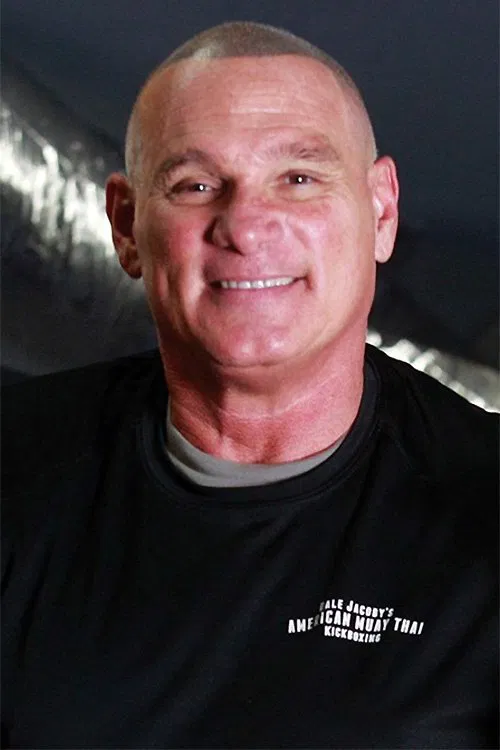
Dale Jacoby is an American actor, director, film producer, martial artist and kickboxer whose career brings the worlds of filmmaking and combat sports together. Born in Los Angeles on March 17, 1961, he has worked on both sides of the camera while also being identified with the physical disciplines of martial arts and kickboxing. That combination gives Jacoby a distinctive place among screen performers. Acting, directing and producing each demand a different relationship with a movie: the actor works within the frame, the director shapes what the audience sees, and the producer helps bring the project into being. Jacoby’s range of occupations covers all three, suggesting a career not confined to a single corner of filmmaking. His background as a martial artist and kickboxer adds another dimension, connecting screen work with disciplines built around training, timing and controlled movement. Los Angeles is both Jacoby’s birthplace and a fitting point of origin for someone associated with several areas of film production. Rather than being defined solely as a performer, his profile reflects the broader work that goes into making movies, from appearing before the camera to taking on creative and production responsibilities behind it. There are no Dale Jacoby films currently connected to the Please Rewind movie collection, but his mix of acting, directing, producing and martial arts makes him a natural subject for the Talent Wall. His career is best understood through that combination: a film professional whose work spans performance and production, with kickboxing and martial arts forming an equally important part of his public identity.
1 Film
Maywood
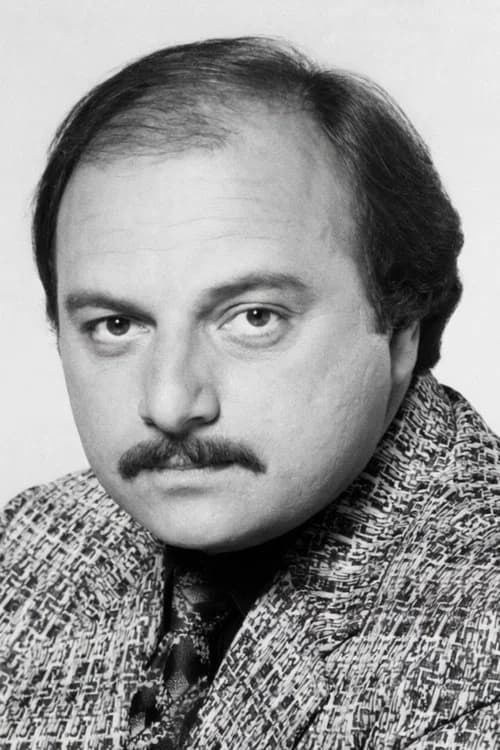
Few actors have worn a badge on screen as often as Dennis Franz. By his own count, Andy Sipowicz on NYPD Blue was his 28th role as a police officer, the culmination of a career shaped by tough, complicated authority figures rather than straightforward heroes. Born on October 28, 1944, in Maywood, Illinois, Franz studied speech and theater at Southern Illinois University Carbondale, graduating in 1968. After college, he was drafted into the U.S. Army and served in Vietnam with the 82nd Airborne Division and the 101st Airborne Division. His acting career began back in Chicago at the Organic Theater Company. Although he had performed Shakespeare, Franz found that his appearance led to early typecasting as a cop—a limitation he ultimately turned into a remarkably durable specialty. During the late 1970s and early 1980s, Franz worked regularly with Robert Altman and Brian De Palma, appearing in three Altman films and five directed by De Palma. Television gave him some of his most substantial parts. On Hill Street Blues, he first played corrupt detective Sal Benedetto, then returned to the series as Lt. Norman Buntz, a character he carried into the short-lived Beverly Hills Buntz. Movie audiences may also know Franz as airport police captain Carmine Lorenzo in Die Hard 2. His final film role to date was Nathaniel Messinger in 1998’s City of Angels. Franz’s defining performance arrived with NYPD Blue, where he played Andy Sipowicz from 1993 to 2005. The role earned him four Emmy Awards and demonstrated how much mileage he could find inside a familiar professional type. After the series ended, Franz retired from acting to focus on his private life, though he said in 2015 that the right opportunity could tempt him back. His career remains a striking example of an actor taking typecasting and giving it depth, variation and staying power.
1 Film
Stockholm
Dominique Jennings has built a varied career across film, television, animation and video games, moving comfortably between live-action performances and voice work. Born in Stockholm on October 30, 1965, she is the daughter of Swedish flight attendant Ann-Charlotte Dahlqvist and American artist and journalist Richard Slater Jennings. After her mother was killed in a plane crash in January 1969, Jennings moved to the United States with her father in 1971. Her early film work included secondary roles in Bad Influence and Die Hard 2, both released in 1990. She later appeared in A Low Down Dirty Shame in 1994 and Seven in 1995. On television, she took guest roles in several of the decade’s best-known sitcoms, including Living Single, Martin, The Fresh Prince of Bel-Air and The Wayans Bros. Jennings found a larger showcase in 1997 when she was cast as Virginia Harrison on the NBC soap opera Sunset Beach. She had originally auditioned for a different role and was contracted for ten episodes, but the arrangement quickly changed: after her first day on set, she was offered and accepted a three-year contract. Virginia remained part of the serial until 1999, when the character was written out without being killed off. Jennings’ performance earned her a 1999 Soap Opera Digest Award nomination for Outstanding Villainess. At the same time, she was establishing a substantial voice-acting career. From 1997 to 1999, she voiced Wanda Blake in HBO’s adult animated superhero series Todd McFarlane’s Spawn. Later credits extended that work into The Zeta Project, the video games 50 Cent: Bulletproof and Tom Clancy’s EndWar, and the 2022 animated feature The Ice Age Adventures of Buck Wild. Taken together, her credits show an actor whose work has crossed genres and formats without being confined to one corner of the screen.

1 Film
Edward Gero is an American actor whose long career has taken him from Shakespeare and acclaimed stage productions to movies and television, including appearances in Die Hard 2, Striking Distance, House of Cards and TURN: Washington's Spies. Although movie fans may recognise Gero from the big screen, particularly his small role as an engineer in Die Hard 2 alongside Bruce Willis, it is on stage where he has built his reputation. Raised in New Jersey, Gero studied at Montclair State before beginning his professional acting career in the late 1970s. After working in New York and with Virginia's Barter Theatre, he became part of Washington D.C.'s theatre community during the early 1980s. A Career Built on the Stage Gero became particularly associated with classical theatre and Shakespeare, developing into one of the most respected performers in Washington's theatre scene. Over the years he has tackled an extraordinary range of characters, with performances including Hotspur in Henry IV, Bolingbroke in Richard II, Macduff in Macbeth, Gloucester in King Lear, Ebenezer Scrooge in A Christmas Carol, Antonio Salieri in Amadeus and the title character in Sweeney Todd. His work has earned him 16 Helen Hayes Award nominations and four wins, recognising a stage career spanning decades. Edward Gero in Die Hard 2 For 90s movie fans, Gero has a connection to one of the decade's biggest action franchises. He appeared in Die Hard 2 (1990) as an engineer, joining Bruce Willis' second outing as John McClane. It's a relatively small screen role compared with Gero's extensive theatre work, but it places him inside a movie that became one of the defining action sequels of the early 1990s. His film credits also include Striking Distance (1993), where he appeared as Officer Lulley — once again in a movie starring Bruce Willis. From Shakespeare to the Supreme Court One of Gero's most acclaimed later performances came with The Originalist, John Strand's play about US Supreme Court Justice Antonin Scalia. Gero originated the role of Scalia at Arena Stage in 2015. His preparation went considerably further than simply learning the script: he researched Scalia extensively and met the justice personally while developing his portrayal. The production subsequently travelled around the United States before reaching Off-Broadway in 2018. Gero has also portrayed artist Mark Rothko in Red, Richard Nixon in Nixon's Nixon and numerous other historical and fictional characters across his stage career. Television Work Gero's screen career also extends into television. His credits include appearances in House of Cards and TURN: Washington's Spies, while his decades of work as a performer have also included narration for the Discovery Channel. More Than an Actor Alongside performing, Gero has passed his experience on to another generation of actors. He has served as a professor at George Mason University's School of Theater, where he has worked in the performance programme while continuing his professional stage career. Even after decades in the profession, Gero remains active. His official site announced that he is appearing alongside John Kani in Kunene and the King, with performances scheduled at the Guthrie Theater in 2026 and ArtsEmerson in 2027. Edward Gero's Legacy Edward Gero might not be the first name audiences remember when looking through the enormous cast of Die Hard 2, but his career tells a much bigger story. This is an actor who has spent decades mastering his craft on stage, moving between Shakespeare, contemporary drama, historical figures, film and television without being defined by any single role. For movie fans, he's part of the Die Hard universe. For American theatre audiences, however, Edward Gero is something considerably bigger: a veteran character actor with more than four decades of acclaimed work behind him.
1 Film
England
Felicity Waterman is a British actress born in England, with her professional work associated with acting and film performance. It is a straightforward description, but also the right place to begin: Waterman belongs to that broad company of British performers whose careers are rooted in the craft of appearing on screen. There is not yet a Please Rewind movie connected to Waterman’s Talent Wall profile, so there is no single featured role or film here through which to frame her work. That makes this a compact portrait rather than a tour through individual performances. For now, the focus remains on the essentials: an English-born actor identified particularly with film acting. Movie careers are often reduced to a handful of prominent titles, but an actor’s place in cinema is rarely defined by one credit alone. The Talent Wall is intended to leave room for those careers to be revisited as more films enter the conversation. In Waterman’s case, that conversation begins simply, with her identity as a British screen performer.
1 Film
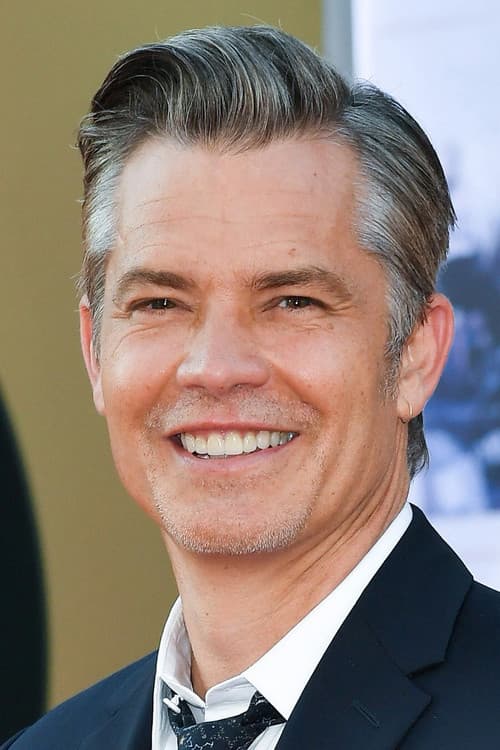
Explore the movies and roles of Timothy Olyphant.
The collection
Rewind the movies that built the Die Hard franchise.
1988 // VHS
Rewind Die Hard on Please Rewind.

1990 // VHS
Rewind Die Hard 2 on Please Rewind.

1995 // VHS
Rewind DIE HARD WITH A VENGEANCE on Please Rewind.

2007 // VHS
Rewind Live Free or Die Hard on Please Rewind.

2013 // VHS
John McClane takes the family business international.