Why VHS and Horror Movies Were Made for Each Other
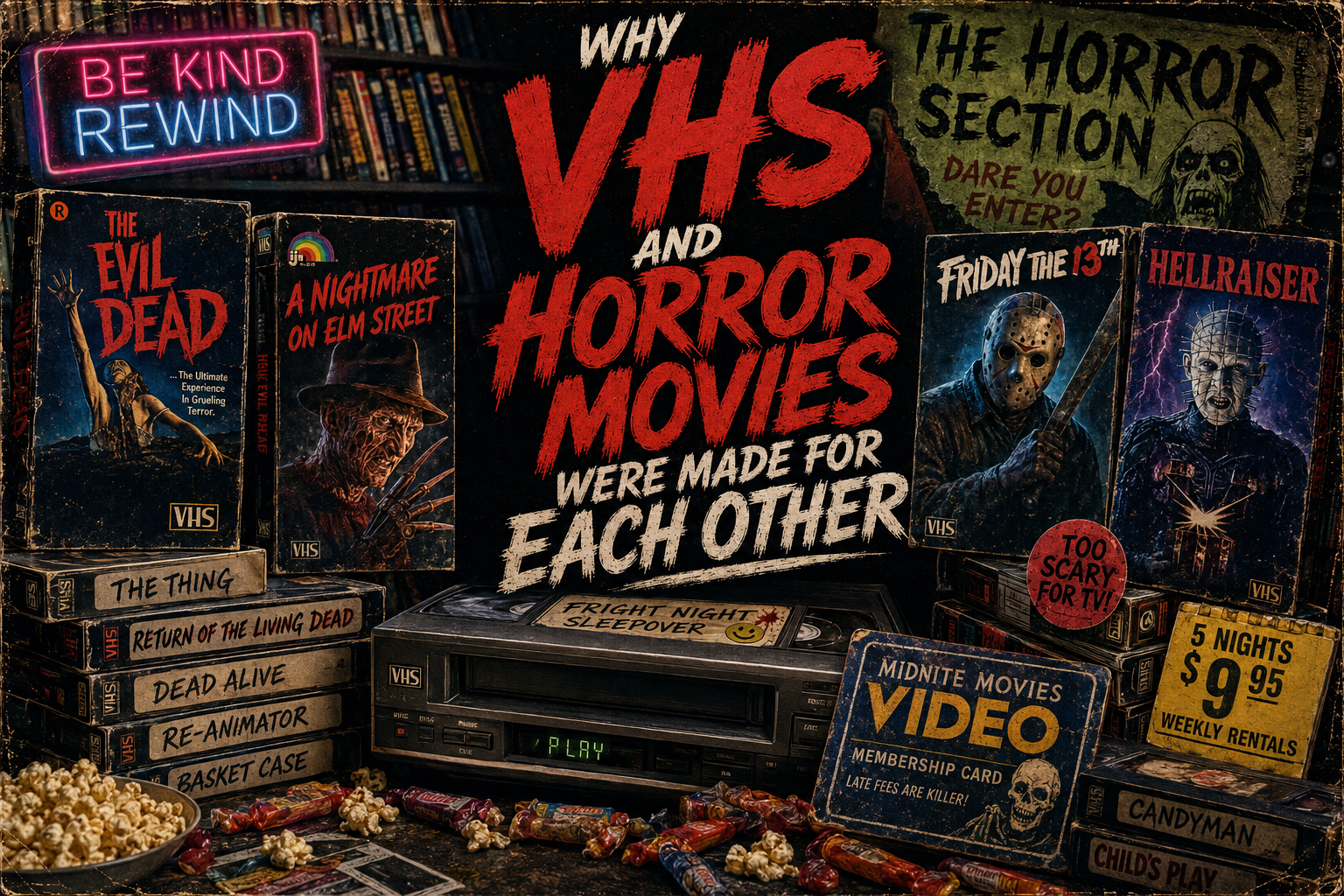
Before streaming gave us every horror movie at the touch of a button, there was VHS. From video-shop shelves and outrageous cover art to video nasties, sleepovers and cult movies finding a second life, horror and videotape became the perfect partnership.
STAFF PICK
ONE MORE MOVIE?
FEATURE PRESENTATION
STORIES WORTH REWINDING
FEATURE PRESENTATION
PLAY // READ // REWIND
THE MACHINE ARRIVED
Horror Was About to Enter the Living Room
Video recorders began appearing in British homes in the late 1970s.
The BBFC dates their UK introduction to 1978, when no specific legislation controlled what could be released on video or who could be supplied with recordings. Major distributors were initially cautious about the format, worried it might damage cinema revenue.
That hesitation created an opportunity.
Smaller distributors entered the market.
And smaller distributors needed movies.
Lots of them.
Cheap ones.
Strange ones.
Films capable of grabbing someone's attention from the other side of a video shop.
Horror was absolutely perfect.
THE VIDEO SHOP
Suddenly There Were Hundreds of Movies to Choose From
Anyone who grew up during the video-rental era remembers the ritual.
You didn't search.
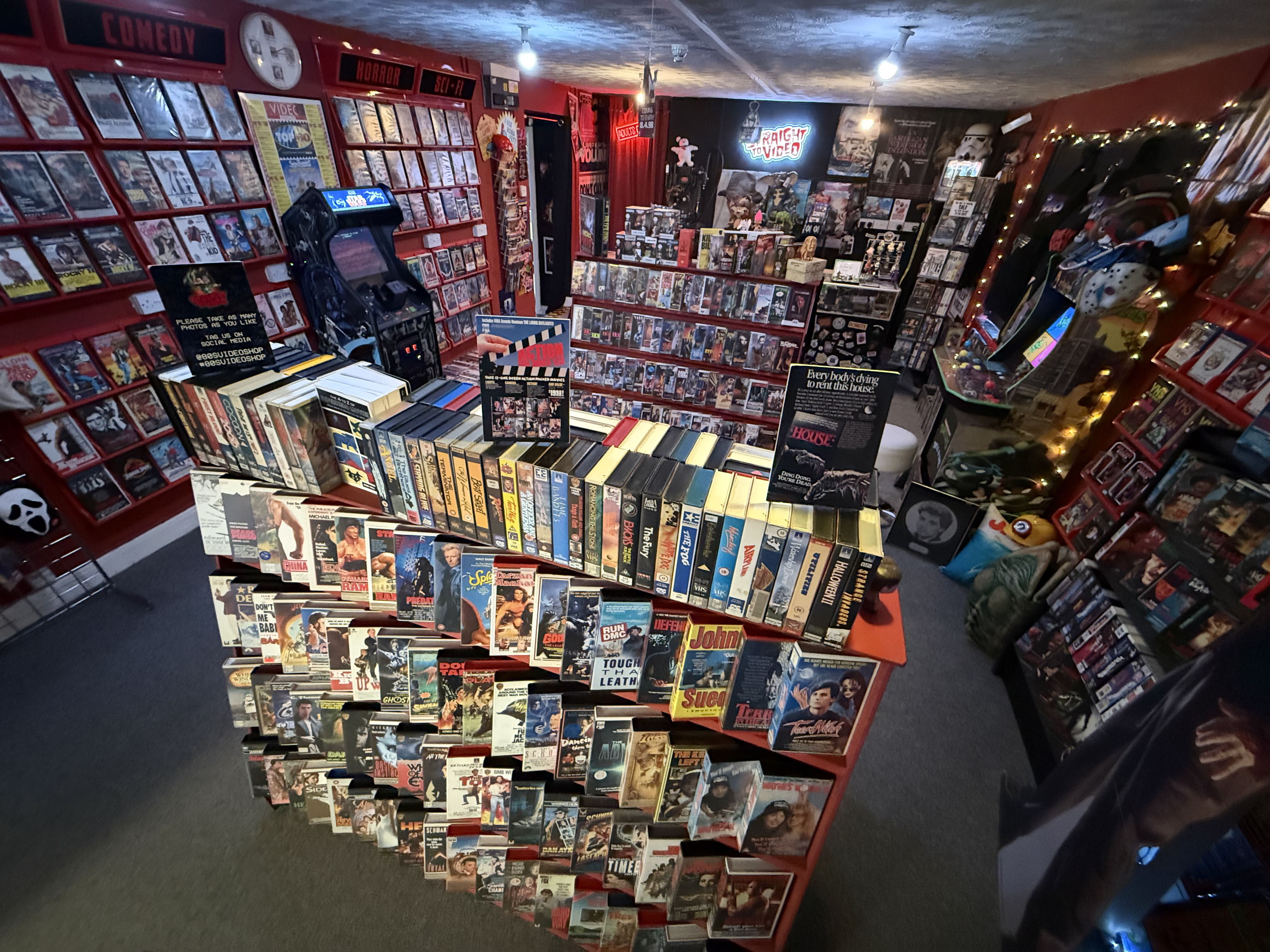
You wandered.
Comedy.
Action.
New releases.
Science fiction.
Then eventually...
Horror.
And the horror section felt different.
Rows of black plastic boxes promised things you weren't entirely convinced you should be watching.
Some films were famous.
Others you'd never heard of.
But that didn't necessarily matter.
Because VHS created its own form of movie marketing.
THE COVER WAS EVERYTHING
Before We Watched Horror, We Judged the Box
Streaming thumbnails disappear in seconds.
A VHS case had to sit on a shelf and fight for attention.
So horror distributors became extremely good at getting your attention.
Skulls.
Knives.
Blood.
Gravestones.
Monsters.
Terrified faces.
Taglines promised the movie's budget had absolutely no chance of delivering.
Sometimes the artwork was better than the film.
Occasionally it appeared to advertise an entirely different film.
Didn't matter.
You picked up the box.
You turned it over.
You studied the screenshots.
You read the description.
And then came the most important question of the entire evening:
"Shall we 'get this one '?"
For countless horror movies, that decision was the difference between obscurity and another rental.
THE HORROR AISLE
The Scariest Part Could Happen Before You Pressed Play
We've written before at Please Rewind about how intimidating the horror aisle itself could be.
That's because VHS packaging allowed horror imagery to exist outside the movie.
You didn't have to watch the film.
The monster was already looking at you from the shelf.
As a kid, you could walk past dozens of films you weren't old enough to rent and construct entire movies inside your imagination based purely on their covers.
What was behind that mask?
What happened to that person?
Why was there a chainsaw?
And why did every horror film apparently contain somewhere you absolutely shouldn't go?
The video shop became a gallery of nightmares.
HORROR CAME HOME
And That Changed the Experience Completely
The cinema is communal.
VHS made horror private.
Now you could watch something frightening upstairs with the lights off.
You could watch it while your parents were asleep.
You could watch with friends.
You could pause it.
Rewind it.
Replay the kill everybody had been talking about.
And most importantly:
You could watch it again tomorrow.
That repetition mattered.
Movies stopped being experiences you might see once before they disappeared.
They became possessions — even when technically they belonged to the rental shop until Monday morning.
SLEEPOVER HORROR
One Tape Could Terrify an Entire Room
VHS and sleepovers were made for each other.
Someone's parents went upstairs.
The lights went off.
The snacks appeared.
And somebody produced the movie they'd managed to rent.
One person always claimed nothing scared them.
Another hiding behind a cushion.
Someone laughing during the most disgusting scene.
And somebody who'd already seen the film insisting:
“Wait until you see what happens next.”
Horror became social currency.
Knowing the nastiest movie mattered.
Finding something your friends hadn't seen mattered.
And VHS made sharing those discoveries incredibly easy.
REWIND THAT
For the First Time, We Controlled the Movie
Streaming has made this ordinary.
Back then it was transformative.
At the cinema, the movie controlled you.
It started.
It played.
It ended.
If you missed something, tough.
VHS changed the relationship.
Pause.
Fast-forward.
Rewind.
Slow motion if your machine could manage it.
Suddenly, viewers could examine special effects.
Replay frightening moments.
Freeze-frame things they weren't sure they'd actually seen.
Horror fans became students of the movies they loved.
That incredible practical effect?
Rewind it.
Did something move behind him?
Rewind it.
Did we actually just see THAT?
REWIND IT.
There couldn't be a more appropriate technology for a website called Please Rewind.
THE RENTAL ECONOMY
A Movie Didn't Have to Win at the Cinema Anymore
Home video changed the lifespan of films.
Previously, theatrical performance mattered enormously.
VHS provided another marketplace.
A movie could finish its cinema run and begin a new life on video shelves.
Films overlooked theatrically could be rediscovered.
Older films could meet younger audiences.
Low-budget productions had somewhere to go.
The BFI notes that the video boom provided lower-budget British filmmakers with a new outlet during an otherwise difficult decade for the country's film industry.
A movie wasn't necessarily finished because audiences hadn't discovered it during its opening weekend.
The cassette could keep circulating.
One rental at a time.
CULT MOVIES
VHS Gave Films Time to Find Their Audience
This might be VHS's greatest gift to horror.
Time.
Some films need time.
They need one person to discover them.
Then tell another.
Then lend them the tape.
Then that person tells somebody else.
Horror thrives on recommendation.
“You HAVE to see this.”
“It's completely mental.”
“Wait until the ending.”
“Don't read anything about it first.”
That's how cult cinema grows.
Not through enormous advertising campaigns.
Through obsession.
And a physical cassette could travel through an entire friendship group.
THE WEIRD STUFF
Video Shops Had Space for Movies Cinemas Didn't
Theatrical distribution has limitations.
Screens are finite.
Showtimes are finite.
Marketing costs money.
A video shop could put something strange on a shelf and leave it there.
That gave unconventional horror a fighting chance.
Italian horror.
Low-budget slashers.
Zombie films.
Obscure sequels.
Regional productions.
Movies with titles that sounded as though somebody invented them five minutes before printing the cover.
Horror became a treasure hunt.
You weren't only watching movies.
You were discovering them.
THEN BRITAIN PANICKED
The Video Nasties Arrived
Of course, Britain being Britain, eventually somebody decided all this fun was probably destroying civilisation.
The early home-video market had a genuine regulatory gap.
The BBFC explains that films could appear on video without going through the same classification process that governed cinema releases. That included uncut versions of previously censored films and titles that hadn't received cinema certificates at all.
Newspapers noticed.
Politicians noticed.
Campaigners noticed.
And suddenly horror VHS tapes weren't merely movies.
They were apparently a threat.
VIDEO NASTIES
Horror Became Something You Weren't Supposed to See
The phrase “video nasty” became synonymous with Britain's early-1980s moral panic around violent home video.
The Director of Public Prosecutions maintained a changing list of titles that could be prosecuted under the Obscene Publications Act.
According to the BFI, 72 videos appeared on the DPP list and 39 were successfully prosecuted.
The controversy ultimately helped lead to the Video Recordings Act 1984, bringing home video under a much stronger regulatory framework.
But something interesting happened along the way.
Tell horror fans they're not supposed to watch something...
And guess what they immediately want to watch?
FORBIDDEN TAPES
Censorship Accidentally Created Horror Legends
The phrase “video nasty” became almost irresistible.
It implied danger.
Forbidden cinema.
Something beyond ordinary horror.
A tape somebody had decided you shouldn't be allowed to see.
For teenage horror fans, you couldn't invent better marketing.
Titles were whispered about.
Copies circulated.
Stories became exaggerated.
Had somebody actually seen the uncut version?
Was this the banned tape?
Was that scene really in it?
The mythology surrounding certain films became almost as important as the films themselves.
Horror wasn't simply entertainment anymore.
It felt illicit.
THE EVIL DEAD
One Movie Became Perfect for the VHS Age
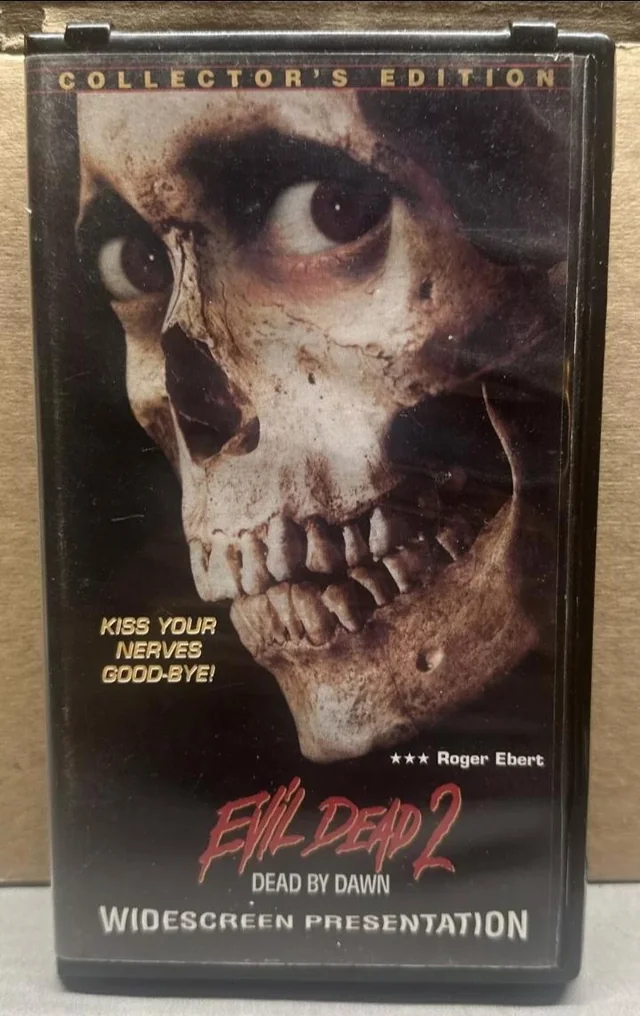
Few films represent this relationship better than The Evil Dead.
Sam Raimi's low-budget nightmare already possessed everything the home-video horror audience wanted.
Energy.
Gore.
Creativity.
Practical effects.
A cabin.
Demons.
Bruce Campbell being put through absolute hell.
Then controversy gave it another layer.
The film became caught up in Britain's video-nasty era, turning an independently made horror film into exactly the kind of forbidden object curious viewers wanted to find.
The VHS tape wasn't merely carrying the movie.
The VHS tape became part of the movie's legend.
DIRECT TO VIDEO
Eventually Movies Were Being Made for the Shelf
Once producers understood the economics of home video, something inevitable happened.
Movies began targeting the home market itself.
One notable milestone came in 1985 when Blood Cult was marketed as the first horror movie specifically made for the home-video market.
The video shop wasn't merely somewhere movies went after the cinema anymore.
It could be the destination.
That changed low-budget filmmaking.
You didn't necessarily need thousands of cinema screens.
You needed an eye-catching box and enough rental stores willing to stock it.
For horror producers, that opened another door.
SEQUELS
VHS Helped Horror Franchises Keep Going
Horror already loved sequels.
Home video gave those sequels another reason to exist.
Once audiences knew Freddy...
Jason...
Michael...
Pinhead...
Chucky...
...the cassette itself became recognisable.
Put the character on the box.
Put a number beside the title.
Promise another collection of kills.
Done.
Even somebody who hadn't seen every instalment knew what they were getting.
The monsters became brands.
And the video-shop shelf became their billboard.
THE TAPE ITSELF
VHS Was Weirdly Perfect for Horror
There's another reason VHS and horror belong together.
The technology itself feels slightly creepy now.
A cassette is physical.
There's magnetic tape wound inside it.
It can degrade.
Warp.
Jam.
Snap.
The picture can distort.
Tracking errors appear.
Colours bleed.
Sound warbles.
The BFI has written about the particularly tactile quality of videotape and how filmmakers later exploited its association with intrusion, taboo and the uncanny.
That's why VHS distortion has become visual shorthand for horror decades after VHS stopped being the dominant format.
Static means something is wrong.
Tracking lines mean something is coming.
A damaged tape feels like evidence.
BE KIND, REWIND
Returning the Tape Was Part of the Ritual
Then came the final stage.
The movie finished.
The credits rolled.
And you weren't done.
You had to rewind it.
Maybe your VCR did it.
Maybe you had a separate rewinder.
Either way, that cassette had to return to the beginning before going back to the shop.
Hence one of the most beautifully mundane phrases ever associated with movie culture:
BE KIND. REWIND.
Then the tape went back.
And another family took the monster home.
WHAT STREAMING CAN'T REPLACE
Convenience Isn't the Same as Discovery
Streaming is better in almost every practical sense.
Thousands of films.
Instant playback.
No damaged tape.
No late fees.
No driving back to the video shop in the rain because somebody forgot the cassette was due yesterday.
We wouldn't genuinely trade all of that convenience away.
But something disappeared with it.
Scarcity.
You had to choose.
And because you had to choose, the choice mattered.
You couldn't abandon a film after seven minutes and scroll through another 400 thumbnails.
You'd rented the bloody thing.
We were watching it.
THE PLEASE REWIND TAKE
Horror Didn't Just Live on VHS. It Thrived There.
Horror and VHS arrived at exactly the right moment for each other.
Horror needed somewhere beyond the cinema.
VHS needed movies people desperately wanted to see.
Together they created an entire culture.
Video shops.
Rental nights.
Sleepovers.
Forbidden tapes.
Video nasties.
Cult discoveries.
Direct-to-video movies.
Ridiculous cover art.
Worn-out cassettes.
Tracking lines.
And thousands of conversations beginning with:
“You have GOT to see this.”
Streaming gave us access to more horror than we could ever watch.
VHS gave horror something different.
Mystery.
You never knew what was hiding on that shelf.
Sometimes you found a masterpiece.
Sometimes you found absolute rubbish.
Sometimes the cover had clearly lied to you.
But every now and again you'd push a cassette into the machine, hear that familiar mechanical clunk and discover a movie you'd remember for the rest of your life.
And when it finished?
There was only one thing left to do.
Please rewind.
END OF FEATURE
Be kind. Rewind. Then pick another.
One more movie?
DON'T RETURN
THE TAPE YET.
Two more stories from the Please Rewind magazine rack.
RENTAL_01
Movie Culture
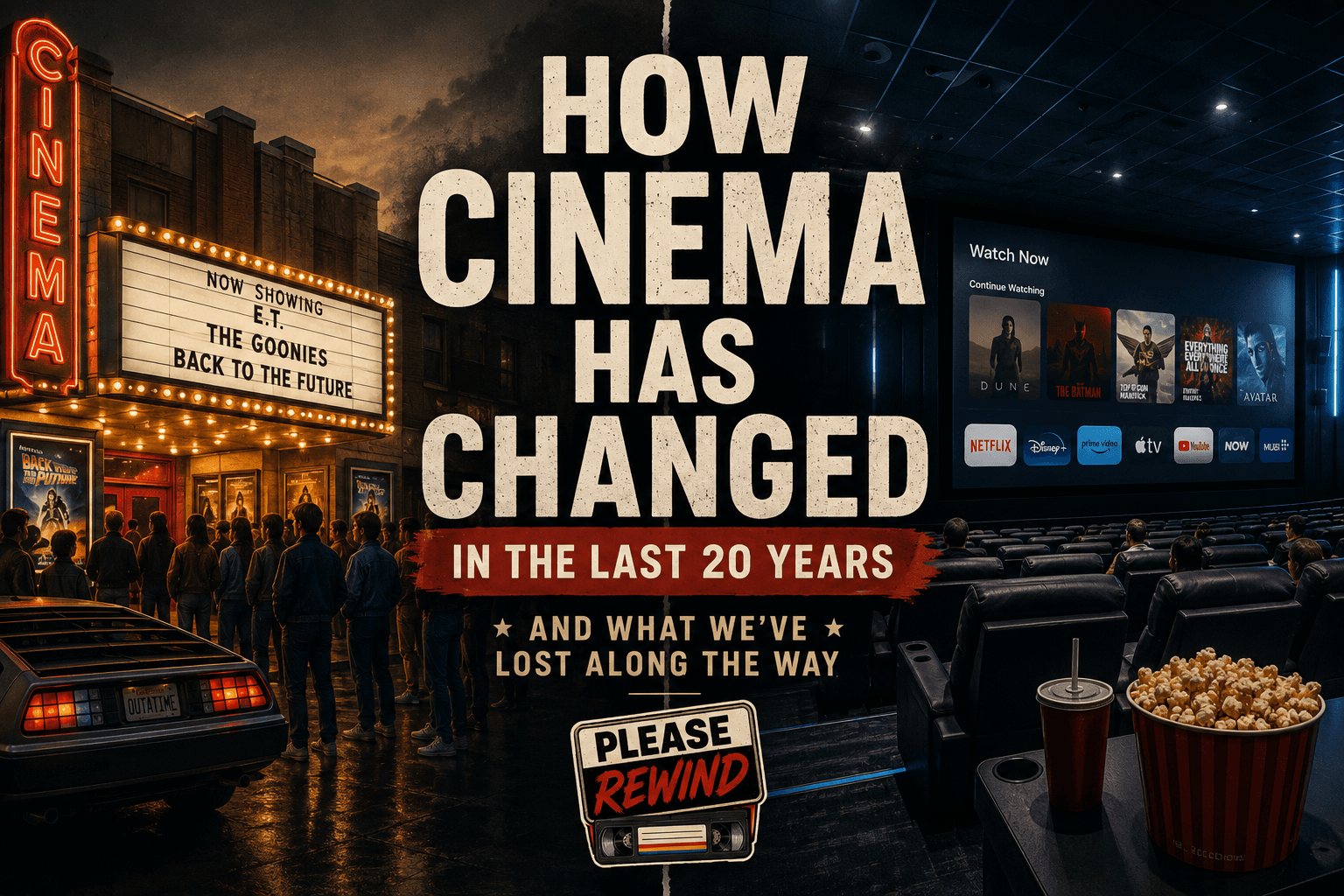
How Cinema Has Changed in the Last 20 Years — And What We’ve Lost Along the Way
From Friday-night queues and packed multiplexes to streaming, phones and endless choice, going to the movies feels very different now.
PICK UP RENTAL →
RENTAL_02
Nostalgia
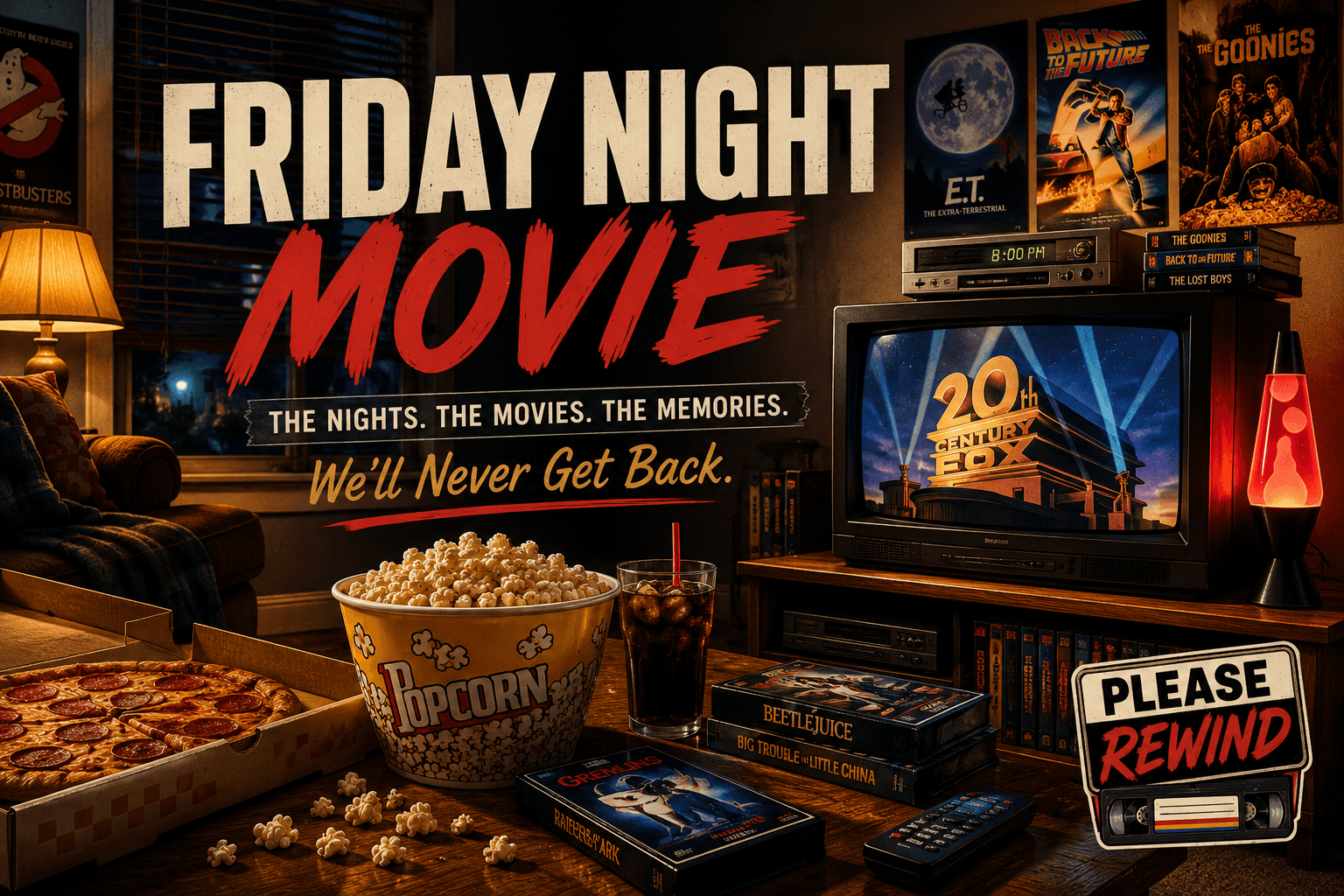
Whatever Happened to the Friday Night Movie?
Before endless scrolling and infinite watchlists, Friday night meant choosing one film, getting the snacks in and actually pressing play.
PICK UP RENTAL →