Why the 1980s Were the Greatest Decade for Horror Movies
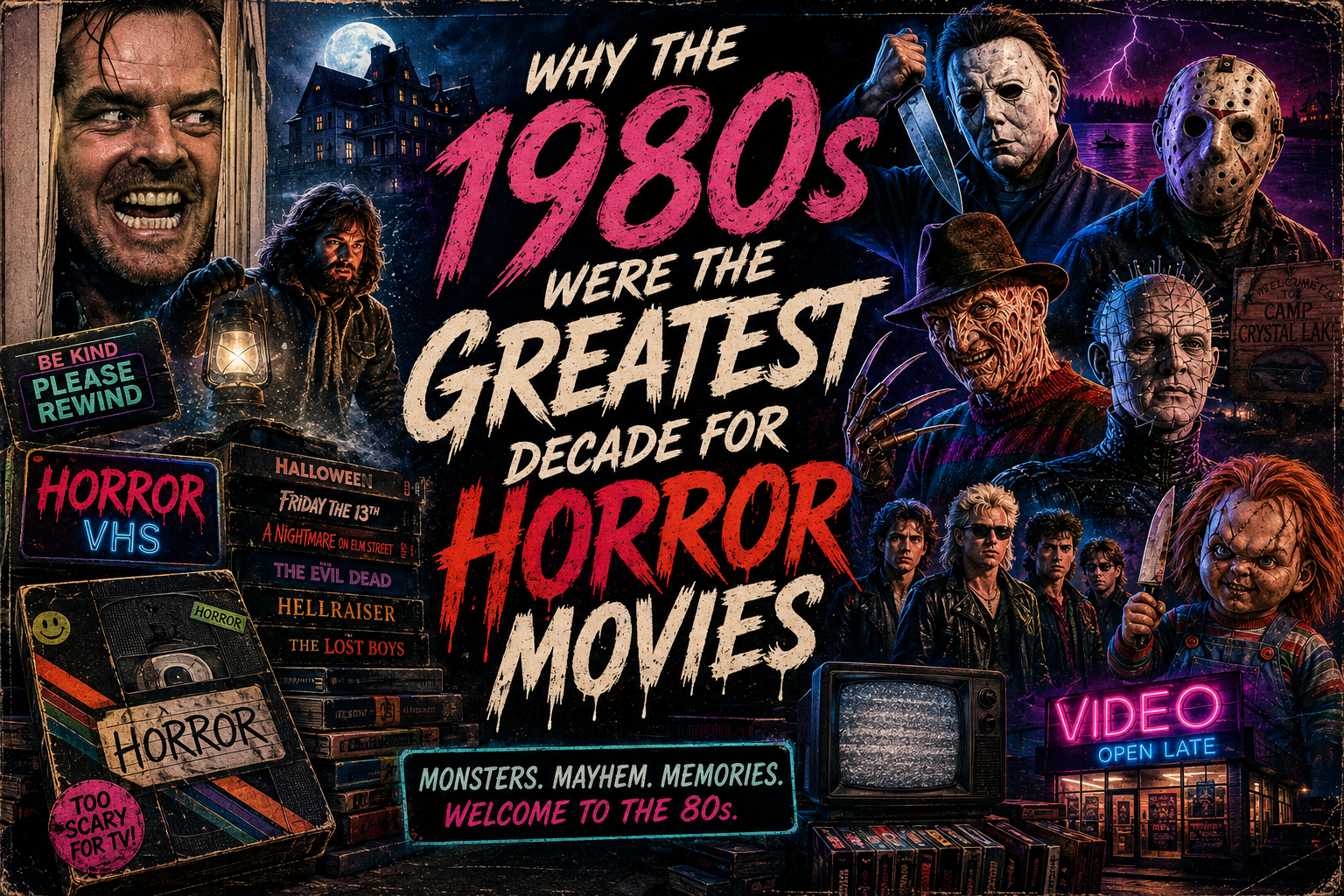
From The Shining and The Thing to Freddy Krueger, Jason Voorhees, The Evil Dead, The Fly and The Lost Boys, the 1980s didn't just produce great horror movies. It changed how horror looked, how we watched it and who its biggest stars were.
STAFF PICK
ONE MORE MOVIE?
FEATURE PRESENTATION
STORIES WORTH REWINDING
FEATURE PRESENTATION
PLAY // READ // REWIND
THE 70s LIT THE FUSE
The 1980s Inherited a Genre Already Looking for Trouble
The great horror explosion of the 1980s didn't appear from nowhere.
The previous decade had already ripped up the rules.
Horror had moved away from gothic castles and distant monsters and discovered terrifying things much closer to home.
The Exorcist invaded a child's bedroom.
The Texas Chain Saw Massacre found horror down an American back road.
Jaws made audiences suspicious of the sea.
Alien took the haunted-house movie into space.
Then John Carpenter brought evil into suburbia.
Halloween arrived in 1978 and gave filmmakers a frighteningly simple formula.
A killer.
Young victims.
An isolated environment.
A recognisable visual identity.
And relatively modest production requirements.
Two years later, Friday the 13th arrived.
The slasher boom was about to begin.
THE SLASHER EXPLOSION
Suddenly Everybody Had a Knife
If one type of movie immediately evokes 1980s horror, it's probably the slasher.
The decade barely had time to begin before Friday the 13th opened in 1980.
Then they seemed to come from everywhere.
Prom Night.
The Burning.
My Bloody Valentine.
The Prowler.
The Funhouse.
The Slumber Party Massacre.
Sleepaway Camp.
And sequel after sequel after sequel.
There was always another camp.
Another school.
Another holiday.
Another group of teenagers making catastrophically poor decisions.
The formula could become ridiculous.
That was part of its charm, too.
Horror had discovered a structure that audiences understood immediately.
You knew approximately what sort of ride you were getting.
The fun came from discovering how the filmmakers would deliver it.
And somewhere along the way, the killers became more important than the people running from them.
THE MONSTERS BECAME STARS
Michael, Jason and Freddy Didn't Need Introductions
We covered this in our piece on how the 1980s turned horror villains into movie stars, because it's one of the decade's biggest shifts.
Michael Myers entered the 80s already established.
Jason Voorhees acquired his hockey mask in Friday the 13th Part III.
Then Freddy Krueger arrived in Wes Craven's A Nightmare on Elm Street in 1984.
The BFI describes Craven's film as arriving at a crucial moment when teenagers had increasingly easy access to horror through both cinemas and VHS.
These weren't merely villains anymore.
They were brands.
A hockey mask.
A white face.
A bladed glove.
Eventually Pinhead and Chucky joined them.
Horror had created characters that could sell a movie almost on their own.
That doesn't happen very often.
The 1980s did it repeatedly.
FREDDY CHANGED THE RULES
The Slasher Learned How to Dream
A Nightmare on Elm Street was especially important because Wes Craven found a way around one of the slasher's biggest limitations.
Reality.
Freddy Krueger attacks through dreams.
Once your killer lives inside somebody's imagination, almost anything becomes possible.
A bedroom isn't necessarily a bedroom.
A staircase doesn't necessarily behave like a staircase.
The dead can appear alive.
The impossible becomes normal.
And Freddy could talk.
Where Michael and Jason were silent forces, Freddy had personality.
That meant Robert Englund could develop a genuine performance across the series.
Suddenly the monster wasn't merely stalking the star.
The monster was the star.
BUT THE 80s WERE NEVER JUST SLASHERS
That's Why the Decade Was So Good
Here's where the argument for the 1980s really becomes interesting.
Take the slashers away.
You still have an extraordinary decade of horror.
The Shining.
The Thing.
The Evil Dead.
An American Werewolf in London.
Poltergeist.
Videodrome.
Gremlins.
Re-Animator.
The Fly.
Aliens.
Hellraiser.
Fright Night.
The Lost Boys.
Near Dark.
The Blob.
And that's barely scratching the surface.
The decade's greatness isn't simply about the number of famous movies.
It's the variety.
Horror could be disgusting, funny, intelligent, trashy, romantic, surreal and terrifying — sometimes within the same film.
THE THING
Practical Effects Reached the Impossible
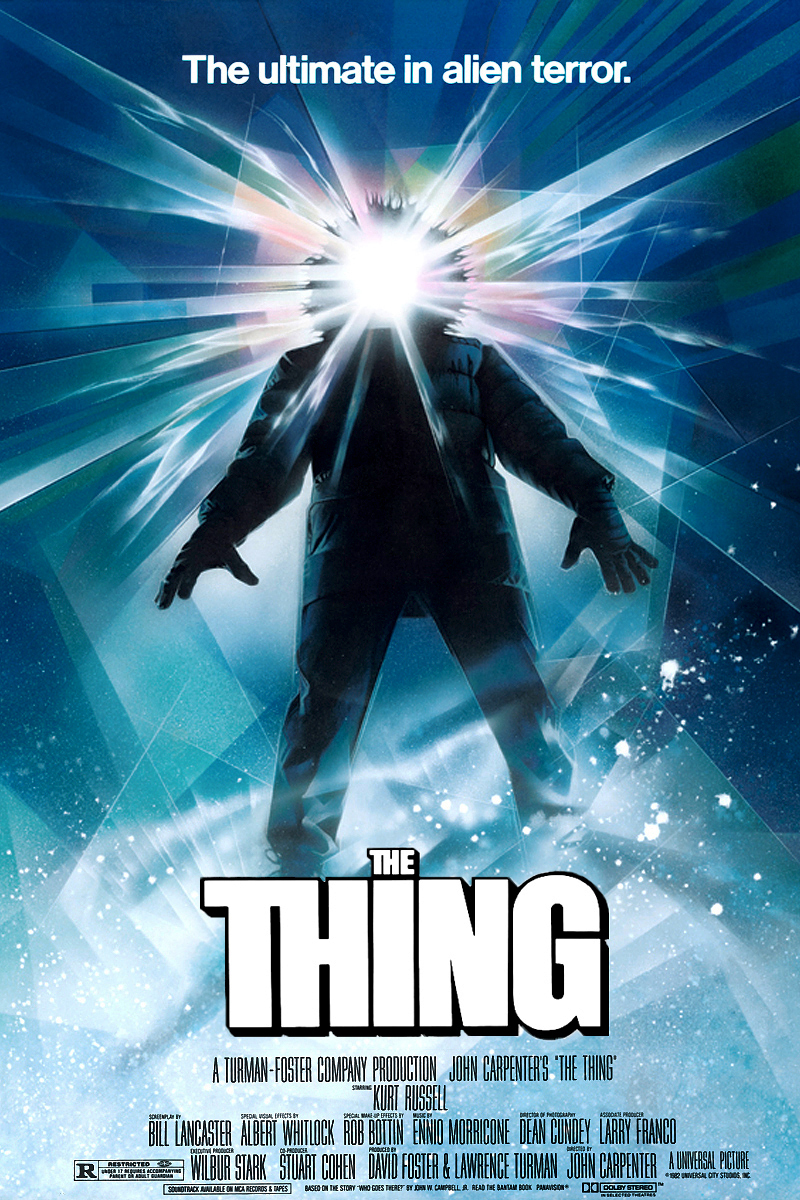
If someone asked us to put one movie in a time capsule to explain why 1980s horror still matters, The Thing would be hard to beat.
John Carpenter's 1982 film traps a group of men at an Antarctic research station with an organism that can assimilate and imitate other life.
That's scary enough.
Then Rob Bottin's effects arrive.
Bodies split.
Heads detach.
Flesh mutates.
Things emerge that seem biologically impossible.
The BFI describes Bottin's work as setting a benchmark for special makeup effects, while noting that the movie — underappreciated when initially released — is now regarded among the decade's great horror films.
That's one of the wonderful ironies of 80s horror.
Some of its greatest achievements weren't fully appreciated until later.
PRACTICAL MAGIC
If You Could Imagine It, Somebody Had to Build It
1980s horror has a physicality that's hard to reproduce.
The monster had to exist somewhere in front of the camera.
Foam latex.
Animatronics.
Puppetry.
Prosthetics.
Mechanical effects.
Makeup.
Gallons of fake blood.
Sometimes you can see the trick.
But somehow that can make it even more charming.
Because when the trick works, you're looking at something that was actually there.
The Thing is an obvious example.
So is An American Werewolf in London.
So is The Fly.
David Cronenberg's 1986 film turns Seth Brundle's transformation into something disgusting, tragic and strangely intimate. The BFI notes that Chris Walas's makeup work won the Academy Award and calls the film's transformation effects among the most extravagant in Cronenberg's work.
The effects weren't decoration.
They were storytelling.
BODY HORROR
The Monster Was Suddenly Us
The 1980s also produced some extraordinary movies about the betrayal of the human body.
Cronenberg was central to this.
Scanners.
Videodrome.
The Fly.
These films understood something deeply uncomfortable:
You can't run away from your own body.
Transformation, disease, sexuality, technology and identity could all become sources of horror.
The Fly works because, beneath the makeup and bodily destruction, something terribly human remains.
Seth Brundle knows he's disappearing.
We know it too.
No masked killer is required.
The monster is happening from the inside.
HORROR COULD BE FUNNY
Being Scared Didn't Mean We Couldn't Laugh
Then there was another wonderfully 80s development.
Horror realised it could make us laugh without necessarily making the horror less effective.
An American Werewolf in London could be funny and horrifying.
Gremlins could be a creature feature and a comedy.
Re-Animator could be grotesque and hilarious.
The Return of the Living Dead could have punk music, zombies and genuine laughs.
And Sam Raimi eventually pushed Evil Dead II into an extraordinary collision of horror, slapstick and cartoon insanity.
The decade became comfortable mixing tones that shouldn't work together.
Sometimes they didn't.
When they did, nobody else made movies quite like them.
THE EVIL DEAD
You Didn't Need Hollywood's Permission
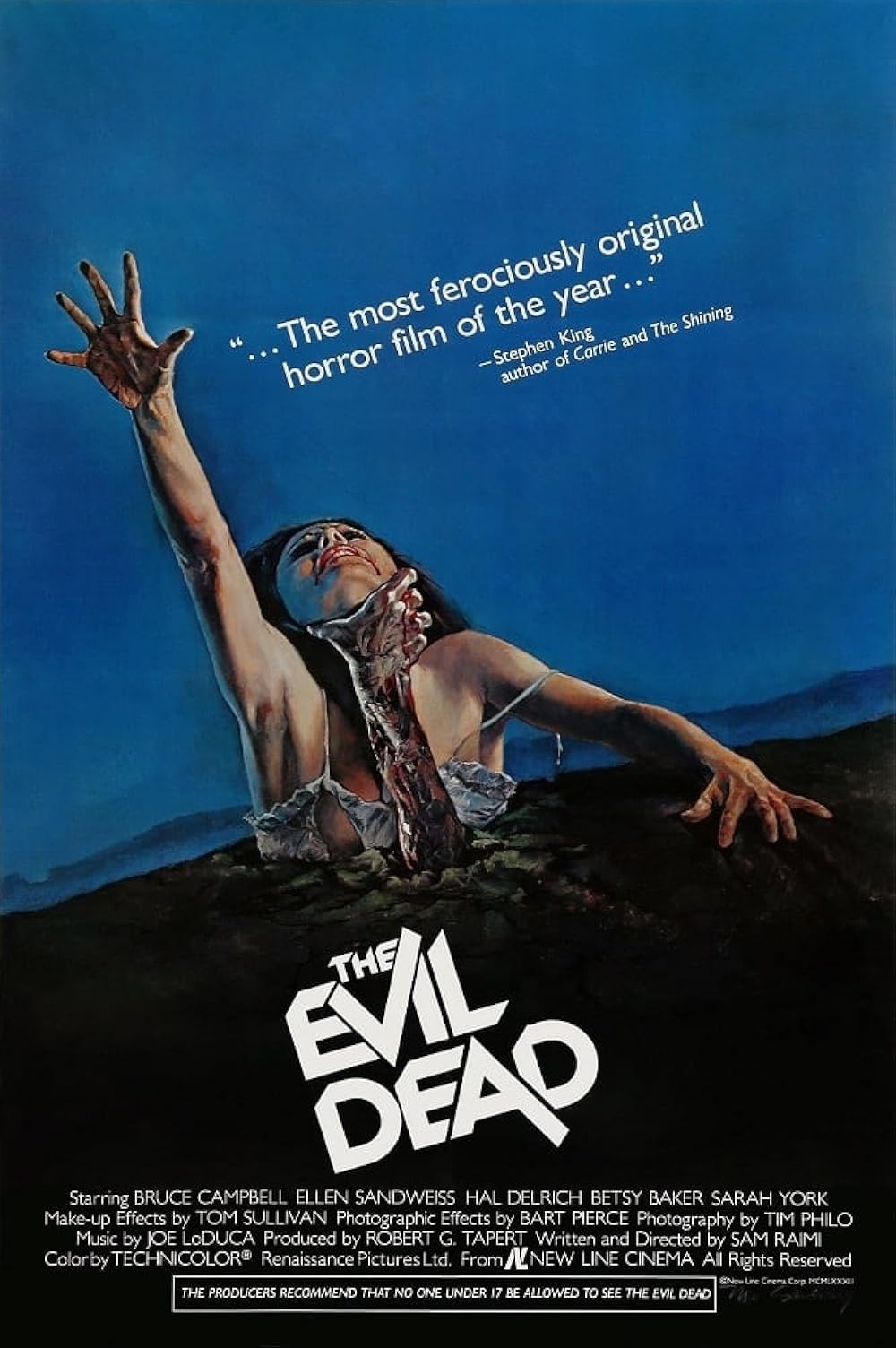
Then there's The Evil Dead.
Sam Raimi's 1981 film remains a great example of what happens when limited resources meet unlimited ambition.
Young filmmakers.
A remote cabin.
16mm film.
Wild camera movements.
Makeup effects.
Blood.
Lots of blood.
The BFI describes the original as a low-budget, privately financed production Raimi and his friends made that grew into a worldwide phenomenon.
That's another crucial piece of the decade.
Horror didn't always require enormous studios.
If you could frighten people — or disgust them, or make them laugh — you had a chance.
For generations of future filmmakers, that mattered enormously.
HORROR WENT TO THE VIDEO SHOP
VHS Changed Everything
And this might be the biggest reason 1980s horror feels different from every decade before it.
The movies came home.
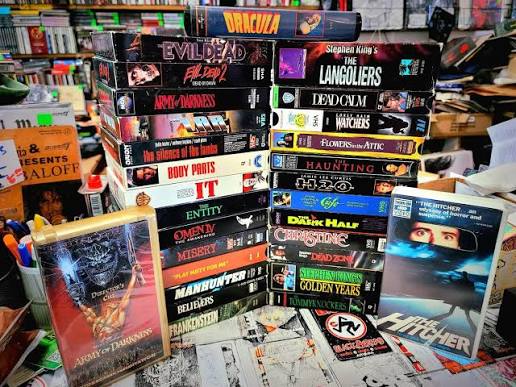
VHS didn't simply change where people watched films.
It changed how people related to them.
A horror movie could be watched again and again.
Paused.
Rewound.
Passed between friends.
Discovered years after its theatrical release.
And most importantly...
rented.
The video shop became a second cinema.
For horror, it might have been even more important than the first.
The BFI notes how the rapidly growing video-rental market transformed access to horror during the early 1980s.
Suddenly, films didn't need to survive solely on their theatrical run.
They could have another life sitting on a shelf.
THE HORROR AISLE
Sometimes the VHS Cover Was Enough
If you grew up around video shops, you'll understand this immediately.
You didn't need to rent the film for it to become part of your imagination.
You just needed to see the box.
The horror section was different from everything around it.
Faces.
Skulls.
Knives.
Blood.
Monsters.
Titles you weren't supposed to watch.
You could walk past the same VHS cover dozens of times before ever seeing the movie.
Some of us probably remember the artwork better than the films themselves.
That's why VHS and horror became such natural partners.
Horror sells through imagery.
And a video box was a tiny movie poster sitting at eye level.
VIDEO NASTIES
In Britain, Horror Became Dangerous
For British horror fans, VHS meant something else entirely.
The video nasty.
The arrival of home video created a regulatory gap, allowing films to circulate without the classification restrictions audiences were used to in theatres.
Then came the headlines.
Moral outrage.
Police seizures.
Politicians.
Lists of supposedly dangerous films.
The BFI records 72 titles appearing at various times on the Director of Public Prosecutions' list, with 39 successfully prosecuted under obscenity laws.
The Evil Dead became caught up in the controversy, although the BFI notes it was removed from the DPP list in 1985 after its distributors successfully argued that it wasn't obscene.
Whether intended or not, the panic accomplished something incredibly useful for horror.
It gave certain films an irresistible reputation.
If adults were desperately trying to stop you from seeing something...
Of course you wanted to see it.
CREATURE FEATURES CAME BACK
The Monsters Got Wet, Hairy and Disgusting
The 1980s also remembered something horror occasionally forgets.
Monsters are fun.
The Howling.
An American Werewolf in London.
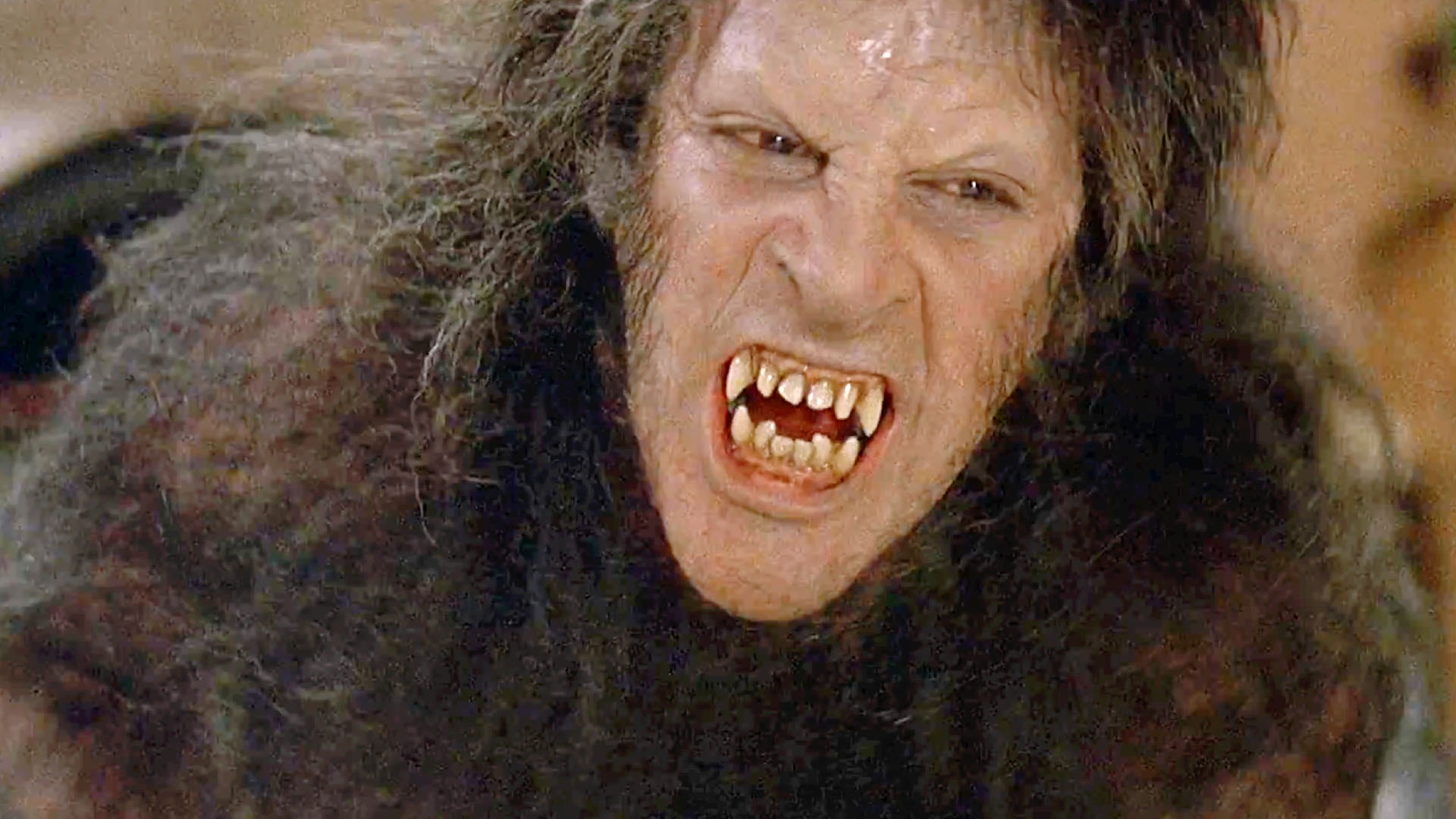
Gremlins.
The Thing.
The Fly.
The Blob.
Different creatures.
Different tones.
But all benefiting from filmmakers eager to show audiences things they'd never seen before.
The 1988 remake of The Blob is a perfect example of a movie that takes an old B-movie premise and attacks it with modern effects and considerably less mercy. The BFI highlights exactly how gleefully the film dispatches characters audiences assume will survive.
Nobody was safe.
Sometimes not even the child.
80s horror could be wonderfully mean.
VAMPIRES GOT COOL
Dracula's Cape Wasn't Going to Cut It Anymore
The decade also reinvented the vampire.
Fright Night knew the old mythology but dropped it into suburbia.
The Lost Boys made vampires look like people you'd actually want to hang around with — right up until they tried to eat you.
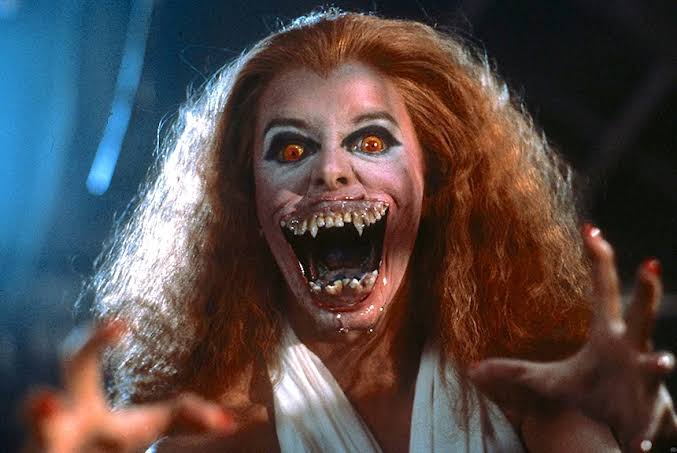
Near Dark took vampirism onto the road.
The vampire wasn't trapped in a gothic castle anymore.
He could live next door.
Ride a motorcycle.
Hang around a boardwalk.
Wear sunglasses at night.
And have a bloody brilliant soundtrack.
That's the 1980s in a nutshell.
Even the undead got a makeover.
HORROR WENT BLOCKBUSTER
Aliens Proved Horror Could Get Huge
At the other end of the spectrum from independent horror was Aliens.
James Cameron took Ridley Scott's claustrophobic original and expanded the universe into something much bigger.
More creatures.
More weapons.
More characters.
More action.
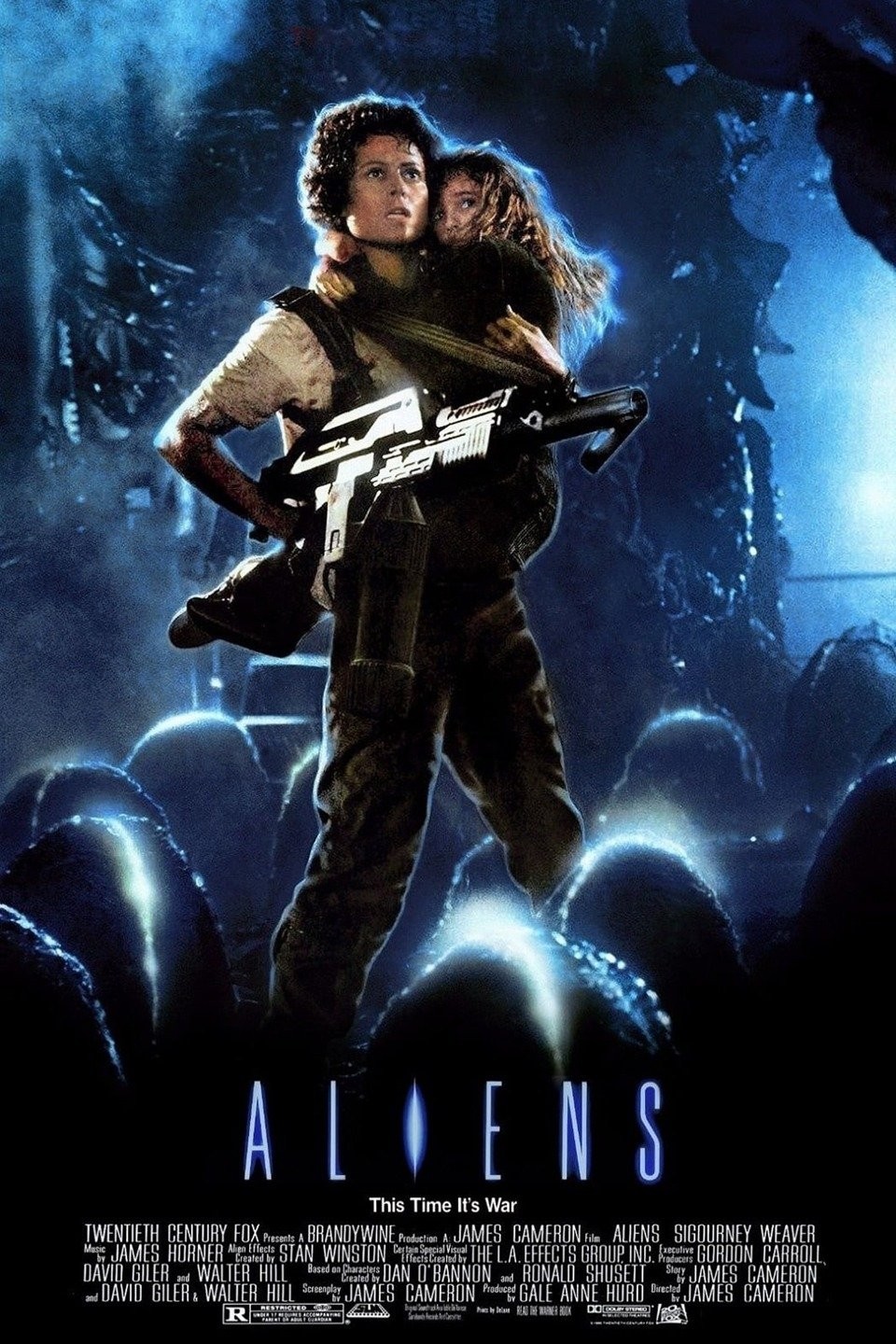
Yet underneath the military hardware, Aliens still works because its central threat is horrifying.
The movie demonstrated that horror elements didn't have to disappear when budgets and scale increased.
The haunted house could become an entire colony.
The monster could become an army.
Horror could play blockbuster cinema's game too.
HELLRAISER
And Then Horror Opened the Box
Just when audiences might have thought they'd seen every possible monster, Clive Barker arrived.
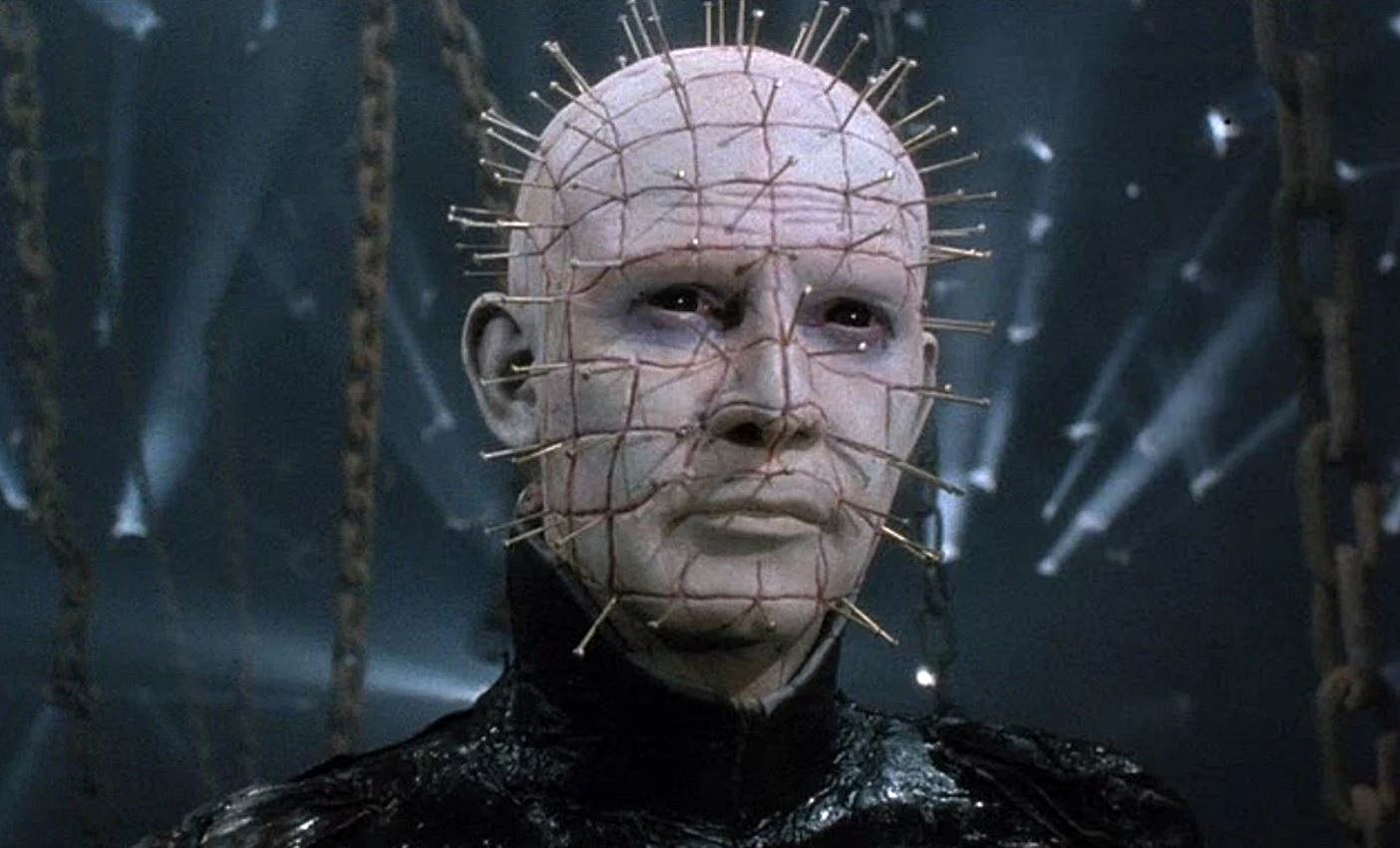
Hellraiser in 1987 didn't feel like another slasher.
Its world was stranger.
Sexual.
Painful.
Gothic.
Almost religious.
And the Cenobites looked unlike almost anything else in mainstream horror.
Pinhead would eventually become the franchise's recognisable face, but that first film isn't simply built around creating another killer.
It feels like somebody opened a door into an entirely different mythology.
That's another reason the decade remains so rich.
Even during the height of franchise horror, filmmakers were still finding new nightmares.
THE SOUND OF THE 80s
Synths Made the Darkness Sound Different
You can often recognise an 80s horror film with your eyes closed.
Synthesisers became an enormous part of the genre's atmosphere.
Carpenter had already demonstrated how powerful minimalist electronic music could be with Halloween.
Throughout the following decade, electronic scores became intertwined with horror imagery.
Sometimes pulsing.
Sometimes dreamy.
Sometimes cheap.
Sometimes beautiful.
Combined with neon lighting, fog machines and practical effects, that sound became part of an aesthetic we're still recreating today.
Modern horror frequently borrows the language of the 1980s because the decade created such a distinctive one.
NOT EVERYTHING WAS GOOD
And That's Part of Why We Love It
We should probably admit something.
The 1980s produced loads of terrible horror movies.
Derivative slashers.
Pointless sequels.
Cheap knock-offs.
Bad acting.
Questionable effects.
Plots apparently written during somebody's lunch break.
But even the failures could possess personality.
That's something horror sometimes loses when it becomes too polished.
The rough edges were part of the experience.
A strange idea could become a movie simply because somebody was mad enough to make it.
And years later, something dismissed as rubbish could become somebody's favourite cult film.
The decade produced masterpieces.
But it also produced midnight movies.
Horror needs both.
THE MOVIES GREW OLD WITH US
VHS Turned Films Into Memories
There's another reason the 1980s remain so powerful for horror fans.
Nostalgia.
Many of these films weren't experienced once.
They were watched repeatedly.
At sleepovers.
Late at night.
On battered rental tapes.
With friends.
Sometimes secretly.
Sometimes through fingers.
Sometimes after somebody's parents had gone upstairs.
That experience becomes attached to the movie.
We don't merely remember Freddy Krueger.
We remember where we were when we watched Freddy Krueger.
We remember the video shop.
The television.
The tape.
The friend who swore it wasn't scary and then couldn't sleep.
Movies become memories.
And VHS made horror incredibly good at creating them.
LOOK WHAT SURVIVED
Forty Years Later, the 80s Are Still Everywhere
Here's perhaps the strongest argument of all.
Look at horror today.
Michael Myers remains an icon.
Jason remains instantly recognisable.
Freddy remains instantly recognisable.
Chucky continues.
Hellraiser has returned.
Evil Dead continues.
The Thing is revered.
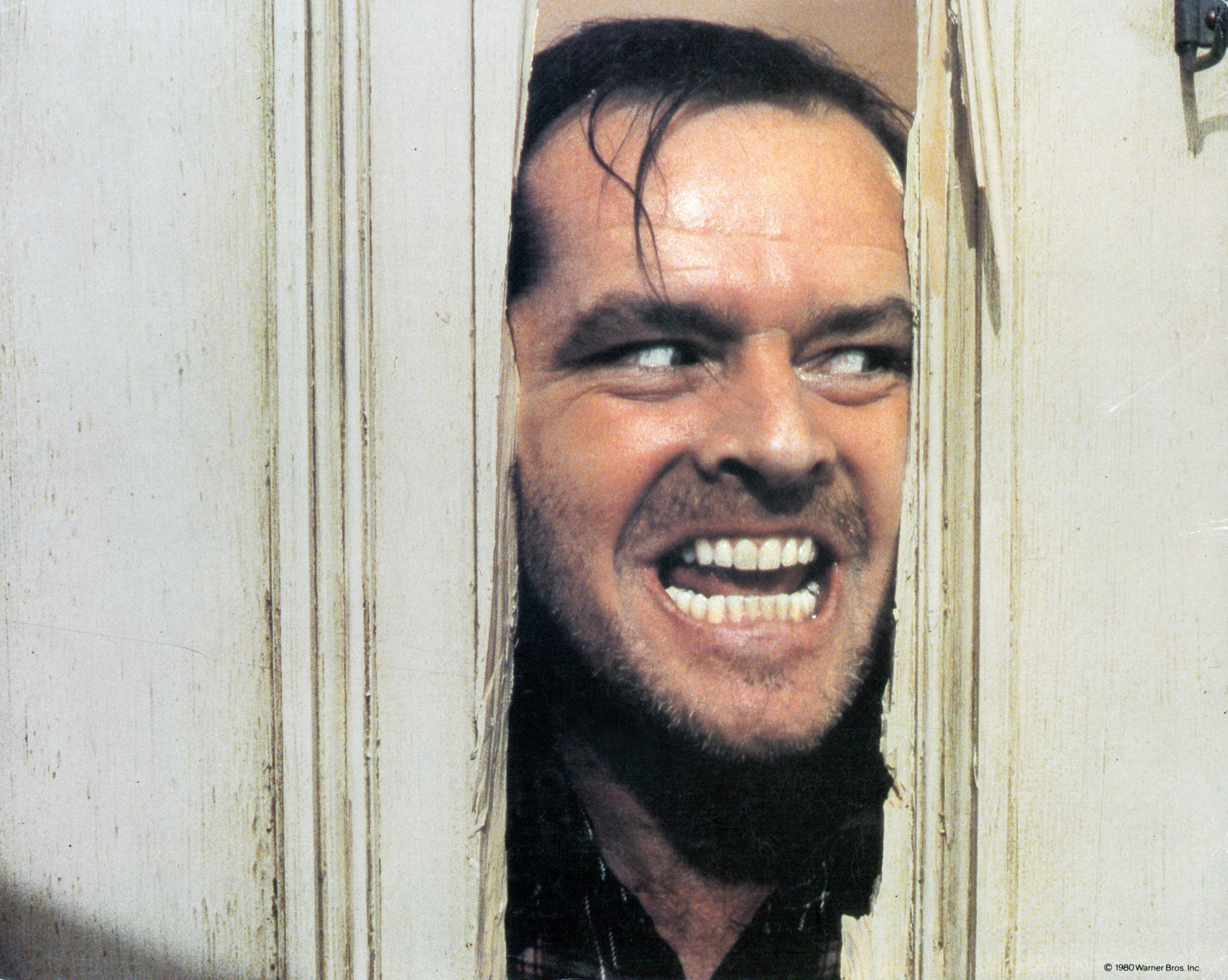
The Shining remains endlessly discussed.
The Lost Boys still sells merchandise.
Fright Night has become beloved.
Studios continue remaking, rebooting, restoring and re-releasing films from the decade.
Collectors buy elaborate editions of movies once sitting in plastic VHS cases.
And younger audiences keep discovering them.
That's not merely nostalgia.
Nostalgia explains why people who were there care.
It doesn't explain why people born twenty years later do.
The movies survived because something about them still works.
THE PLEASE REWIND TAKE
Horror Has Never Been This Much Fun Again
Was the 1980s objectively the greatest decade for horror?
Of course not.
Art doesn't work like that.
Someone will always choose the 1970s.
Someone else will defend the 1990s.
And horror right now is producing filmmakers and movies that may eventually define another golden age.
But if we could choose one decade to spend a Friday night wandering around a video shop...
Give us the 80s.
Because no other decade combined quite so many things at once.
The slashers were booming.
The monsters became celebrities.
Practical effects reached astonishing heights.
Independent filmmakers crashed through the door.
Horror learned to laugh at itself.
Vampires became cool.
Bodies mutated.
Dreams became dangerous.
VHS brought everything home.
And somewhere in a video shop, a kid who wasn't remotely old enough to watch The Evil Dead was staring at its box and wondering what could possibly be inside.
That kid might now be a filmmaker.
Or a collector.
Or someone sitting on the sofa every October watching the same movies all over again.
That's the legacy of 1980s horror.
It didn't simply give us great films.
It gave horror an identity that survives to this day.
The decade was excessive.
Inventive.
Disgusting.
Funny.
Cheap.
Expensive.
Brilliant.
Occasionally bloody awful.
And completely unforgettable.
Maybe the 1980s weren't the greatest decade for horror movies.
But we'd still like to see another decade try to beat it.
END OF FEATURE
Be kind. Rewind. Then pick another.
One more movie?
DON'T RETURN
THE TAPE YET.
Two more stories from the Please Rewind magazine rack.
RENTAL_01
Movie Culture
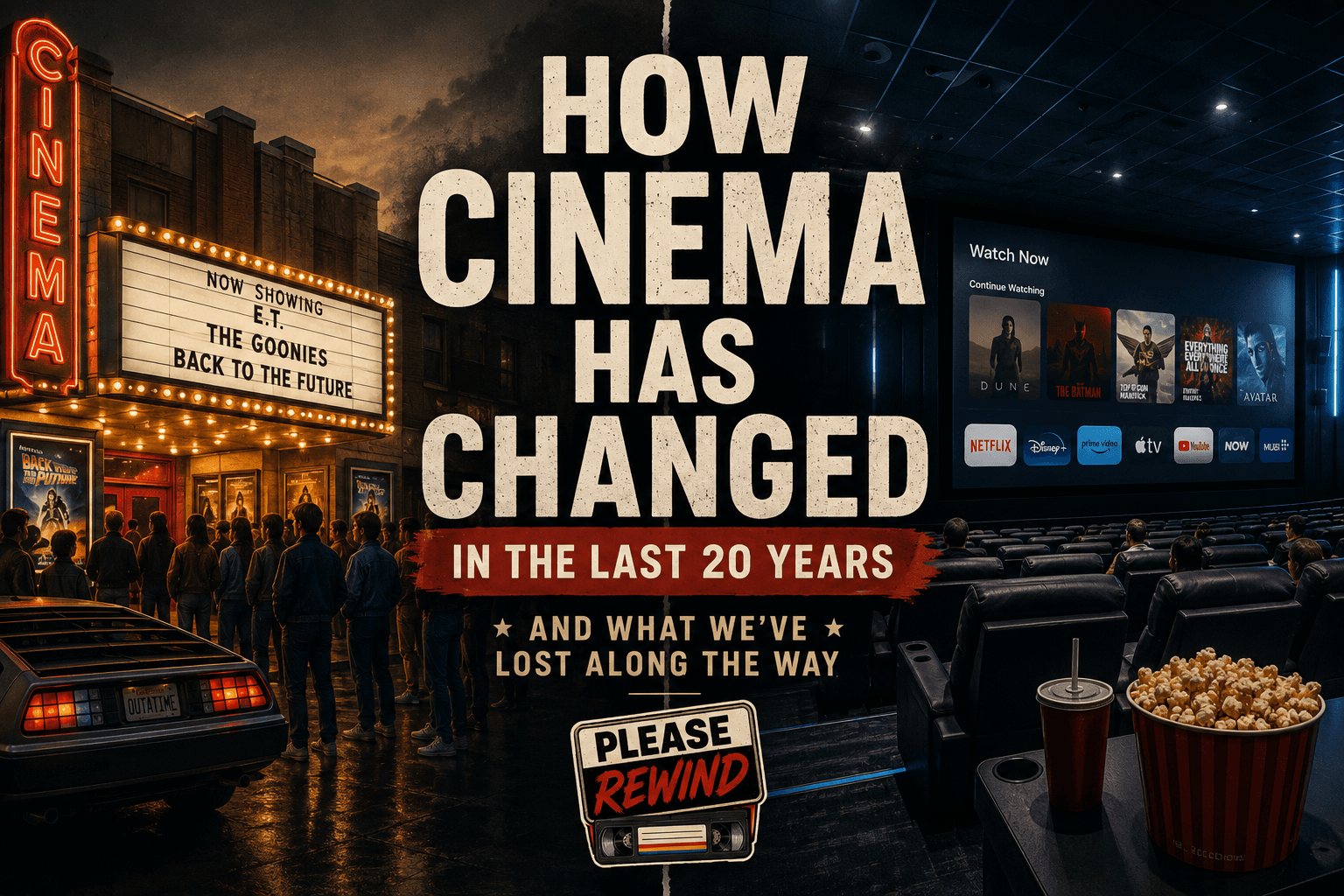
How Cinema Has Changed in the Last 20 Years — And What We’ve Lost Along the Way
From Friday-night queues and packed multiplexes to streaming, phones and endless choice, going to the movies feels very different now.
PICK UP RENTAL →
RENTAL_02
Nostalgia
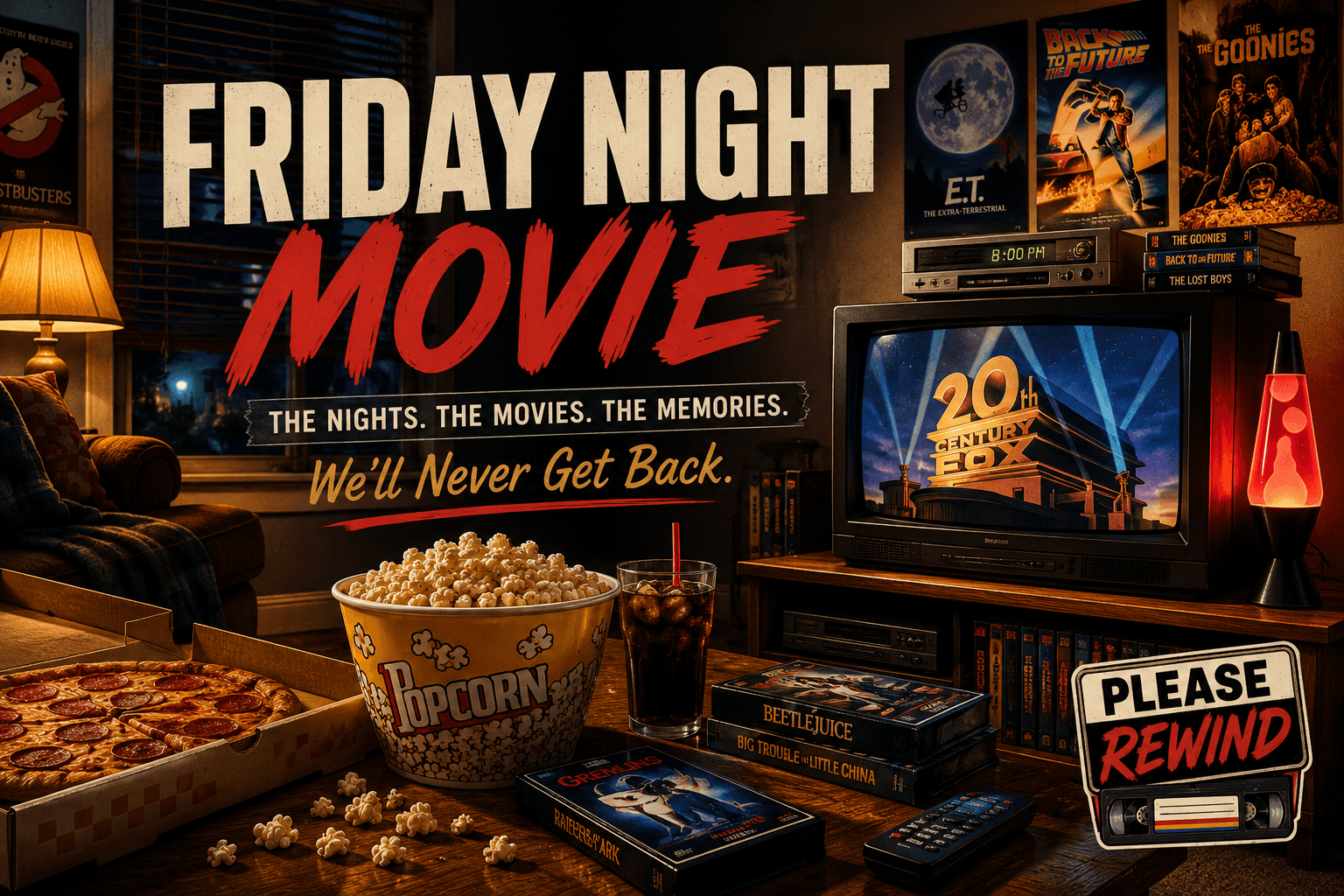
Whatever Happened to the Friday Night Movie?
Before endless scrolling and infinite watchlists, Friday night meant choosing one film, getting the snacks in and actually pressing play.
PICK UP RENTAL →