Why Practical Effects Made 1980s Horror So Terrifying
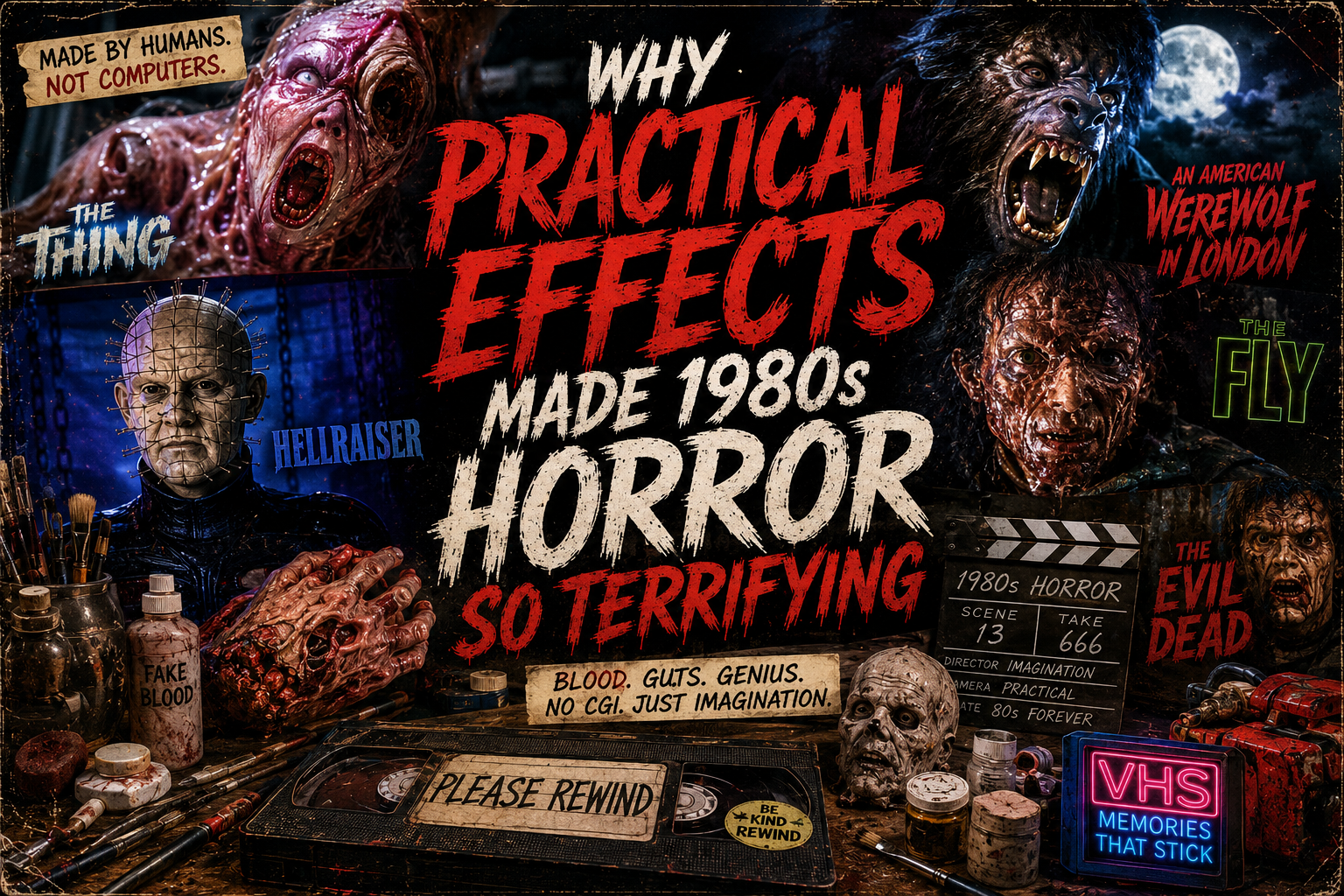
From The Thing and An American Werewolf in London to The Fly, Hellraiser and The Evil Dead, 1980s horror put its monsters physically in front of the camera — and more than forty years later, we're still trying to work out how they did it.
STAFF PICK
ONE MORE MOVIE?
FEATURE PRESENTATION
STORIES WORTH REWINDING
FEATURE PRESENTATION
PLAY // READ // REWIND
BEFORE DIGITAL
If the Monster Was in the Script, Somebody Had to Make It
Think about the problem facing a horror filmmaker in the early 1980s.
Your screenplay says a man's head tears itself away from his body, grows spider-like legs and runs across the floor.
Great.
Now do it.
There isn't a convenient computer-generated creature waiting to be added months later.
Someone has to figure out how that head works.
How does it move?
How does the skin stretch?
Where does the blood come from?
How do you hide the mechanisms?
How does the actor interact with it?
Horror effects crews became engineers, sculptors, painters, puppeteers, mechanics, makeup artists and occasionally amateur inventors.
And those limitations produced creativity.
The question wasn't:
What can we imagine?
It was:
How the hell can we physically make this happen?
AN AMERICAN WEREWOLF IN LONDON
The Transformation That Changed Everything
If there's one sequence that represents the practical-effects revolution of 1980s horror, it may be Rick Baker's transformation in An American Werewolf in London.
Werewolf transformations weren't new.
Cinema had been doing them for decades.
Traditionally, filmmakers could use dissolves between progressive stages of makeup.
John Landis wanted something different.
He wanted audiences to watch the transformation happen.
Rick Baker delivered.
Mechanical effects pushed David Naughton's features outward. Prosthetics altered his body. His limbs appeared to stretch and change.
And crucially, much of it happens in clear lighting.
There's nowhere for the effect to hide.
The result was important enough that Baker became the first winner of the Academy Award for Makeup when the competitive category debuted at the 1982 ceremony.
Think about what that says.
Horror makeup had become sophisticated enough that the Academy had to acknowledge what artists like Baker were achieving.
Once audiences saw that transformation, the bar moved.
THE PAIN MATTERS
Practical Effects Made Transformation Feel Physical
Another reason the werewolf transformation works is that it looks painful.
It looks painful.
That's something practical effects can communicate incredibly well.
When a prosthetic hand stretches, our brain recognises the texture as something physical.
When mechanical pressure appears beneath artificial skin, it resembles the way real flesh moves.
When a creature occupies the same lighting environment as an actor, our eyes don't need to reconcile two different visual worlds.
We know it's an illusion.
But the illusion has enough reality to make us uncomfortable.
The transformation doesn't feel like somebody changing into a cool monster.
It feels like a human body being destroyed and reconstructed.
That's horror.
THE THING
Then Rob Bottin Apparently Declared War on Human Anatomy
One year later came The Thing.
And all bets were off.
John Carpenter's film has one enormous advantage over almost every conventional movie monster.
The creature has no definitive shape.
It assimilates other organisms.
It copies them.
It changes.
That means the effects aren't restricted by anatomy.
A head can split.
A chest can open.
Limbs can appear where limbs absolutely shouldn't appear.
A human face can become something completely different.
Rob Bottin and the effects team were therefore faced with the wonderful and horrifying challenge of creating something that could essentially become anything.
And they went for it.
YOU'VE GOT TO BE FUCKING KIDDING
The Head That Refused to Stay Dead
One particular Thing sequence remains legendary for a reason.
The creature has already been exposed.
The situation is already horrific.
Then a head detaches itself.
Falls to the floor.
Sprouts legs.
And begins scuttling away.
Palmer looks at it and delivers the only sensible response:
“You've got to be fucking kidding.”
That's exactly what the audience is thinking.
The effect works because it keeps escalating beyond what seems reasonable.
Every time you think you've understood what the creature can do, Bottin gives it another impossible biological trick.
That's not merely spectacle.
It sets the monster's rules.
There aren't any.
IMPERFECTION CAN BE SCARY
Your Brain Knows Something Is Wrong
Here's something strange about practical effects.
They don't always look real.
And sometimes that's precisely why they work.
A practical creature can move slightly strangely.
Its proportions might be subtly wrong.
Its skin might stretch in a way human skin shouldn't.
Its movements can have an unnatural mechanical quality.
But for horror, unnatural movement is useful.
Your brain recognises that you're looking at something physical.
It also recognises that something about that physical object isn't right.
That gap can become deeply unsettling.
Perfect realism isn't always the goal.
Sometimes horror lives in the imperfection.
THE FLY
Practical Effects Could Tell a Story One Piece at a Time
David Cronenberg's The Fly demonstrates another strength of practical makeup.
Gradual transformation.
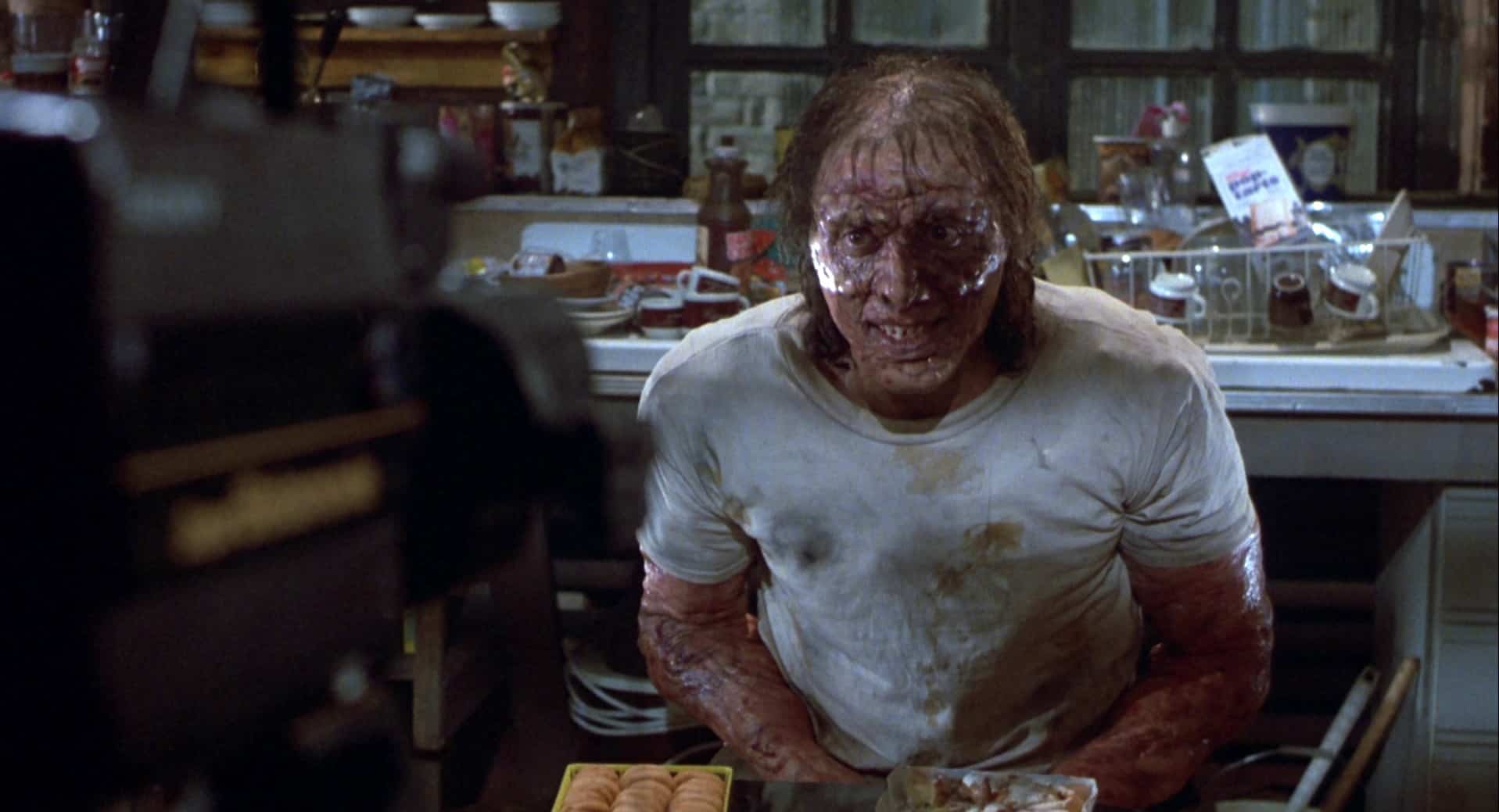
Seth Brundle doesn't simply become Brundlefly in one dramatic scene.
We watch him deteriorate.
At first, something seems slightly different.
Then something is clearly wrong.
Then there's no pretending anymore.
Makeup effects allow the transformation to progress in stages.
Each stage tells us how much of Seth remains.
By the end, we're not simply looking at a monster.
We're looking at what happened to a person.
Chris Walas and Stephan Dupuis won the Academy Award for Makeup for The Fly at the 1987 ceremony.
Once again, some of the decade's most grotesque horror imagery was also being recognised as serious filmmaking craft.
BODY HORROR NEEDED A BODY
Flesh Was the Special Effect
That's particularly important with body horror.
Cronenberg's films aren't frightening merely because strange things happen.
They're frightening because strange things happen to flesh.
Videodrome.
The Fly.
Other filmmakers would explore similar territory in different ways.
Body horror relies on our familiarity with ourselves.
We know roughly how skin behaves.
How bones move.
What a human face should look like.
So when an effects artist changes those things physically, the audience feels the violation.
A computer can create extraordinary transformations.
But latex, makeup, mechanical effects and prosthetics have an inherent material quality.
They're made from stuff.
And horror is frequently about what happens to stuff we're made from.
THE EVIL DEAD
Sometimes Ingenuity Beat Money
At the opposite end of the production scale were filmmakers who couldn't simply throw enormous resources at a problem.
Sam Raimi's The Evil Dead became a masterclass in making whatever was available work.
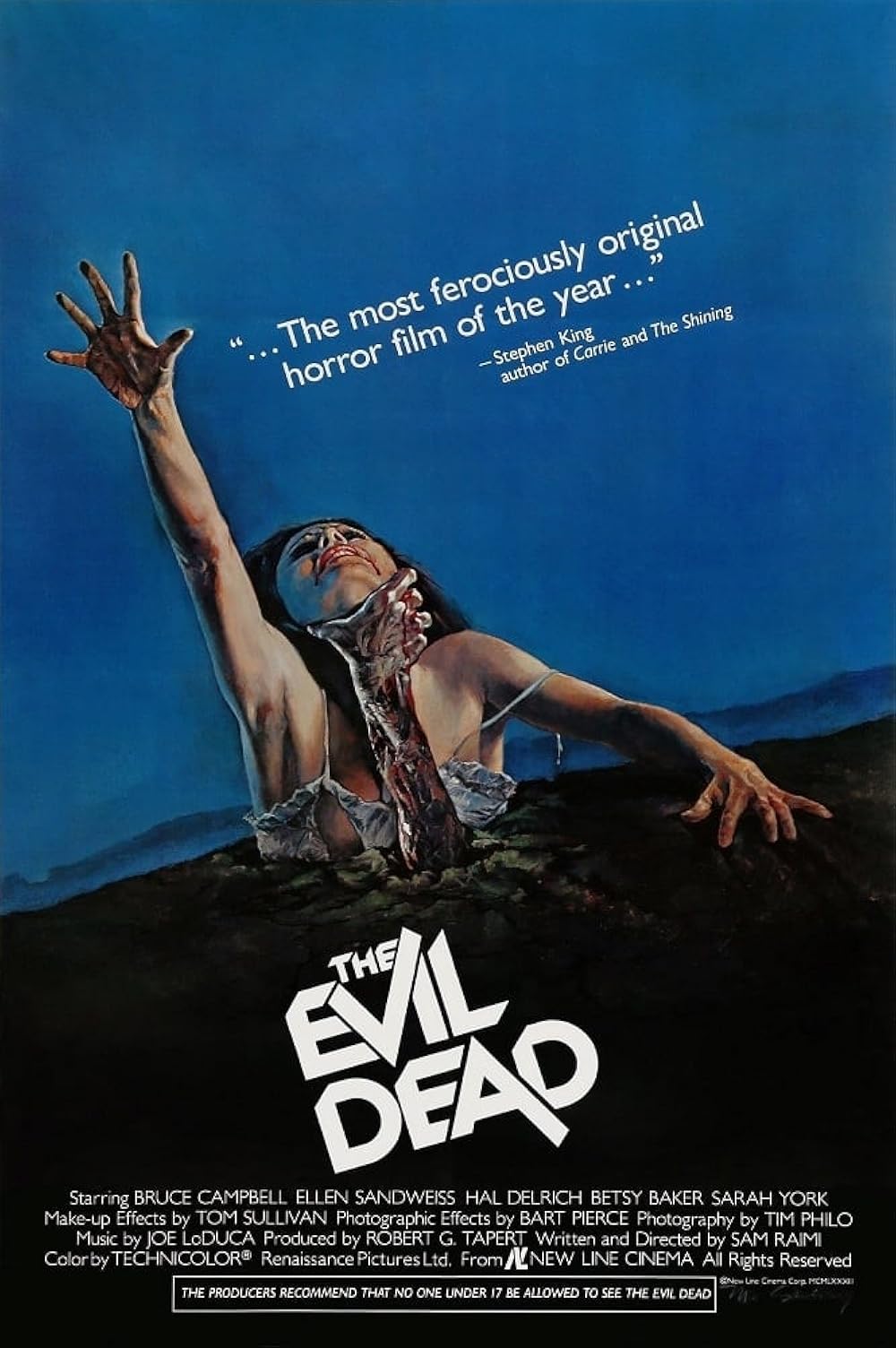
Makeup.
Stop-motion.
Prosthetics.
Fake blood.
Camera tricks.
Animation.
Whatever solved the problem.
That's one of the wonderful things about practical-effects filmmaking.
A low budget doesn't necessarily mean a lack of imagination.
Sometimes it forces more of it.
If you can't afford the perfect solution, you invent an imperfect one.
And horror audiences can be remarkably forgiving when they can feel the creativity behind what they're watching.
In fact, those rough edges often become part of why we love the movie.
BLOOD
And Bloody Hell, There Was a Lot of It
Then there's fake blood.
Buckets of it.
Gallons of it.
Sprays.
Explosions.
Walls covered in it.
Actors drenched in it.
Horror filmmaking became wonderfully excessive during the decade.
And practical blood has one extremely useful property:
It makes a mess.
That sounds obvious, but it's important.
Blood lands on costumes.
It drips down walls.
It sticks to faces.
It pools on floors.
It affects everything around it.
The set remembers that something horrible just happened.
Digital blood can disappear when the shot ends.
Practical blood means somebody has to clean the room.
That's commitment.
HELLRAISER
Some Monsters Need Texture
Then Clive Barker opened the puzzle box.
Hellraiser arrived in 1987 and introduced audiences to imagery that felt completely different from the slasher boom surrounding it.
The Cenobites weren't simply monsters.
They looked constructed from flesh.
Leather.
Metal.
Scars.
Hooks.
Pins.
Their designs depend heavily on texture.
You want to understand what you're seeing even while every instinct tells you not to look too closely.
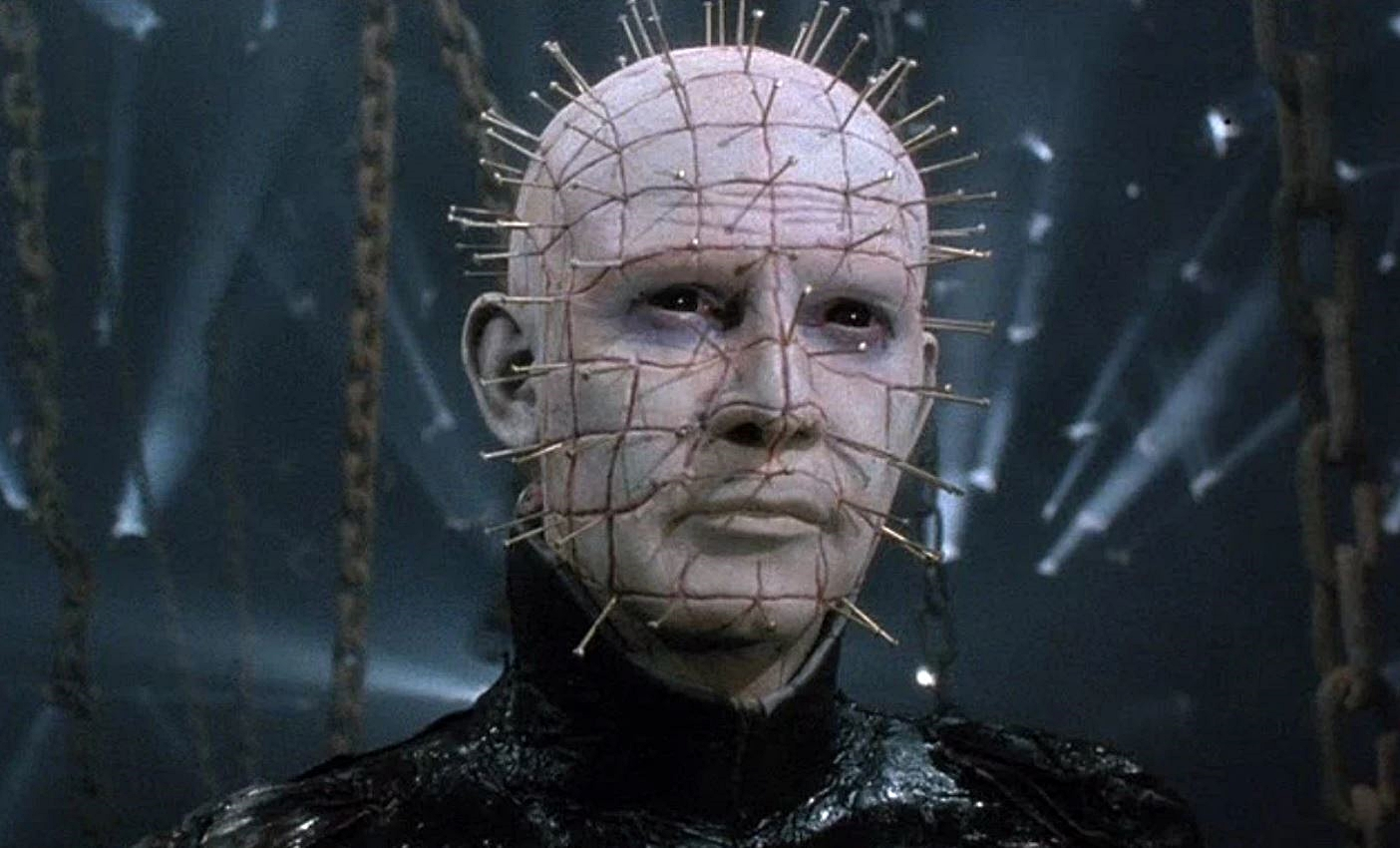
Pinhead is perhaps the obvious example.
The geometric pattern cut across the head.
The pins.
The pale skin.
Doug Bradley's controlled performance.
The design becomes more unsettling the longer the camera stays on it.
Practical makeup allowed the camera to do exactly that.
No need to hide.
No need for frantic editing.
Just look at him.
CREATURES HAD PERSONALITY
Gremlins Were Actors Too
Practical effects weren't restricted to gore.
Look at Gremlins.
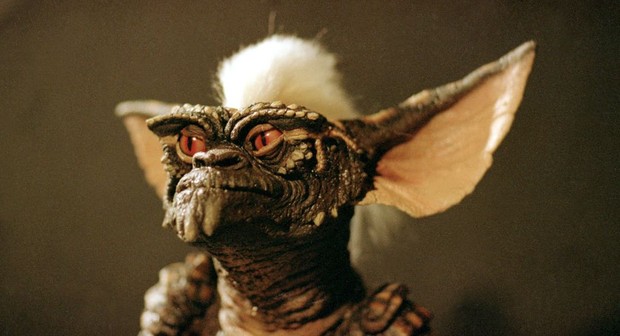
Those creatures needed personality.
They needed to react.
Interact.
Destroy things.
Perform comedy.
Be threatening.
And somehow remain expressive enough for audiences to understand what they were thinking.
Puppetry and animatronics allowed creatures to share physical space with human performers.
That relationship matters.
An actor isn't staring at a tennis ball waiting for something to be inserted later.
There's a creature in front of them.
Even if they know perfectly well it's made of foam, cables and mechanisms, they have something to perform against.
The audience benefits from that interaction too.
THE BLOB
Practical Effects Could Make the Impossible Disgustingly Tangible
The 1988 remake of The Blob is another brilliant example.
A blob sounds simple.
It's basically goo.
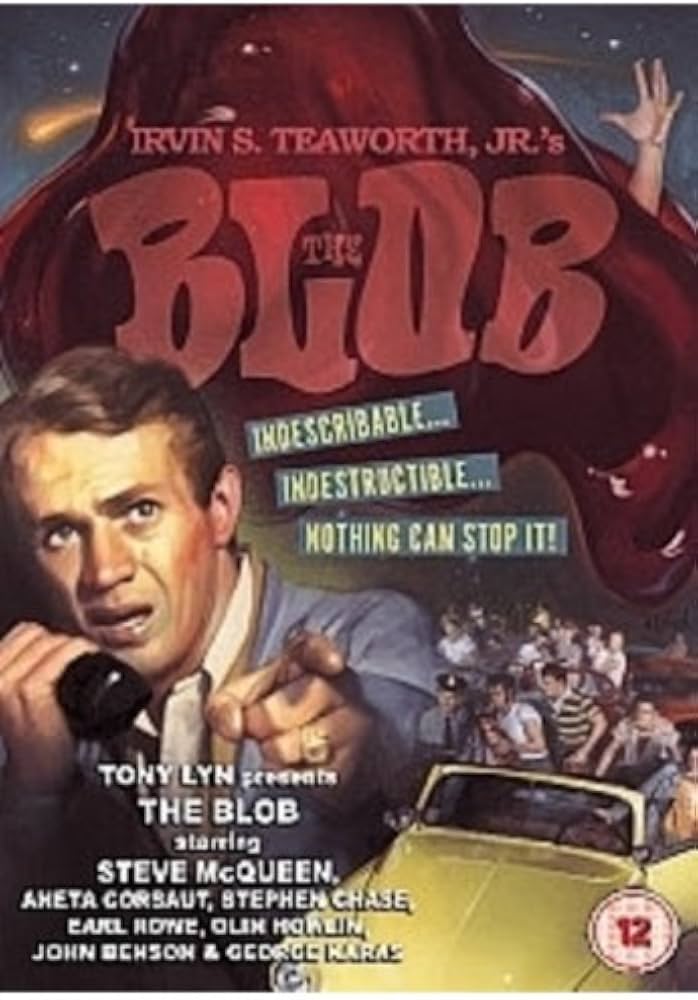
Except goo becomes considerably more frightening when it starts dissolving people.
The movie repeatedly finds horrible ways of showing bodies trapped, consumed and distorted inside the creature.
It's nasty.
Inventive.
And wonderfully physical.
The monster doesn't simply attack the environment.
It coats it.
Fills it.
Moves through it.
That's the strength of practical effects again.
The threat feels like it's occupying actual space.
WHEN THE EFFECT FAILED
Sometimes You Could See the Rubber
We shouldn't romanticise this.
Not every practical effect was convincing.
Not every puppet worked.
Not every prosthetic survived close inspection.
Sometimes you can see the seam.
Sometimes the creature moves like something being pulled with fishing wire because that's essentially what's happening.
Sometimes the fake head looks extremely fake.
And sometimes the gallons of blood resemble red paint.
But here's the strange thing.
Many horror fans love those moments too.
Because you can see the craftsmanship in the failure.
Somebody tried to make something impossible happen with their hands.
Even when the illusion doesn't completely work, the attempt can be fascinating.
LIMITATIONS CREATED DECISIONS
You Couldn't Fix Everything Later
Practical effects also forced filmmakers to make choices before shooting.
How will the creature move?
Where can we put the camera?
What can the effect actually do?
How long can we show it?
Where should the lighting fall?
How do we edit around its limitations?
Restrictions can be frustrating.
But restrictions also create filmmaking decisions.
One of horror's great tricks is knowing what not to show.
If your creature can only perform convincingly from a particular angle, suddenly composition becomes important.
Darkness becomes useful.
Editing becomes useful.
Sound becomes useful.
The limitation shapes the movie.
THE ACTORS COULD SEE THE MONSTER
Fear Had Something to Look At
Another advantage is easy to overlook.
Performance.
Imagine being an actor asked to react to a horrific creature.
Now imagine the creature is physically standing in front of you.
Even though you know it's artificial, you can see its dimensions.
You know where its eyes are.
You know how close it is.
You know when it's touching you.
You can respond to its movement.
That doesn't automatically produce a better performance.
But it gives the actor information.
Practical effects provide something extremely valuable on a film set:
a thing to react to.
THE CAMERA BELIEVED IT TOO
Light Doesn't Need to Know What's Real
A physical object also interacts naturally with cinematography.
Light hits it.
Shadow falls from it.
Atmosphere moves around it.
Blood reflects light.
Moisture shines.
Textures respond differently depending on the angle.
The camera doesn't have to understand whether something is a monster or a rubber puppet.
It's simply photographing an object.
That creates countless tiny visual cues telling our brains:
Something was really standing there.
Again, we know it's fake.
But the photograph itself is real.
That's incredibly powerful in horror.
THEN COMPUTERS ARRIVED
CGI Wasn't the Enemy
This is where discussions about practical effects often become unfair.
CGI didn't destroy horror.
Computer-generated imagery is a tool.
And an extraordinary one.
It can remove wires.
Extend sets.
Enhance makeup.
Create movements impossible for mechanical creatures.
Blend separate elements.
Allow filmmakers to visualise things that simply couldn't have been photographed practically.
Some of the best modern effects aren't practical or digital.
They're both.
The problem isn't CGI.
The problem is when an effect loses the physical cues that help convince us something occupies the same world as the characters.
THE BEST TRICK IS OFTEN BOTH
Practical and Digital Don't Have to Fight
Modern filmmaking has increasingly demonstrated that the strongest solution can be a hybrid.
Build what you can.
Photograph what you can.
Then use digital effects to extend, enhance or remove the limitations.
That philosophy keeps the physical interaction while gaining CGI's flexibility.
And perhaps that's the real lesson of 1980s horror.
Not that every effect should be practical.
But that physicality matters.
If something exists on set, everybody — actor, cinematographer, director and editor — has something concrete around which to build the scene.
WHY WE STILL TALK ABOUT THEM
Forty Years Later, We're Still Asking How They Did It
This might be the strongest evidence of all.
People still watch The Thing and talk about the effects.
They still analyse the werewolf transformation.
They still marvel at The Fly.
They still celebrate Hellraiser.
Effects artists who worked behind the camera became famous among horror fans.
Rick Baker.
Rob Bottin.
Chris Walas.
Tom Savini.
Stan Winston.
Names normally buried in credits became part of horror culture.
Audiences understood these people weren't simply decorating the films.
They were creating the nightmares.
Rick Baker's career alone eventually produced seven Academy Awards from eleven nominations, beginning with that inaugural competitive Makeup Oscar for An American Werewolf in London.
That's how significant the craft became.
THE PLEASE REWIND TAKE
The Monsters Were Fake. Their Presence Wasn't.
Nobody watching The Thing genuinely believes Rob Bottin discovered an alien organism.
Nobody thinks Rick Baker turned David Naughton into an actual werewolf.
Nobody believes Jeff Goldblum really transformed into Brundlefly.
We know.
We've always known.
That's not the point.
The magic is that something happened in front of the camera.
A mechanism moved.
A prosthetic stretched.
A puppet breathed.
A gallon of fake blood hit somebody in the face.
An actor grabbed something that existed.
Light bounced from a creature that occupied physical space.
For a few seconds, cinema photographed the impossible.
And maybe that's why these effects have survived.
Technology can become obsolete.
Resolution improves.
Computers become faster.
Digital effects become more sophisticated every year.
But craftsmanship doesn't expire.
There's something wonderfully human about looking at an impossible creature and knowing that somewhere behind it were artists covered in glue, paint and fake blood desperately trying to make the bloody thing work before the camera rolled.
Sometimes you can spot the trick.
Sometimes the rubber looks like rubber.
Sometimes the puppet doesn't move quite naturally.
We don't care.
Because when practical horror effects work, they possess something difficult to manufacture afterwards.
Presence.
The monster might not have been real.
But it was really there.
END OF FEATURE
Be kind. Rewind. Then pick another.
One more movie?
DON'T RETURN
THE TAPE YET.
Two more stories from the Please Rewind magazine rack.
RENTAL_01
Movie Culture
How Cinema Has Changed in the Last 20 Years — And What We’ve Lost Along the Way
From Friday-night queues and packed multiplexes to streaming, phones and endless choice, going to the movies feels very different now.
PICK UP RENTAL →
RENTAL_02
Nostalgia
Whatever Happened to the Friday Night Movie?
Before endless scrolling and infinite watchlists, Friday night meant choosing one film, getting the snacks in and actually pressing play.
PICK UP RENTAL →