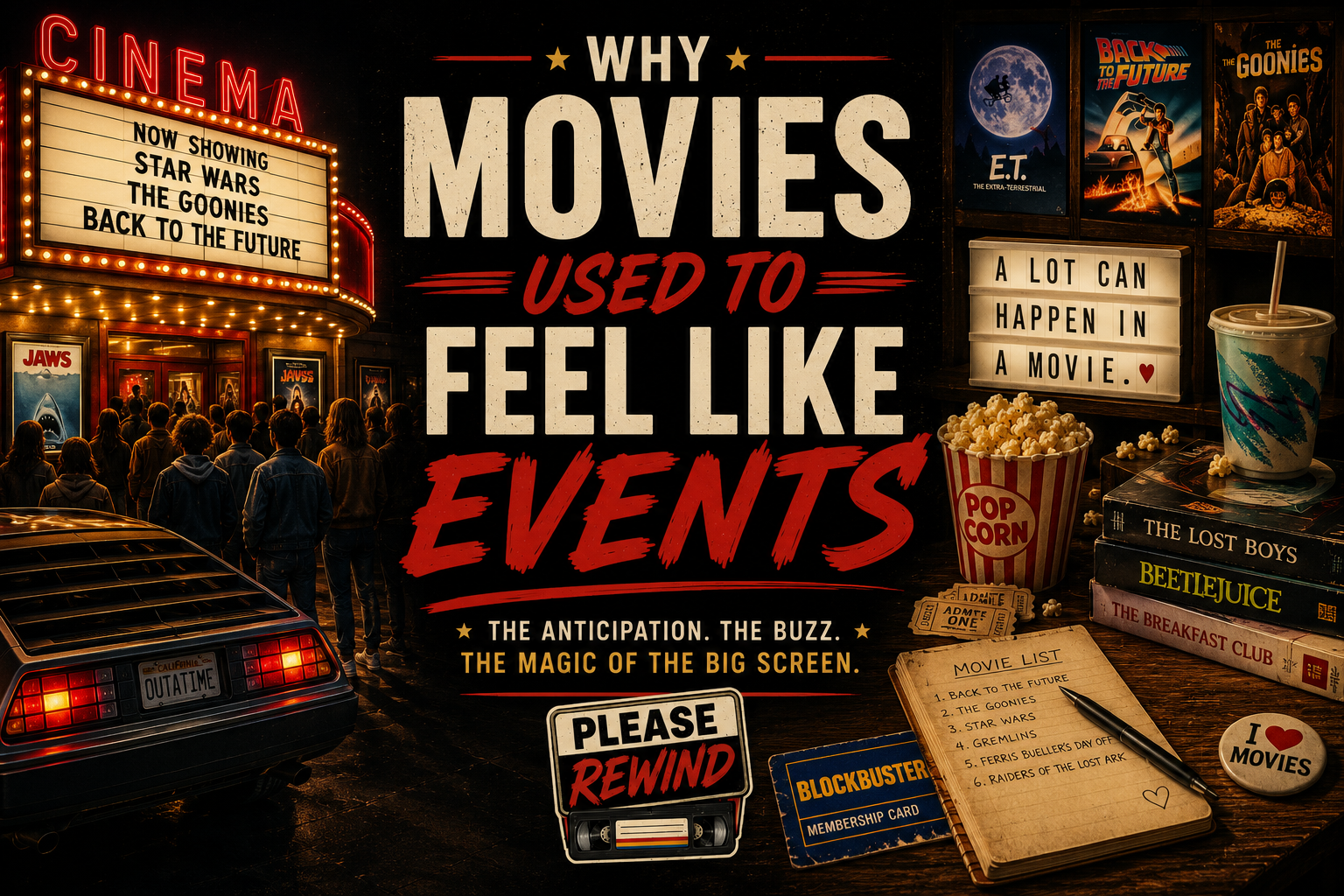
Why Movies Used to Feel Like Events
Posters, trailers, release-day queues and months of anticipation once made a new movie feel enormous. Have we lost that — or just changed how hype works?
STAFF PICK
ONE MORE MOVIE?
FEATURE PRESENTATION
STORIES WORTH REWINDING
FEATURE PRESENTATION
PLAY // READ // REWIND
COMING SOON
You knew when a big movie was coming
A major movie used to arrive slowly.
First came the rumour. Then maybe a photograph in a magazine. Eventually a poster appeared at the cinema. A trailer played before another film and, for two minutes, you saw something you would not be able to watch for months.
By the time release day arrived, anticipation had been building for ages.
That waiting could be frustrating, but it gave movies room to grow in your imagination. You replayed the trailer in your head because you could not instantly watch it ten more times on your phone.
A big movie did not simply appear. It approached.
THE POSTER
A poster had to make you want a film you knew almost nothing about
Movie posters once carried an enormous amount of responsibility.
A great image had to sell mood, stars, genre and scale in a single glance. You saw it on the side of a bus, outside the cinema or hanging in the video shop months later.
Some posters became almost as iconic as the films themselves because they were not merely pieces of advertising. They were invitations.
You could stare at one and imagine the movie before you had seen a frame.
Today campaigns can explain everything through trailers, clips, social posts and interviews. The poster is still there, but it rarely has to carry the whole fantasy on its shoulders.
THE TRAILER
A trailer felt exciting because you could not summon it whenever you wanted
Seeing a trailer in the cinema used to be a genuine part of going to the movies.
You did not necessarily know what was coming. Then the lights dimmed, the green rating card appeared and suddenly you were seeing the first proper footage of something enormous.
There was no immediate frame-by-frame analysis waiting outside. No thirty reaction videos. No algorithm serving you the same trailer every day for the next four months.
Scarcity made those two minutes feel valuable.
We have far better access now, but access changes the emotional weight of information. Something you can replay endlessly stops feeling quite as rare.
OPENING WEEKEND
Release day felt like an appointment
When a movie genuinely mattered to you, the release date went into your mental calendar.
You planned around it. You arranged who was going. You decided whether to brave opening night or wait until Saturday. If the movie was big enough, queues outside the cinema became part of the spectacle.
There is something powerful about people making an appointment with a story.
Streaming has taught us that entertainment should fit around our schedule. That is incredibly convenient, but events work the other way around: we fit our schedule around them.
That small reversal makes something feel important.
HAVE YOU SEEN IT?
Word of mouth could build for weeks instead of being measured in hours
A film did not need to dominate its first weekend to become part of the culture.
Some movies grew because people kept telling other people to see them. A friend at work, somebody at school, a review in the paper or a conversation in the pub could keep pushing audiences toward a film.
The conversation had time to breathe.
Now success and failure are often declared almost instantly. Opening-weekend numbers arrive, social media makes a judgement and the next release is already demanding attention.
We know more, faster. But speed can make culture feel disposable.
COMING TO VIDEO
Then the movie got a second life when it came home
The cinema was only the first chapter.
Months later came the VHS or DVD release. Suddenly the movie you had seen once on a huge screen could live in your house.
That gap mattered. It created anticipation all over again.
You could finally pause it, rewind it, show it to somebody who missed it and watch favourite scenes until you wore them out.
Home video did not immediately replace the cinema experience. It extended it.
THE CONTENT CYCLE
Now the movie can feel surrounded by content before it even exists
Modern audiences can know an extraordinary amount about a film before release.
Casting announcements become news. Set photos become news. Teasers become news. Trailer release dates become news. Reactions to early screenings become news.
By the time the movie arrives, it can feel as though we have already spent six months discussing it.
The machinery of anticipation has become more powerful than ever, but it also risks exhausting the thing it is trying to promote.
Hype used to build a mystery. Sometimes hype now explains the mystery to death.
THE GOOD NEWS
Movies can still become events — because audiences still want them to
Every few years a release cuts through the noise and proves that the appetite has not gone anywhere.
People dress up. Cinemas sell out. Friends organise group trips. Social media fills with people trying not to spoil the experience for everyone else.
The tools changed, but the instinct did not.
We still want movies that feel bigger than something to put on while we answer messages.
The difference is that a modern film has to fight through far more competing entertainment to earn that status.
PLEASE REWIND
Maybe the event starts with how we choose to watch
Not every movie needs a queue around the block.
Sometimes an event is simply deciding that a film deserves the good television, the lights off, the phones away and everyone watching from the beginning.
Sometimes it means going back to the cinema instead of waiting six weeks. Sometimes it means buying a physical copy of something you love. Sometimes it means showing an old classic to somebody who has never seen it.
Movies used to feel like events partly because the culture around them created anticipation.
We can still create some of that ourselves.
Pick the movie. Make the plan. Press play. Give it the night.
END OF FEATURE
Be kind. Rewind. Then pick another.
One more movie?
DON'T RETURN
THE TAPE YET.
Two more stories from the Please Rewind magazine rack.
RENTAL_01
Movie Culture
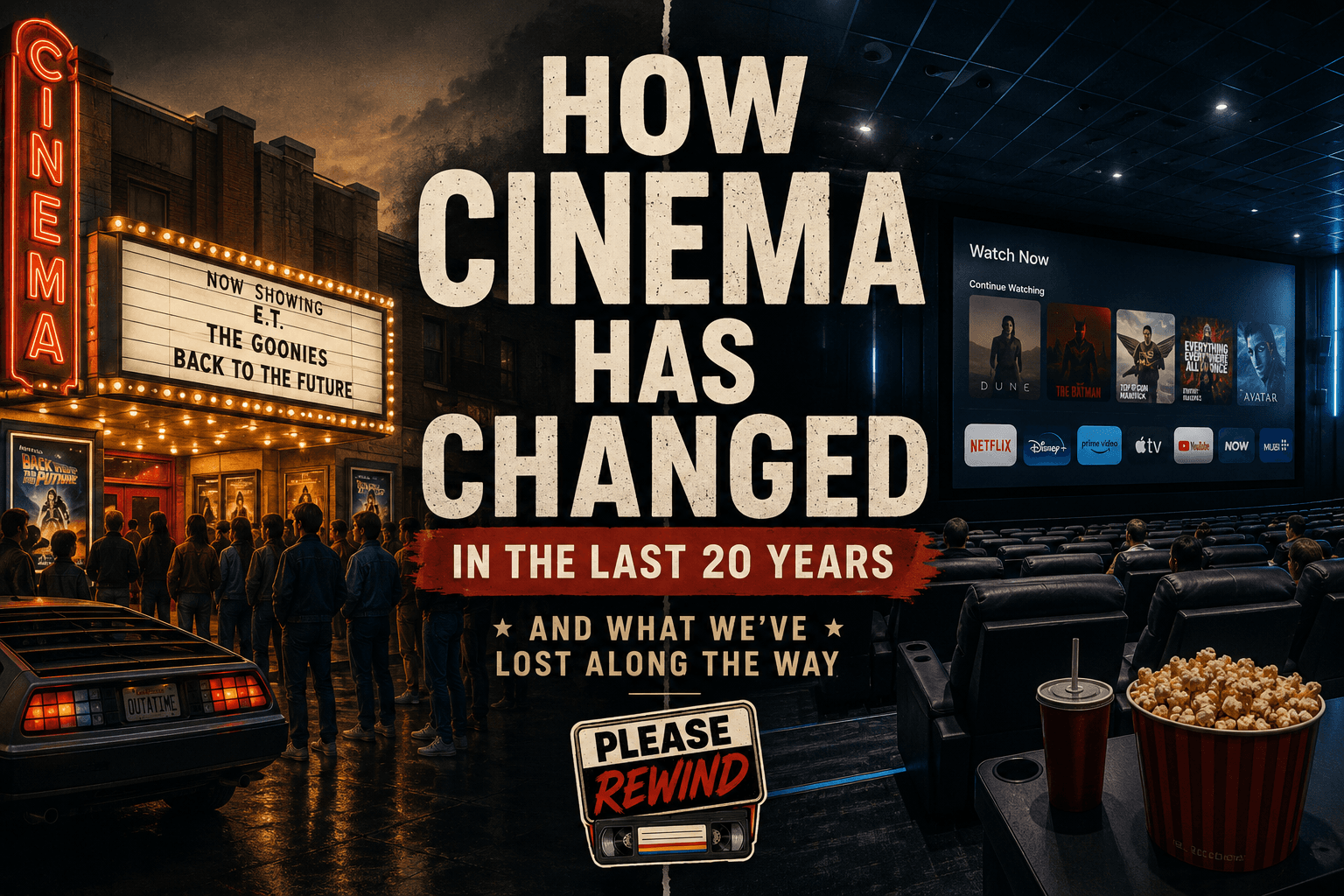
How Cinema Has Changed in the Last 20 Years — And What We’ve Lost Along the Way
From Friday-night queues and packed multiplexes to streaming, phones and endless choice, going to the movies feels very different now.
PICK UP RENTAL →
RENTAL_02
Nostalgia
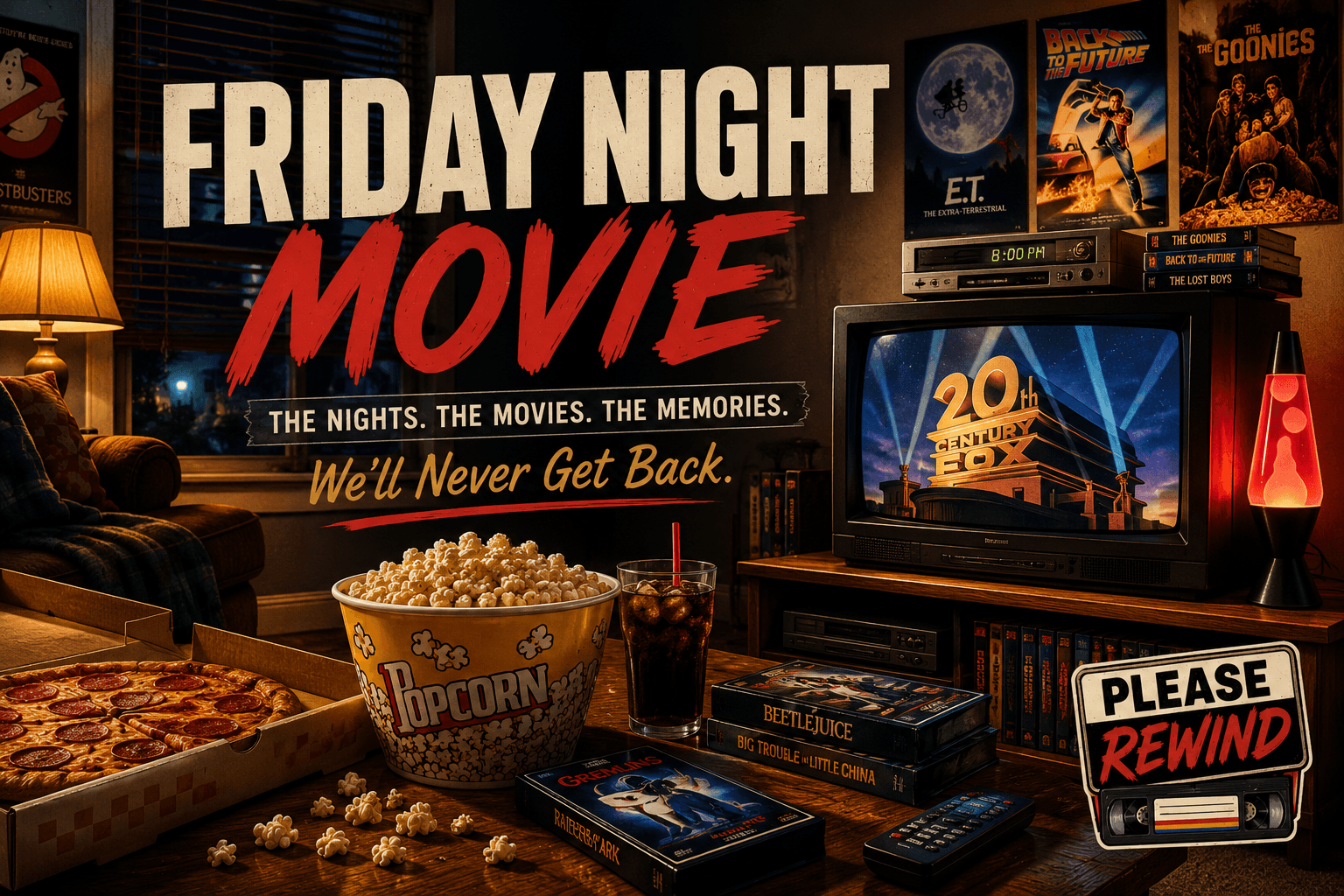
Whatever Happened to the Friday Night Movie?
Before endless scrolling and infinite watchlists, Friday night meant choosing one film, getting the snacks in and actually pressing play.
PICK UP RENTAL →