Why Michael Myers Is Still Scary After Nearly 50 Years
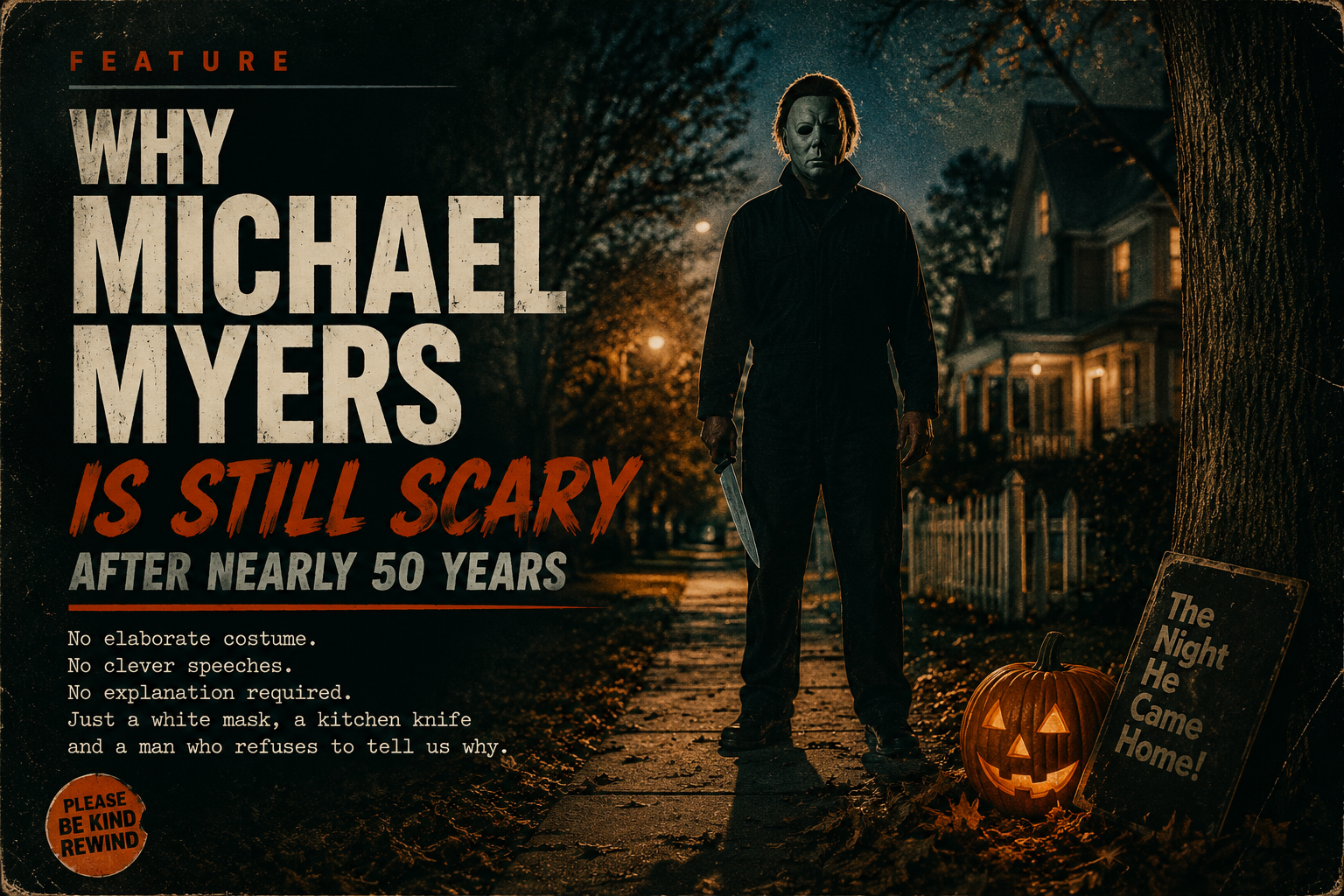
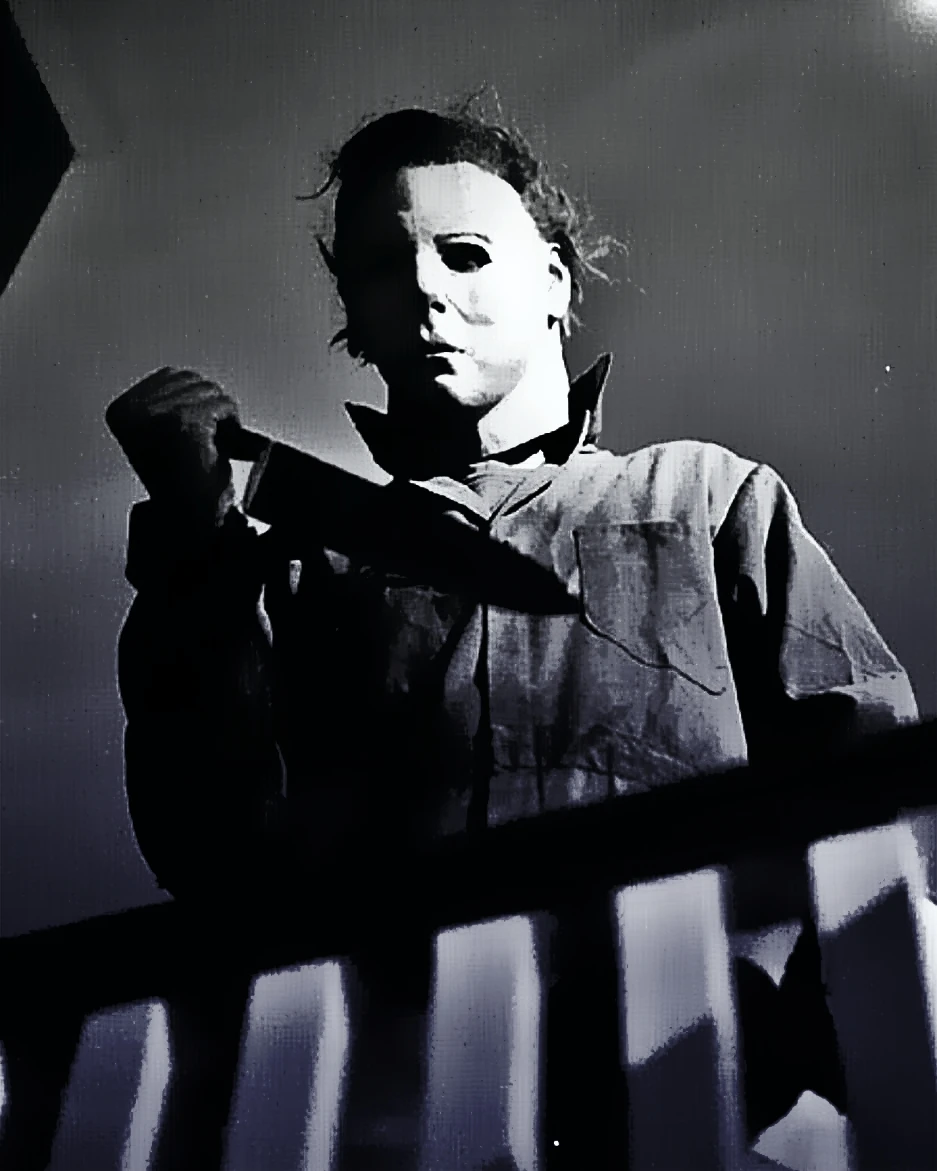
Nearly half a century after Halloween, Michael Myers can still make standing at the end of a quiet suburban street feel terrifying. No elaborate costume. No clever speeches. No explanation required. Just a white mask, a kitchen knife and a man who refuses to tell us why.
STAFF PICK
ONE MORE MOVIE?
FEATURE PRESENTATION
STORIES WORTH REWINDING
FEATURE PRESENTATION
PLAY // READ // REWIND
THE SHAPE
He Wasn't Supposed to Be Michael Myers
Look at the credits for the original Halloween, and you'll find something important.
Michael Myers isn't simply presented as Michael Myers.
The masked figure is credited as:
The Shape.
That tells you almost everything about what makes the original character work.
Michael isn't treated like the charismatic horror celebrity he would eventually become.
He's a presence.
A silhouette.
Something standing behind a hedge.
Something visible between washing hanging on a line.
A figure at the other end of the street.
Laurie Strode looks. He's there. She looks again. He's gone.
That's Michael Myers at his most frightening.
Not charging through a door.
Not swinging a weapon.
Standing still. Watching. Waiting.
And apparently having absolutely nowhere else he needs to be.
THE MASK
The Face That Shows Absolutely Nothing
It might be the greatest piece of accidental horror design ever created.
The mask that eventually became one of cinema's most recognisable faces began life as a Captain Kirk mask.
Production designer and art director Tommy Lee Wallace modified it by changing the eye holes and hair and painting the face a ghostly pale colour to remove its recognisable features.
And somehow that cheap alteration produced something perfect.
Because Michael's mask doesn't look angry.
It doesn't look happy.
It doesn't look particularly monstrous.
It doesn't look like anything.
That's what makes it horrible.
Most villains communicate something through their faces.
Freddy Krueger enjoys what he's doing.
Chucky enjoys it even more.
Leatherface can be frantic and distressed.
Even Jason's hockey mask eventually becomes an expression of the character because we understand what it represents.
Michael gives us nothing.
You can project anything onto that face.
Anger. Curiosity. Hatred. Nothingness.
And the mask never confirms which one you're looking at.
Perhaps that's why it still works.
The scariest expression Michael Myers can make...
is no expression at all.
ACROSS THE STREET
Michael Is Scarier When He's Doing Nothing
One of the strangest things about Halloween is how little Michael actually needs to do.
Think about the moments you remember.
Michael standing beside a hedge.
Michael appearing behind Laurie.
Michael watching from across the road.
Michael partly hidden by darkness.
Michael standing amongst washing.
The film trains us to search the frame for him.
And once Carpenter has done that, he barely needs Michael anymore.
We do the work ourselves.
Suddenly every doorway matters.
Every dark corner matters.
Every patch of background darkness might contain that white face.
Carpenter and cinematographer Dean Cundey turned an ordinary suburban neighbourhood into somewhere unsafe. AFI notes that the production even had to carefully disguise its Southern California shooting locations — avoiding palm trees and reusing scattered leaves to maintain the illusion of the Midwestern setting.
That's important because Haddonfield isn't Dracula's castle.
It's not an abandoned asylum.
It's not some cabin miles from civilisation.
It's home.
And Michael is standing outside.
NO RUNNING REQUIRED
The Walk Is Part of the Nightmare
Michael doesn't need to run.
That's become such a familiar slasher cliché that it's easy to laugh about it.
Victim runs. Killer walks. Killer somehow catches up.
But with Michael it works because running would destroy part of what makes him frightening.
Running suggests urgency. Running suggests panic.
Running suggests Michael thinks you might escape.
He doesn't appear concerned about any of that.
Nick Castle's physical performance in the original is beautifully uncomplicated. Accounts of the film have described Carpenter's direction to Castle in similarly straightforward terms: Michael needed to move from one place to another without unnecessary theatricality.
And that's exactly what we get.
No swagger. No dramatic monster pose. No performance telling us:
LOOK HOW EVIL I AM.
He just walks. Slowly.
Because apparently Michael Myers has already decided how this ends.
BEHIND THE EYES
Dr Loomis Makes Michael Even Scarier
Michael barely speaks.
Fortunately, Dr Sam Loomis never stops talking about him.
And thank God for Donald Pleasence.
Loomis gives Halloween something enormously important.
Mythology.
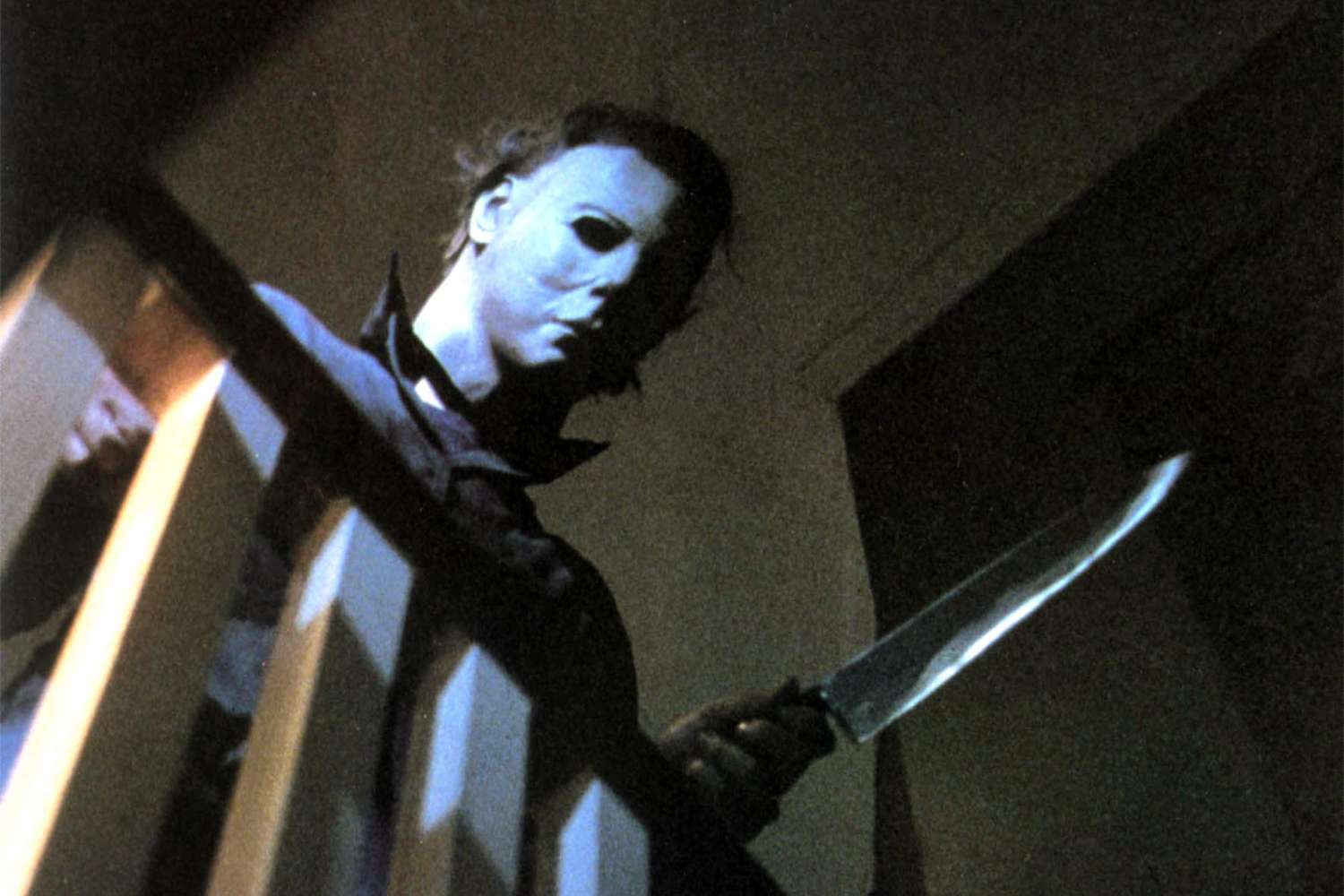
Without him, Michael could simply be an escaped murderer stalking teenagers.
Loomis tells us there's something else happening.
He spent years trying to understand the child who murdered his sister.
Eventually he stopped trying.
In Loomis's mind, Michael isn't sick.
He isn't misunderstood. He's simply evil.
AFI's synopsis preserves the essence of Loomis's description: a child seemingly empty of reason, conscience and understanding, with eyes Loomis associates with the devil itself.
It's wonderfully dramatic. But it's also incredibly effective.
Because the psychiatrist — the person supposedly qualified to explain Michael — essentially tells us:
I can't.
And if the doctor who spent fifteen years studying him can't understand what's behind those eyes...
What chance have we got?
DON'T EXPLAIN THE BOOGEYMAN
Michael Is Frightening Because We Don't Know Why
This might be the most important part.
The original Halloween doesn't give Michael an elaborate motivation for stalking Laurie.
Later films would add mythology.
Family connections. Cults. Alternative timelines. Childhood explanations.
Different continuities would repeatedly attempt to answer questions about Michael Myers.
But the original movie's power comes partly from refusing to answer them.
Why Laurie? Why tonight? Why does he kill? What does he want?
What is he thinking?
We don't know.
And that's bloody terrifying. Because motives create rules.
If the killer wants revenge, perhaps you can reason with him.
If the monster follows particular rules, perhaps you can avoid them.
If something happened during childhood that explains everything, at least there's a cause.
Michael doesn't offer us one.
He saw Laurie. And now he's following her.
That's almost the entire explanation.
Sometimes horror becomes less frightening the moment somebody switches the light on.
Michael Myers works best when we leave it off.
THE BOOGEYMAN
Every Generation Understands Michael Myers
Kids don't need Halloween mythology explained to them.
They already understand the idea.
There's something outside.
There's something upstairs.
There's something behind the curtain.
There's something standing at the end of the hallway.
The boogeyman.
Michael gives that childhood fear a physical form.
Tommy Doyle spends the film worrying about the boogeyman.
The adults dismiss it because adults know monsters aren't real.
Then Michael Myers walks into the neighbourhood.
That's the wonderfully simple trick at the heart of Halloween.
What if the kid was right?
What if there really was something outside?
What if it really was watching the house?
And what if locking the door didn't matter?
LESS BLOOD, MORE FEAR
Halloween Doesn't Need to Drown You in Gore
Memory can make Halloween seem more violent than it actually is.
It has become such an important slasher movie that we mentally group it with decades of increasingly elaborate horror kills.
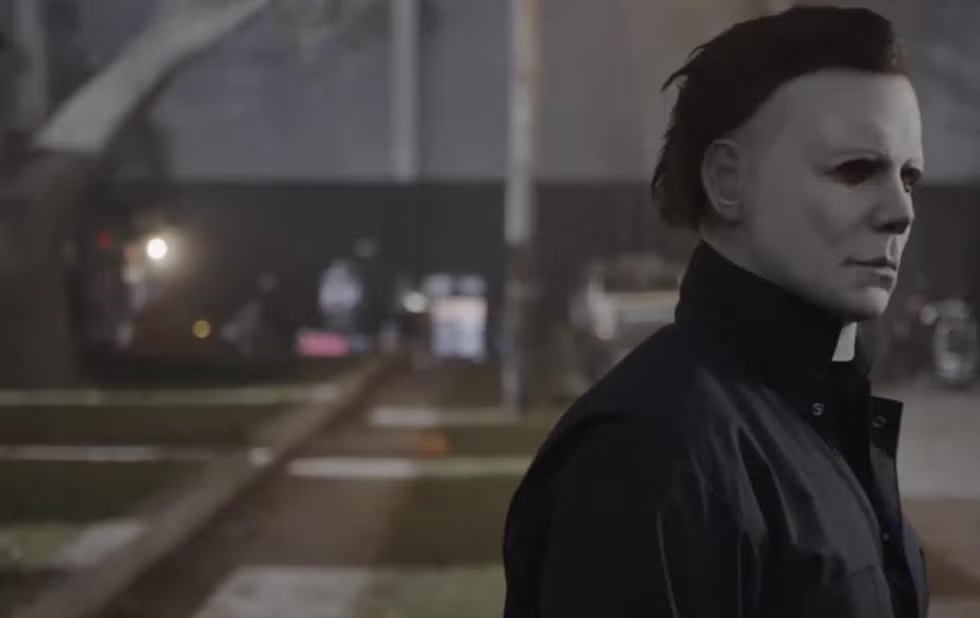
But the original is remarkably restrained.
Even contemporary assessments have noted how little blood Carpenter needed to create its terror.
That's another reason Michael remains effective.
The anticipation is often worse than the violence.
You're waiting for him to appear.
Waiting for Laurie to notice him.
Waiting for something in the background to move.
Carpenter makes us frightened before anything happens.
That's much harder than simply making us jump.
A jump scare lasts a second.
Dread can follow you around for the entire movie.
THAT MUSIC
Michael Myers Has a Sound Before He Has a Face
Then there are those notes.
You know them. You don't even need Michael on screen.
John Carpenter's Halloween theme starts playing, and your body understands what's happening before your brain catches up.
Something is wrong.
The score gives Michael another presence.
He can be outside the frame and still feel nearby.
That's enormously important to the film because Carpenter spends so much time making us wonder where Michael is.
The music doesn't simply accompany the threat.
It helps create it.
Put that theme over an ordinary suburban street, and suddenly we're looking behind every tree.
That's quite an achievement for a few notes and a bloke in a modified Captain Kirk mask.
LAURIE STRODE
Michael Needs Someone Worth Being Afraid For
Another ingredient sometimes gets forgotten when discussing great horror villains.
The victim matters.
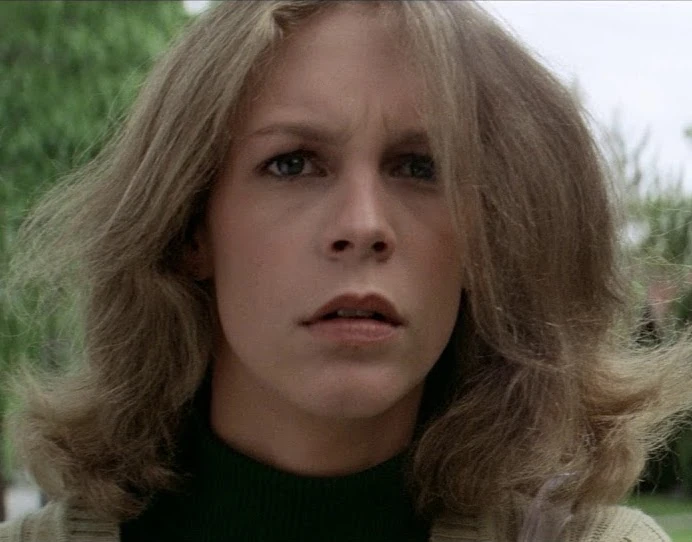
Michael Myers works because Laurie Strode works.
Jamie Lee Curtis made her feature-film debut in Halloween, and Laurie gives us someone recognisably human to experience Michael through.
She's not a superhero.
She doesn't know she's beginning a decades-long franchise.
She's a teenager babysitting on Halloween night.
That's all we need.
Michael's emptiness works because Laurie isn't empty.
She worries. She panics. She fights. She protects the children.
She's frightened. We're frightened because she is.
A horror villain is only as effective as the people we're desperate to see escape him.
Michael got one of the best.
LOOK BEHIND YOU
Carpenter Made the Background Dangerous
This might be my favourite thing Halloween does.
Michael changes how you watch the movie.
Normally, our eyes follow the characters.
Carpenter teaches us not to.
Look behind Laurie. Look through the window. Look beside the house.
Look into that doorway. Is that him?
Sometimes it is. Sometimes it isn't. Eventually it doesn't matter.
Because now you're watching the entire frame.
That's one of horror cinema's greatest tricks.
The director hasn't simply put the monster inside the movie.
He's put the monster inside your expectations.
Once you're looking for Michael Myers...
you start seeing him everywhere.
FORTY-EIGHT YEARS LATER
Familiarity Should Have Killed Michael Myers
This is where Michael becomes particularly interesting.
Halloween was released in 1978.
That means audiences have had nearly half a century to become comfortable with him.
And usually familiarity destroys fear.
The monster becomes merchandise.
The terrifying villain becomes somebody you take selfies with at conventions.
The mask ends up on mugs.
Yet put Michael back into the right environment — darkness, silence, that music, a suburban street — and something ancient switches back on.
Because underneath all the sequels and merchandise, the basic idea remains intact.
A human shape.
Standing where it shouldn't be.
Watching you.
THE SEQUELS
The More We Learned About Michael, the Less We Needed to Know
This is where the Halloween franchise gets fascinating.
Over the decades, filmmakers understandably tried to expand Michael.
Sequels need stories.
Stories need mythology.
Eventually somebody has to answer questions.
But every explanation risks taking something away.
Is Michael Laurie's brother?
Okay.
There's a reason.
A supernatural curse?
Now there are rules.
A complicated mythology?
Now we can study it.
And Michael Myers was never frightening because we understood him.
He was frightening because we couldn't.
That's why virtually every attempt to reinvent Halloween eventually circles back toward the simplicity of 1978.
Michael. Laurie. Haddonfield. Halloween night.A mask.
A knife.
Sometimes the strongest mythology is barely any mythology at all.
THE EMPTY FACE
Freddy Wants You to Know Him. Michael Doesn't Care.
Think about the great slasher villains.
Freddy Krueger talks.
Chucky talks.
Ghostface definitely talks.
They have personalities.
Catchphrases.
Motives.
Humour.
Michael Myers doesn't need any of it.
You could sit Michael Myers opposite a psychiatrist for ten hours and he'd probably spend ten hours staring at the wall.
That absence of personality somehow became his personality.
He's the blank space amongst horror's loudest characters.
And perhaps that's why he hasn't dated in quite the same way.
No performance style becomes unfashionable.
No jokes stop being funny.
Not much dialogue suddenly sounds ridiculous.
There's just...
The Shape.
OCTOBER 31
Michael Myers Belongs to Halloween Now
Eventually, a movie character can become bigger than the movie that created them.
Michael has reached that point.
That white face has become part of Halloween itself.
Costume shops. Decorations. Posters. T-shirts. Marathons.
October television schedules.
Put the mask beside a pumpkin, and nobody needs an explanation.
That's extraordinary, considering how simple the design is.
And perhaps that's another reason Michael survives.
He doesn't merely belong to a franchise anymore.
He belongs to the season.
When October arrives, so does Michael Myers.
PLEASE REWIND
Why Michael Myers Is Still Scary After Nearly 50 Years
Maybe we've been looking for the answer in the wrong place.
Perhaps Michael Myers isn't frightening despite being simple.
He's frightening because he's simple.
Take away the sequels.
Take away the timelines.
Take away the family trees, mythology, explanations and decades of franchise baggage.
Go back to Haddonfield in 1978.
A teenage girl walks home from school.
She looks down the street.
A man is standing there. White face. Dark eyes. Motionless.
She looks away. When she looks back... He's gone. That's it.
That's Michael Myers.
John Carpenter and Debra Hill didn't need to explain what was behind the mask. The original film understood that the question was far more frightening than any answer they could have given us.
Nearly fifty years later, we know Michael Myers better than audiences in 1978 ever could.
We've seen behind the mask. We've learned the stories.
We've followed the timelines.
And yet when the lights go out, and that familiar music begins...
We still look towards the doorway. Just in case.
Because underneath everything that came afterwards, Michael Myers remains what he was always supposed to be.
Not a man. Not a personality.
Not something we're supposed to understand.
The Shape.
And sometimes...
An empty doorway is frightening because we're waiting for him to appear in it.
END OF FEATURE
Be kind. Rewind. Then pick another.
One more movie?
DON'T RETURN
THE TAPE YET.
Two more stories from the Please Rewind magazine rack.
RENTAL_01
Movie Culture
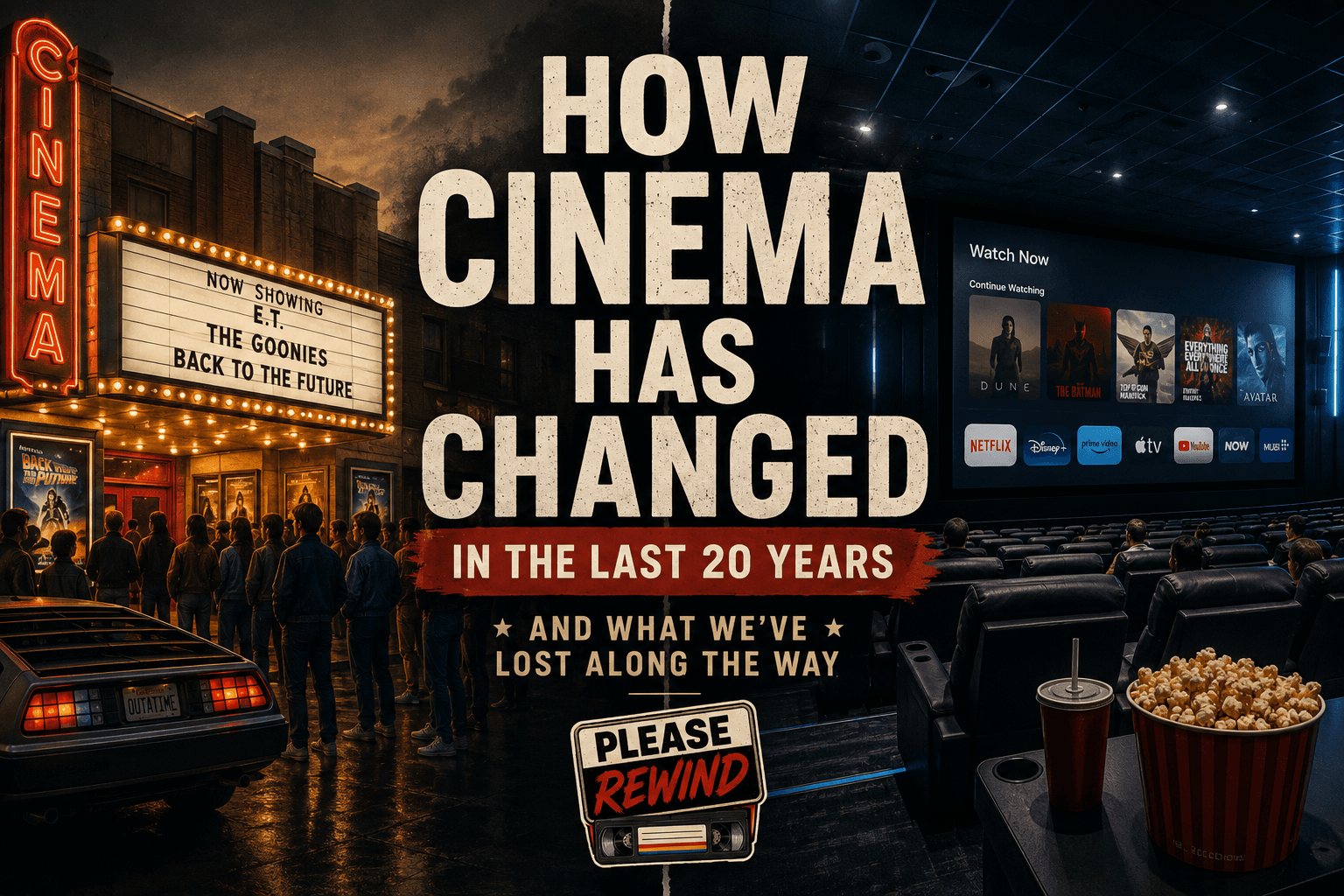
How Cinema Has Changed in the Last 20 Years — And What We’ve Lost Along the Way
From Friday-night queues and packed multiplexes to streaming, phones and endless choice, going to the movies feels very different now.
PICK UP RENTAL →
RENTAL_02
Nostalgia
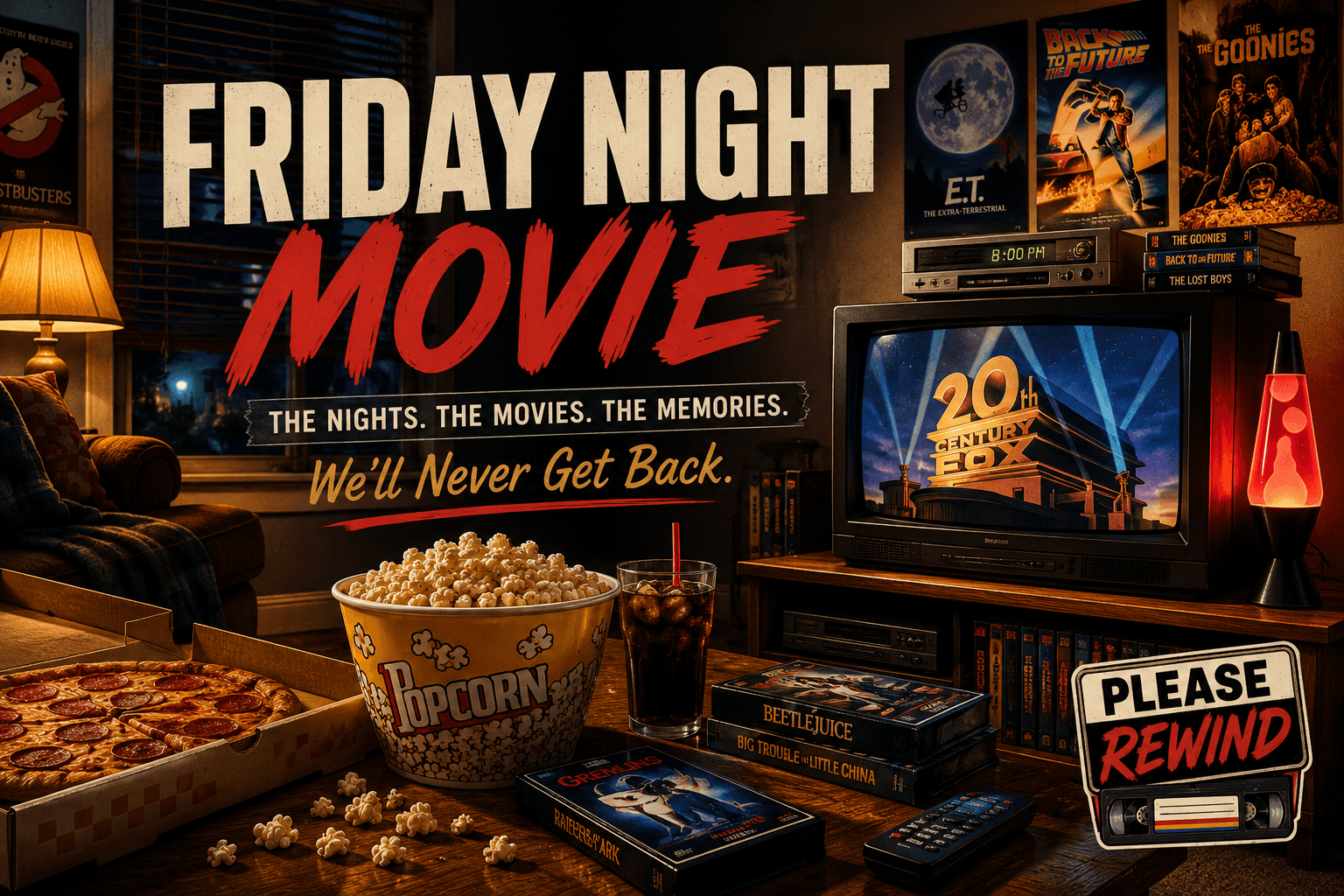
Whatever Happened to the Friday Night Movie?
Before endless scrolling and infinite watchlists, Friday night meant choosing one film, getting the snacks in and actually pressing play.
PICK UP RENTAL →