Why Are People Choosing Streaming Over the Cinema? It’s About More Than Ticket Prices
Cinema tickets aren't cheap, but money alone doesn't explain why so many of us would rather watch a movie from the sofa. Streaming hasn't killed our love of cinema—it's completely changed what we expect from a night at the movies.
STAFF PICK
ONE MORE MOVIE?
FEATURE PRESENTATION
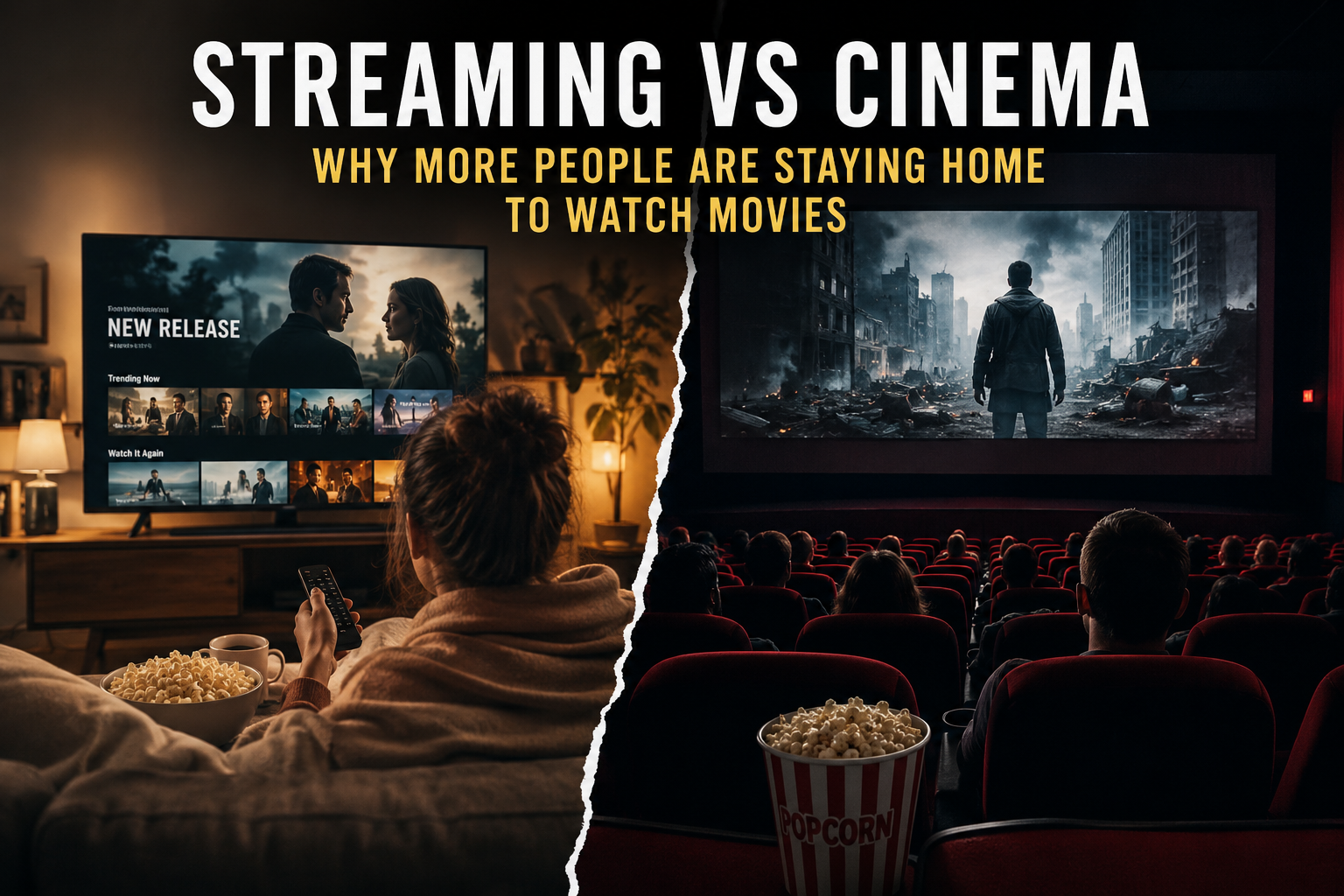
STORIES WORTH REWINDING
FEATURE PRESENTATION
PLAY // READ // REWIND
The Friday Night Thing
It Was What You Did Most Weekends Why Did It Change
There was a time when seeing a new movie meant going to the cinema.
You checked the listings. Picked a showing. Drove or caught a bus into town. Bought your ticket. Grabbed some popcorn and sat in a dark room with a couple of hundred strangers.
That was simply how movies worked.
Today?
We have another option.
We can sit on the sofa, turn on a television that's probably bigger and better than anything our parents could have imagined owning, open a streaming service and have thousands of films available within seconds.
No parking, No queues, No £7 popcorn. Nobody kicking the back of your seat.
And if you desperately need the toilet halfway through the movie, you can pause the bloody thing.
So when cinema attendance struggles, the obvious explanation is usually price.
Tickets cost too much. Food costs too much. Taking an entire family can turn watching one movie into a surprisingly expensive night.
That's certainly part of it.
But we think something much bigger has happened.
The cinema didn't necessarily become worse.
Home became much better.
THE PRICE OF MOVIE NIGHT
Going to the Cinema Has Become a Financial Decision
Let's start with the obvious one.
Going to the cinema costs money.
And we're not talking only about the ticket.
If you're driving, there might be petrol and parking.
Take the kids, and suddenly you're buying several tickets.
Then somebody wants popcorn.
Somebody else wants a drink.
Before you know it, watching a two-hour movie has become a fairly substantial family expense.
Compare that with home.
You've already bought the television.
You're probably already paying for Netflix, Disney+, Prime Video, Apple TV or another streaming service.
The drinks are in the fridge.
Popcorn costs a fraction of cinema prices.
And four people watching the same movie doesn't multiply the cost four times.
When household budgets are being squeezed, that matters.
But here's the interesting thing.
Streaming isn't particularly cheap anymore either.
Multiple subscriptions quickly add up, services regularly increase their prices, and more platforms are introducing advertising unless viewers pay for more expensive tiers.
Deloitte's research has found considerable frustration with streaming prices, with almost half of surveyed consumers saying they already felt they were paying too much.
So the story isn't simply:
Cinema expensive. Streaming cheap.
There's more going on than that.
THE LIVING ROOM WON
Watching a Movie at Home Isn't the Compromise It Used to Be
Think about what watching a movie at home looked like 30 years ago.
A relatively small CRT television.
VHS.
Stereo sound if you were lucky.
Maybe somebody had an enormous 32-inch television in the corner, and everybody thought they were showing off.
The cinema absolutely destroyed the living room.
There wasn't even a competition.
Now walk into an electronics shop.
55-inch televisions are completely normal.
65 inches isn't unusual.
4K resolution, HDR, OLED, Affordable soundbars, Subwoofers. Dolby Atmos.
Streaming in 4K.
Some people's living rooms have better screens than small cinemas we remember visiting years ago.
Of course a television still can't reproduce a genuinely enormous cinema screen.
But the gap has narrowed enormously.
For a drama, comedy or straightforward thriller, plenty of people understandably look at their television and think:
Do I really need to leave the house for this?
Thirty years ago the answer was often yes.
Today it isn't.
STREAMING CHANGED US
We Got Used to Watching Movies on Our Own Terms
This might be the biggest change of all.
Streaming gave audiences control.
And once you get used to control, giving it back feels surprisingly difficult.
At home, the movie starts when you want it to start.
Not 6:10.
Not 7:40.
Not 9:15.
Whenever you're ready. Need the toilet? Pause it. Want another drink? Pause it. Missed something somebody said?
Rewind ten seconds. Can't understand the dialogue?
Turn the subtitles on. Kids finally gone to bed at 8:37?
Start the movie at 8:37. Feeling tired halfway through?
Finish it tomorrow.
None of those things sounds revolutionary.
But together they've fundamentally changed our expectations.
The cinema demands that we organise ourselves around the movie.
Streaming organises the movie around us.
That's an enormous psychological difference.
THE OTHER PEOPLE PROBLEM
Sometimes the Worst Thing About the Cinema Is the Audience
We love watching movies with an audience.
When it works.
A packed cinema laughing together during a great comedy is brilliant.
Hearing an entire audience gasp at the same moment is something your living room can't recreate.
Seeing a huge movie on opening night with hundreds of people who genuinely want to be there can remind you exactly why cinemas are special.
But then there's the other version.
Someone talking three rows behind you.
A phone screen lighting up every five minutes.
Someone arriving 20 minutes late and climbing across everybody.
A teenager apparently filming half the movie for TikTok.
Someone kicking your chair.
A couple having a conversation as though they've accidentally wandered into a pub.
And because you've paid to be there, you can't simply choose another room.
At home, the annoying person is usually somebody you're related to.
At least you can tell them to shut up.
OUR ATTENTION HAS CHANGED
A Two-Hour Movie Now Competes With Almost Everything
The cinema isn't simply competing with Netflix.
It's competing with YouTube.
TikTok, Gaming, Social media, Podcasts, Television, Streaming series & Sport.
And a phone that's sitting in everybody's pocket offering an almost endless supply of entertainment.
That matters particularly with younger audiences.
We live in an entertainment economy where everything is fighting for the same finite resource:
our attention.
Watching a movie requires commitment.
Going to the cinema requires even more.
A two-hour film might mean three or four hours once you include getting there, trailers, adverts and travelling home.
Streaming removes much of that friction.
And increasingly, convenience wins.
THE EVENT MOVIE
Audiences Haven’t Abandoned Cinemas — They’ve Become More Selective
Here's where the idea that cinema is dying becomes too simplistic.
People still go.
And when the right movie arrives, they go in enormous numbers.
The difference is that audiences increasingly seem to ask themselves one question:
Is this worth seeing at the cinema?
That's a very different question from simply asking whether they want to see the movie.
A huge Christopher Nolan film?
Cinema.
Avatar?
Cinema.
A massive superhero movie you've been waiting years for?
Probably cinema.
Something designed around IMAX?
Absolutely.
But a mid-budget comedy?
A small drama?
A thriller that will probably be available at home fairly soon?
That's where the decision becomes harder.
Research from the British Film Institute offers a fascinating clue.
Two of the strongest reasons audiences gave for choosing the cinema were treating it as a special occasion and believing a particular film needed to be seen on the big screen.
That tells us something important.
Cinema hasn't disappeared. It's becoming an event.
THE VALUE OF THE BIG SCREEN
Cinemas Still Have Something Streaming Can’t Reproduce
For everything streaming does brilliantly, something still feels magical about a great cinema.
The lights go down. The conversations stop. The studio logo appears.
The sound fills the room.
And for the next couple of hours, the movie has your complete attention.
No checking emails. No putting the washing machine on.
No wandering into the kitchen.
No scrolling through your phone because a scene has gone quiet for 30 seconds.
You're there to watch the film. That concentration matters.
We've watched and enjoyed movies at home.
There are other movies we've watched in a cinema and experienced.
Those aren't necessarily the same thing.
And premium formats make that difference even greater.
IMAX, Dolby Cinema and other large-format screens are effectively cinemas responding to the living-room problem by saying:
Fine. Try doing THIS at home.
And they're right.
You can't.
STREAMING HAS A PROBLEM TOO
The Sofa Isn’t Quite the Bargain It Used to Be
Streaming won audiences partly because it was simple.
One subscription. Loads of movies. No adverts.
Watch whenever you want.
That simplicity has slowly disappeared.
Now films are scattered across multiple services.
One movie is on Netflix. Another is on Disney+.
The thing you actually want to watch is on a service you cancelled six months ago.
Some subscriptions contain adverts. Prices keep increasing.
Movies disappear from catalogues.
And occasionally you spend 40 minutes scrolling through thousands of choices before deciding there's nothing to watch.
That's an extraordinary achievement when you think about it.
We have access to more movies than any generation in history and somehow still end up saying:
“There's nothing on.”
Deloitte's research shows audiences are increasingly frustrated with subscription costs, while many question whether the content they're getting is worth what they're paying.
Streaming solved plenty of problems.
It created a few new ones too.
MAYBE WE DON'T HAVE TO CHOOSE
Streaming and Cinema Can Actually Need Each Other
Perhaps we've spent too long treating this as a war.
Cinema versus streaming. Big screen versus television.
Theatrical versus digital. Maybe they serve different purposes.
Streaming is incredible for discovery. It's brilliant for revisiting old favourites.
It's perfect for the movie you've been meaning to watch for ten years.
It's accessible, Convenient, Comfortable. Cinema offers something else.
Occasion, Scale, Community, Focus & Spectacle.
One doesn't necessarily have to destroy the other.
In fact, streaming may ultimately make audiences appreciate cinemas differently.
If we're going to leave the comfort of home, we'll want the experience to be worth it.
That's not necessarily bad news for cinema.
It simply means cinemas have to give us a reason to go.
PLEASE REWIND'S TAKE
Streaming Didn’t Kill the Cinema — It Made the Cinema Prove Its Worth
We don't think people stopped loving the cinema.
We certainly haven't.
What changed is that going to the cinema is no longer the default.
Once upon a time, if you wanted to see the newest movie properly, you really didn't have another option.
Now there is.
And that alternative sits ten feet from your sofa.
The television is huge. The picture is beautiful.
The fridge is full. The film starts whenever you want.
And nobody is going to charge you £6 for a Coke.
So cinemas now have to answer a question they didn't really have to answer 30 years ago:
Why should I leave the house?
Sometimes the answer is obvious.
Because Oppenheimer is playing in IMAX.
Because you've waited years for this sequel.
Because it's opening night and you want to experience it with a crowd.
Because some films simply deserve a screen that fills your entire field of vision.
Other times? The sofa wins.
And maybe that's the real reason streaming has changed cinema.
It isn't simply cheaper. It isn't simply easier.
It gave audiences a choice.
Once audiences had that choice, they became much more selective about which movies deserved their time, money and effort.
Cinema isn't dead, far from it.
But going to the movies has become something it perhaps hadn't been for a very long time.
An occasion.
And honestly?
Maybe that's exactly what it should be.
END OF FEATURE
Be kind. Rewind. Then pick another.
One more movie?
DON'T RETURN
THE TAPE YET.
Two more stories from the Please Rewind magazine rack.
RENTAL_01
Movie Culture
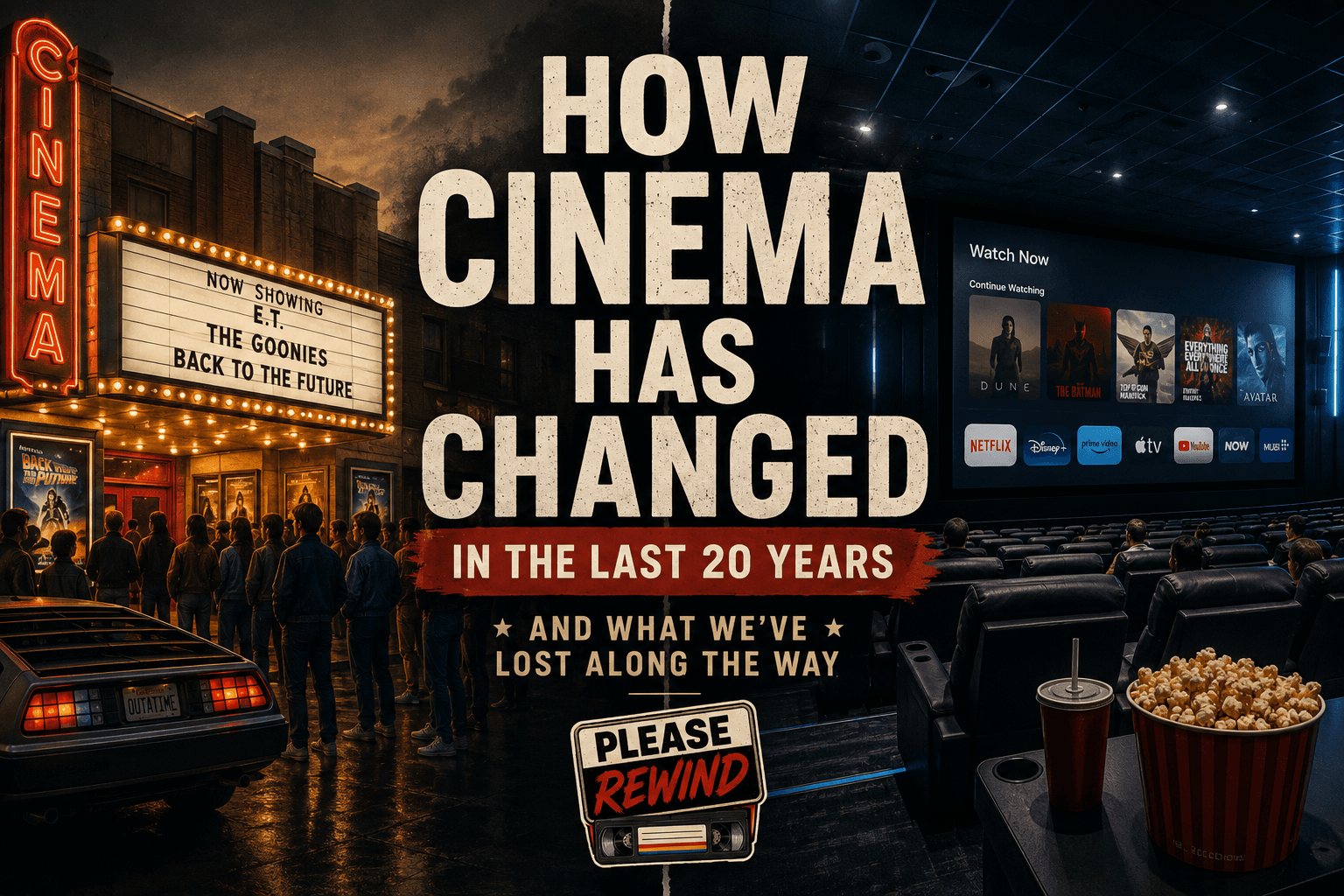
How Cinema Has Changed in the Last 20 Years — And What We’ve Lost Along the Way
From Friday-night queues and packed multiplexes to streaming, phones and endless choice, going to the movies feels very different now.
PICK UP RENTAL →
RENTAL_02
Nostalgia
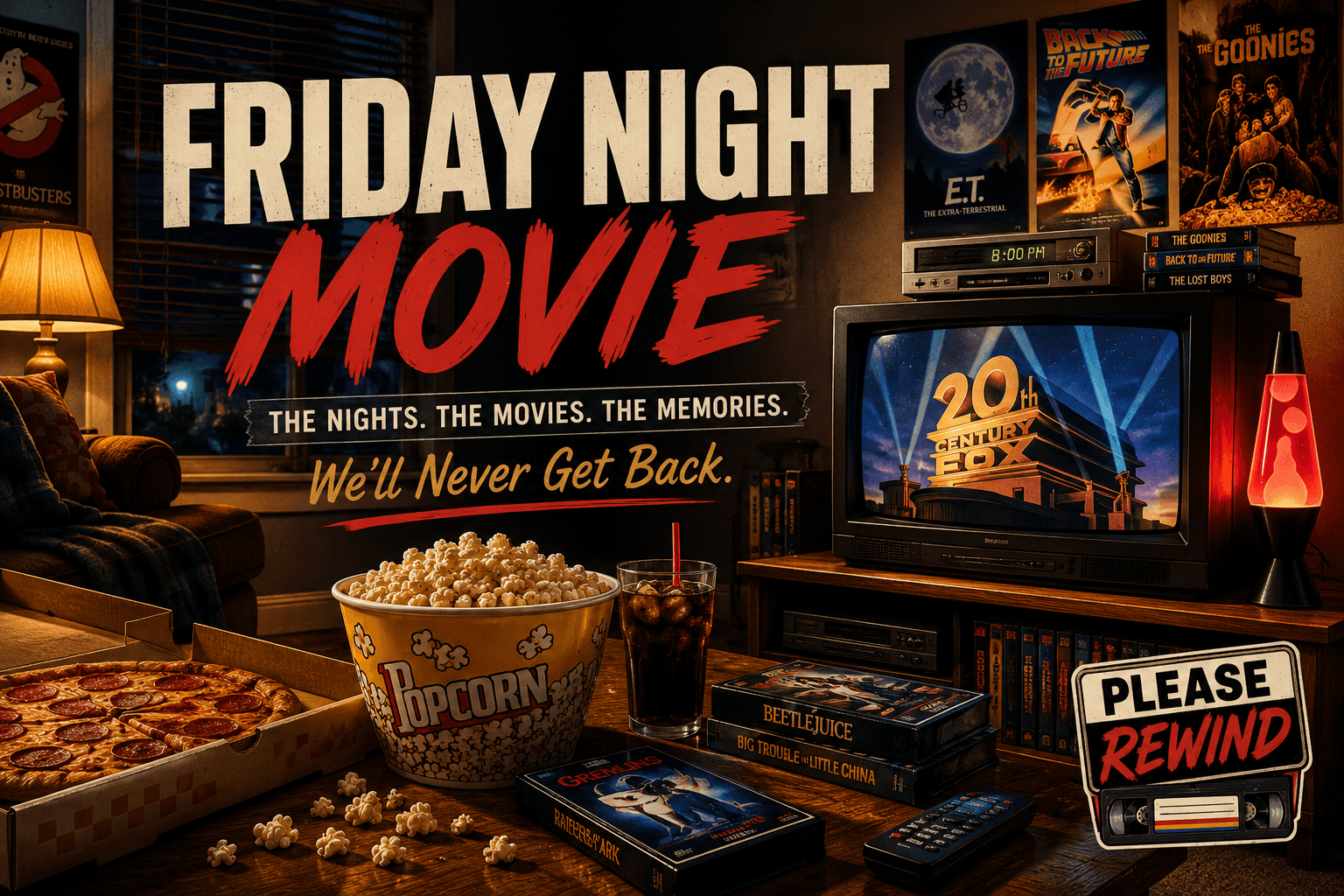
Whatever Happened to the Friday Night Movie?
Before endless scrolling and infinite watchlists, Friday night meant choosing one film, getting the snacks in and actually pressing play.
PICK UP RENTAL →