The Video Shop Horror Aisle Was Scarier Than Half the Movies
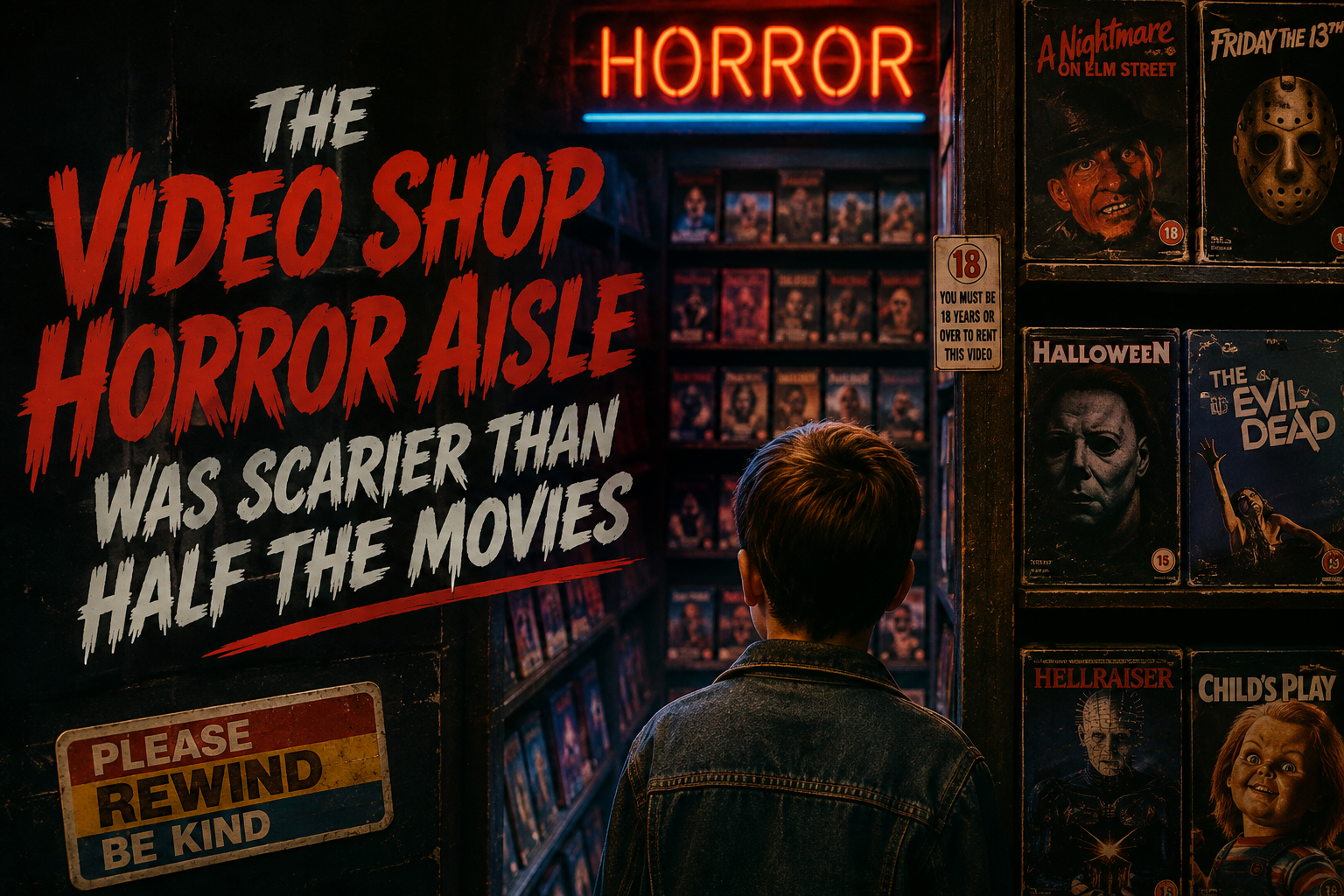
Before trailers followed us around the internet and every horror movie was a click away, sometimes all it took to scare the life out of you was a VHS cover. For a generation of horror fans, the video shop horror aisle was where the nightmares really started.
STAFF PICK
ONE MORE MOVIE?
FEATURE PRESENTATION
STORIES WORTH REWINDING
FEATURE PRESENTATION
PLAY // READ // REWIND
PLEASE BE KIND, REWIND
Going to the Video Shop Was an Event
It's hard to explain to someone who grew up with streaming just how exciting renting a movie could be.
Today we have almost everything.
Thousands of films available without leaving the sofa.
That's obviously incredible.
But having everything available has removed something too.
The hunt.
Going to the video shop was an event.
Maybe it was Friday night.
Maybe somebody had decided you were having a takeaway.
Maybe your parents told you that you could choose one film.
One.
That single word transformed an ordinary trip into a major life decision.
You'd walk through rows of VHS boxes looking for the film worthy of your weekend.
Action.
Comedy.
New releases.
Family.
And somewhere, usually towards the back or along a wall that somehow felt slightly darker than everywhere else...
Horror.
That was where things got interesting.
BEYOND THE CURTAIN
The Section You Probably Shouldn't Have Been Looking At
The horror aisle felt forbidden even when it technically wasn't.
You knew instinctively that some of those boxes weren't meant for you.
The age certificates made that perfectly clear.
15.
18.
Numbers that didn't behave like warnings.
They behaved like invitations.
An 18 certificate didn't make a horror movie less interesting when you were twelve.
It made it approximately 400 per cent more interesting.
What was in there?
Why weren't we allowed to see it?
How bad could it possibly be?
The answer, according to the VHS artwork, was very bloody bad indeed.
And because we couldn't just pull out a phone and find the entire movie explained online, those films still had genuine mystery attached.
You might know Freddy Krueger's face without having seen A Nightmare on Elm Street.
You knew Jason wore a hockey mask.
Michael Myers was that terrifying white face from Halloween.
Pinhead?
God knows what was going on there.
But you knew you weren't supposed to be watching it.
Which naturally meant you desperately wanted to.
COVER ART
VHS Boxes Were Allowed to Terrify You
Horror VHS artwork had one job.
Make you pick up the box.
Subtlety wasn't always part of the plan.
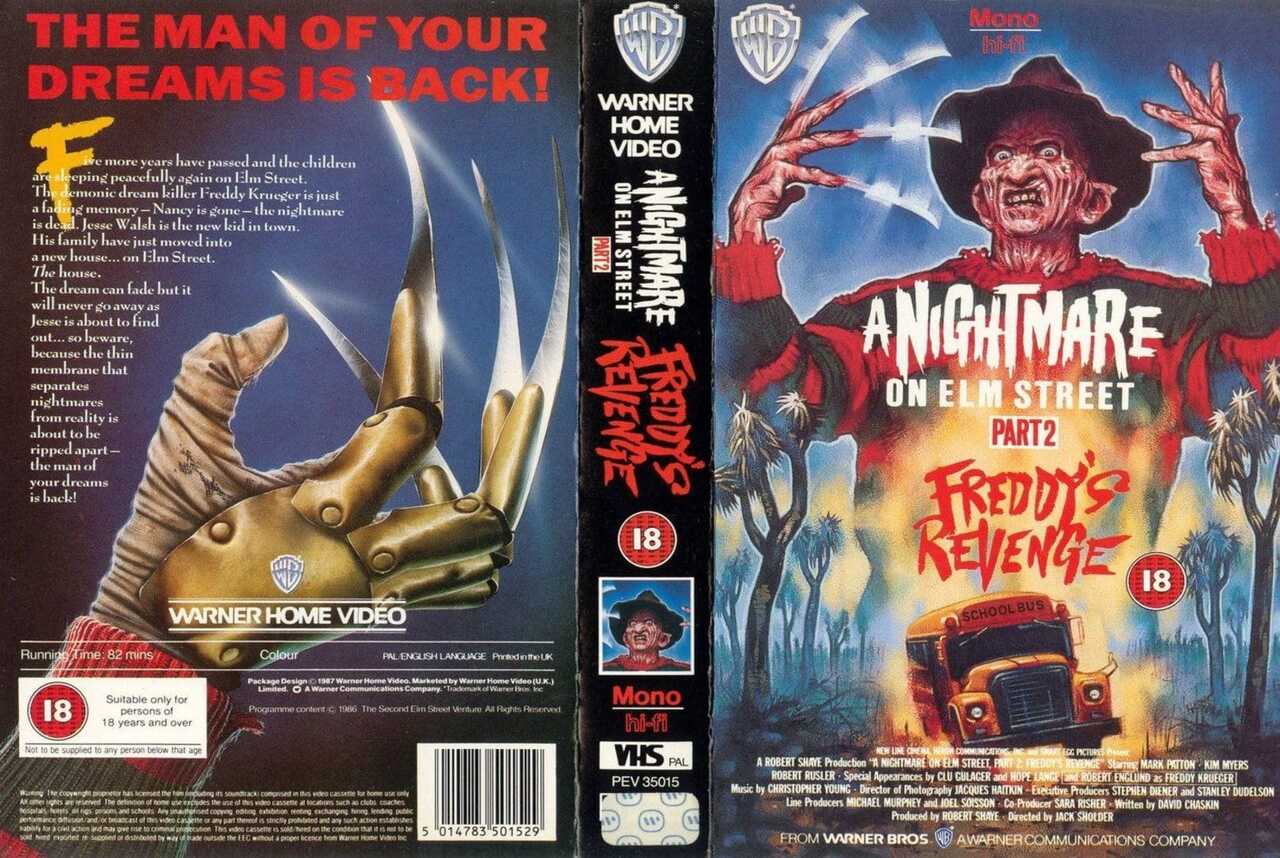
And thank God for that.
Some of those covers were miniature works of exploitation art.
A modern streaming thumbnail has to survive at the size of a postage stamp while you scroll past it in half a second.
A VHS box had physical presence.
You could pick it up.
Study it.
Turn it around.
You could look at the photographs on the back.
Read the description.
Then you turned it back over because something about the front bothered you.
That artwork had time to work on you.
The original A Nightmare on Elm Street artwork looked like somebody's nightmare had escaped onto the cover.
The Evil Dead gave you a hand bursting from the ground and dragging somebody down with it.
House had that wonderful severed hand ringing a doorbell.
Fright Night turned the sky above an ordinary suburban house into something monstrous.
The Friday the 13th films transformed a hockey mask into one of the most recognisable images in popular culture.
And then there were covers for movies you'd never heard of.
Those were sometimes the best.
You had no franchise familiarity.
No famous character.
No idea whether the film was any good.
Just some utterly deranged artwork promising that whatever was on that tape would permanently damage you.
Obviously, you wanted to rent it.
THE MOVIE IN YOUR HEAD
Imagination Did Most of the Work
This might be what we've lost most of all.
Not scarcity.
Mystery.
If you weren't allowed to watch a horror film, you had to imagine it.
And children are extremely good at making things worse.
You'd see one disturbing image on a VHS cover and construct an entire nightmare around it.
Maybe an older kid at school had seen the movie.
Even better.
Because now you had information.
Completely reliable information, obviously.
“My brother watched it, and someone gets their head cut off, and you actually see everything.”
Right.
Of course he did.
Someone else knew somebody who'd been sick watching it.
Another film had supposedly been banned.
One was apparently based on something that really happened.
These stories travelled through playgrounds with almost no relationship to reality.
And they made the films legendary before we'd watched a frame.
By the time you finally saw one, perhaps years later, the poor movie didn't stand a chance.
Nothing could compete with the version you'd already directed in your head.
18 CERTIFICATE
Being Told You Couldn't Watch Something Made It Irresistible
There was enormous power in that little red 18.
Adults saw consumer guidance.
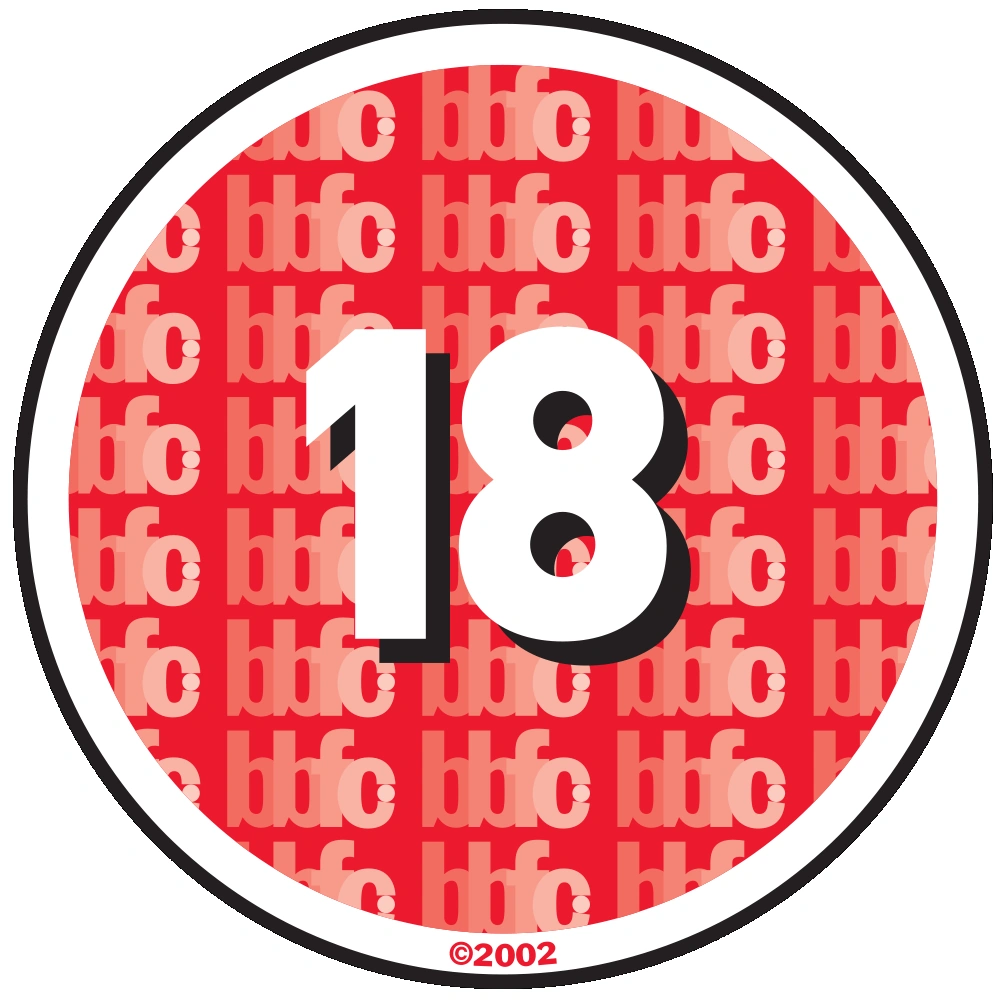
Kids saw a challenge.
Horror has always benefited from prohibition.
Tell somebody that a movie is too disturbing, too violent or simply inappropriate for them, and you've immediately made it interesting.
Britain had an especially complicated relationship with horror on home video.
The “video nasty” panic of the early 1980s turned certain films into almost mythical objects. Titles became notorious precisely because authorities, newspapers, and campaigners told people they shouldn't see them.
Even if you grew up after the height of that controversy, its shadow remained.
Some movies felt dangerous.
Not fictional-dangerous.
Actually dangerous.
The sort of thing you half expected the person behind the counter to question you about.
Which brings us to one of the most powerful people in our childhood...
THE GATEKEEPER
The Person Behind the Counter Knew Everything
Before algorithms recommended movies, there was Dave.
Or Steve.
Or Sarah.
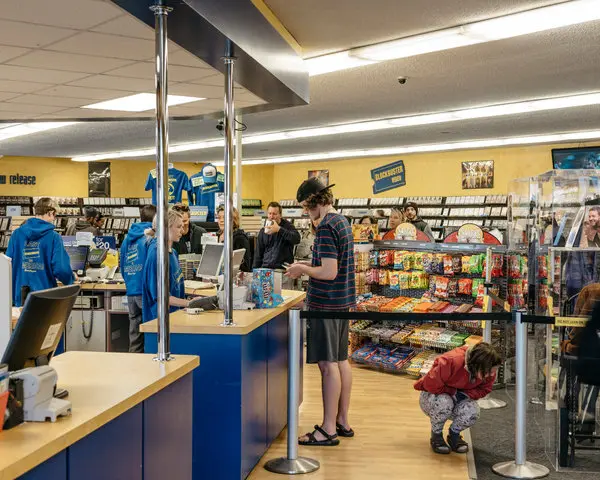
Whoever worked behind the counter at your local video shop.
They knew.
They'd seen what everybody rented.
They knew which new release was constantly out.
They knew which horror movie was genuinely nasty and which one had brilliant artwork covering up 90 minutes of absolute rubbish.
Most importantly, they controlled the tapes.
Getting a horror movie past your parents was only stage one.
You still had the counter.
There was always the possibility somebody would look at the certificate.
Then look at you.
Then look at your dad.
Then back at you.
It felt like attempting to smuggle classified government documents across an international border.
Sometimes a parent would simply say:
“He's fine.”
Victory.
You were going home with an 18.
And for the entire journey home, that VHS tape suddenly felt like the most valuable object you owned.
THE BOX LIED
Sometimes the Cover Was Better Than the Film
We should probably admit something.
Horror VHS covers were occasionally spectacular liars.
You'd see artwork promising demons, carnage, screaming victims and possibly the collapse of human civilisation.
Then you'd get home and discover you'd rented 84 minutes of people walking around a poorly lit building.
The monster shown prominently on the cover?
About eleven seconds of screen time.
That enormous bloody knife?
Not in the movie.
The terrified woman featured on the artwork?
Possibly not in the cast.
And somehow this rarely stopped us from trying again.
Because horror fans developed an extraordinarily high tolerance for disappointment.
Maybe the movie was rubbish.
But look at that box.
We'd rent another one next week.
There was almost an art to making a low-budget horror film look like the most terrifying cinematic experience ever created.
Sometimes the person designing the VHS sleeve deserved top billing.
FACES IN THE DARK
Horror Icons Were Bigger Than Their Movies
VHS also helped turn horror villains into celebrities.
Freddy.
Jason.
Michael.
Chucky.
Pinhead.
Leatherface.
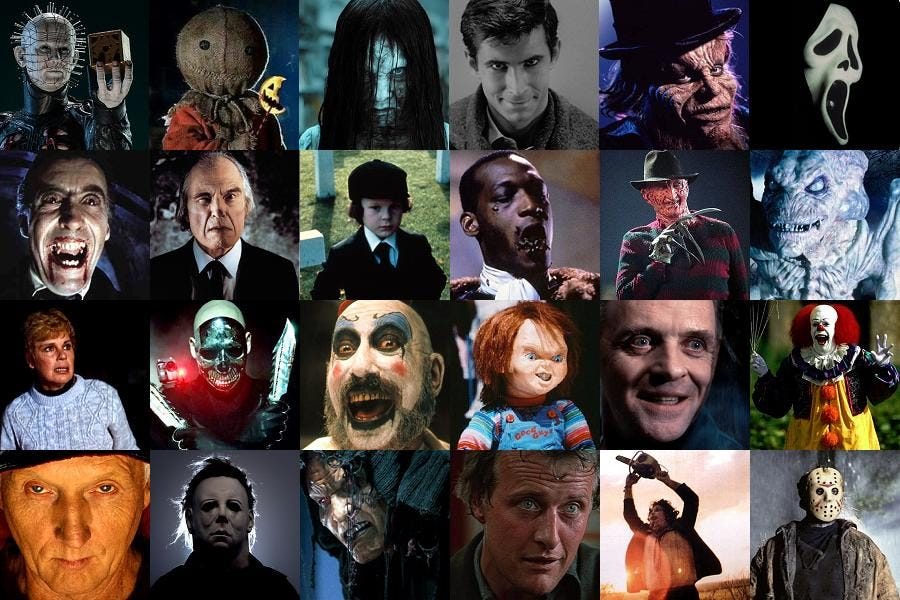
You didn't necessarily have to watch their films to know them.
Their faces were everywhere.
And when a franchise reached part four, five or six, the covers increasingly sold the monster.
That's what we wanted.
Jason didn't need an introduction.
Put the mask on the box.
Done.
Freddy became even more interesting because his personality escaped the films entirely. By the late 1980s, he wasn't simply a movie villain. He was part of popular culture.
For younger horror fans watching from the sidelines, these characters occupied a strange space.
They terrified us.
But we also thought they were incredibly cool.
We wanted posters.
Figures.
T-shirts.
We wanted to watch the movies we were simultaneously frightened to watch.
Horror turned fear into fandom.
The video shop helped make that happen.
FRIDAY NIGHT
Then You Had to Actually Watch the Bloody Thing
Eventually you got home.
The takeaway arrived.
The lights went down.
The tape went into the VCR.
And suddenly the bravado disappeared.
It's very easy to tell your mates that Freddy Krueger isn't scary at four o'clock in the afternoon.
It's a slightly different proposition at midnight when you're supposed to walk upstairs alone afterwards.
That was part of the ritual too.
Watching horror at home felt different when you had physically gone somewhere and chosen the tape.
There had been a journey.
You'd found it.
Carried it home.
Put it into the machine.
And once the film finished, the object that contained whatever had just scared the life out of you was still sitting underneath the television.
That's irrational.
Obviously.
But horror thrives on irrationality.
The movie might be finished.
Your imagination wasn't.
BE KIND, REWIND
Even Returning the Tape Was Part of It
Then came the following morning.
Daylight.
Everything considerably less frightening.
The VHS went back into its case.
Hopefully rewound, unless you wanted to become the reason shops had to put BE KIND, REWIND stickers everywhere.
And back it went.
That part matters more than it seems.
Movies disappeared from your house.
You couldn't necessarily watch them again immediately.
If you loved something, you remembered it.
Maybe you'd rent it again eventually.
Maybe you'd wait months.
Perhaps you'd never find it in stock again.
That distance gave movies room to grow in your memory.
Scenes became bigger.
Scares became scarier.
Bad bits conveniently disappeared.
And by the time you finally watched the film again, you weren't simply revisiting a movie.
You were revisiting the memory of watching it.
THE STREAMING AGE
We Gained Everything and Lost a Little Mystery
I don't want this to become another “everything was better when we were kids” argument.
It wasn't.
Streaming is brilliant.
Discovering an obscure horror film and watching it seconds later would have seemed like witchcraft when we were standing in video shops.
Restorations have rescued movies that once survived on horrible transfers.
Films from around the world are more accessible than ever.
Horror fandom is enormous, connected and incredibly knowledgeable.
I wouldn't trade all of that away.
But I do think we lost something when movies stopped being physical objects we had to discover.
Today you can know almost everything about a film before pressing play.
Trailer.
Cast.
Rating.
Reviews.
Plot summary.
Content warnings.
Ending explained.
Ten Things You Missed.
Somebody on YouTube has probably already spent 47 minutes explaining why the monster represents capitalism.
The mystery doesn't last very long.
The video shop gave movies space to exist inside our imaginations before we saw them.
And horror benefited from that more than any other genre.
THE HORROR AISLE
It Was Never Really Just About the Movies
Maybe that's why so many of us remember those shelves so clearly.
It wasn't simply nostalgia for VHS.
It was nostalgia for not knowing.
Not knowing whether the film was good.
Not knowing exactly what happened.
Not knowing whether the monster on the cover was going to scare us.
Not knowing whether we'd actually make it through the movie without pretending we needed the toilet during the frightening bit.
The horror aisle represented possibilities.
Hundreds of little plastic boxes containing stories we hadn't experienced yet.
Some became favourites.
Some were forgotten.
Some were absolutely terrible.
And a handful stayed with us for the rest of our lives.
PLEASE REWIND
The Video Shop Horror Aisle Was Scarier Than Half the Movies
Walk into a video shop today — if you're lucky enough to find one — and it can feel like stepping into another world.
For those of us who remember when that was how you watched movies, it's difficult not to miss it.
Not because VHS looked better.
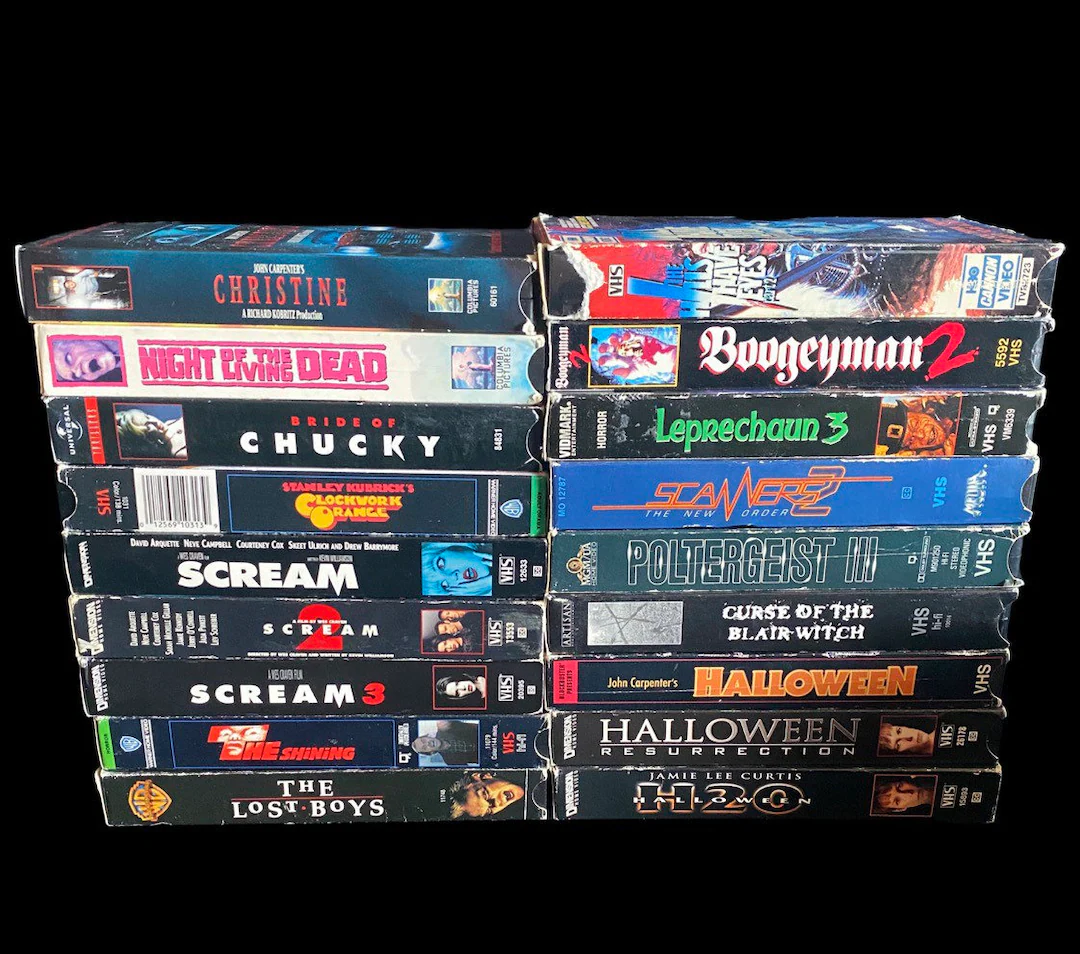
It didn't.
Not because rewinding tapes was convenient.
It definitely wasn't.
And not because every horror movie we rented was some forgotten masterpiece.
Christ, no.
We miss the feeling.
Standing in front of that horror section and wondering what was hiding inside those boxes.
Picking up something you absolutely weren't old enough to watch.
Studying artwork that promised horrors your imagination was more than capable of supplying.
Taking a chance on a movie because the cover looked amazing.
And occasionally discovering something that turned you into a horror fan for life.
Streaming gives us almost every movie we could want.
But it'll never recreate that moment when you were twelve years old, standing beneath the fluorescent lights of your local video shop, staring at an 18-rated VHS you knew your mum wasn't going to let you rent.
Maybe the film wasn't actually that frightening.
It didn't need to be.
The box had already done the damage.
END OF FEATURE
Be kind. Rewind. Then pick another.
One more movie?
DON'T RETURN
THE TAPE YET.
Two more stories from the Please Rewind magazine rack.
RENTAL_01
Movie Culture
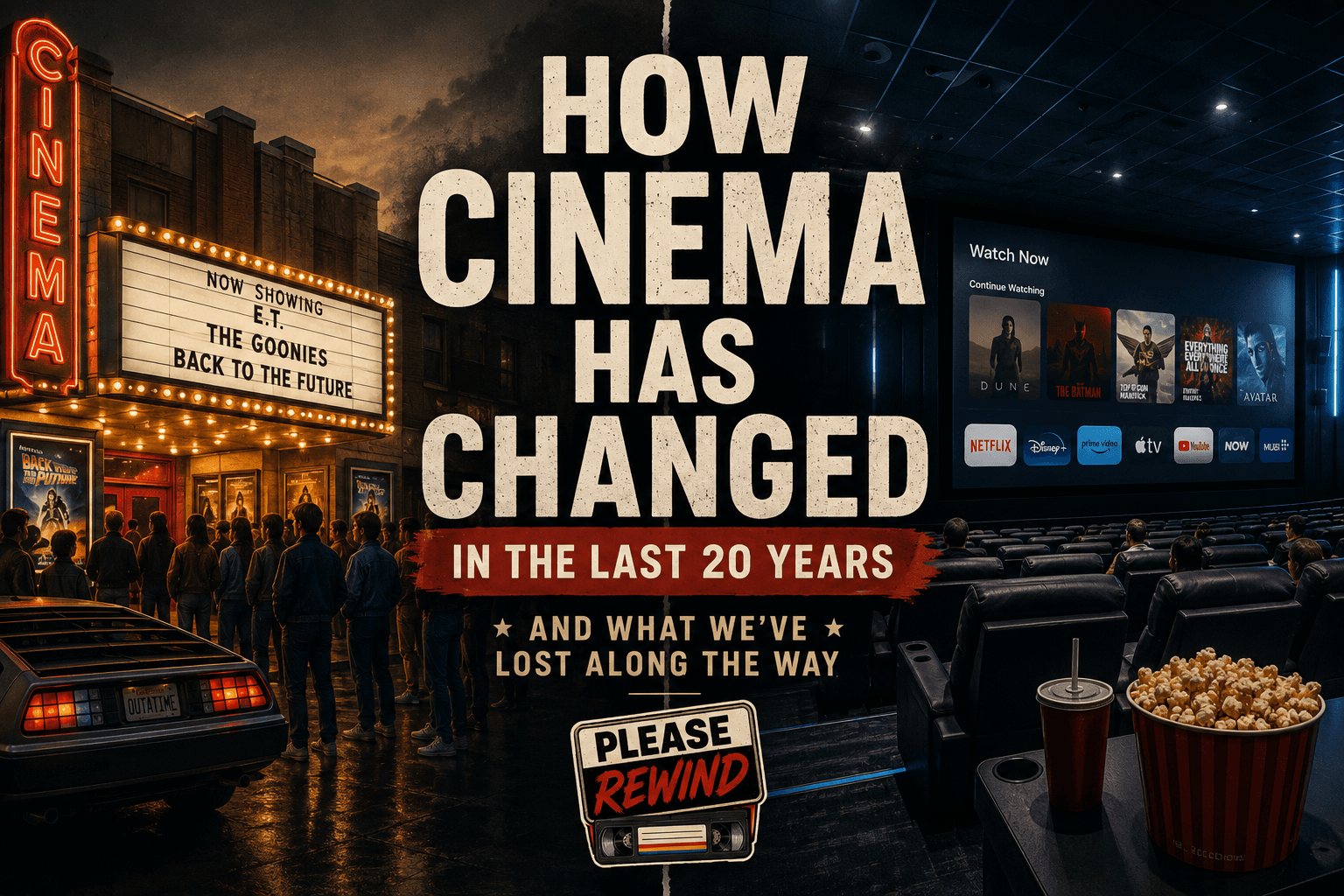
How Cinema Has Changed in the Last 20 Years — And What We’ve Lost Along the Way
From Friday-night queues and packed multiplexes to streaming, phones and endless choice, going to the movies feels very different now.
PICK UP RENTAL →
RENTAL_02
Nostalgia
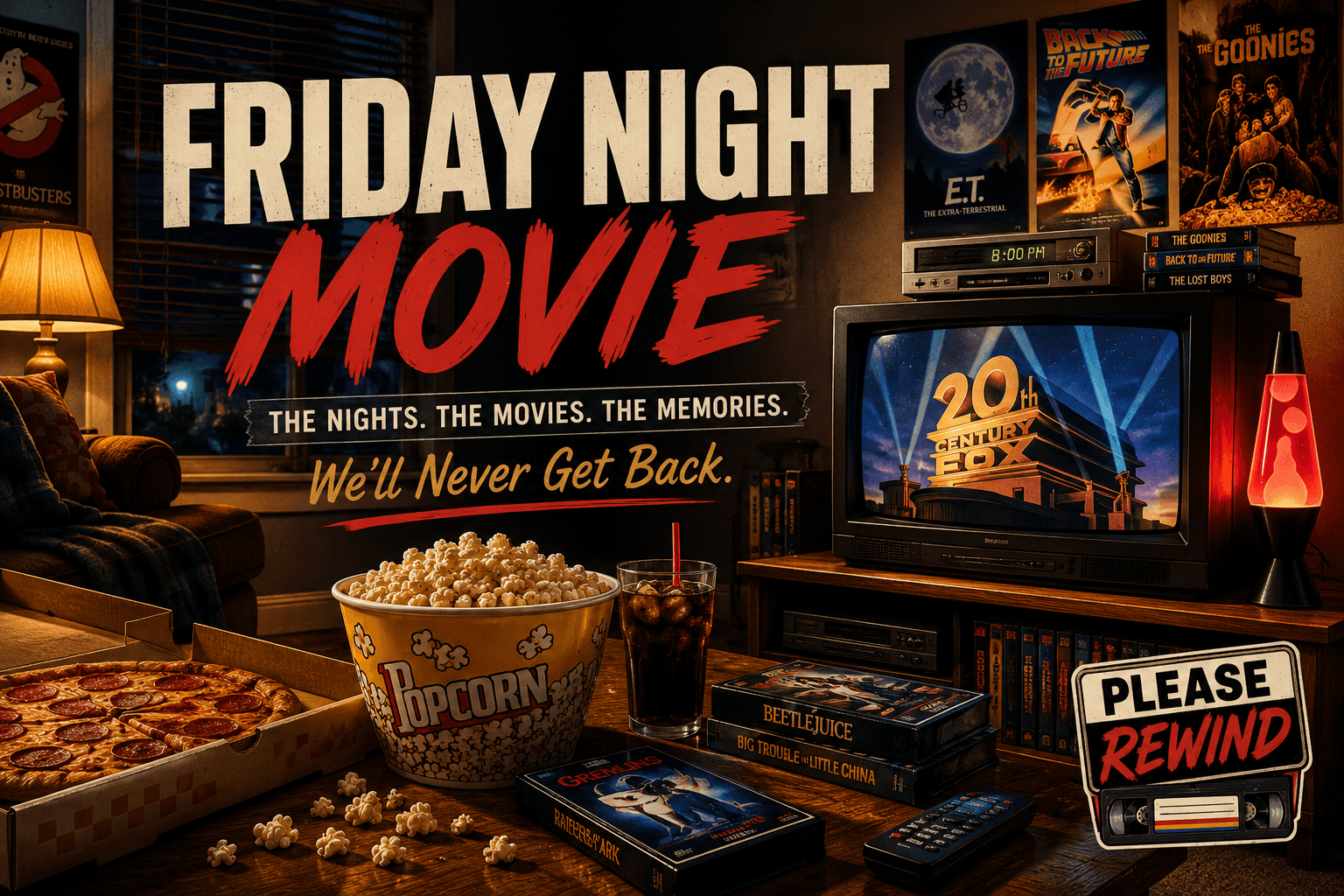
Whatever Happened to the Friday Night Movie?
Before endless scrolling and infinite watchlists, Friday night meant choosing one film, getting the snacks in and actually pressing play.
PICK UP RENTAL →