How Halloween and Horror Movies Became Inseparable
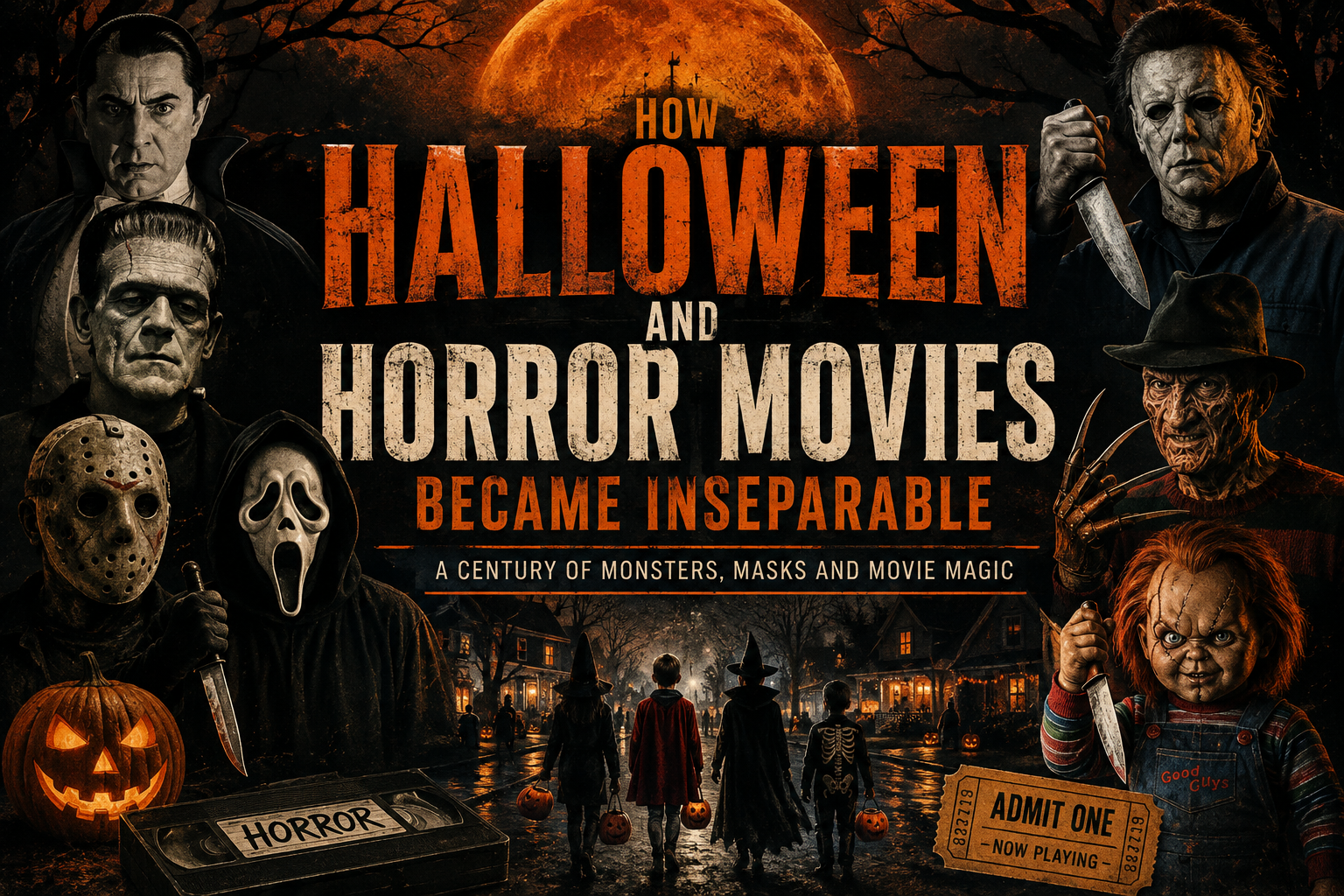
Halloween existed long before the movies. But over more than a century, horror cinema and America's favourite spooky holiday have borrowed so much from each other that it's now hard to imagine one without the other.
STAFF PICK
ONE MORE MOVIE?
FEATURE PRESENTATION
STORIES WORTH REWINDING
FEATURE PRESENTATION
PLAY // READ // REWIND
BEFORE THE MOVIES
Halloween Was Already a Horror Story
Long before Michael Myers walked through Haddonfield, Halloween already contained most of the ingredients necessary for a horror movie.
Death.
Spirits.
Disguises.
Darkness.
The supernatural.
And the possibility that something might cross from another world into ours.
The holiday's history is complicated, with Celtic traditions around Samhain mixing across centuries with Christian observances surrounding All Saints' Day and All Souls' Day. What eventually became Halloween carried traditions involving spirits, disguises, food offerings and the dead. Smithsonian traces costumed trick-or-treating partly to Samhain and later practices such as Scottish and Irish guising.
Irish and Scottish immigration helped bring those traditions to America during the nineteenth century.
But America changed Halloween.
By the late nineteenth and early twentieth centuries, Halloween had become associated with parties, pranks and increasingly elaborate mischief. In some American cities, that mischief became serious enough that communities actively looked for ways of making the night more controlled and child-friendly.
Eventually, the suburban Halloween we recognise today emerged.
Children.
Costumes.
Porch lights.
Decorated houses.
And trick-or-treating.
By the post-war years, growing American suburbs offered perfect neighbourhood routes for children going door-to-door, while packaged sweets made handing out treats increasingly convenient.
At almost the same time that America was figuring out what Halloween should look like, another new form of entertainment was figuring out how to frighten people.
The movies.
WHEN CINEMA DISCOVERED FEAR
Horror Didn't Need Sound to Scare Us
The earliest filmmakers discovered something very quickly.
Moving pictures could make impossible things seem real.
Ghosts could appear.
Bodies could disappear.
People could transform.
The dead could move.
Cinema was practically designed for ghost stories.
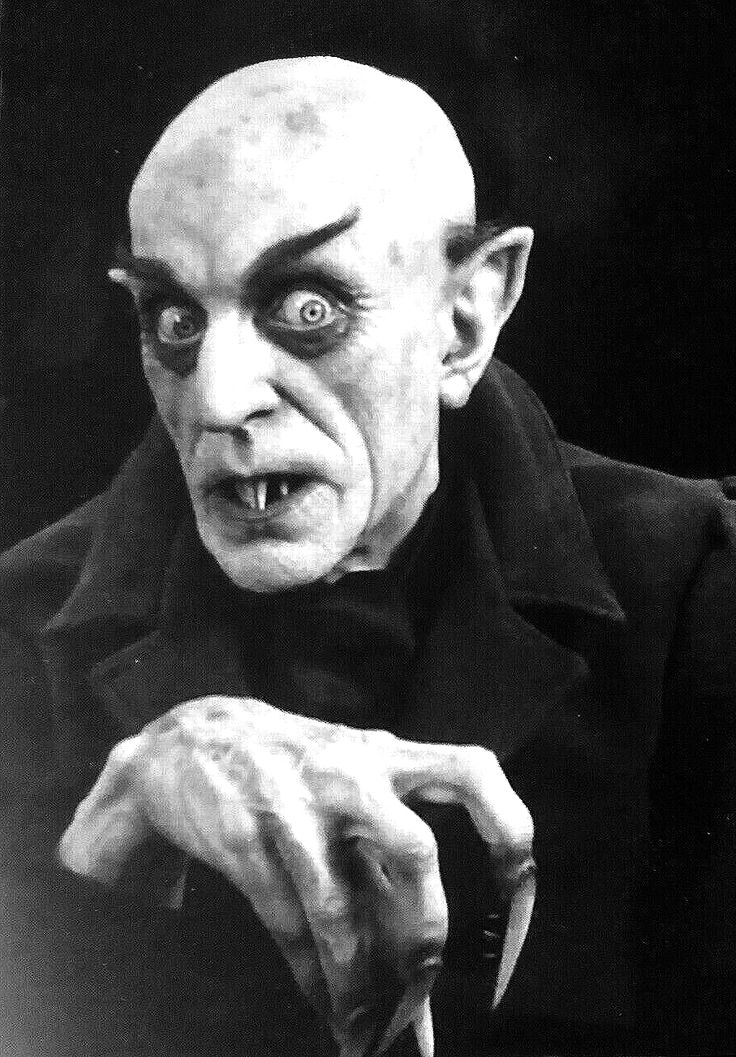
During the silent era, filmmakers brought vampires, monsters, and supernatural figures to the screen, eventually producing some of horror's foundational images.
The Cabinet of Dr Caligari.
Nosferatu.
Early adaptations of Frankenstein.
The Library of Congress describes those silent-era monsters and films as establishing a visual language that horror cinema would continue developing for generations.
Halloween had its ghosts.
Cinema could now show them moving.
But the relationship was about to become much stronger.
THE MONSTERS ARRIVE
Dracula and Frankenstein Gave Halloween New Faces
The 1930s changed what a monster looked like.
Universal's cycle of horror films turned characters from literature and folklore into something far more powerful in popular culture: instantly recognisable images.
Dracula didn't simply become a vampire.
He became the vampire.
Frankenstein's monster didn't remain something readers individually imagined from Mary Shelley's novel.
Cinema gave him a face.
Then came the Mummy.
The Wolf Man.
The Invisible Man.
And generations of creatures that could be recognised from a silhouette.
Movies had created something Halloween desperately loves:
a costume.
You didn't need to explain who Dracula was.
Put on the cape.
You didn't need a paragraph describing Frankenstein's monster.
Paint the face, flatten the hair and add the bolts.
Cinema had started exporting its monsters from the screen onto the street.
Children could become the creatures they'd seen at the movies.
And every October, those monsters came back.
HORROR GROWS UP
Then Horror Stopped Feeling Like a Fairy Tale
By the 1950s and 1960s, Halloween itself was becoming safer, brighter and increasingly centred around children.
Horror cinema went the opposite direction.
The monsters started getting closer to home.
Psycho didn't need Dracula's castle.
Night of the Living Dead didn't need ancient Transylvania.
Rosemary's Baby found horror inside an apartment building.
The Exorcist brought it into a child's bedroom.
The Texas Chain Saw Massacre put it down a dusty American road.
The supernatural never disappeared, but horror increasingly discovered something more unsettling.
The terrifying place didn't have to be somewhere else.
It could be here.
That idea would eventually collide with Halloween itself.
1978
The Night He Came Home Changed Halloween Forever
Then came Halloween.
Not a movie merely released around Halloween.
Not simply a horror film borrowing pumpkins and costumes.
A horror movie that turned Halloween night itself into the monster's playground.
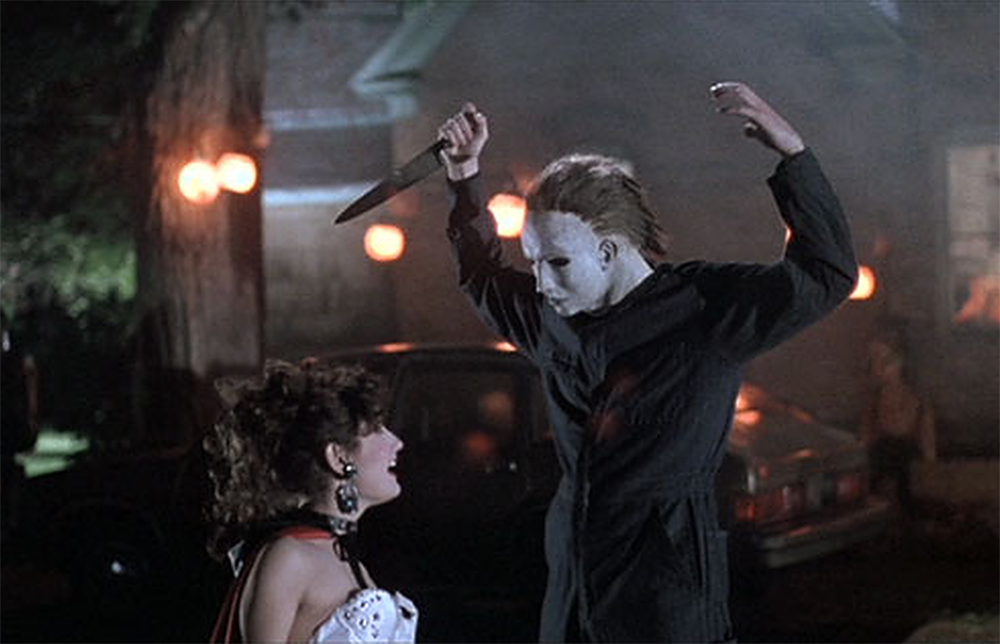
John Carpenter and Debra Hill took an ordinary American suburb and made it frightening.
Haddonfield wasn't Dracula's castle. It wasn't a remote farmhouse.
It wasn't another planet. It was home.
Children walked around carrying trick-or-treat bags.
Pumpkins sat outside houses.
Teenagers made plans.
Babysitters watched television.
Porch lights glowed.
And somewhere among all of it walked Michael Myers.
The official John Carpenter site credits Carpenter and Debra Hill as screenwriters and dates the film's theatrical release to October 25, 1978.
What makes the movie's connection with the holiday so powerful is how little it has to change.
Halloween was already full of masked people.
So Michael wore a mask.
Halloween already encouraged people to scare one another.
So seeing a strange figure standing across the street wasn't automatically an emergency.
Halloween already transformed familiar suburban streets for one evening every year.
Carpenter simply asked:
What if one of the monsters was real?
That changed everything.
THE SHAPE
Michael Myers Became Part of the Holiday He Terrorised
There's a strange circularity to what happened next.
Michael Myers wears a mask partly because Halloween is a night of masks.
Then Halloween becomes successful.
Michael becomes one of horror cinema's most recognisable characters.
And eventually people begin dressing as Michael Myers...
for Halloween.
The movie borrowed from the holiday.
Then the holiday borrowed the movie back.
That's perhaps the clearest example of the relationship between Halloween and horror cinema.
Cinema wasn't merely depicting Halloween anymore.
It was helping decide what Halloween looked like.
THE 1980s
Suddenly the Streets Were Full of Movie Monsters
Then horror exploded.
Jason Voorhees.
Freddy Krueger.
Michael Myers.
Leatherface.
Chucky.
Pinhead.
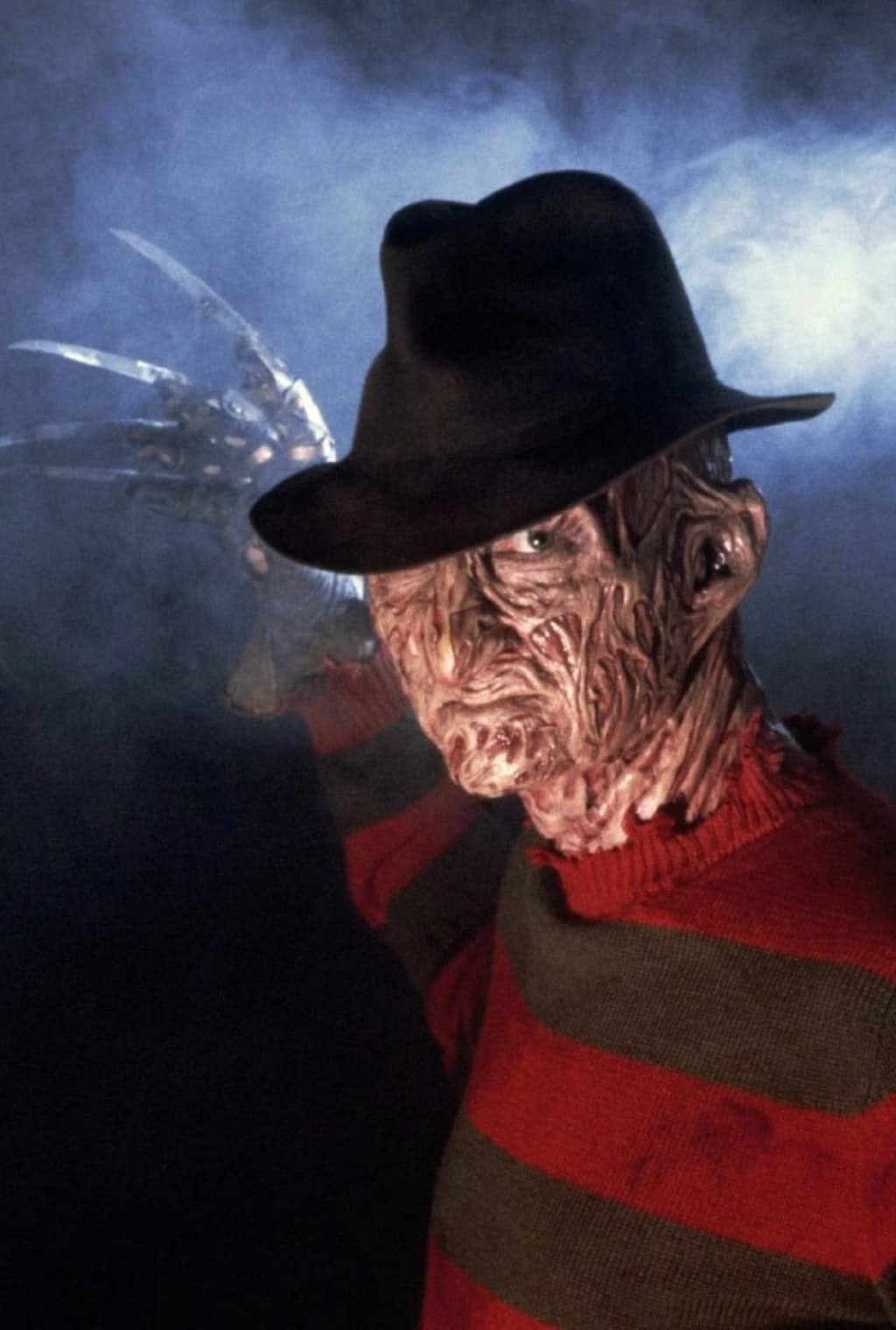
By the 1980s, horror villains weren't simply antagonists.
They were icons.
Posters.
VHS covers.
T-shirts.
Toys.
Masks.
And Halloween costumes.
This was also the era when the video shop became part of horror culture.
October no longer required a cinema ticket.
You could walk into a video store, find the horror aisle and take the monsters home.
For children who were probably too young to watch half those movies, the covers themselves became part of Halloween mythology.
A hockey mask meant Jason.
A striped jumper and bladed glove meant Freddy.
A blank white face meant Michael.
The old monsters had gained company.
HORROR BECOMES POP CULTURE
Freddy and Jason Didn't Stay Inside Horror Movies
Something else changed during this period.
The monster became the celebrity.
People who had never watched Friday the 13th knew Jason.
People who had never sat through A Nightmare on Elm Street recognised Freddy Krueger.
People who couldn't tell you the plot of Halloween knew Michael Myers.
That's enormously important to the connection between horror and Halloween.
Halloween depends upon instant recognition.
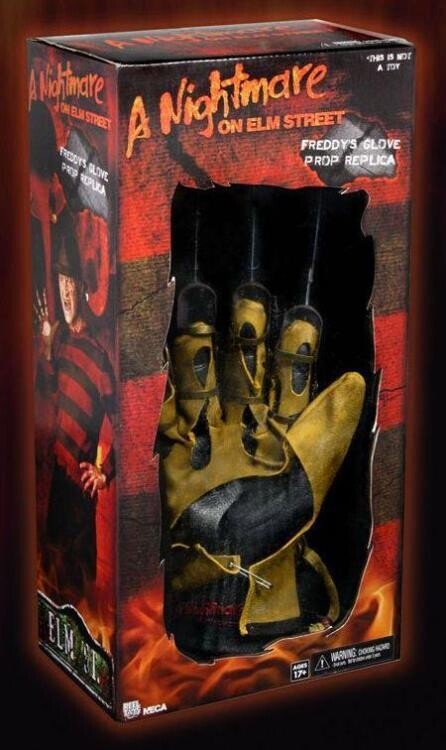
A costume has seconds to communicate what it is.
Horror movies became exceptionally good at producing characters identifiable by one object.
A hockey mask.
A glove.
A chainsaw.
A white mask.
Cinema had effectively created a new folklore.
THE 1990s
Ghostface Completed the Circle
Then Scream arrived.
And the relationship between horror movies and Halloween became even stranger.
Ghostface looked exactly like something that belonged at Halloween.
A simple black robe. An exaggerated screaming face.
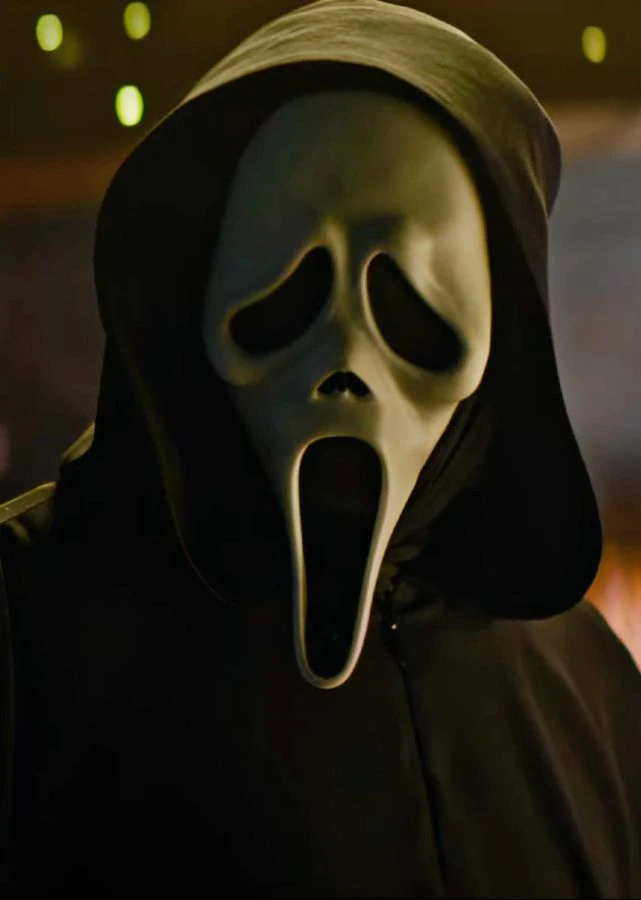
A costume-store nightmare.
And once Scream became a phenomenon, that face became inseparable from the film.
Soon Ghostface wasn't merely stalking characters on cinema screens.
Ghostface was walking down real streets every October.
Once again the cycle had completed itself.
Halloween imagery influenced horror.
Horror transformed that imagery into a character.
Then Halloween reclaimed the character.
By this point, horror movies weren't borrowing Halloween's monsters anymore.
They were manufacturing new ones.
OCTOBER BECOMES HORROR MONTH
Halloween Eventually Took Over the Entire Calendar
Another change happened gradually.
Halloween stopped being just one night.
For horror fans, October became a season.
Television channels scheduled horror marathons.
Video shops created Halloween displays.
DVD collections appeared.
Theme parks launched elaborate horror events.
Streaming services eventually created dedicated Halloween categories.
People began making thirty-one-day horror watchlists.
A movie didn't necessarily need to take place on Halloween to become a Halloween movie.
The Exorcist could be Halloween viewing.
So could Alien.
Or The Shining.
Or The Thing.
Or The Conjuring.
Or Saw.
October became the month when audiences collectively gave themselves permission to enjoy being frightened.
Halloween had effectively become horror cinema's Christmas.
THE NEW MONSTERS
Every Generation Adds Something to the Costume Box
The fascinating part is that the process never stopped.
Older monsters didn't disappear when new ones arrived.
Dracula survived Freddy.
Frankenstein survived Jason.
Michael survived Ghostface.
Ghostface survived Jigsaw.
And now characters from newer horror films stand beside monsters created nearly a century earlier.
That's why a modern Halloween street can look like the entire history of horror cinema walking around at once.
A child dressed as Dracula might pass somebody wearing a Michael Myers mask.
Michael might walk past Ghostface.
Ghostface might walk past Art the Clown.
Different generations.
Different movies.
Same night.
Horror cinema doesn't replace Halloween mythology.
It keeps adding to it.
WHY HALLOWEEN WORKS
Horror Is More Fun When Everyone Agrees to Be Scared
Perhaps the deepest connection between Halloween and horror movies has nothing to do with masks.
It's the agreement.
When we watch a horror movie, we make a temporary deal with the filmmaker.
Scare me.
Make me uncomfortable.
Make me look toward the dark corner of the room even though I know perfectly well there's nothing there.
Halloween operates on exactly the same principle.
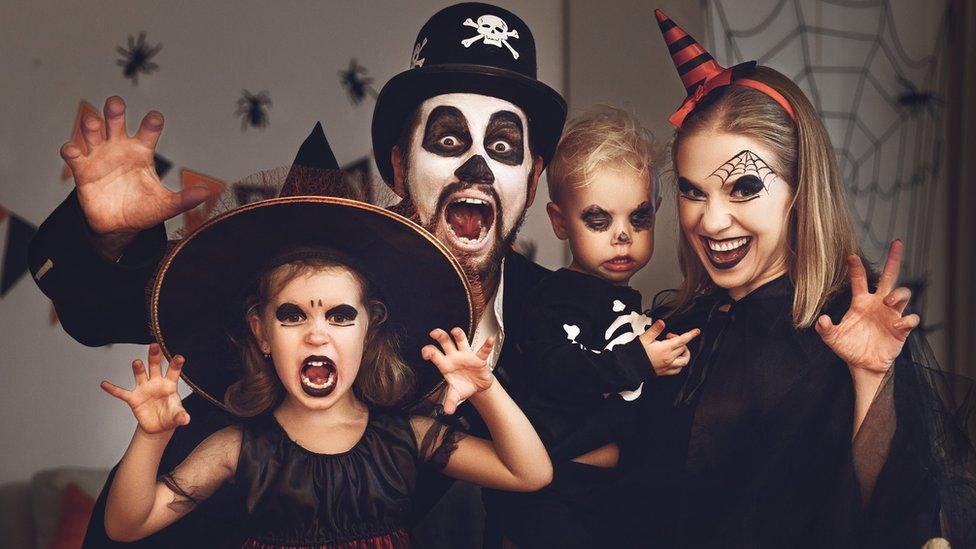
We decorate houses to look dangerous.
Then take our children to them.
We hang skeletons from trees.
Put gravestones on lawns.
Carve threatening faces into vegetables.
Dress as murderers, ghosts and monsters.
Then give one another sweets.
The fear isn't an unfortunate side effect.
It's the entertainment.
That's the strange magic shared by Halloween and horror cinema.
Both allow us to approach things we're normally supposed to avoid — darkness, death, monsters, the supernatural — because everybody understands that tonight we're playing.
THE PLEASE REWIND TAKE
Halloween Gave Horror Its Playground. Horror Gave Halloween Its Monsters.
Halloween existed long before cinema.
Horror existed long before anybody called it a movie genre.
But the two were almost destined to find one another.
One offered darkness, superstition, disguises, ghosts and a night when the normal rules could temporarily change.
The other offered a machine that could make monsters visible.
For more than a century they've been trading ideas.
Folklore became movies.
Movies became costumes.
Costumes became characters.
Characters became sequels.
Sequels created icons.
And the icons walked back out onto the streets every October.
That's why separating Halloween from horror cinema now feels almost impossible.
Look at a group of trick-or-treaters and somewhere among the witches, skeletons and ghosts you'll probably find a movie character.
Turn on the television in October, and you'll find horror marathons.
Walk through a shop and horror villains stare from masks, decorations and T-shirts.
And when darkness falls on October 31, ordinary houses become haunted houses and ordinary streets become movie sets.
For one night, everyone gets to live inside a horror movie.
The strange part is that horror movies spent the last hundred years learning how to live inside Halloween too.
Halloween gave horror cinema a night to haunt.
The movies made sure we'd never look at that night quite the same way again.
END OF FEATURE
Be kind. Rewind. Then pick another.
One more movie?
DON'T RETURN
THE TAPE YET.
Two more stories from the Please Rewind magazine rack.
RENTAL_01
Movie Culture
How Cinema Has Changed in the Last 20 Years — And What We’ve Lost Along the Way
From Friday-night queues and packed multiplexes to streaming, phones and endless choice, going to the movies feels very different now.
PICK UP RENTAL →
RENTAL_02
Nostalgia
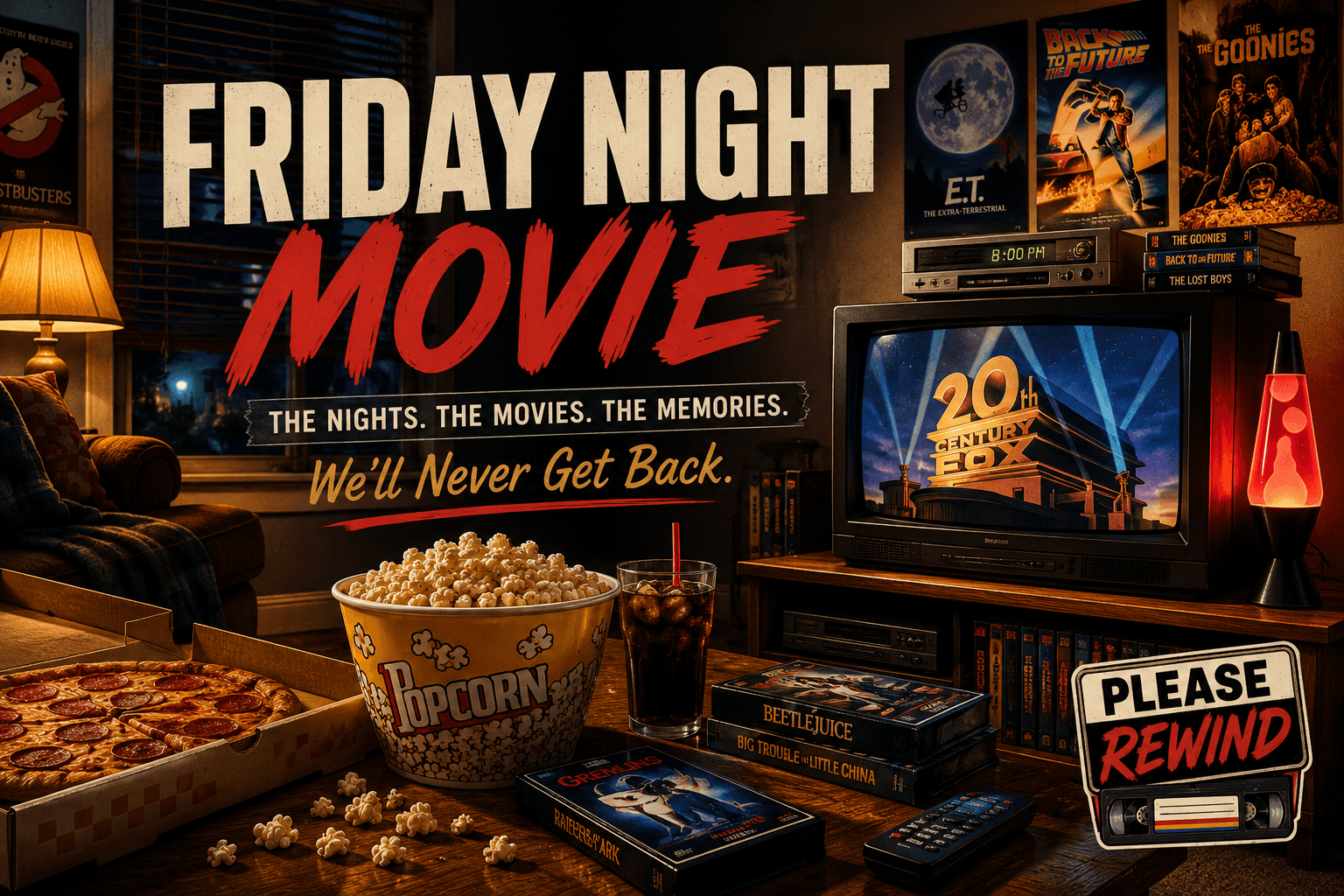
Whatever Happened to the Friday Night Movie?
Before endless scrolling and infinite watchlists, Friday night meant choosing one film, getting the snacks in and actually pressing play.
PICK UP RENTAL →