
Hans Gruber: Why He’s Still One of Cinema’s Greatest Villains
Nearly four decades after Die Hard, Hans Gruber remains the action villain everyone measures against. Alan Rickman didn't make him the strongest man in Nakatomi Plaza. He made him the smartest, coolest and perhaps the most dangerously charming.
JUST IN
DEVELOPING STORY
THE STORY
There are movie villains who frighten us. There are villains we despise. There are villains who can throw the hero through a wall without breaking a sweat. And then there's Hans Gruber. He walks into Nakatomi Plaza looking less like a terrorist and more like the man who's arrived to buy the building. Beautifully dressed. Perfectly composed. Quietly spoken. There's no ridiculous shouting. No need to explain how dangerous he is. Hans simply enters the room and behaves as though everything that happens next has already been decided. That's what makes him so bloody good. Because underneath the expensive suit and impeccable manners is a man attempting an audacious robbery while manipulating the hostages, police, FBI and media into doing almost exactly what he needs them to do. Almost. Hans Gruber didn't plan for one thing. John McClane. And that's where Die Hard becomes more than another 1980s action movie. At its heart, it's a battle between two extremely capable men who couldn't be more different. Hans plans. John improvises. Hans controls people. John disrupts them. Hans has an army, weapons, technology and a meticulously constructed timetable. John McClane doesn't even have his bloody shoes. Yet somehow, step by step, McClane starts pulling Hans Gruber's perfect evening apart. Nearly four decades later, plenty of action movies have given us bigger villains, louder villains and considerably more destructive villains. Very few have given us a better one.
ENTER HANS GRUBER
The Villain Who Didn't Look Like an Action Villain
Think about the era in which Die Hard arrived.
The 1980s had turned the action hero into something approaching a superhero.
Arnold Schwarzenegger was wiping out armies.
Sylvester Stallone's John Rambo could wage a small war almost single-handedly.
Cinema screens were filled with enormous men carrying enormous weapons while enormous things exploded behind them.
Then Alan Rickman walked into Die Hard wearing a suit.
And somehow he was every bit as intimidating.
Hans Gruber doesn't need muscles because his weapon is control.
When he and his crew take Nakatomi Plaza, everything they do is efficient. People move where they're supposed to move. Communications are cut. Security is neutralised. The hostages are gathered together.
Hans isn't reacting to events; he's conducting them. Even his voice matters.
Rickman rarely needs to raise it. That calmness creates something far more unsettling than another screaming psychopath ever could.
When Hans speaks, people listen.
And when they don't? Ask Joseph Takagi.
The brilliance of that scene isn't simply that it establishes Hans is prepared to kill.
It's that he remains Hans Gruber while doing it.
Controlled.
Businesslike.
Almost disappointed that things couldn't have been resolved more pleasantly.
The violence isn't his personality.
It's another tool.
THE PERFECT CRIME
Hans Gruber Isn't Really a Terrorist — And That's the Point
One of the smartest things Die Hard does is tell us what Hans Gruber apparently wants before eventually revealing what he actually wants.
The authorities believe they're dealing with terrorists.
That's exactly what Hans wants them to believe.
He gives them political demands. He invokes imprisoned revolutionaries. He constructs an entire ideological identity around the takeover of Nakatomi Plaza.
But Hans isn't there to change the world.
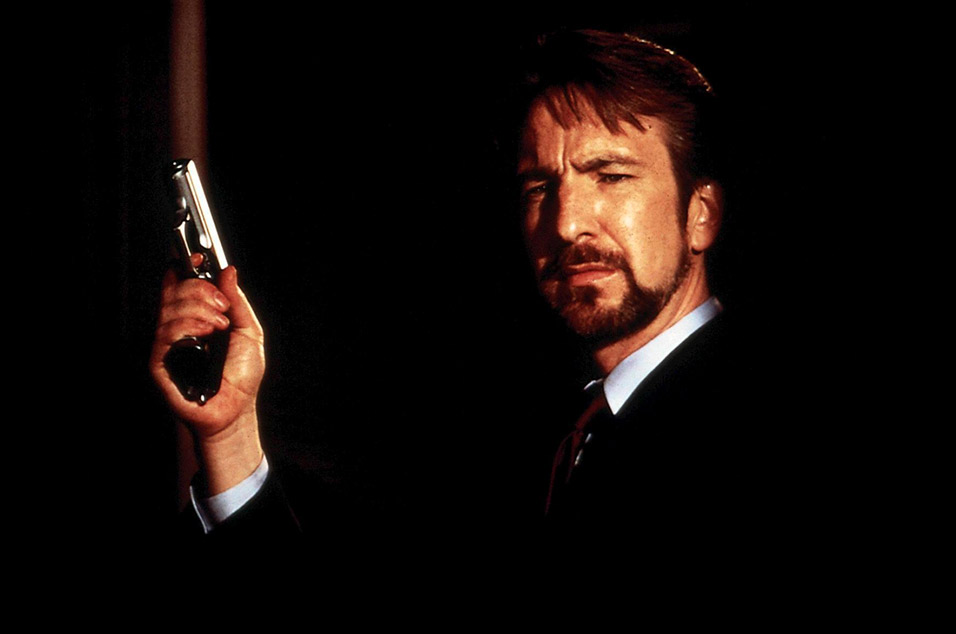
He's there to rob the bloody place.
The terrorism is theatre.
Behind it sits an extraordinarily ambitious heist involving hundreds of millions of dollars in bearer bonds locked inside the Nakatomi vault.
And here's the clever part.
Hans doesn't simply account for the authorities becoming involved.
He needs them.
The police response, the FBI response and eventually the shutdown of the building's power aren't inconveniences interrupting his plan.
They're part of it.
That's what immediately separates Gruber from so many action villains.
We're not watching somebody whose scheme only works because everyone around him suddenly becomes stupid.
We're watching someone who has anticipated how supposedly intelligent people will respond and incorporated their behaviour into his plan.
Hans Gruber isn't merely ahead of the police.
He's effectively written their part of the script.
Only one character refuses to follow it.
THE MAN BEHIND GRUBER
Alan Rickman Had Never Made a Feature Film
This part becomes almost ridiculous when you look back.
Die Hard was Alan Rickman's first credited feature-film role.
He was already an accomplished stage performer, of course, with major theatre work behind him. But Hollywood audiences hadn't spent years watching Alan Rickman develop into Hans Gruber.
He essentially arrived fully formed.
Rickman had travelled to Los Angeles following his acclaimed theatre work, and Die Hard came his way remarkably quickly.
He wasn't immediately convinced.
It's difficult to imagine now because Hans Gruber and Alan Rickman feel inseparable, but Rickman later spoke about his reservations over playing the villain in an American action movie.
Thank God he changed his mind.
Because Rickman didn't approach Hans like a conventional action-movie bad guy.
He approached him like a character.
Little looks, pauses, and changes in tone throughout Die Hard tell us what Hans is thinking without needing dialogue to explain it.
Watch his expression when something unexpected happens.
He doesn't immediately explode. He processes it.
You can almost see the calculations happening.
What changed? Why? What does this mean? What do I do next?
Rickman's theatrical experience gave Hans a presence that the screenplay alone couldn't provide.
And somehow, in his first feature film, Alan Rickman created the performance against which an entire generation of action villains would be measured.
BRAINS VS INSTINCT
Gruber and McClane Are Perfect Opposites
Hans Gruber's secret weapon isn't really Hans Gruber.
It's John McClane.
And John McClane's secret weapon is Hans Gruber.
They make each other better.
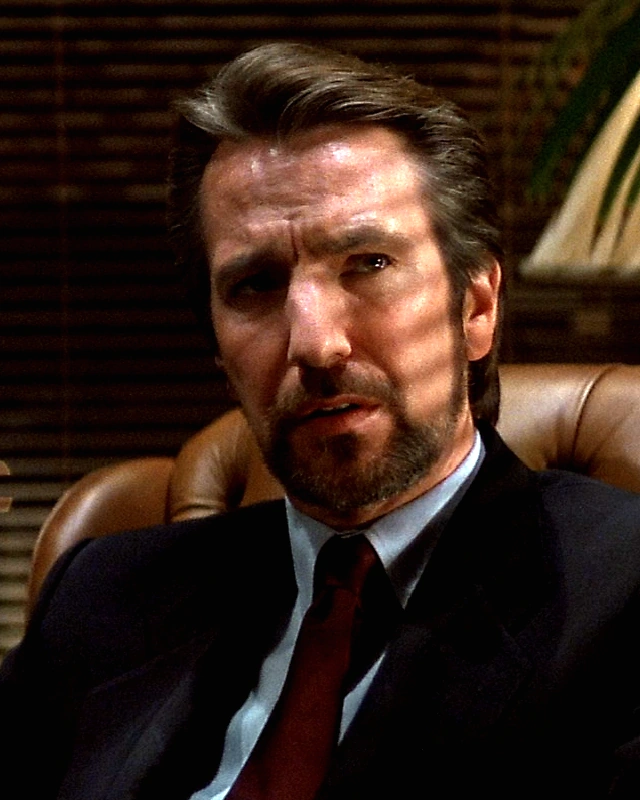
Hans is meticulous.
John is chaotic.
Hans arrives with a detailed plan involving a large team, specialist equipment and carefully calculated timings.
John arrives expecting to attend his wife's Christmas party.
Within hours, he's crawling through ventilation shafts, stealing weapons, communicating with a police officer he's never met and throwing dead terrorists through windows.
McClane survives because he's extraordinarily good at dealing with whatever happens next.
Hans succeeds because he's extraordinarily good at predicting what happens next.
That's a fantastic conflict.
And for much of Die Hard, these two men barely interact face-to-face.
They get to know each other through radio conversations, actions and consequences.
John does something. Hans responds. Hans changes the situation.
John adapts.
It's almost a chess match being played across a skyscraper.
Except occasionally somebody fires a machine gun.
Ho. Ho. Ho.
A VERY DIFFERENT BAD GUY
Charm Is One of Gruber's Most Dangerous Weapons
Hans Gruber is charming.
That's part of what makes him frightening.
He can be polite while threatening someone.
He can make conversation while manipulating them.
He can smile while already knowing exactly what he's prepared to do if they don't cooperate.
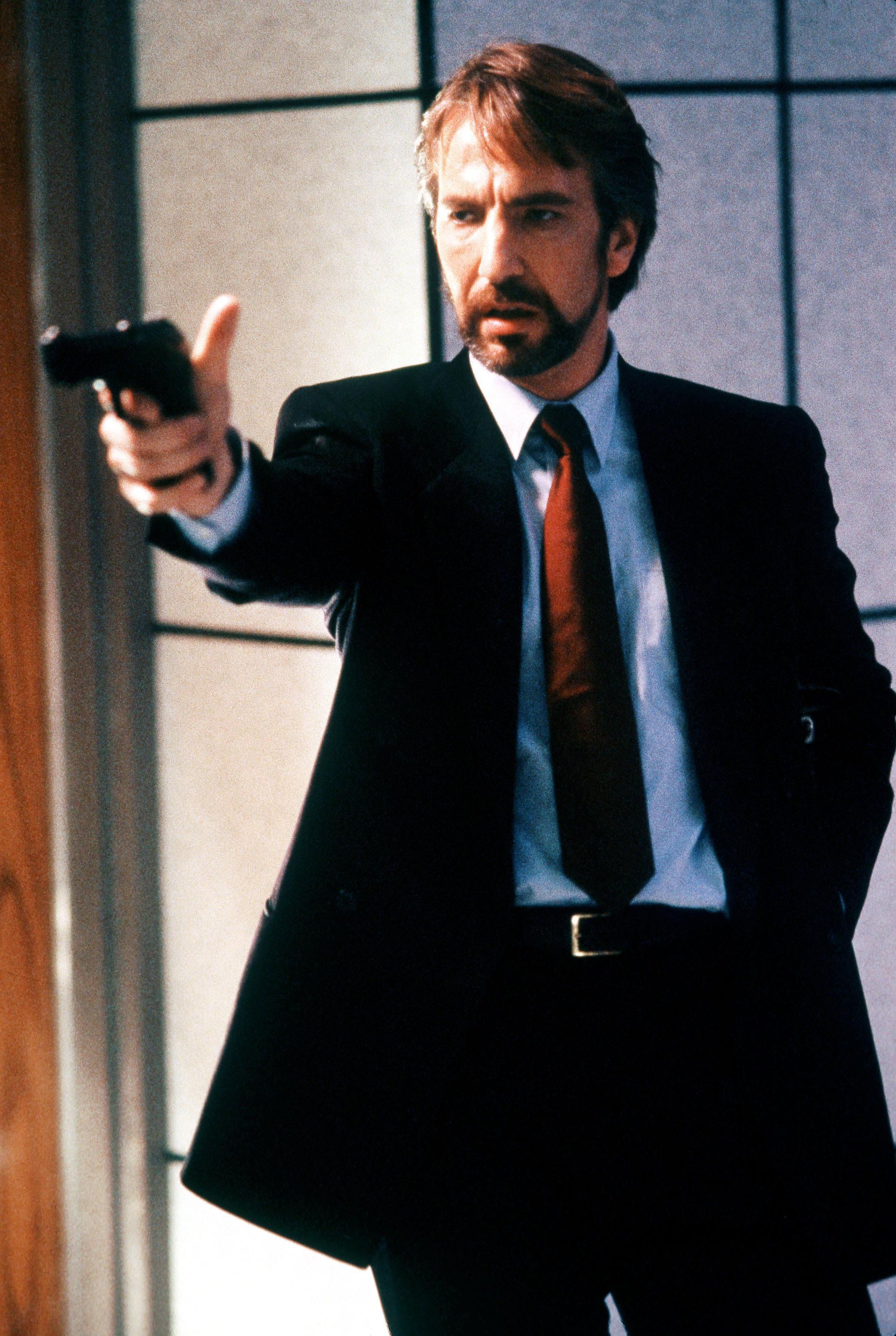
Look at the different ways Hans deals with Takagi, Ellis and Holly.
He doesn't approach all three people the same way.
Because he understands people.
With Takagi, he initially tries to persuade him.
With Ellis, Hans allows the man's arrogance to do much of the work for him.
And with Holly, he quickly realises he's dealing with someone considerably sharper.
This is emotional intelligence being weaponised.
Hans doesn't simply command his crew either. His professionalism with them sells the idea that they've worked together before.
Then McClane starts killing them.
And something interesting happens.
The operation becomes personal.
Not immediately.
Not melodramatically.
But the temperature begins to change.
Especially after Karl loses his brother.
The perfectly controlled machine Hans brought into Nakatomi Plaza starts developing cracks.
BILL CLAY
The Moment Hans Gruber Nearly Beats McClane
Then comes one of the best scenes in the movie.
Hans and McClane finally meet.
Except McClane doesn't know he's meeting Hans Gruber.
Hans is away from the others when John catches him.
And within seconds, Gruber becomes somebody else.
Bill Clay.
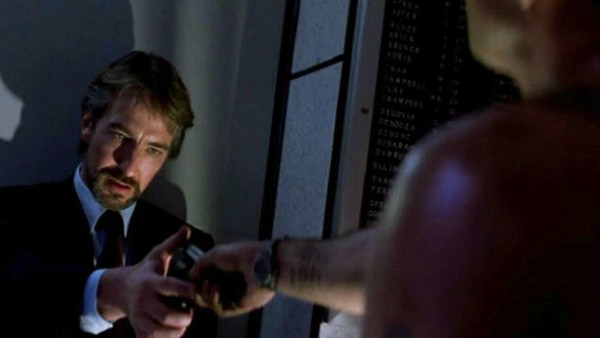
An innocent hostage who's escaped.
Suddenly the controlled European criminal mastermind is frightened and vulnerable, complete with an American accent.
And for a moment, it works.
That's what's so brilliant about the scene.
Hans' plan has changed completely, but he doesn't freeze.
He improvises.
We've spent the movie watching McClane survive because he can think on his feet.
Now Hans demonstrates that he can do it too.
The scene also underlines how important Rickman's performance is to the character.
Hans isn't wearing a supervillain costume.
He wears clothes that let him plausibly disappear into the corporate environment around him.
Take away what we know about him, and he could simply be another executive trapped inside the building.
McClane eventually sees through the deception.
But Hans comes remarkably close.
And that matters.
Because the best villains shouldn't only feel dangerous when they're holding a gun.
THE LITTLE DETAILS
Why Hans Gruber Feels Like a Real Person
Dozens of small choices make Hans memorable.
His clothes.
His watch.
The way he talks.
His appreciation of Takagi's suit.
His irritation when people fail to understand him.
His dry humour.
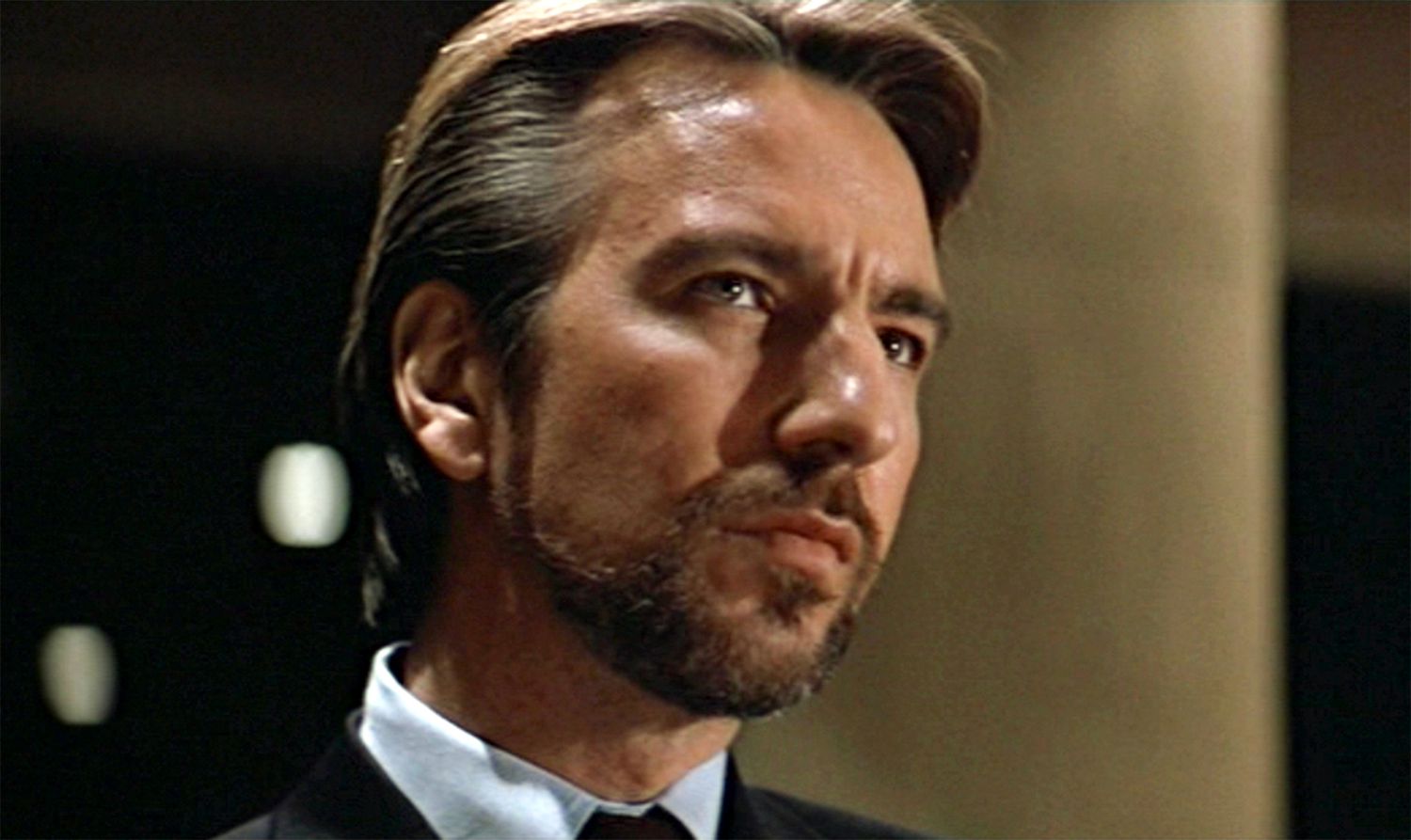
His obvious intelligence.
Even the way he moves through Nakatomi Plaza.
None of these things is necessary for the basic mechanics of the story.
But they're necessary for Hans Gruber.
He has taste.
He has preferences.
He has an ego.
And he has a sense of humour.
That last part is particularly important.
Funny villains are difficult to get right.
Push too far, and they stop being threatening.
Hans never does.
His humour comes from confidence, not desperation to make the audience laugh.
We enjoy watching him.
That's the dangerous trick.
We're obviously waiting for McClane to stop him, but there's a part of us that doesn't particularly want Hans to leave the movie.
Great villains create that contradiction.
You want them defeated.
You don't necessarily want them gone.
LOSING CONTROL
Watching the Perfect Plan Fall Apart
Hans Gruber's plan is brilliant.
Unfortunately for Hans Gruber, John McClane is John McClane.
Gradually, the operation unravels.
Men disappear.
Equipment is lost.
Assumptions stop being reliable.
The unknown man somewhere inside the building becomes increasingly capable of causing serious damage.
And Hans begins losing the one thing that defined him when he arrived.
Control.
This is where lesser movie villains sometimes fall apart.
The intelligent antagonist suddenly starts making ridiculous decisions because the hero needs to win.
Die Hard largely avoids that trap.
Hans remains dangerous.
He continues adapting.
He continues looking for ways to regain control of the situation.
Even when the original plan is under enormous pressure, we believe Hans might still pull it off.
That uncertainty is essential.
If the audience knows the villain has already lost with half an hour remaining, the climax becomes a formality.
Hans Gruber remains capable of winning until very close to the end.
And then he discovers something else.
Holly.
HOLLY GENNARO
Hans Finds McClane's Weakness
For most of the movie, Hans knows surprisingly little about the man causing him so much trouble.
Then he discovers John's connection to Holly.
Suddenly the battle changes.
McClane isn't merely an anonymous obstacle hiding somewhere in the building.
He's Holly's husband.
Hans finally has leverage.
Again, the important thing isn't simply that Hans discovers the information.
It's what he does with it.
He immediately understands its value.
John McClane has spent the entire movie exploiting whatever opportunities Nakatomi Plaza gives him.
Now Hans does exactly the same thing.
The conflict becomes personal in a way it hadn't been before.
And we're heading towards the inevitable meeting between the two men.
No radios.
No false identities.
No distance.
Just McClane and Gruber.
THE FALL
One of Cinema's Most Famous Villain Deaths
Hans Gruber's death had to be good.
You couldn't spend an entire movie building a villain this memorable and then have him quietly arrested in the lobby.
Die Hard gives him an ending worthy of the character.
McClane has been battered, bloodied and pushed almost beyond breaking point.
Hans still appears to have the advantage.
Then everything turns.
And Hans Gruber goes through the window of Nakatomi Plaza.
That image has become inseparable from Die Hard.
Alan Rickman falling backwards.
The shock on Gruber's face.
The building stretching upwards behind him.
According to the American Film Institute's account of the production, Rickman performed the high-fall stunt onto an airbag, and the timing of the release helped capture the startled expression we see in the finished film.
It's spectacular.
But the scene works because we've spent the previous two hours with him.
We're not simply watching a bad guy fall from a building.
We're watching Hans Gruber finally lose control.
For a character defined by having everything planned, there's something beautifully appropriate about his final moment being completely beyond his control.
THE GRUBER EFFECT
Hollywood Has Been Chasing Hans Gruber Ever Since
Die Hard's influence on action cinema is enormous.
For years afterwards, movies were routinely described through the same basic formula.
Die Hard on a bus.
Die Hard on a ship.
Die Hard on a plane.
Die Hard in the White House.
But copying the location-based siege concept was the easy part.
Finding another Hans Gruber was considerably harder.
The movie showed how effective an intelligent, charismatic antagonist could be.
The hero didn't need a physically bigger opponent.
He needed someone who could challenge him.
That's an important distinction.
Hans Gruber isn't remotely convincing because we believe he could beat John McClane in a fistfight.
He's convincing because we believe he could beat everybody.
The police.
The FBI.
Nakatomi.
McClane.
Even his own supposed terrorist narrative is merely another layer of manipulation.
That sophistication became part of the DNA of the modern blockbuster villain.
But Hans has endured for another reason, even as so many imitators haven't.
Alan Rickman.
You can reproduce the ingredients.
European accent.
Expensive suit.
Dry humour.
Elaborate plan.
Sophisticated dialogue.
None of those things automatically gives you Hans Gruber.
Because eventually you reach the part you can't copy from a screenplay.
The performance.
ALAN RICKMAN
The Performance That Made Hans Immortal
Go back and watch Die Hard, knowing it was Alan Rickman's first credited feature film.
It's astonishing.
There's no sense of an actor cautiously finding his way around a Hollywood production.
Rickman owns every scene he's in.
AFI has highlighted both Rickman's feature-film debut in Die Hard and Gruber's place among memorable screen villains.
That legacy only became stronger as audiences discovered what else Rickman could do.
He could be funny.
Romantic.
Cruel.
Warm.
Heartbreaking.
And, of course, another generation would eventually know that unmistakable voice through Severus Snape.
But Hans Gruber came first on the big screen.
And perhaps that's why the performance still feels so fresh.
Rickman wasn't playing the action-movie villain audiences expected.
He was simply playing Hans Gruber.
The genre changed around him.
JOHN McCLANE
A Great Villain Made Die Hard's Hero Better
There's another reason Hans matters.
Without him, John McClane isn't the John McClane we remember.
Heroes need resistance.
The more formidable the obstacle, the more meaningful it becomes when they overcome it.
McClane doesn't stroll through Nakatomi Plaza dispatching disposable bad guys until the credits roll.
He's exhausted.
He's injured.
He's frightened.
He's improvising constantly.
At several points, he looks completely screwed.
That's what makes us root for him.
And Hans is responsible for much of that pressure.
Their personalities are opposites, but their abilities are surprisingly well matched.
Both men are observant.
Both adapt quickly.
Both use humour.
Both understand people.
Both can improvise when the plan collapses.
The difference is what they're fighting for.
Hans wants the money.
John wants Holly.
One has constructed an extraordinarily complicated operation to leave Nakatomi Plaza hundreds of millions richer.
The other just wants to get his wife home.
Underneath all the gunfire and explosions, Die Hard keeps things remarkably simple.
And that's why the final confrontation matters.
PLEASE REWIND
Why Hans Gruber Is Still One of Cinema's Greatest Villains
Nearly four decades later, Hans Gruber still works.
Not because he's the loudest villain.
Not because he's the strongest.
Not because he wants to destroy the world.
Hans Gruber wants money.
Lots of it.
And he's built an extraordinarily clever plan to get it.
What elevates him is everything surrounding that simple motivation.
The intelligence.
The confidence.
The humour.
The clothes.
The voice.
The ability to manipulate people.
The way Alan Rickman can communicate irritation with little more than a glance.
And most importantly, Die Hard lets Hans be good at what he does.
The movie doesn't weaken its villain to make its hero look stronger.
It does the opposite.
It makes Hans Gruber formidable so that John McClane has to become extraordinary to defeat him.
That's the lesson plenty of action movies still forget.
A great villain isn't there simply to give the hero somebody to shoot at.
A great villain creates the hero.
Hans Gruber gave John McClane somebody worth fighting.
Alan Rickman gave Die Hard somebody impossible to forget.
And all these years later, whenever another beautifully dressed, softly spoken criminal mastermind walks into an action movie with an elaborate plan and a suspiciously expensive watch, there's still a little bit of Hans Gruber standing somewhere in the room.
Yippee-ki-yay, Mr Gruber.
News Desk
MORE LATEST NEWS

Movies
David Corenswet Headlines Jonathan Levine’s Underdog Biopic ‘Mr. Irrelevant’ — Trailer Out Now
Paramount and Skydance Sports have released the trailer for Mr Irrelevant, a Jonathan Levine‑directed biopic starring David Corenswet as late New York Giants running back John Tuggle, due this Christmas.
READ STORY →

Movies
Peter Farrelly’s I Play Rocky wows at Toronto with an uplifting take on the making of 1976’s Rocky
Peter Farrelly’s I Play Rocky, a biopic about the making of the 1976 classic Rocky, premiered at the Toronto Film Festival. Deadline’s review calls it a sensational, crowd-pleasing film that matches the original’s inspiration.
READ STORY →

Movies
Venice jury prizes push Malkovich-linked title, Possible Love and NAZA into Oscar conversation
Venice jury decisions have boosted three competition titles — a project tied to John Malkovich, Possible Love and NAZA — into early Oscar contention, while Golden Lion winner Woman Unknown secures Best International Feature eligibility.
READ STORY →