
STAFF PICK
Halloween
BE KIND. PLEASE REWIND.
Halloween
The Night He Came Home!
THE SETUP
He doesn't run. He barely speaks. Most of the time, he simply stands there. Watching. In 1978, John Carpenter's Halloween took a small budget, a quiet suburban neighbourhood and a featureless white mask and created one of the most influential horror films ever made. Michael Myers doesn't need elaborate explanations. He doesn't need monsters, demons or supernatural spectacle. He walks through Haddonfield on Halloween night while Dr. Samuel Loomis desperately tries to convince everyone of something he already understands. Michael isn't coming home.
HALLOWEEN NIGHT, 1963
The Myers House
The nightmare begins fifteen years earlier.
On Halloween night in 1963, six-year-old Michael Myers walks through his family home in Haddonfield, Illinois.
He picks up a kitchen knife.
He goes upstairs.
And he murders his teenage sister, Judith.
When Michael's parents return, they find their young son standing outside the house holding the bloody knife.
There is no explanation.
No emotional outburst.
Just a child staring blankly from behind a Halloween mask.
Michael is institutionalised.
For fifteen years, he waits.
SMITH'S GROVE
Michael Myers Escapes
Dr. Samuel Loomis has spent years treating Michael.
Or trying to.
Loomis eventually reaches a terrifying conclusion: he can't understand or rehabilitate what's behind Michael's eyes.
On October 30, 1978, Michael escapes from Smith's Grove Sanitarium.
He steals a car.
And heads toward Haddonfield.
Loomis knows exactly where he's going.
Home.
LAURIE STRODE
Someone Is Watching
Laurie Strode is an ordinary teenager.
She's responsible.
Quiet.
More interested in school and babysitting than the Halloween-night plans being made by her friends Annie Brackett and Lynda Van Der Klok.
Then Laurie sees a man standing across the street.
Later, he's near a hedge.
Then outside the school.
Then somewhere else.
Every time Laurie looks again, he's gone.
She doesn't know his name.
She doesn't know why he's watching her.
And she has no idea that earlier that morning she walked directly to the abandoned Myers house.
Michael noticed.
THE SHAPE
Michael Myers
Michael Myers is frightening partly because the film refuses to make him behave like an ordinary person.
He doesn't chase Laurie through Haddonfield at full speed.
He walks.
He waits.
He watches.
Director John Carpenter often places Michael somewhere in the frame before the characters notice him.
Sometimes he's obvious.
Sometimes he's barely visible.
The effect makes Haddonfield feel increasingly unsafe because Michael could be standing almost anywhere.
In the credits, Nick Castle's character isn't simply called Michael Myers.
He's The Shape.
That's exactly what Carpenter turns him into.
A human outline at the edge of the frame.
DR. LOOMIS
“I Met This Six-Year-Old Child…”
Donald Pleasence gives Halloween its sense of approaching catastrophe.
Dr Loomis isn't trying to understand Michael anymore.
He already tried.
Now he's trying to stop him.
While Sheriff Leigh Brackett initially sees an escaped psychiatric patient, Loomis sees something far worse.
He describes Michael's eyes as emotionless and warns that the man returning to Haddonfield isn't acting on ordinary human motivations.
Loomis spends much of Halloween night searching the streets.
Unfortunately, Michael has already found Laurie and her friends.
HALLOWEEN NIGHT
Haddonfield Goes Dark
Halloween's brilliance is how normal everything initially feels.
Children are trick-or-treating.
Pumpkins sit outside houses.
Teenagers make plans.
Televisions play old horror movies.
Parents leave their children with babysitters.
Then the streets empty.
Night falls.
And Michael begins moving between the houses.
Carpenter doesn't transform Haddonfield into an obviously frightening place.
He makes an ordinary American suburb frightening.
A dark doorway becomes threatening.
A washing line becomes somewhere to hide.
A neighbour's garden becomes somewhere Michael might be standing.
Home no longer means safe.
ANNIE
The Wallace House
Annie Brackett is babysitting Lindsey Wallace across the street from Laurie.
Her plans quickly change when her boyfriend calls.
After arranging for Laurie to watch Lindsey too, Annie heads to her car.
Michael is waiting.
By now, the stalking that occupied much of the film has become something else.
The Shape has started killing.
And Laurie still doesn't realise how close he is.
LYNDA
“Totally”
Lynda and her boyfriend Bob arrive at the Wallace house later that evening.
Michael kills Bob and then does something particularly unsettling.
He puts a sheet over himself.
Bob's glasses sit over the fabric.
Lynda assumes she's looking at her boyfriend playing a joke.
She isn't.
The sequence captures what makes Michael so strange.
There's calculation behind the silence.
He isn't simply attacking people.
He's watching them.
Learning.
Playing.
ACROSS THE STREET
Laurie Goes Looking
Eventually Laurie becomes concerned that Annie isn't answering.
She crosses the street to investigate.
The house is quiet.
Too quiet.
Upstairs, Laurie discovers Annie's body arranged beneath Judith Myers' stolen gravestone.
Then the other bodies appear.
Michael has created a display.
And suddenly he's there.
The figure Laurie has been glimpsing all day is no longer across the street.
He's in the room with her.
THE CLOSET
Laurie Fights Back
Laurie runs.
Michael follows.
She gets back to the Doyle house and desperately tries to protect Tommy and Lindsey.
But Michael keeps coming.
Laurie fights with whatever she can find.
A knitting needle.
A coat hanger.
Michael's own knife.
More than once she believes he's finished.
More than once he gets back up.
This is where Jamie Lee Curtis turns Laurie from the quiet teenager we've followed throughout the film into one of horror cinema's defining survivors.
She's terrified.
But she keeps fighting.
SIX SHOTS
Loomis Finds Michael
Tommy and Lindsey finally escape the house, screaming.
Loomis sees them.
He knows immediately what it means.
Inside, Michael attacks Laurie again.
Loomis arrives and fires repeatedly.
Michael falls from the upstairs balcony.
Laurie asks whether Loomis believes Michael was the boogeyman.
Loomis looks at her.
Then he looks over the balcony.
Michael is gone.
THE BOOGEYMAN
“As a Matter of Fact, It Was”
The final moments of Halloween are among the genre's most effective.
Carpenter shows us locations we've already visited.
The houses.
The staircase.
The street.
Empty rooms.
Michael isn't visible.
But his breathing remains on the soundtrack.
The implication is far more frightening than another appearance could have been.
Michael Myers isn't merely somewhere in Haddonfield.
He could be anywhere.
The Shape has disappeared back into the darkness.
JOHN CARPENTER
A Simple Idea Executed Brilliantly
Halloween was made with limited resources, but Carpenter turns those limitations into strengths.
The film doesn't require huge sets or elaborate effects.
Its weapons are framing, darkness, silence and anticipation.
Carpenter's widescreen compositions often let the audience search the background for Michael.
Sometimes he's there.
Sometimes he isn't.
That uncertainty becomes part of the experience.
And then there's the music.
Carpenter's minimalist Halloween theme became inseparable from Michael Myers, its repeating piano figure immediately signalling that something is wrong.
Few horror scores are more recognisable.
THE MASK
One of Horror's Most Famous Faces
Michael's mask is remarkably simple.
A pale face.
Dark eye holes.
Messy hair.
Almost no expression.
The production famously transformed a commercially available Captain Kirk mask into Michael Myers' face.
Removing the identifiable features and painting the face white created something far more unsettling.
The lack of expression means audiences can't read Michael.
Anger isn't visible.
Pleasure isn't visible.
Nothing is visible.
There's simply a blank face staring back.
JAMIE LEE CURTIS
The Arrival of a Scream Queen
Halloween marked Jamie Lee Curtis's feature-film debut.
As Laurie Strode, she created a horror heroine audiences immediately cared about.
Laurie isn't presented as an action hero.
She's a teenager trying to survive something she doesn't understand.
That vulnerability makes her eventual resistance much more powerful.
The role launched Curtis's film career and began an association with Halloween that would eventually span multiple eras and timelines of the franchise.
Laurie Strode became every bit as important to the series as Michael Myers himself.
LEGACY
The Night That Changed Horror
Halloween wasn't the first slasher film.
But its success helped establish the template that countless films would follow.
A masked killer.
Teenage victims.
A recognisable location.
A distinctive musical theme.
A survivor.
And an ending that leaves the door open for the nightmare to continue.
The wave of slashers that followed throughout the 1980s owes an enormous debt to what Carpenter, Debra Hill and their cast achieved in Haddonfield.
Michael Myers became one of horror cinema's defining monsters.
Laurie Strode became one of its defining heroines.
And October 31 would never feel quite the same again.
Michael doesn't need to speak.
He doesn't need to run.
He doesn't even need you to see him.
Because once you've watched Halloween, every dark shape standing at the end of the street looks slightly different.
The night he came home never really ended.
Magazine rack
MORE ABOUT Halloween
Share this movie
Keep browsing
YOU MIGHT ALSO
TAKE THESE HOME.

PR-01
Scream 3
The final scream is going to be the loudest.
TAKE HOME →

PR-02
Halloween Kills
Evil Dies Tonight.
TAKE HOME →
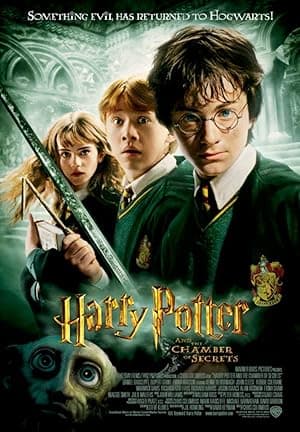
PR-03
Harry Potter and the Chamber of Secrets
A school year of secrets, snakes and the peculiar bravery of three friends.
TAKE HOME →