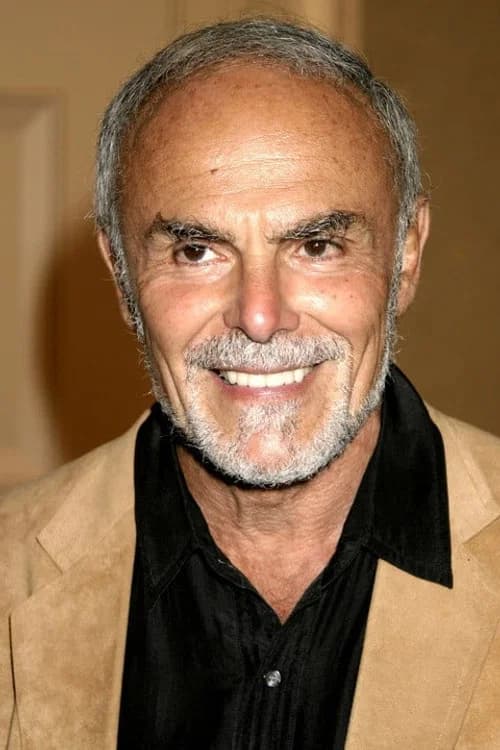
CAST MEMBER
Please Rewind
John Saxon
Please Rewind Talent Wall
John Saxon
John Saxon built the kind of career that rewards viewers who keep following the side roads. Born Carmine Orrico in Brooklyn on August 5, 1936, he grew up in an Italian-speaking home and studied acting with Stella Adler. After being spotted by a modeling scout as a teenager, he signed with agent Henry Willson, took the name John Saxon and joined Universal Studios in 1954. His early work played on the brooding quality Hollywood wanted from its young actors. Running Wild cast him as a juvenile delinquent, while the success of Rock, Pretty Baby briefly established him as a teen idol. Saxon had other plans. In 1960, he said he wanted to play “all sorts of character parts,” and the decades that followed show how fully he pursued that goal. He moved comfortably among studio pictures, European productions, television and genre filmmaking. His credits included John Huston’s The Unforgiven, Mario Bava’s The Girl Who Knew Too Much and The Appaloosa, for which he received a Golden Globe supporting-actor nomination. A martial artist who had practiced since 1957, Saxon played Roper opposite Bruce Lee in Enter the Dragon. He also became a dependable presence in horror, appearing as Lieutenant Fuller in Black Christmas and working with Dario Argento in Tenebrae. For many viewers, Saxon is closely tied to the Nightmare on Elm Street series. He played Donald Thompson, father of Nancy Thompson, in A Nightmare on Elm Street and returned for Dream Warriors. In Wes Craven’s New Nightmare, featured by Please Rewind, the film’s reality-bending design allowed him to appear as both John Saxon and Donald Thompson. It is a fitting showcase for an actor whose familiar authority could shift into something stranger without losing its grounding. Saxon also worked extensively in television, with roles in The Bold Ones: The New Doctors, Falcon Crest and Dynasty, and made his directing debut with Zombie Death House in 1987. Across a career stretching from 1950s studio filmmaking to later independent work, he proved far more durable—and far more interesting—than the teen-idol label that first followed him.
