CAST MEMBER
Please Rewind
Alec Guinness
Please Rewind Talent Wall
Alec Guinness
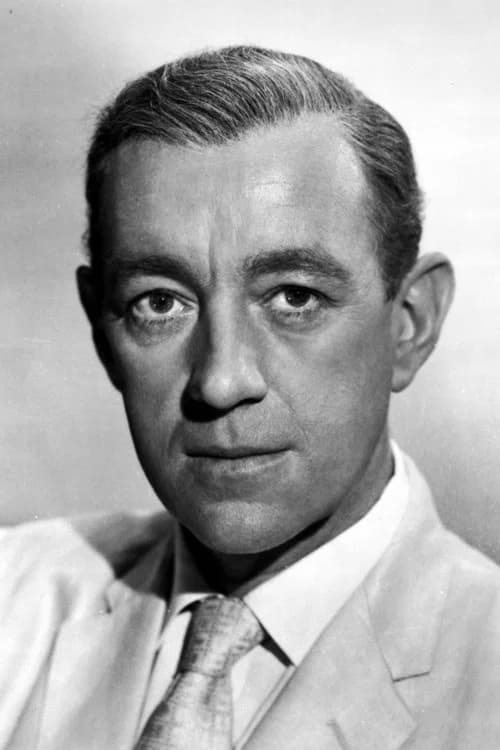
Alec Guinness built a career on transformation, restraint and a quietly commanding screen presence. Born in Marylebone on 2 April 1914, he began in advertising before entering the theatre in 1934. His years at the Old Vic and his many Shakespearean roles gave him a formidable stage foundation, but film revealed just how readily he could shift between gravity, eccentricity and dry comedy. His speaking film debut came in David Lean’s Great Expectations in 1946, reprising the role of Herbert Pocket from his own stage adaptation of the Dickens novel. Guinness became closely associated with the Ealing comedies, most spectacularly playing eight characters in Kind Hearts and Coronets. The Lavender Hill Mob, The Man in the White Suit and The Ladykillers further demonstrated his gift for making odd, tightly controlled characters feel entirely lived in. His collaborations with Lean brought another dimension to that talent. As Colonel Nicholson in The Bridge on the River Kwai, Guinness played discipline hardening into obsession and won the Academy Award and BAFTA Award for Best Actor. Lean later cast him as Prince Faisal in Lawrence of Arabia, Yevgraf in Doctor Zhivago and Professor Godbole in A Passage to India. Guinness could occupy the centre of a film or alter its temperature from the edges. For a later generation, he became Obi-Wan Kenobi in the original Star Wars trilogy. Guinness had mixed feelings about the material and the attention it brought him, yet his measured performance supplied the films with moral weight and old-world authority. On television, he found another defining role as George Smiley in Tinker Tailor Soldier Spy and Smiley’s People, winning the British Academy Television Award for Best Actor for both portrayals. Guinness was also a screenwriter and autobiographer, and his stage career continued until 1989. Across theatre, film and television, his work was marked less by showy transformation than by exact choices: a voice, a pause or a posture that could disclose an entire character.
